The anabolic window has been softened considerably by recent research, but the meal around training remains a genuinely valuable opportunity to refuel, support recovery, and get quality nutrition into the day. This guide covers how to structure the six-hour peri-workout window, the protein and carbohydrate targets that support recovery, and the exception cases where timing does actually matter.
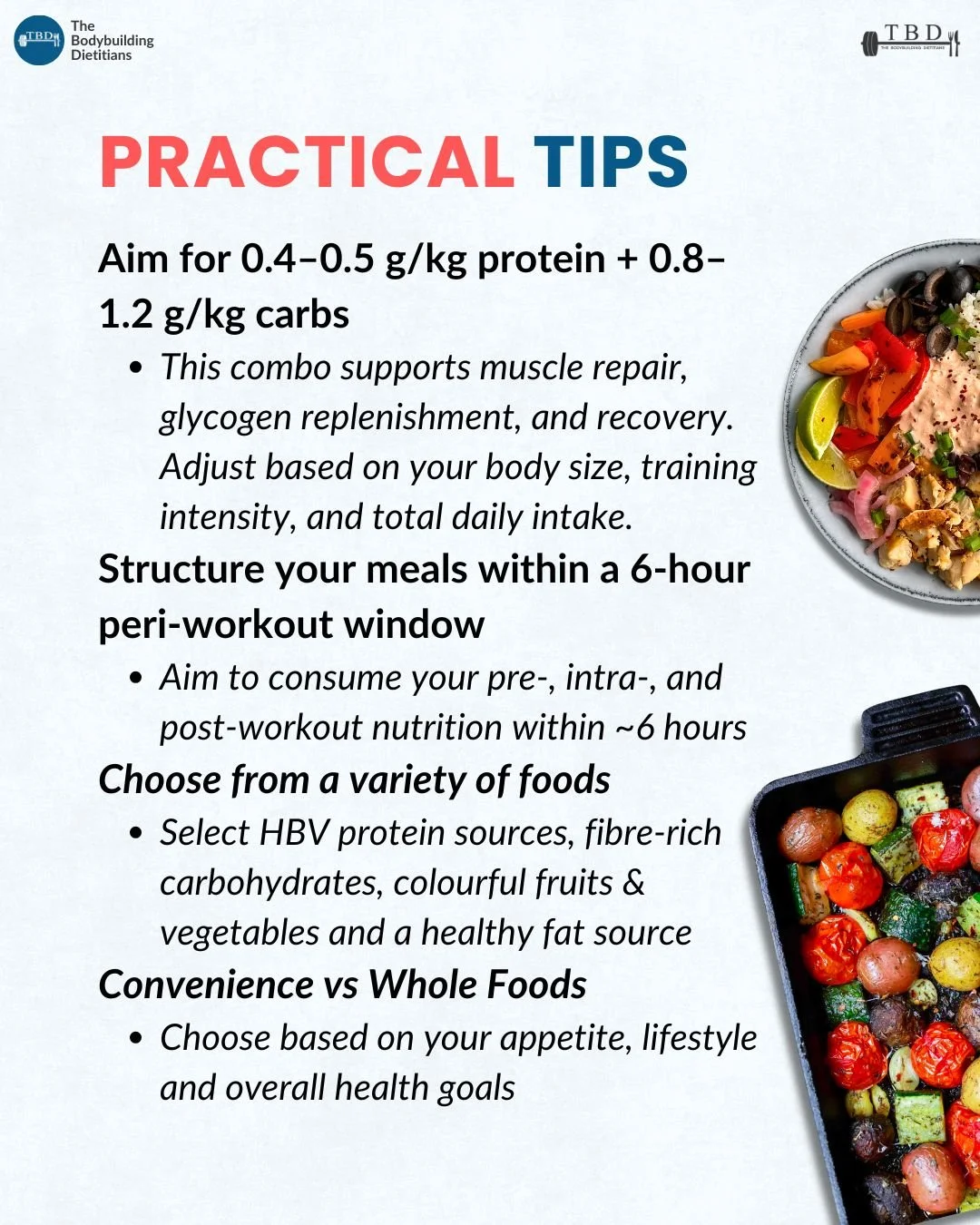
The anabolic window is much wider than it was once thought to be, with muscle protein synthesis elevated for 24 to 48 hours after resistance training, meaning total daily protein intake matters more for recovery than the exact timing of any single meal. What still matters is structuring the meal around training well, because appetite is usually solid, the meal is already a priority, and it is a valuable opportunity to include quality nutrition into the day. The practical framework is to think of the pre-workout meal, intra-workout nutrition (optional), and post-workout meal as a single peri-workout window of approximately six hours, containing 0.4 to 0.5 grams of protein per kilogram of bodyweight and 0.8 to 1.2 grams of carbohydrate per kilogram of bodyweight across the window. The common misapplication of "anabolic window" thinking is stripping fibre, fat, fruit, and vegetables out of the post-workout meal in the belief that they interfere with recovery, which is backwards for most people in most situations. The specific cases where speed of digestion genuinely matters are two-a-day training, sessions with only a few hours of recovery between them, and situations where digestive comfort or maximising calorie intake requires more refined food choices.
The idea that there is a narrow window immediately after training where nutrition has to be perfectly timed has been softened considerably by the research over the past decade. What used to be presented as a 30 to 60 minute window during which the body was uniquely responsive to protein and carbohydrate is now understood to extend across many hours, and total daily intake is meaningfully more important for recovery than the exact timing of any single meal.
What has not changed is that the meal around training remains genuinely valuable. Appetite is usually solid after a training session, the meal is already a priority, and it is a natural opportunity to get quality protein, carbohydrate, and micronutrient intake into the day. The mistake to avoid is not treating training as an important context for eating; it is treating that context so narrowly that the meal becomes stripped back to protein powder and a banana when it could easily deliver much more nutritional value.
This article covers the peri-workout window framework we use with coaching clients, which treats pre-workout, intra-workout, and post-workout nutrition as a single six-hour block rather than three separate decisions. The framework accepts what the current research shows about MPS timing while still using the meal around training strategically for the practical benefits it delivers.
How Wide Is the Anabolic Window, Really?
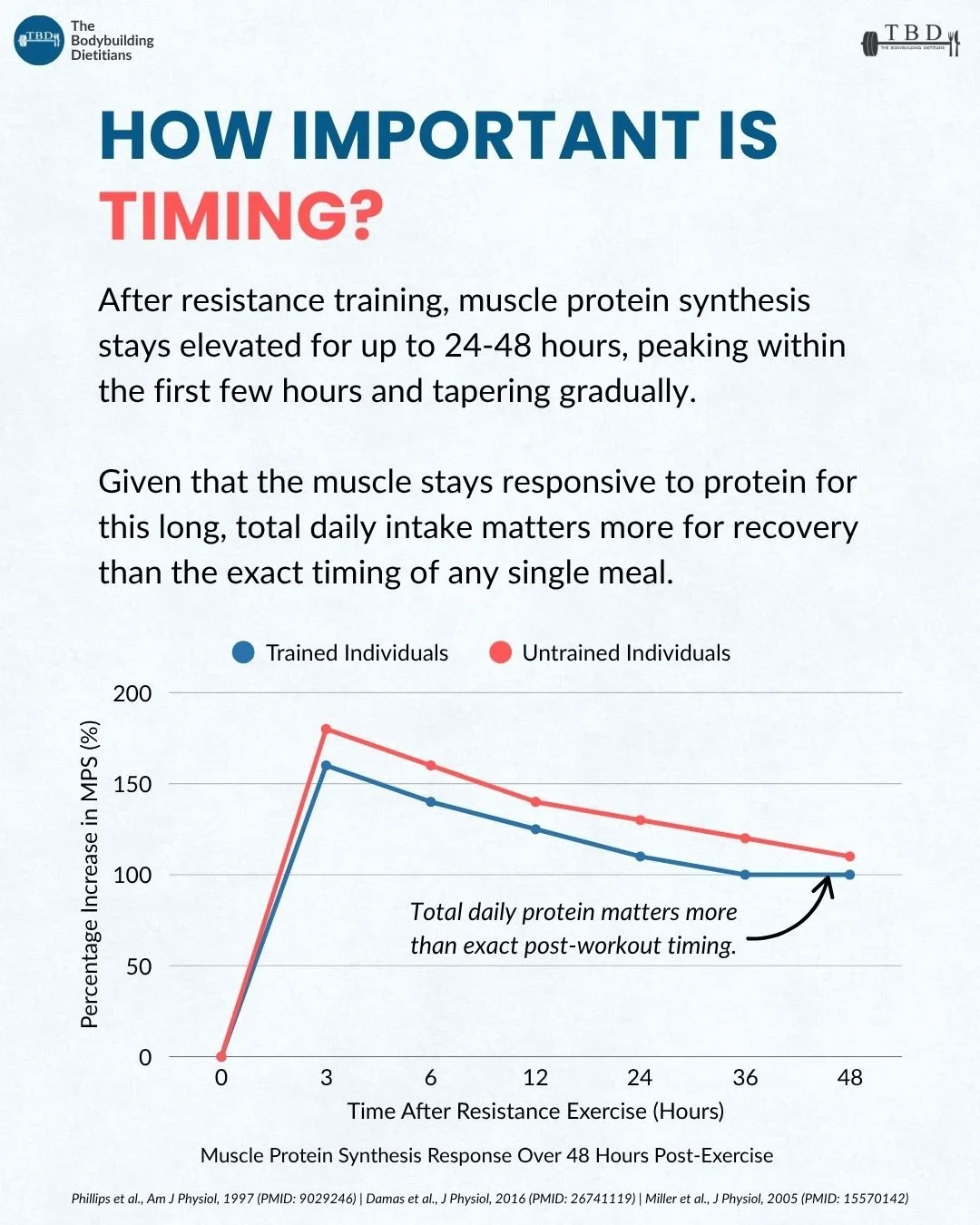
The anabolic window is much wider than the original 30 to 60 minute framing suggested. Muscle protein synthesis (MPS) is elevated for approximately 24 to 48 hours after a resistance training session, peaking within the first few hours and tapering gradually. This means the muscle stays responsive to protein intake across a period spanning multiple meals, which reframes the practical implication substantially.
Research measuring MPS response to resistance exercise has consistently shown that the elevated MPS state lasts for at least 24 hours in trained individuals and up to 48 hours in less trained individuals, with the peak response occurring approximately 3 hours post-exercise. This means the meal immediately post-training is one of many opportunities to contribute protein and carbohydrate toward recovery, rather than a uniquely time-limited window. Source: Phillips et al., 1997, American Journal of Physiology, 273(1):E99-E107; Damas et al., 2016, Journal of Physiology, 594(18):5209-5222; Miller et al., 2005, Journal of Physiology, 568(3):941-952.
The practical implication is that total daily protein intake matters substantially more than the exact timing of any single meal. Hitting the daily protein target across 4 to 5 meals of adequate size, each above the per-meal MPS threshold of approximately 0.4 grams per kilogram of bodyweight, is a stronger driver of recovery and muscle protein balance than compressing protein into a narrow post-training window.
For a more detailed look at the per-meal MPS threshold, the maximum protein per meal question, and how protein is metabolised across the day, our article on where excess protein goes covers the metabolic pathways in depth.
This does not mean training-adjacent nutrition is unimportant. It means the importance is more about capitalising on a natural opportunity to eat well than about hitting a narrow timing target. The meal around training deserves attention because of what it delivers (protein, carbohydrate, micronutrients, hydration, energy for the next few hours) rather than because a missed window closes off recovery.
What Is the Peri-Workout Window and How Should You Structure It?
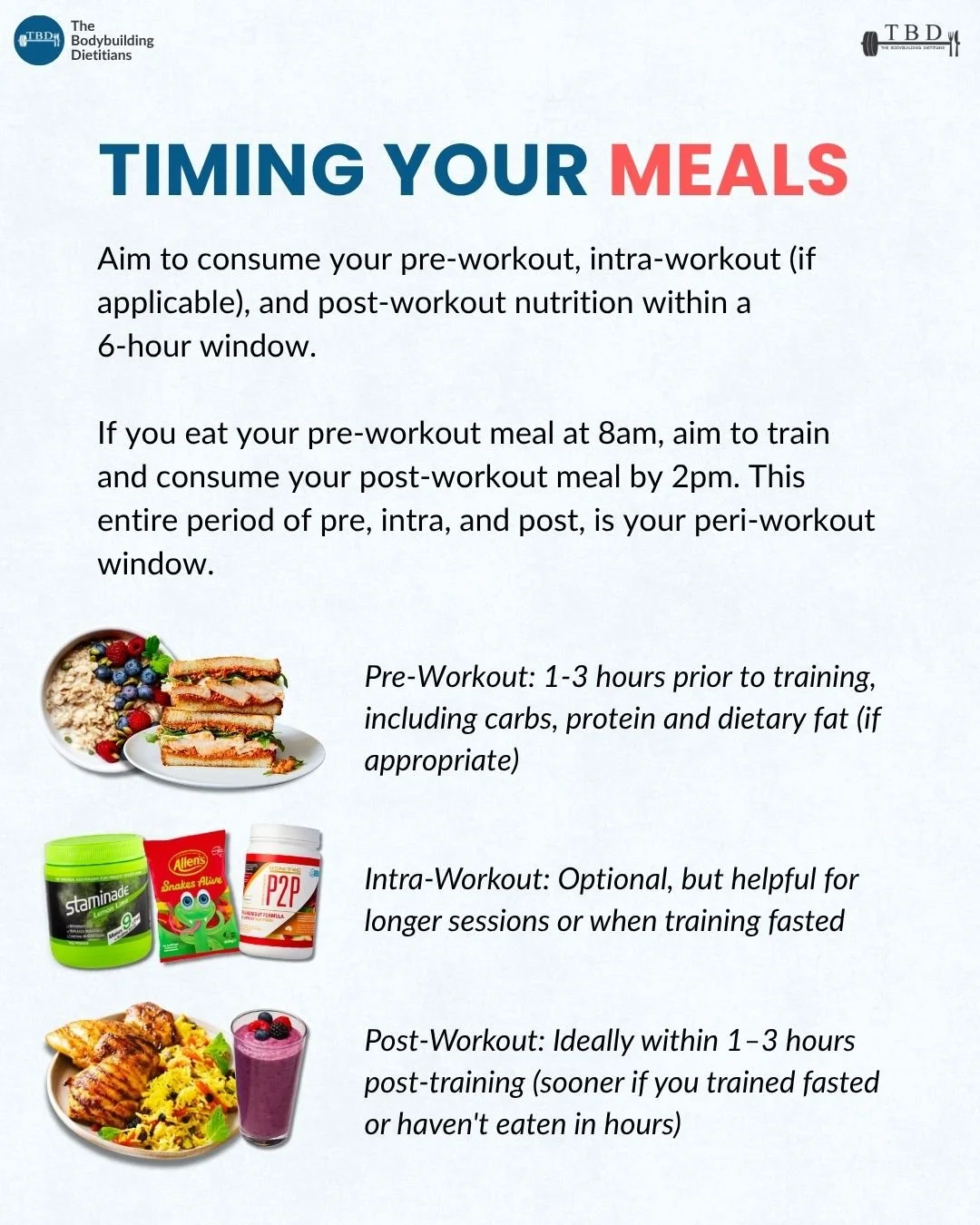
The peri-workout window is the approximately six-hour period covering pre-workout, intra-workout (optional), and post-workout nutrition. Rather than treating these as three separate decisions, the framework structures them as one connected block that delivers the total protein and carbohydrate needed around training.
Pre-workout meal (1 to 3 hours before training). Includes carbohydrate, protein, and (if appropriate for the individual) dietary fat. The meal should be substantial enough to fuel the training session but not so close to training that it produces gastrointestinal discomfort. The specific composition depends on individual digestion, session intensity, and how many hours have passed since the last meal.
Intra-workout nutrition (optional). Most sessions of 60 to 90 minutes do not require intra-workout nutrition beyond water. Longer sessions, fasted training, or high-intensity work benefit from intra-workout carbohydrate (typically 20 to 40 grams of a fast-digesting source like a sports drink, energy chew, or diluted juice) to sustain performance and protect glycogen. Trained individuals doing standard resistance training in the middle of the day typically don't need intra-workout nutrition.
Post-workout meal (ideally within 1 to 3 hours post-training). Delivers the protein and carbohydrate for recovery and provides an opportunity to include quality nutrients. Sooner is better if training was done fasted or if several hours have passed since the last meal. Not urgent if the pre-workout meal was substantial and recent.
The example structure would look like this: pre-workout meal at 8am, training at 10am, post-workout meal at 12 or 1pm. The entire window from 8am to 2pm is peri-workout, and the total protein and carbohydrate across those meals sits in the recovery-supportive range even if any single meal within it doesn't hit specific timing targets.
The specific timing shifts based on training time. A lifter training at 6am typically eats a smaller pre-workout (or nothing) and prioritises the post-workout meal. A lifter training at 6pm may have several meals earlier in the day that function as pre-workout fuelling, then a post-workout meal in the evening. The six-hour window framework accommodates these variations because it focuses on the total protein and carbohydrate delivered around training rather than on precise timing rules.
What Protein and Carbohydrate Targets Support Recovery?
The protein and carbohydrate targets for the post-workout meal (and across the broader peri-workout window) sit within evidence-supported ranges rather than fixed values.
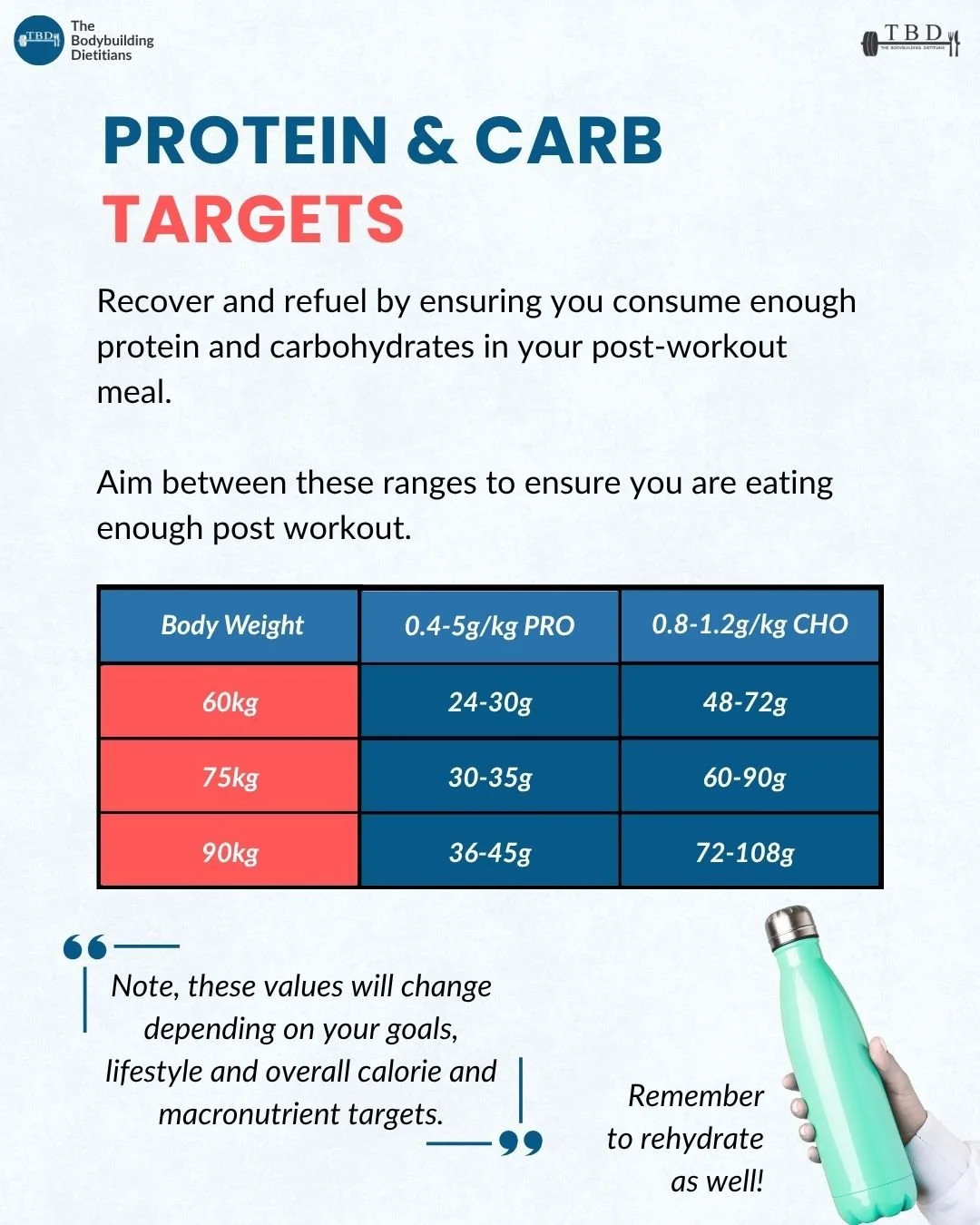
Protein: 0.4 to 0.5 grams per kilogram of bodyweight. For a 60kg lifter, this is 24 to 30 grams of protein. For 75kg, 30 to 38 grams. For 90kg, 36 to 45 grams. This range corresponds to the per-meal MPS threshold identified in the literature, ensuring the acute protein synthesis response is fully stimulated. Higher intakes within this range are more relevant for larger lifters and for lifters at higher total daily protein targets.
Carbohydrate: 0.8 to 1.2 grams per kilogram of bodyweight. For a 60kg lifter, 48 to 72 grams of carbohydrate. For 75kg, 60 to 90 grams. For 90kg, 72 to 108 grams. This range supports glycogen replenishment without being so aggressive that it exceeds daily carbohydrate targets in a single meal. The specific point within the range depends on training intensity (higher for hard glycogen-depleting sessions, lower for easier or lower-volume work) and total daily calorie targets.
Hydration. Not a macronutrient, but part of the post-workout recovery picture. Rehydration after training with fluid and electrolytes is worth attending to alongside the protein and carbohydrate targets, particularly for lifters training in warm environments or with high sweat rates.
These ranges shift based on individual context. Lifters in fat loss phases with tight calorie targets may sit at the lower end of both ranges to preserve room for other meals in the day. Lifters in muscle gain phases with higher total intake may sit at the upper end. Lifters with lower training volume or intensity may need less carbohydrate than lifters running high-volume prep or heavy training blocks. The ranges are starting points that get individualised based on the broader nutrition plan.
For a more detailed look at how meal-level protein and carbohydrate targets fit within the broader meal-building framework, our five-part meal framework article covers the structural template we use with coaching clients.
What Should the Post-Workout Meal Actually Contain?
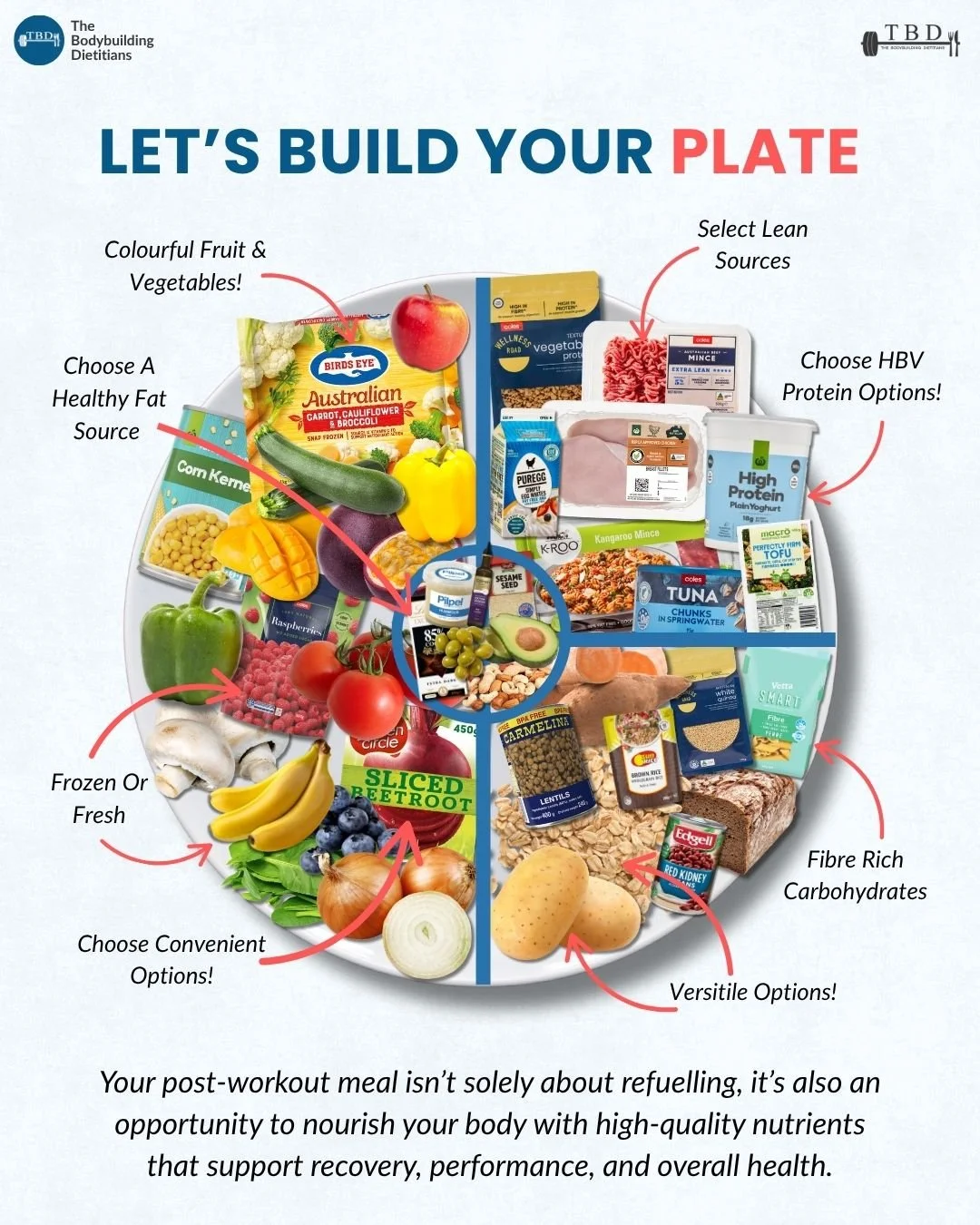
The post-workout meal follows the same five-part framework as any well-built meal for lifters: a high-quality protein source, fibre-rich carbohydrates, colourful fruit and vegetables, a healthy fat source, and flavour boosters that make the meal genuinely enjoyable to eat.
The specific composition depends on the individual context, but the framework applies broadly.
Protein source: Lean, high-biological-value options work best. Chicken breast, lean beef, fish (tuna, salmon), egg whites, tofu, textured vegetable protein, Greek yoghurt, and cottage cheese all deliver the protein target efficiently. For lifters wanting speed and convenience, a protein shake with 30 to 40 grams of protein also works and can be paired with a carbohydrate source.
Carbohydrate source: Fibre-rich carbohydrates work well for most post-workout meals. Rice, potato, sweet potato, quinoa, wholemeal pasta, wholegrain bread, and oats all deliver the carbohydrate target across the ranges above. The specific choice depends on preferences and total daily carbohydrate distribution.
Fruit and vegetables: A serving of colourful fruit and vegetables adds phytonutrients, micronutrients, fibre, and volume to the meal. Frozen mixed vegetables, fresh salads, roasted vegetables, or fruit alongside a smoothie all work. This is one of the components that most often gets stripped out of the post-workout meal in "keep it simple" thinking, when it is actually one of the more valuable components to include.
Healthy fat: A modest healthy fat source (avocado, olive oil, nuts, seeds, hummus) adds fatty acids, fat-soluble vitamin absorption, and satiety. The traditional recommendation to minimise fat post-workout to speed absorption is largely outdated for most lifters in most situations. Fat slows gastric emptying slightly, which extends amino acid and glucose delivery over a longer period rather than compromising the recovery response.
Flavour boosters: Herbs, spices, sauces, and condiments make the meal genuinely enjoyable, which supports adherence to well-structured post-training eating rather than the mental fatigue of eating the same bland chicken and rice every day.
The single most common misapplication of anabolic window thinking is stripping fat, fibre, fruit, and vegetables out of the post-workout meal in the belief that they interfere with recovery or nutrient uptake. For most people in most situations, this is backwards. Appetite is solid, the meal is a priority, and this is one of the higher-quality nutritional opportunities in the day. Treating it as a bare-minimum protein plus carbohydrate refuelling opportunity leaves value on the table.
Not Sure How to Structure Your Own Peri-Workout Window?
Setting up peri-workout nutrition that fits your training schedule, digestive comfort, appetite, and total daily calorie targets is a common area where general rules don't fit individual context. Someone training at 5am has different requirements than someone training after work. Someone doing two-a-days has different requirements than someone doing one session per day. Our team works with clients to build a peri-workout structure that fits the actual demands of their training week and the rest of their daily nutrition, rather than working from a generic template.
When Does Speed of Digestion Genuinely Matter?
The general framework above assumes a typical lifter training once per day with several hours between the post-workout meal and the next session. Under those conditions, the standard post-workout meal composition (including fat, fibre, and vegetables) works well because digestion has time to complete and the next training session is far enough away that gastric contents aren't a concern.
There are specific cases where speed of digestion becomes genuinely relevant, and where leaning toward lower-fibre, more refined options is appropriate.
Two-a-day training. Lifters training twice in the same day, with only 4 to 6 hours between sessions, have a genuine reason to prioritise fast-digesting foods in the meal after the first session. High-fibre carbohydrates, high-fat meals, and large vegetable volumes can leave gastric contents present during the second session, producing discomfort and impairing performance. In this context, the post-first-session meal typically leans toward white rice or refined bread, lean protein, and lower fibre and fat than a typical post-workout meal.
Very short recovery windows. Similar logic applies to lifters with 2 to 3 hours between sessions, which sometimes happens in prep phases involving multiple training sessions per day. The tighter the window, the more the meal should lean toward fast-digesting options to be gastric-empty by the next session.
Digestive comfort issues. Some lifters have digestive sensitivities that make high-fibre or high-fat meals immediately post-training uncomfortable. In these cases, adjusting the post-workout meal toward more refined and lower-fibre options is a reasonable individualisation, with the fibre and micronutrient contribution shifted to other meals in the day.
Maximising calorie intake during muscle gain phases. Lifters with very high calorie targets (particularly larger lifters in aggressive muscle gain phases) sometimes struggle to hit calorie targets from whole foods alone. In these cases, leaning on more calorie-dense and easier-to-consume foods post-workout can help hit total daily targets. This is a specific application rather than a general recommendation.
These exception cases don't invalidate the general framework. They illustrate that the framework is a starting point, and specific circumstances warrant adjustment. Most lifters, most of the time, benefit from the standard peri-workout structure that includes the full range of components rather than a stripped-back version.
Should You Use Convenience Products or Whole Foods Post-Workout?
Both convenience products (protein shakes, ready meals, protein-fortified milks, single-serve tuna bowls) and whole food meals work for post-workout nutrition. The choice depends on context rather than one approach being universally superior.
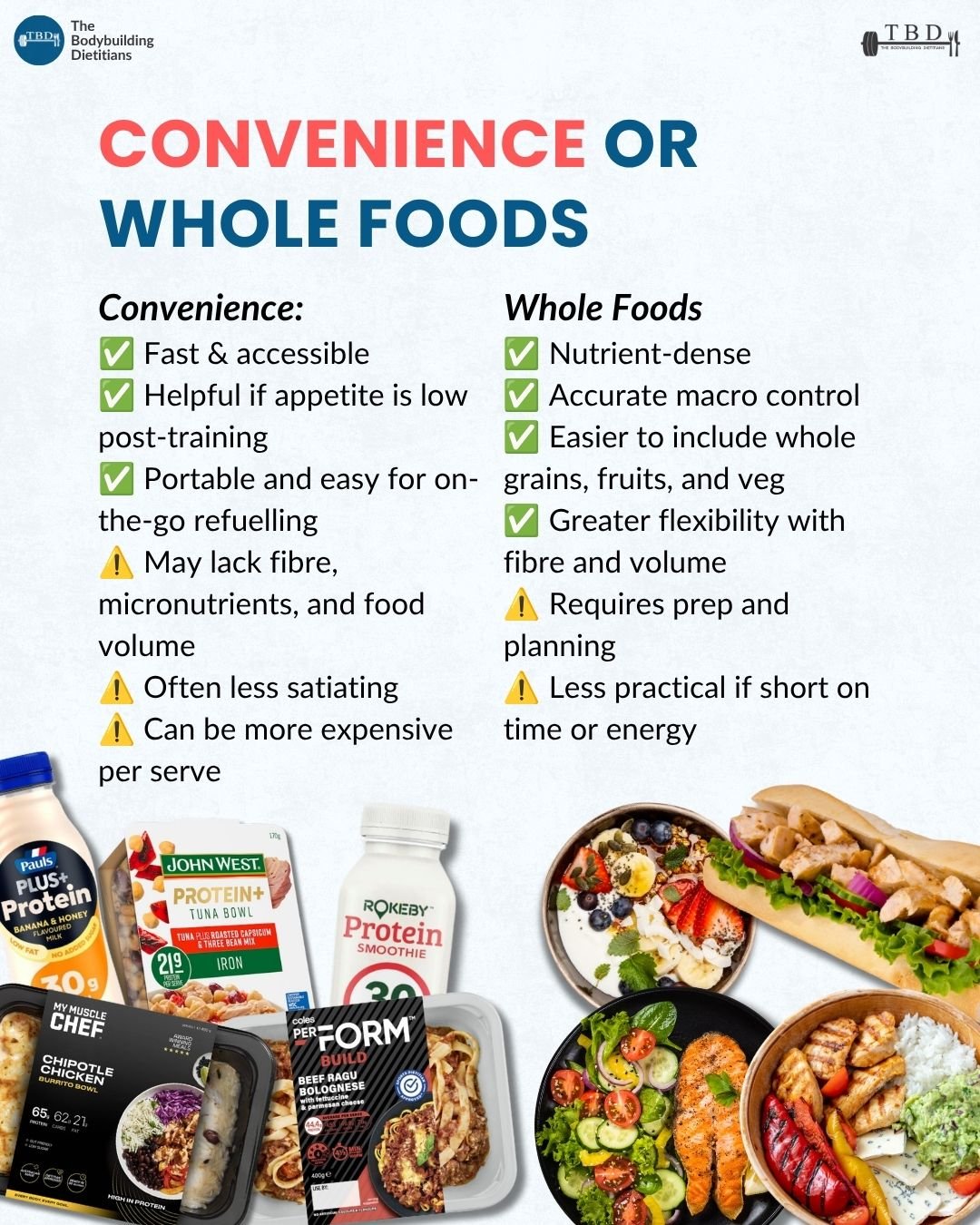
Convenience products are fast, accessible, portable, and helpful when appetite is low immediately post-training (a common experience after very high-intensity sessions). They tend to be lower in fibre, micronutrients, and food volume than whole food equivalents, and often less satiating per calorie. They can also be more expensive per serve than equivalent whole food meals. The strongest case for convenience products is when the lifter is genuinely time-constrained, training away from home, or has poor post-training appetite.
Whole food meals are more nutrient-dense, provide more accurate macro control, and allow easier inclusion of whole grains, fruit, and vegetables. They provide greater flexibility with fibre and volume, which supports satiety and daily fibre targets. The trade-off is that they require preparation and planning, which can be less practical when time or energy is short.
The practical framework for most lifters is a mix of both, chosen based on the specific day's context. A whole food meal at home after a Sunday morning session might sit alongside a convenience protein shake plus a piece of fruit after a Tuesday evening session followed by immediate work commitments. Neither approach is intrinsically better, and the flexibility to use both as circumstances warrant tends to produce better real-world adherence than either purism.
Practical Takeaways
The anabolic window is much wider than the original 30 to 60 minute framing suggested. Muscle protein synthesis stays elevated for 24 to 48 hours after training, meaning total daily protein intake matters more for recovery than the exact timing of any single meal.
The peri-workout window is the approximately six-hour period covering pre-workout, intra-workout, and post-workout nutrition. Structuring the window as one connected block rather than three separate decisions tends to produce better results than treating any single meal as narrowly time-critical.
Protein target across the post-workout meal: 0.4 to 0.5 grams per kilogram of bodyweight. Carbohydrate target: 0.8 to 1.2 grams per kilogram. These are ranges that shift with training intensity, total daily intake, and phase of training.
The post-workout meal follows the same five-part framework as any well-built meal (protein, fibre-rich carbohydrate, colourful fruit and vegetables, healthy fat, flavour). Stripping fat, fibre, and vegetables out of the post-workout meal in the belief that they interfere with recovery is backwards for most lifters in most situations.
Speed of digestion genuinely matters in specific cases: two-a-day training, very short recovery windows between sessions, digestive comfort issues, and calorie-maximisation during muscle gain phases. In these contexts, leaning toward lower-fibre, more refined options is appropriate.
Convenience products and whole food meals both work for post-workout nutrition, and choosing between them based on the specific day's context (time constraints, appetite, cost, macro control needs) tends to produce better real-world adherence than either purism.
Frequently Asked Questions
How long is the anabolic window?
Muscle protein synthesis is elevated for approximately 24 to 48 hours after resistance training, peaking within the first few hours and tapering gradually. This is much wider than the original 30 to 60 minute framing that circulated in the earlier fitness literature. The practical implication is that total daily protein intake matters substantially more for recovery than the exact timing of any single meal.
How much protein should I eat post-workout?
Approximately 0.4 to 0.5 grams of protein per kilogram of bodyweight, which corresponds to 24 to 30 grams for a 60kg lifter, 30 to 38 grams for a 75kg lifter, and 36 to 45 grams for a 90kg lifter. This range meets the per-meal MPS threshold and ensures the acute protein synthesis response is fully stimulated. Larger lifters and lifters at higher total daily protein targets can sit toward the upper end of the range.
How much carbohydrate should I eat post-workout?
Approximately 0.8 to 1.2 grams of carbohydrate per kilogram of bodyweight, corresponding to 48 to 72 grams for a 60kg lifter, 60 to 90 grams for a 75kg lifter, and 72 to 108 grams for a 90kg lifter. This range supports glycogen replenishment and shifts based on training intensity (higher for hard glycogen-depleting sessions), total daily calorie targets (lower during fat loss phases), and individual context.
Do I need to eat immediately after training?
Not for most lifters in most situations. If the pre-workout meal was substantial and eaten within a few hours before training, the post-workout meal can be eaten within 1 to 3 hours of training without any recovery cost. The urgency is higher for lifters who trained fasted or who haven't eaten in many hours, in which case eating sooner rather than later is worthwhile. For most standard training situations, the meal timing has considerable flexibility.
Should I avoid fat, fibre, and vegetables in my post-workout meal?
No, this is backwards for most lifters. Appetite is usually solid after training, the meal is already a priority, and it is a natural opportunity to include quality nutrients. The traditional recommendation to strip these components out was based on older thinking about a narrow anabolic window and rapid nutrient uptake, which the research has moved past. The exceptions where speed of digestion genuinely matters are two-a-day training, very short recovery windows between sessions, and specific digestive comfort issues.
Are protein shakes as good as whole food meals post-workout?
Both work for post-workout nutrition. Convenience products (protein shakes, ready meals) are fast, portable, and helpful when appetite is low or time is constrained. Whole food meals are more nutrient-dense, provide more accurate macro control, and allow easier inclusion of fibre and micronutrients. Neither is universally superior, and using a mix of both based on the specific day's context tends to produce better real-world adherence than either purism.
If you want help structuring your peri-workout window, matching post-workout targets to your training and phase of the year, and building a nutrition plan that fits your actual training schedule, our team can build a plan that fits your specific context. You can enquire about coaching or book a consultation with our team.