Tracking apps capture calories and macronutrients cleanly, but they are less useful for identifying the meal-level gaps that shape satiety, recovery, digestion, and long-term adherence. This is the five-part meal framework we use with coaching clients to build meals that support training, recovery, and body composition alongside hitting macro targets.
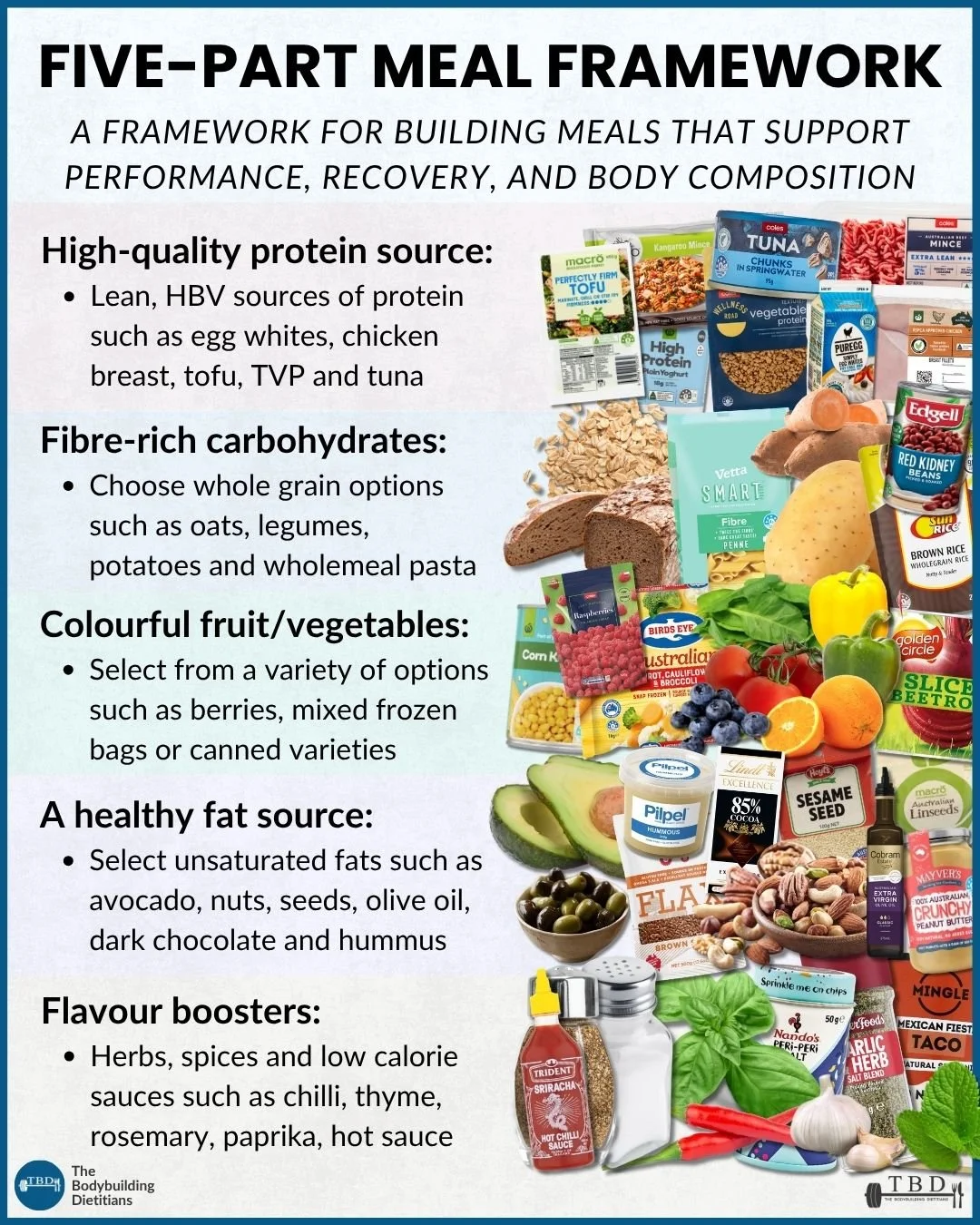
A well-built meal for lifters and physique athletes has five components: a high-quality protein source at a dose sufficient to stimulate muscle protein synthesis (approximately 0.4 grams per kilogram of bodyweight per meal); a fibre-rich carbohydrate source appropriate to the training context; a serving of colourful fruit and vegetables to support fibre and phytonutrient intake; a healthy fat source rotated across plant-based and oily fish sources; and flavour boosters that make the meal genuinely enjoyable to eat. Meals that hit macros can still fall short on fibre density, food variety, vegetable portioning, fat source rotation, and micronutrient adequacy, which affects satiety, recovery, and long-term adherence even when calorie and macronutrient targets are being met. The framework works as a template for auditing existing meals or building new ones, and it applies whether or not the lifter is actively tracking macros.
Hitting daily macros is a necessary condition for supporting training, recovery, and body composition, but it is not on its own sufficient to build a diet that supports these outcomes across weeks and months. Two meals with identical calorie and macronutrient totals can produce very different downstream effects on satiety, digestion, energy across the day, recovery from training, and (over longer periods) micronutrient status and gut health.
Tracking apps are excellent for capturing the calorie and macronutrient side of the picture. What they are less useful for is identifying the meal-level gaps that sit outside those numbers. A meal can hit its macros and still be under-portioned on vegetables, low on fibre, narrow on food variety, or bland enough that the lifter doesn't actually want to eat it a third day in a row. Each of these affects outcomes over time even when the tracking log looks fine day to day.
This article outlines a five-part meal framework we use with coaching clients to build meals that address the components a standard macro-tracking approach misses. Think of it as a template for auditing your own meal rotation rather than a prescription, and one that applies whether or not you're actively tracking macros.
Why Can a Meal Hit Macros and Still Fall Short?
Macros describe the calorie and macronutrient content of a meal but not its overall nutritional quality. A meal hitting 40 grams of protein, 60 grams of carbohydrate, and 15 grams of fat has met specific quantitative targets, but those targets say nothing about the source of the protein (which affects amino acid profile and satiety), the type of carbohydrate (which affects fibre content and blood glucose response), the composition of the fat (which affects fatty acid profile and micronutrient delivery), or the presence of vegetables, spices, and other components that shape the eating experience and downstream nutritional outcomes.
The result is that two lifters with identical macro adherence can end up in very different places over time. One lifter may be hitting macros through a rotation of chicken breast, white rice, olive oil, and a small salad, day after day. Another may be hitting the same macros through a rotation that includes salmon, oats, avocado, legumes, colourful vegetables, and varied protein sources across the week. Both look identical in a macro tracking app, but the second approach delivers substantially more fibre, phytonutrients, essential fatty acids, and micronutrients across the day and week.
The practical implication is that macro tracking is a useful tool for calibrating calorie and protein intake, but it should sit within a broader framework that captures the quality variables macro tracking does not. Meals that hit macros while systematically missing on other variables tend to produce plateaus in progress, digestive complaints, or the gradual erosion of dietary adherence that leads to phase failures.
For a more detailed look at how tracking accuracy itself can affect the macros you think you're hitting, our article on macro tracking errors covers the six most common patterns.
What Are the Most Common Gaps in Macro-Tracked Meals?
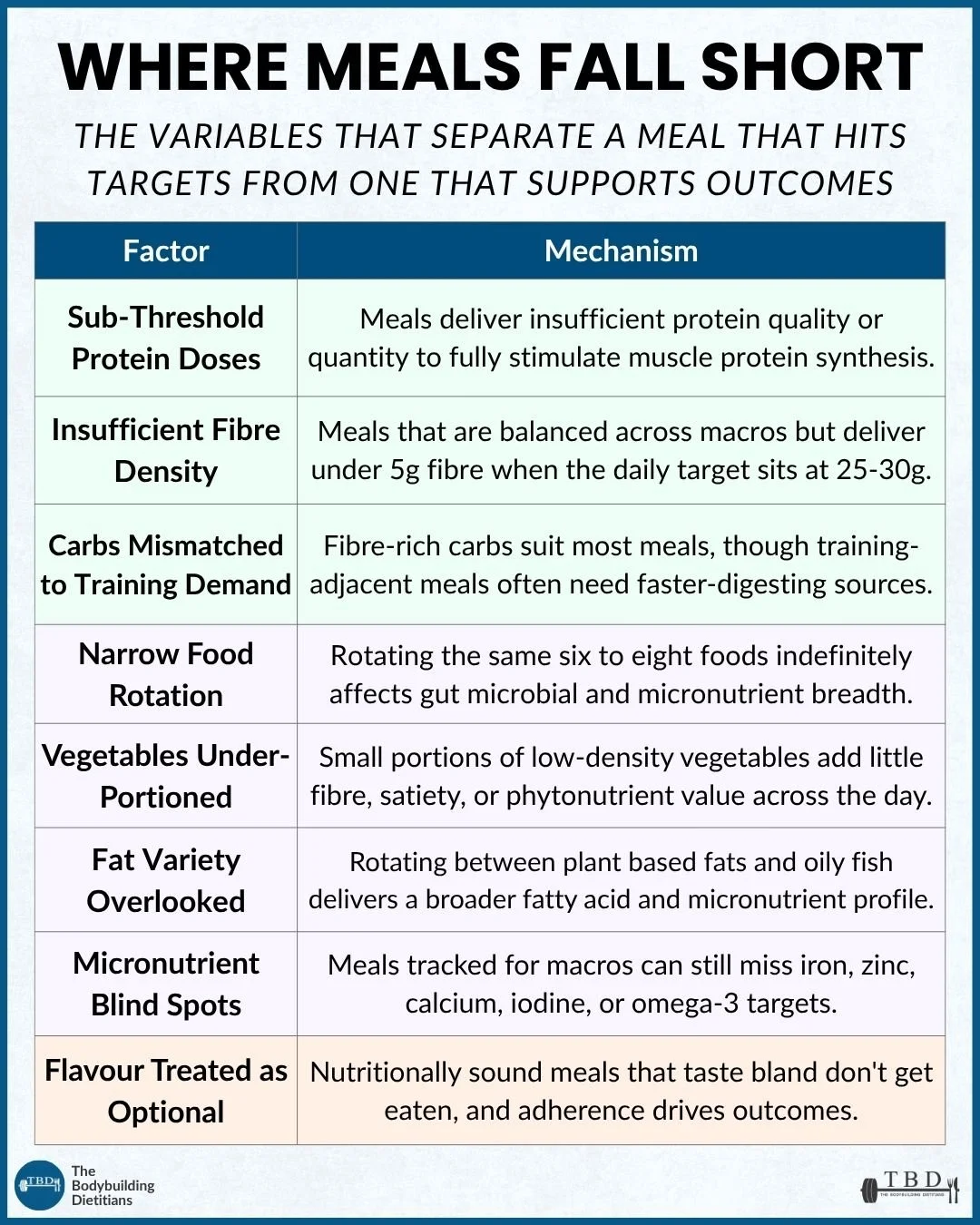
Eight gaps recur consistently in the meals of lifters who track macros carefully but have not applied a broader quality framework. Each one is common enough that it shows up in most first-round meal audits when new coaching clients share a typical week of eating.
Sub-threshold protein doses. Meals that deliver 15 to 20 grams of protein rather than the 30 to 40 grams needed to fully stimulate the acute muscle protein synthesis response. This often happens at breakfast (a bowl of oats with milk delivers around 12 grams of protein without additions) or in lower-effort snack meals. Total daily protein may still hit the target, but the meal-level distribution is uneven.
Insufficient fibre density. Meals that are balanced across the three macronutrients but deliver under 5 grams of fibre when the daily target sits at 25 to 30 grams. A meal built around white rice, chicken breast, and a small side of vegetables can easily land in this territory, and when repeated across multiple meals per day, the daily total falls well below recommendations.
Carbohydrates mismatched to training demand. Fibre-rich carbohydrates suit most meals of the day, though the meal or two immediately before and after a training session often benefit from faster-digesting sources that empty from the stomach more quickly and support acute training performance without gastrointestinal discomfort.
Narrow food rotation. Rotating the same six to eight foods indefinitely reduces gut microbial diversity and narrows the range of micronutrients consumed. This is one of the more common patterns in physique-focused eating, where meal simplicity and predictability are valued, and it can affect microbial diversity and phytonutrient intake even when calorie and macro totals look ideal.
Vegetables under-portioned. Small portions of low-density vegetables (a few florets of broccoli, a handful of salad leaves) add little fibre, satiety, or phytonutrient value across the day. Effective vegetable intake for physique athletes typically requires portions of 150 to 300 grams per main meal, prepared in ways that make them palatable at that volume.
Fat variety overlooked. Rotating between plant-based fats (avocado, olive oil, nuts, seeds) and oily fish (salmon, sardines, mackerel) delivers a broader fatty acid and micronutrient profile than sticking to one or two sources. Diets built entirely on olive oil and nut butter miss the omega-3 contribution that oily fish or supplements provide.
Micronutrient blind spots. Meals tracked for macros can still systematically miss micronutrient targets. Iron, zinc, calcium, iodine, and omega-3 fatty acids are the most common gaps in physique-focused diets, particularly in restrictive fat loss phases or in diets that reduce variety in the interest of simplicity.
Flavour treated as optional. Nutritionally sound meals that taste bland don't get eaten consistently. Adherence is the variable that most reliably drives long-term outcomes, and flavour is the variable that most reliably drives adherence. Meals that hit macros and quality targets but require willpower to consume every day tend to produce phase failures over time.
What Are the Five Components of a High-Quality Meal?
A well-built meal for lifters and physique athletes contains five components. Applied consistently across three to five main meals per day, this framework addresses most of the eight gaps above without requiring detailed micronutrient tracking.
Component 1: A high-quality protein source.
The protein source is the foundation of the meal, and the dose should be sufficient to fully stimulate the acute muscle protein synthesis response. Lean, high biological value sources include chicken breast, egg whites, lean beef, fish (tuna, salmon), tofu, textured vegetable protein, Greek yoghurt, and cottage cheese. Higher-fat sources like eggs, salmon, and full-fat dairy are useful in some meals but count toward both the protein and fat components of the meal.
A systematic review concluded that to maximise muscle protein synthesis, individuals should consume protein at approximately 0.4 grams per kilogram of bodyweight per meal across a minimum of four meals to reach a daily total of at least 1.6 grams per kilogram. This corresponds to approximately 28 to 35 grams of protein per meal for most trained lifters, with lifters at higher daily protein targets sitting toward 40 to 50 grams per meal. Source: Schoenfeld and Aragon, 2018, Journal of the International Society of Sports Nutrition, 15:10.
Component 2: Fibre-rich carbohydrates.
Carbohydrate sources with meaningful fibre content include oats, legumes (lentils, chickpeas, beans), potatoes with skin, sweet potato, wholemeal pasta, brown rice, wholegrain bread, and quinoa. These sources contribute to daily fibre totals, support satiety, and provide sustained energy across the hours between meals. For meals immediately around training, faster-digesting sources (white rice, standard pasta, white potato without skin, low-fibre bread, fruit) can be more practical, but the bulk of daily carbohydrate intake benefits from being fibre-rich.
Component 3: Colourful fruit and vegetables.
The variety of colour across fruit and vegetables is a practical proxy for the variety of phytonutrients, antioxidants, and micronutrients delivered by the meal. Aim for at least two colours per main meal and rotate the specific choices across the week. Frozen mixed vegetables, tinned tomato products, roasted vegetable trays, and pre-cut fresh options make this practical at reasonable cooking effort. Berries, citrus, apples, and other fruit contribute to the same variety.
Component 4: A healthy fat source.
Rotating between plant-based unsaturated fats (avocado, olive oil, nuts, seeds, hummus, dark chocolate) and oily fish (salmon, sardines, mackerel, herring) delivers a broader fatty acid profile than either category alone. For lifters who don't eat oily fish regularly, an omega-3 supplement can fill the same gap. Fat quantity per meal typically sits between 10 and 20 grams for most training-focused meals, with adjustments based on the overall daily fat target.
Component 5: Flavour boosters.
Herbs, spices, low-calorie sauces, and condiments that make the meal genuinely enjoyable to eat. Options include chilli, garlic, paprika, cumin, ginger, thyme, rosemary, basil, oregano, hot sauce, mustard, vinegar, soy sauce, and Worcestershire sauce. This component adds negligible calories but has a substantial effect on how enjoyable the meal is to eat across weeks and months of repetition. Adherence is a real variable in long-term outcomes, and flavour is one of the more direct levers for it.
How Does the Framework Apply to Different Meal Styles?
The framework is deliberately structural rather than prescriptive. It works across a wide range of meal styles, cooking approaches, and dietary preferences. Four worked examples show how it applies to different meal templates.
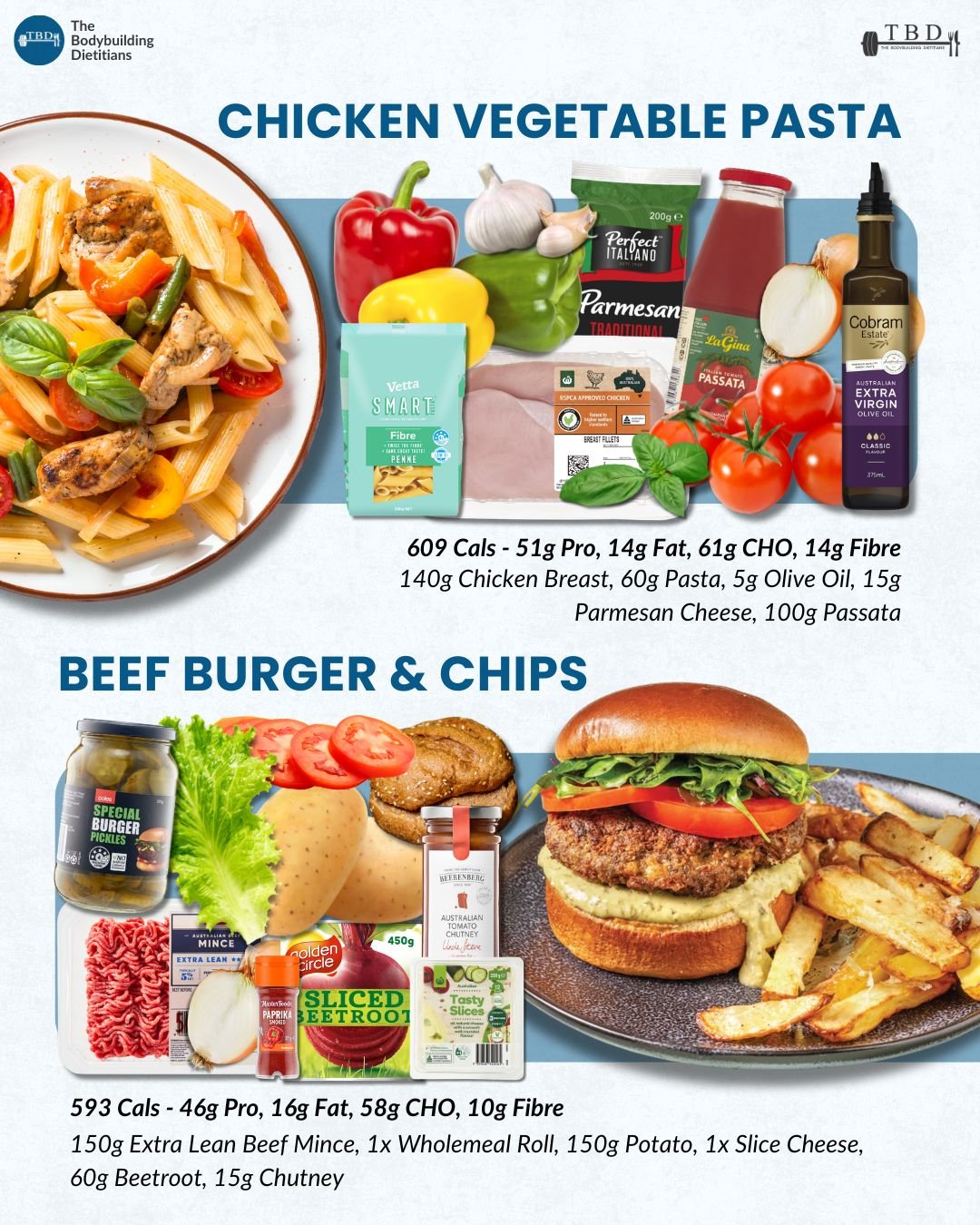
Example 1: Chicken Vegetable Pasta (609 calories, 51g protein, 14g fat, 61g carbohydrate, 14g fibre)
Built from 140 grams of chicken breast, 60 grams of high-fibre pasta, 5 grams of olive oil, 15 grams of parmesan cheese, 100 grams of passata, plus mixed vegetables including capsicum, garlic, and onion. The chicken hits the protein threshold, the high-fibre pasta and vegetables deliver 14 grams of fibre in a single meal, the passata and vegetables contribute multiple colours and phytonutrients, the olive oil and parmesan cover the healthy fat component, and the garlic, herbs, and pasta sauce provide the flavour anchor. This is a familiar meal template restructured to hit every part of the framework.
Example 2: Beef Burger and Chips (593 calories, 46g protein, 16g fat, 58g carbohydrate, 10g fibre)
Built from 150 grams of extra lean beef mince, a wholemeal roll, 150 grams of potato (with skin), a slice of cheese, 60 grams of beetroot, 15 grams of chutney, plus lettuce, tomato, and pickles. Protein comes from the beef and cheese, the potato and wholemeal roll provide fibre-rich carbohydrates, the beetroot and salad vegetables contribute colour and fibre, the cheese and small amount of oil in the beef cover the fat component, and the chutney, pickles, and any seasoning add the flavour layer. A meal often assumed to be a diet-breaking indulgence works cleanly within the framework when the components are chosen deliberately.
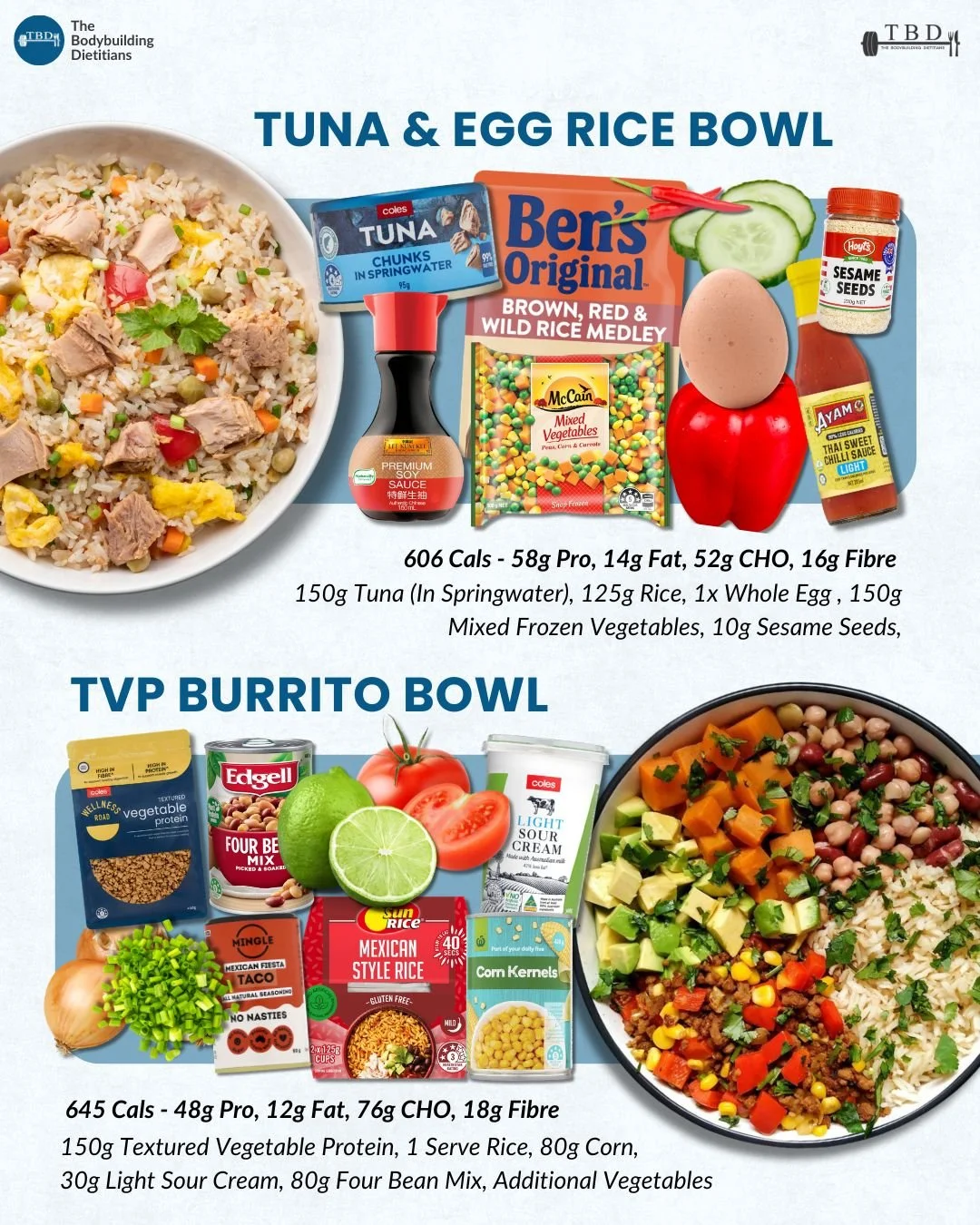
Example 3: Tuna and Egg Rice Bowl (606 calories, 58g protein, 14g fat, 52g carbohydrate, 16g fibre)
Built from 150 grams of tuna in springwater, 125 grams of a brown, red, and wild rice medley, one whole egg, 150 grams of mixed frozen vegetables, 10 grams of sesame seeds, plus soy sauce and sweet chilli sauce. The tuna and egg together hit the protein threshold, the mixed rice medley delivers substantially more fibre than white rice alone, the mixed frozen vegetables add multiple colours and fibre at low cost and preparation effort, the whole egg and sesame seeds cover the fat component with good micronutrient contribution, and the soy sauce and sweet chilli sauce provide flavour without meaningful calorie cost.
Example 4: TVP Burrito Bowl (645 calories, 48g protein, 12g fat, 76g carbohydrate, 18g fibre)
Built from 150 grams of textured vegetable protein, one serve of rice, 80 grams of corn, 30 grams of light sour cream, 80 grams of a four-bean mix, additional vegetables, plus taco seasoning and lime. Textured vegetable protein and beans together provide a complete plant-based protein profile at the target dose, the rice and beans deliver substantial fibre, the corn, tomato, capsicum, and other vegetables add colour and phytonutrient variety, the small amount of sour cream (or an alternative like avocado) covers the fat component, and the taco seasoning and lime provide the flavour anchor. This shows the framework applying cleanly to a plant-based meal template that hits all five components at similar calorie and macro targets to the animal-protein examples.
Not Sure How to Apply This to Your Own Meal Rotation?
Understanding what a well-built meal looks like is one part of the picture. Building a rotation of five or six meals that hits the framework consistently and fits your actual grocery lists, cooking time, and training week is the harder part. Our team works with clients to build meal templates matched to their specific context, rather than starting from a generic plan and hoping it holds together across the demands of a real week.
How Do You Use the Framework Practically?
The framework is most useful applied as a template rather than as a checklist for every individual meal. Not every meal needs to hit all five components perfectly, and forcing them to do so tends to reduce flexibility more than it improves nutritional quality.
Apply the framework at the meal template level rather than the individual meal level. Most lifters eat three to five main meals per day, and the aim is that across those meals, the daily total for each component hits the target. Breakfast might lean lighter on vegetables in exchange for a fruit serving alongside the protein source. A pre-training meal might use a faster-digesting carbohydrate rather than the fibre-rich options. What matters is that across the day, protein, fibre, colourful fruit and vegetables, healthy fats, and flavour are all present in adequate amounts.
Build a rotation of five or six meal templates that fit the framework. Rather than trying to design every meal from scratch, most lifters do better with a rotation of five or six familiar templates that each hit the framework, then rotating through them across the week with small variations. This preserves food variety at the weekly level without requiring novel meal decisions every day.
Prioritise food variety at the weekly level, not the daily level. Eating the same breakfast and lunch on training days is fine if the weekly rotation covers a broader range. The gut microbial and micronutrient variety benefits accrue over weeks rather than requiring daily novelty.
Batch prepare where practical. Cooking chicken breast, rice, and vegetables for three days at a time is more efficient than cooking three separate meals, and it does not compromise the framework as long as the weekly rotation covers different components across other meals.
Adjust the framework toward specific goals. During deliberate fat loss phases, prioritise higher-satiety versions of each component (lean proteins, higher-fibre carbohydrates, more vegetables, moderate fats). During improvement seasons or muscle gain phases, the same framework applies but with larger portions of the fibre-rich carbohydrates and healthy fats to meet the higher calorie targets without needing to increase meal frequency.
For a more detailed look at how these decisions integrate with the broader nutrition priority order, our fuelling hierarchy article covers where meal composition sits relative to energy availability, protein intake, and training-day carbohydrate distribution.
The framework applies whether or not the lifter is actively tracking macros. For non-tracking lifters, it provides a structural template that hits reasonable protein and fibre targets without requiring specific quantitative measurement. For lifters who do track macros, it sits alongside the macro tracking as a quality filter that catches the gaps macros alone miss.
Practical Takeaways
A well-built meal has five components: a high-quality protein source at approximately 0.4 grams per kilogram of bodyweight, a fibre-rich carbohydrate, a serving of colourful fruit and vegetables, a healthy fat source, and flavour boosters.
Meals can hit macros and still fall short on fibre density, food variety, vegetable portioning, fat source rotation, and micronutrient adequacy. These gaps affect satiety, recovery, and long-term adherence even when calorie and macronutrient totals are on target.
Vegetable portions need to be meaningful (typically 150 to 300 grams per main meal) to contribute usefully to fibre and phytonutrient intake. Small side salads and single portions of a few florets do not.
Rotating between plant-based fats and oily fish delivers a broader fatty acid profile than either category alone. Lifters who don't eat oily fish regularly can use an omega-3 supplement to fill the same gap.
Flavour is a genuine adherence variable, not a bonus feature. Meals that require willpower to consume every day tend to produce phase failures over time.
Apply the framework at the meal template level rather than the individual meal level, with a rotation of five or six templates covering the components across the week rather than requiring each individual meal to hit all five perfectly.
Frequently Asked Questions
What is a high-quality meal for muscle gain?
A high-quality meal for muscle gain contains five components: a high-quality protein source at approximately 0.4 grams per kilogram of bodyweight (roughly 30 to 45 grams for most lifters), a fibre-rich carbohydrate source such as oats, legumes, or wholemeal pasta, a serving of colourful fruit and vegetables, a healthy fat source (rotating between plant-based fats and oily fish), and flavour boosters that make the meal genuinely enjoyable to eat. Applied consistently across three to five main meals per day, this framework supports the protein synthesis response, fibre intake, phytonutrient variety, and micronutrient adequacy that muscle gain phases benefit from.
How much protein should be in each meal?
Approximately 0.4 grams of protein per kilogram of bodyweight per meal, based on research on the acute muscle protein synthesis response. For most trained lifters this corresponds to 28 to 35 grams of protein per meal, with lifters at higher daily protein targets sitting toward 40 to 50 grams per meal across four to five meals per day. The dose can be met from any high-quality protein source, with animal proteins and well-combined plant proteins both producing strong responses at adequate doses.
How much fibre should be in each meal?
Aim for meal-level fibre content that contributes toward a daily total of 25 to 30 grams. Across three to five main meals per day, this translates to roughly 5 to 10 grams of fibre per meal, depending on total meal count. Meals built around fibre-rich carbohydrates (oats, legumes, wholegrains, potatoes with skin) and meaningful vegetable portions (150 to 300 grams) reach this range without additional planning.
Does this framework apply if I don't track macros?
Yes. The framework works whether or not the lifter is actively tracking macros. For non-tracking lifters, it provides a structural template that hits reasonable protein and fibre targets without requiring specific quantitative measurement. The components (protein source, fibre-rich carbohydrate, colourful vegetables, healthy fat, flavour) can all be applied through visual portioning and food selection rather than through gram-level tracking.
How many meals per day should I eat?
Three to five main meals per day is the range most lifters do well within. The specific number depends on lifestyle preferences, total daily calorie target, and the ability to consistently hit the meal-level protein threshold across each meal. For lifters with lower total calorie needs, three larger meals may be more practical. For lifters with higher calorie needs (particularly during muscle gain phases), four to five smaller meals often make the total more achievable without any single meal being uncomfortably large.
Do all meals need to hit every part of the framework?
No. The framework is most useful applied at the meal template level and the daily total level, not as a checklist for every individual meal. Some meals may lean lighter on vegetables in exchange for a fruit serving, some may use faster-digesting carbohydrates around training, and some may sit heavier on one component and lighter on another. What matters is that across the day, the daily totals for each component hit the target.
If you want help building a meal rotation that fits the framework, your training week, and your actual grocery list, our team can build meal templates matched to your specific context. You can enquire about coaching or book a consultation with our team.