A pre-prep phase is a short structured block that gets a competitor into position before contest prep begins, so the early weeks of prep are spent progressing rather than fixing fundamentals. This guide covers what the phase is, why it matters, how to run one, and what should be left to shift once prep actually starts.
A pre-prep phase is a structured block of roughly 4 to 12 weeks run immediately before contest prep, in which the habits, routines, and starting position that prep depends on are put in place and pressure-tested. Its purpose is to have a competitor arrive at prep already up to speed, so the early weeks are spent making progress rather than correcting loose tracking, inconsistent meals, or an out-of-range starting body composition. In practice, running one well means confirming a competitor is within roughly 10 to 20 percent of their projected stage weight, using a mini-cut within the pre-prep window if they are not, establishing tracking accuracy to within a gram or two, locking in consistent and repeatable meals, and checking the practical and health foundations such as bloodwork, injury status, and communication with family. When it is done well, only a handful of variables should need to change going into prep itself: a moderate reduction in calories, a gradual increase in steps and cardio, more frequent posing practice, and tighter tracking precision. Everything else, the structure, discipline, and daily habits, should already be running, which gives the competitor the equivalent of a running start rather than beginning prep from a standstill. Deciding whether to compete at all is a separate question of readiness, and this phase assumes that decision has already been made.
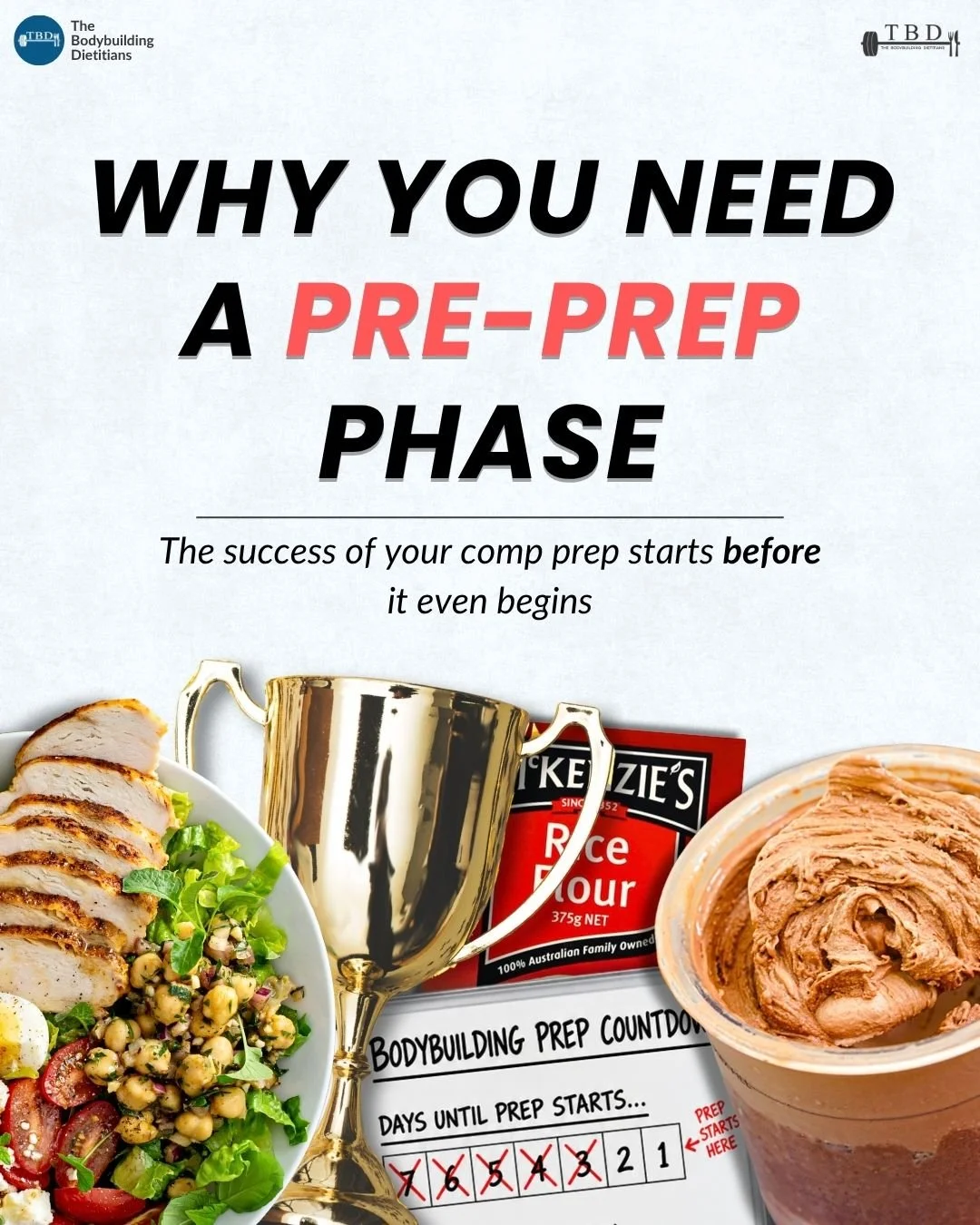
Preparation in bodybuilding applies not only to contest prep itself, but to the phase before it begins. That earlier block, the pre-prep phase, is one of the most underused parts of a competitive year, and it is where a great deal of what determines how a prep goes is put in place. A competitor who arrives at prep with the fundamentals already running moves through it far more smoothly than one who begins with loose routines and unresolved habits, then spends the early weeks correcting problems while the deficit is already underway.
This article covers what a pre-prep phase is, why it matters, how to run one, and which variables should be left to change once prep starts. It assumes the decision to compete has already been made. Working out whether you are ready to commit to a prep in the first place is a separate question, and our article on assessing readiness before a prep covers that decision in full. This piece picks up from there, focused on the block itself and how to execute it well.
Contest prep is the dieting phase, typically run over 15 to 20 or more weeks, in which a competitor reduces body fat to stage condition while preserving the muscle built during the improvement season. The pre-prep phase is the bridge into it.
What Is a Pre-Prep Phase?
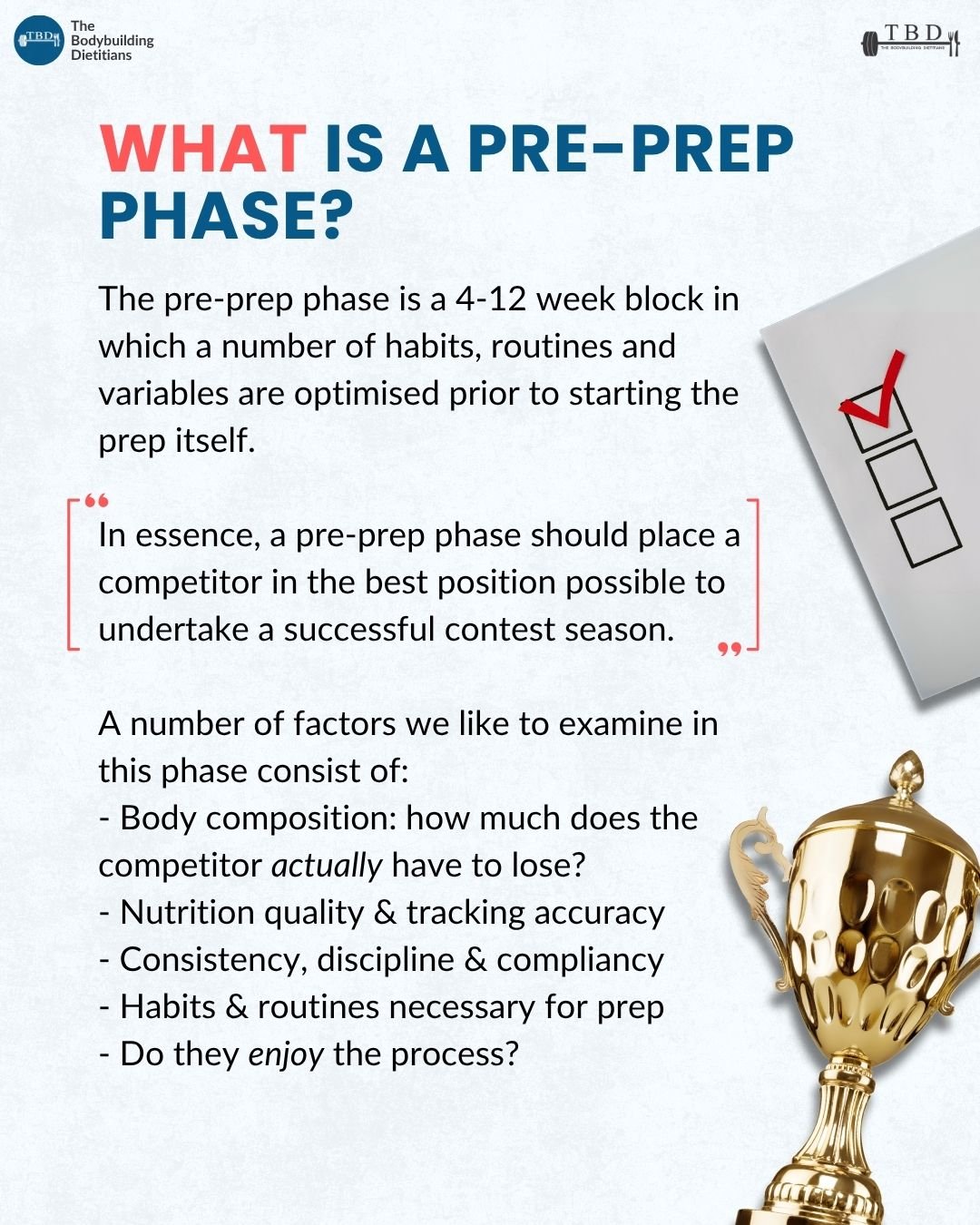
A pre-prep phase is a structured block of roughly 4 to 12 weeks, run immediately before contest prep, in which the habits, routines, and starting position that prep depends on are optimised and tested. It sits between the improvement season and prep, and its job is to place a competitor in the best possible position to undertake a successful contest season.
Foundational behaviours are built during the improvement season, over months of training and eating. The pre-prep phase is where those behaviours are put under the microscope rather than assumed to be in place. Is tracking being done accurately? Are meals consistent and repeatable? Is training execution aligned with the goal ahead? Is recovery dialled in? These are the systems that have to hold up under the pressure of a sustained deficit, and the pre-prep window is the last comfortable opportunity to confirm they will.
The phase examines a specific set of factors: how much a competitor has to lose to reach stage condition, the quality and accuracy of their nutrition, their consistency and compliance, the habits and routines that prep will demand, and whether they enjoy the process. Some of these are physical and measurable, others are behavioural and harder to quantify, but each one influences how prep unfolds. Assessing them while there is still time to adjust is the entire point of running the phase as a distinct block rather than folding it into the first weeks of prep.
Why Does a Pre-Prep Phase Matter?
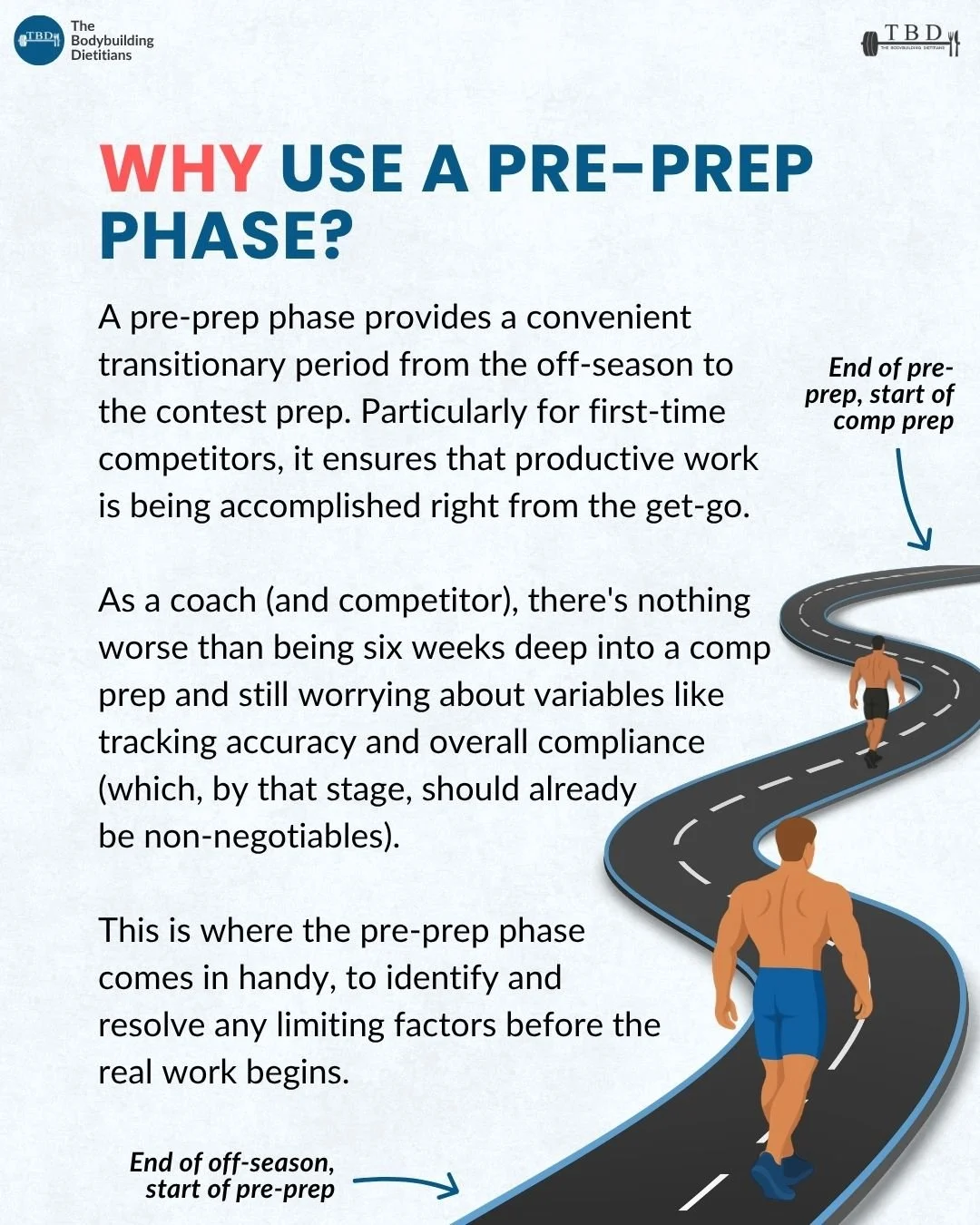
A pre-prep phase matters because it provides a genuine transition from the off-season into prep, rather than a hard switch that assumes everything is ready on day one. This is particularly valuable for first-time competitors, who often have no established prep routines to fall back on, but it applies to experienced competitors returning from a long off-season as well.
The cost of skipping it shows up early in prep and is difficult to recover from. There is little worse, as both a coach and a competitor, than being six weeks into a prep and still contending with variables like tracking accuracy and overall compliance that should already be settled by that stage. By six weeks in, those things need to be non-negotiable, because the deficit is deepening, hunger is rising, and attention is needed for the actual work of prep rather than for fundamentals that could have been locked in beforehand. Every early prep week spent fixing a system that should already have been running is a week of productive deficit effectively lost.
The pre-prep phase exists to identify and resolve those limiting factors before the real work begins. When a competitor reaches the start of prep and the systems are already holding, the deficit can do its job without competing for attention with basic execution. This is where structured bodybuilding coaching earns much of its value, because a coach's role in this window is to surface the weak points a competitor may not see in themselves and resolve them while there is still room to do so comfortably.
Worried You'll Spend the First Month of Prep Playing Catch-Up?
The competitors who struggle most are often the ones fixing tracking, meal consistency, or an out-of-range starting weight once the deficit has already started. Our team uses the pre-prep window to get those systems holding first, so prep begins from a settled base rather than a scramble, as part of how we prepare our competitors.
How Do You Run a Pre-Prep Phase?
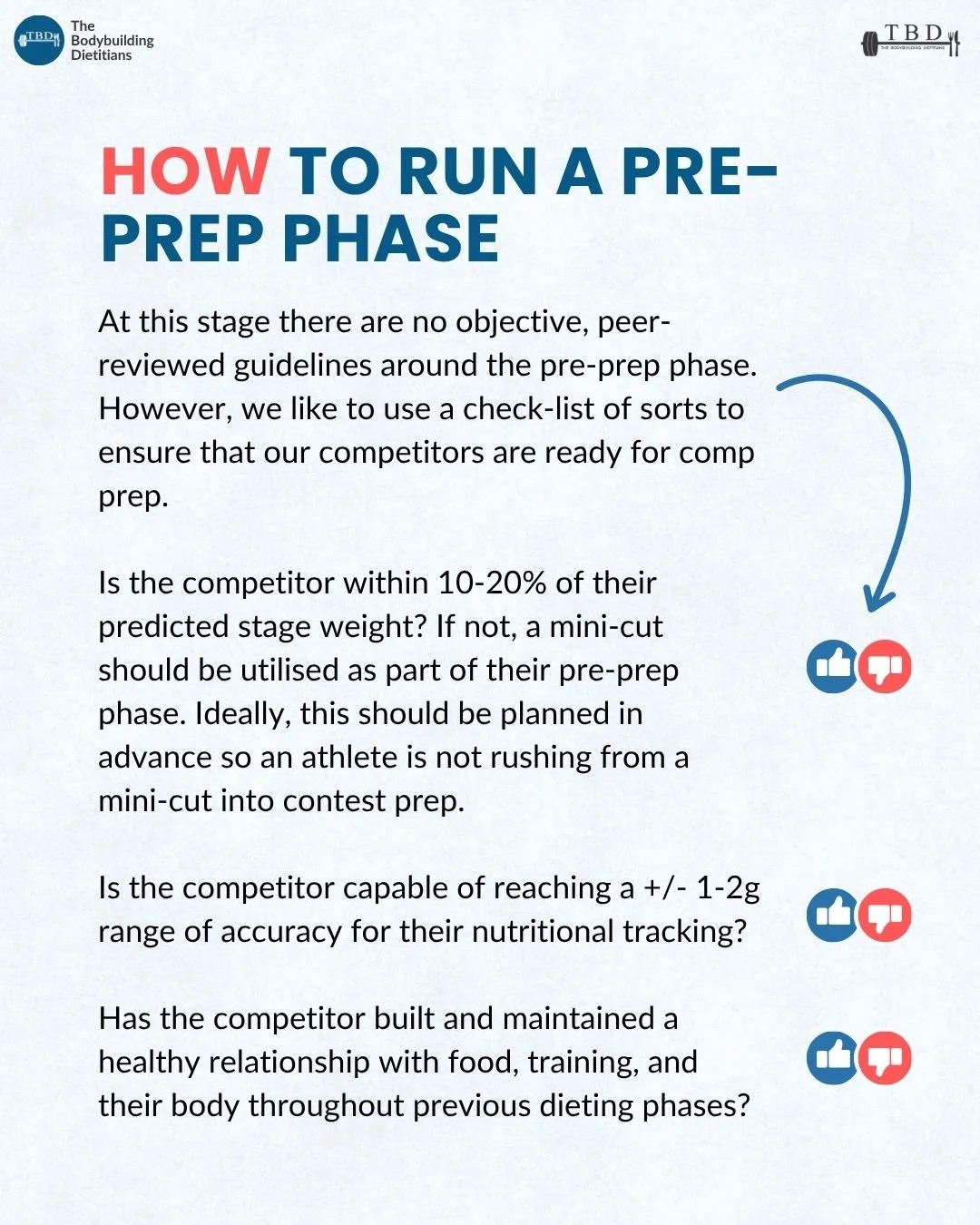
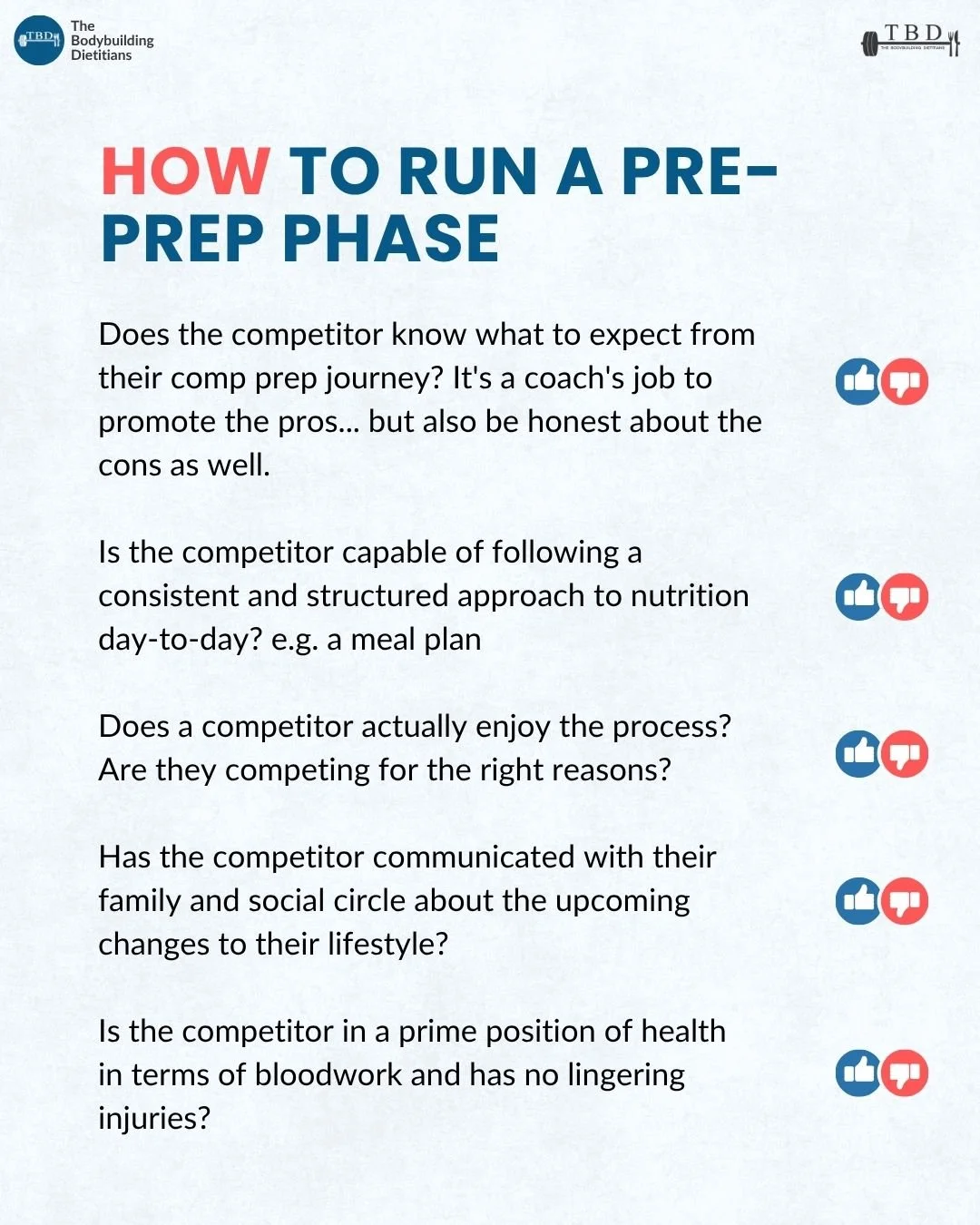
There are no objective, peer-reviewed guidelines for the pre-prep phase, so what follows is a practical framework rather than a validated protocol. The most useful way to run one is as a checklist of the systems and conditions that prep will demand, worked through in the weeks before prep begins. The checks fall into four broad areas.
Starting body composition. The first question is how much a competitor actually has to lose. A competitor within roughly 10 to 20 percent of their projected stage weight is generally in a workable position to begin prep at a controlled rate of loss. If they sit further out than that, a mini-cut within the pre-prep window is the tool to bring them back into range, and it is worth planning in advance so the athlete is not rushing straight from a mini-cut into contest prep with no buffer between them. Our guide to running a mini-cut covers how to execute that block without stalling progress or arriving at prep depleted.
Systems and accuracy. The next area is whether the day-to-day machinery of prep is in place. Can the competitor track their nutrition to within a gram or two of accuracy, rather than estimating loosely? Are their meals consistent and repeatable enough to run under fatigue? Can they follow a structured approach day to day, such as a meal plan, without it falling apart on a difficult day? These systems are the difference between a prep that runs on autopilot and one that requires constant conscious effort at exactly the point when conscious effort is in short supply.
Mindset and relationship with the process. Some of the most important checks are the least measurable. Has the competitor built and maintained a healthy relationship with food, training, and their body through previous dieting phases? Do they enjoy the process, and are they competing for reasons that will hold up when prep becomes difficult? Do they know what to expect from the journey ahead, including an honest account of the difficulties rather than only the appealing parts? A coach's job is to promote the benefits of competing while being honest about the costs, and the pre-prep window is the right time for that conversation. Communication with family and the wider social circle about the coming lifestyle changes also belongs here, since prep affects far more than the competitor alone.
Health and physical readiness. The final area is whether the competitor is in a strong position of health to begin a demanding phase. Recent bloodwork sitting in a healthy range, and the absence of lingering injuries that a deficit and increased training or cardio could aggravate, are both worth confirming before prep starts rather than discovering partway through. Starting a prep from a compromised health baseline narrows the margin for everything that follows.
What Should Change When Comp Prep Actually Begins?
The clearest sign of a well-run pre-prep phase is how little has to change when prep starts. When the groundwork is in place, only a handful of variables should need to shift going into the prep itself.
Those variables are few and specific: a moderate reduction in calories to establish the deficit, a gradual increase in daily steps and cardio, more frequent posing practice, and greater precision in tracking. Everything else, the discipline, the structure, the mindset, and the daily habits, should already be in motion. The competitor is not learning to track, building meal consistency, or renegotiating their relationship with the process at the same time as absorbing a deficit. Those things are already handled, so the limited energy that a deficit leaves can go toward the changes that actually drive prep.
The useful way to picture this is a running start. A competitor who has run a proper pre-prep phase reaches the start of prep already up to speed, moving when the gun goes off rather than accelerating from a standstill. One who skips it starts flat-footed, spending the first weeks building momentum that could have been established in advance, often while the deficit makes everything harder to learn. Across a full prep, that difference compounds, and it is one of the larger advantages a competitor can give themselves before a show. For a wider view of how pre-prep fits alongside the improvement season, prep, and recovery across a competitive career, our article on the phases of a bodybuilding career sets out how each one contributes.
Practical Takeaways
A pre-prep phase is a structured block of roughly 4 to 12 weeks, run before contest prep, to optimise and test the habits, systems, and starting position that prep depends on.
Its purpose is to resolve limiting factors before the deficit begins, so no early prep weeks are lost to fixing tracking, meal consistency, or an out-of-range starting weight.
Confirm the competitor is within roughly 10 to 20 percent of projected stage weight, and use a planned mini-cut within the window if they are not, rather than rushing into prep.
Lock in tracking accuracy to within a gram or two, consistent and repeatable meals, and a structured day-to-day approach that holds up under fatigue.
Check the less measurable foundations too: a healthy relationship with food and body, genuine enjoyment and sound reasons for competing, clear expectations, family communication, and a strong health and injury baseline.
When pre-prep is done well, only a few variables shift into prep: a moderate calorie reduction, a gradual increase in steps and cardio, more posing practice, and tighter tracking. Everything else is already running.
Frequently Asked Questions
How long should a pre-prep phase be?
A pre-prep phase typically runs for around 4 to 12 weeks before contest prep begins. The right length depends on how much needs to be resolved, particularly whether a mini-cut is required to bring starting body composition into range. A competitor with systems already close to prep-ready needs a shorter window, while one with more to address, or further from stage weight, benefits from the longer end of that range.
What is the difference between a pre-prep phase and contest prep?
Contest prep is the dieting phase itself, in which a competitor holds a deficit to reduce body fat to stage condition while preserving muscle. The pre-prep phase is the block immediately before it, used to get the habits, tracking, starting body composition, and health foundations in place so that prep can begin from a settled base. Pre-prep is preparation and positioning, whereas prep is the sustained deficit and the work of reaching stage condition.
How lean should you be before starting contest prep?
A common working range is to begin prep within roughly 10 to 20 percent of projected stage weight, which keeps the rate of loss required through prep controlled enough to protect muscle. A competitor further out than this generally benefits from a mini-cut during the pre-prep window to bring them into range, planned in advance so there is a buffer before prep starts rather than a rush from one phase straight into the next.
Do I need a pre-prep phase for my first competition?
First-time competitors tend to benefit most from a pre-prep phase, because they usually have no established prep routines and the most fundamentals to put in place. Running the phase ensures that the early weeks of prep are productive rather than spent learning to track, building meal consistency, and adjusting to structure while also managing a deficit. Experienced competitors returning from a long off-season also benefit, though they may need a shorter window.
What should change when contest prep actually begins?
When a pre-prep phase has been run well, only a handful of variables should shift going into prep: a moderate reduction in calories, a gradual increase in steps and cardio, more frequent posing practice, and greater precision in tracking. The structure, discipline, mindset, and daily habits should already be running, which is what allows the competitor to begin prep with momentum rather than building it from scratch.
Is a pre-prep phase evidence-based?
There are no objective, peer-reviewed guidelines specifically for the pre-prep phase, so it is best understood as a practical coaching framework rather than a validated protocol. Its components, such as controlled rates of loss, established tracking, and health screening before a demanding phase, are each well supported, and the phase organises them into a structured window before prep. It reflects applied coaching experience of what makes a prep run smoothly rather than a single body of research.
If you would like help setting up a pre-prep phase that has you arriving at your next prep already up to speed, our team can build that block with you and carry it through into the prep itself. Enquire about coaching or book a consultation to get started.