Some nutrition ideas are repeated so often that they harden into rules, even when the underlying science is more nuanced or has moved on. This guide works through five worth understanding properly, covering protein absorption, processed meat and cancer risk, the calorie content of grains, fat-soluble vitamin absorption, and hydration.
Five nutrition points are worth understanding more precisely than they are usually presented. First, the body is not limited to absorbing 25 grams of protein per meal; muscle protein synthesis peaks at around 20 to 40 grams, but larger amounts are still digested and used for other functions, so total daily protein of roughly 1.6 to 2.4 grams per kilogram matters more than any per-meal cap. Second, the World Health Organisation classifies processed meat as a Group 1 carcinogen, which reflects the strength of evidence that it can cause colorectal cancer rather than the size of the risk, with each 50 grams eaten daily associated with roughly an 18 percent relative increase. Third, most whole grains such as oats, quinoa, brown rice, and wholemeal pasta contain a similar number of calories per gram of raw weight, so the meaningful differences between them are micronutrients, fibre, and glycaemic response rather than energy. Fourth, vitamins A, D, E, and K are fat-soluble and absorbed better when eaten alongside some dietary fat, so a very low-fat meal built around vegetables can leave some of those vitamins under-absorbed. Fifth, hydration comes from many foods and drinks rather than plain water alone, and thirst combined with pale yellow urine is a reasonable everyday guide for most people, though it is less reliable for athletes, older adults, and those in hot climates.

Nutrition information reaches most people in fragments, through headlines, packaging claims, and advice passed between training partners, and some of those fragments are accurate while others are simplified to the point of being misleading. The five points below are each worth understanding with a little more precision than they usually get, because the nuance changes how you might apply them.
None of this requires a background in nutrition science to follow. The aim is to give each idea the context it needs so that a reasonable everyday decision, such as how much protein to put in a meal or whether to add oil to a salad, is made on accurate footing rather than a half-remembered rule.
Can Your Body Only Absorb 25 Grams of Protein Per Meal?
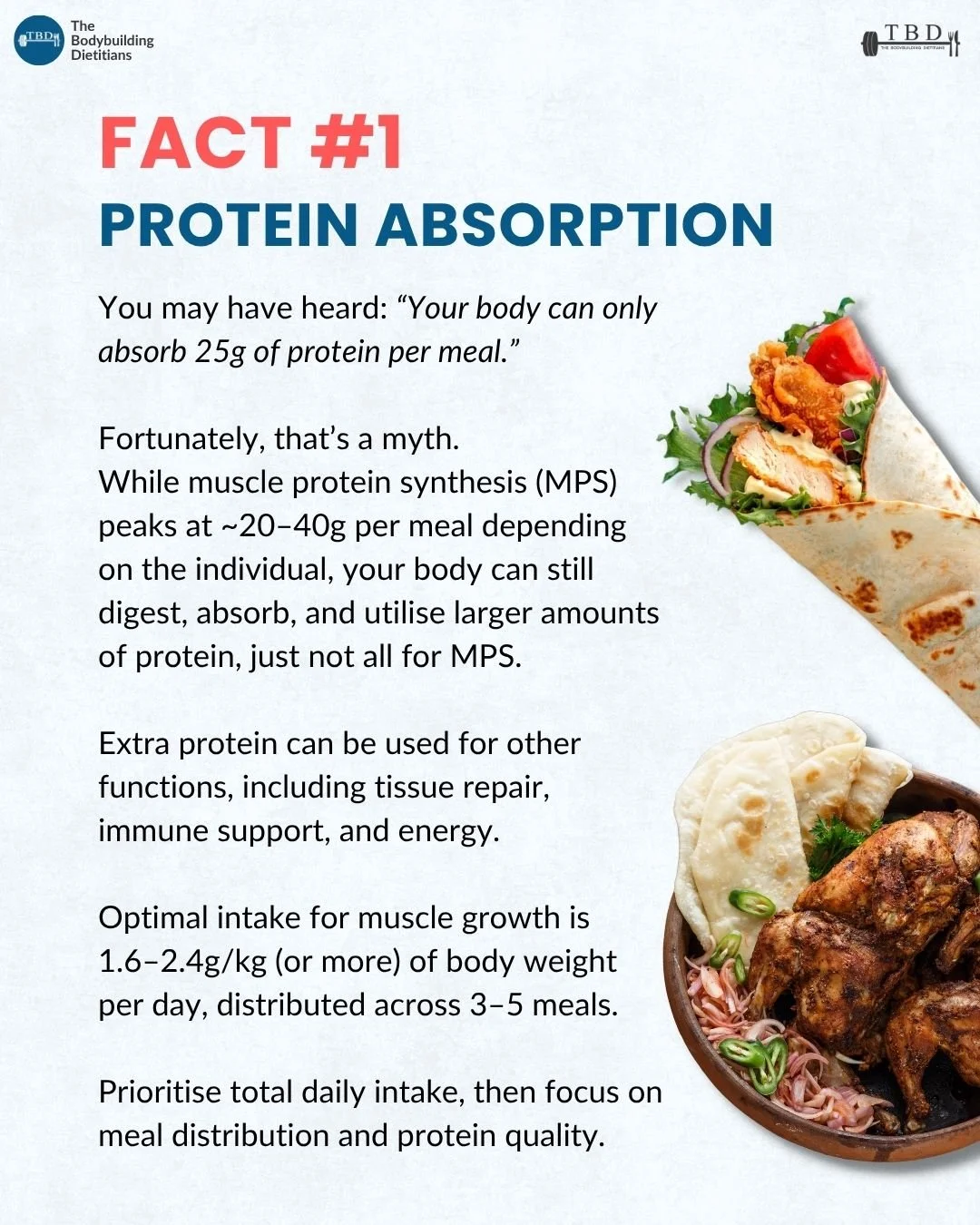
No. The idea that the body can only use 25 grams of protein per meal is one of the most persistent myths in nutrition, and it conflates two different processes. The body can digest and absorb far more than 25 grams; what has an upper limit is the rate at which a single meal maximally stimulates muscle building.
Muscle protein synthesis is the biological process through which dietary protein stimulates the repair and growth of skeletal muscle. It tends to peak at roughly 20 to 40 grams of high-quality protein in a single sitting, depending on factors such as body size, the protein source, and training status. Protein eaten beyond that point is not wasted or stored as fat by default. It is still digested, absorbed, and put to use for functions including tissue repair, immune support, the production of enzymes and hormones, and energy.
The practical implication is that total daily protein intake matters more than any per-meal ceiling. Research consistently supports a daily intake of around 1.6 to 2.4 grams of protein per kilogram of bodyweight to support muscle growth and retention in people who train. Distributing that across three to five meals is a reasonable way to keep individual servings in the range that stimulates muscle building well, but hitting the daily total is the priority, and the distribution is a refinement rather than a rule to stress over. For a closer look at what happens to protein eaten beyond the amount used for muscle building, our article on where excess protein goes covers the metabolism in more detail.
A daily protein intake of approximately 1.6 grams per kilogram of bodyweight supports resistance-training adaptations, with additional intake up to around 2.2 grams per kilogram offering a margin that suits many physique-focused individuals. Source: Morton et al., 2018, British Journal of Sports Medicine.
Spreading Your Protein Thin Because of the 25g Rule?
If you have been capping protein per meal or building your day around hitting an exact number at each sitting, you may be adding effort without benefit. Our team sets protein targets and meal structures around your total intake, training, and preferences rather than a one-size rule, as part of how we build nutrition for coaching clients.
Does the Processed Meat Cancer Classification Mean It Is as Dangerous as Smoking?
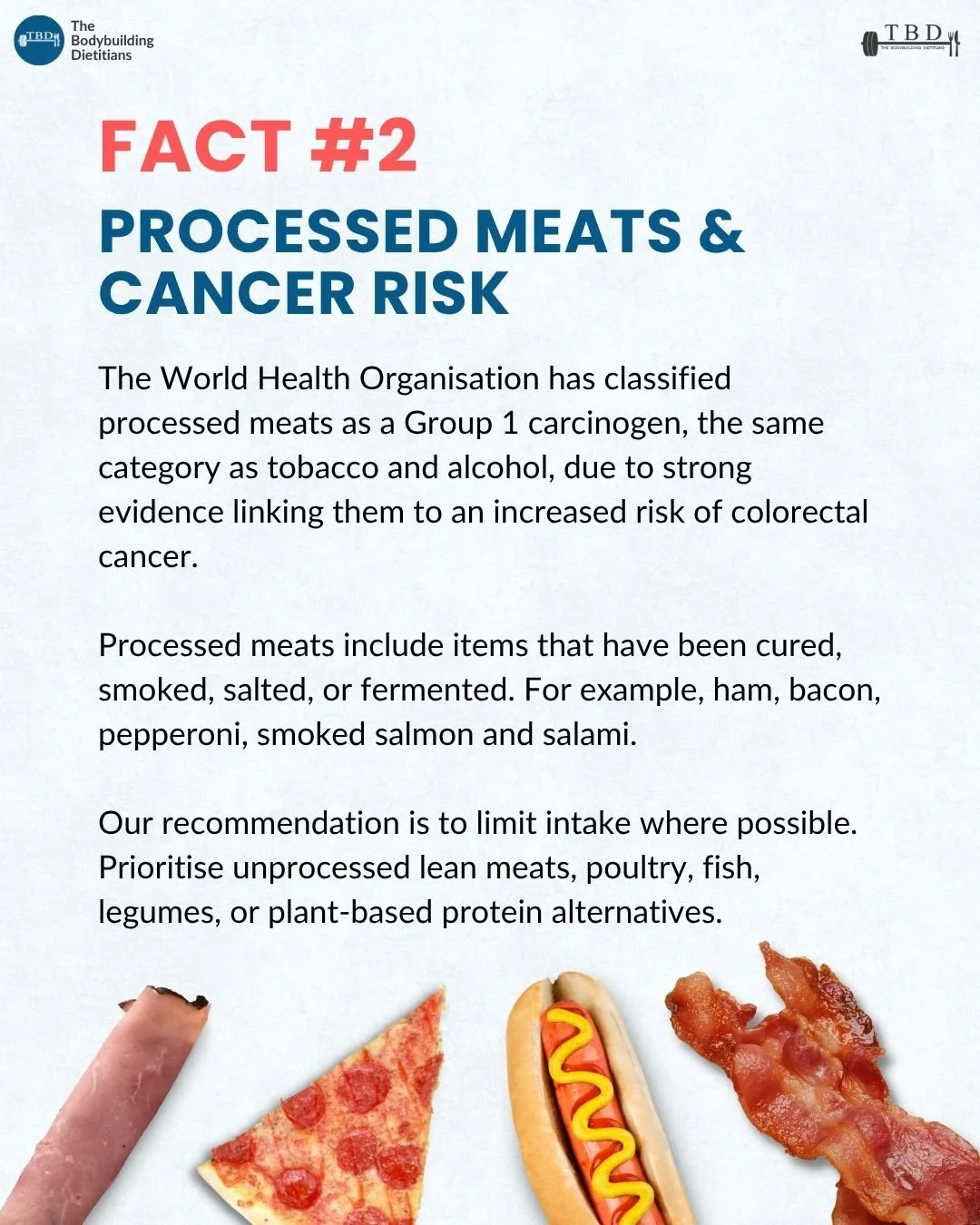
No, and this is the point most often lost in how the classification is reported. The World Health Organisation, through the International Agency for Research on Cancer, classifies processed meat as a Group 1 carcinogen, which places it in the same evidence category as tobacco and alcohol. That category describes how confident the evidence is that something can cause cancer, not how large the risk is.
This distinction between hazard and risk is worth holding onto. A Group 1 classification means there is strong, consistent evidence that processed meat can contribute to cancer, specifically colorectal cancer. It does not mean the size of the effect is comparable to smoking. The estimated increase in colorectal cancer risk is around 18 percent for each 50 grams of processed meat eaten daily, which is a meaningful figure at a population level but a modest one for an individual, and the agency itself has described the individual risk as relatively small.
Processed meat refers to meat preserved by curing, smoking, salting, or fermentation, which includes ham, bacon, pepperoni, salami, and smoked salmon. The practical takeaway is one of moderation rather than elimination. Limiting processed meat where it is easy to do so, and building most meals around unprocessed lean meats, poultry, fish, legumes, or plant-based protein sources, is a sensible response that fits the strength of the evidence without overstating the individual risk. For a fuller discussion of colorectal cancer risk factors and why they are drawing attention in younger adults, our article on bowel cancer in people under 50 covers the topic in depth.
The International Agency for Research on Cancer classifies processed meat as Group 1 (carcinogenic to humans) and red meat as Group 2A (probably carcinogenic), with each 50 gram daily portion of processed meat associated with an approximately 18 percent higher relative risk of colorectal cancer. Source: IARC / World Health Organisation, 2015.
Do Different Grains Really Contain Similar Calories?
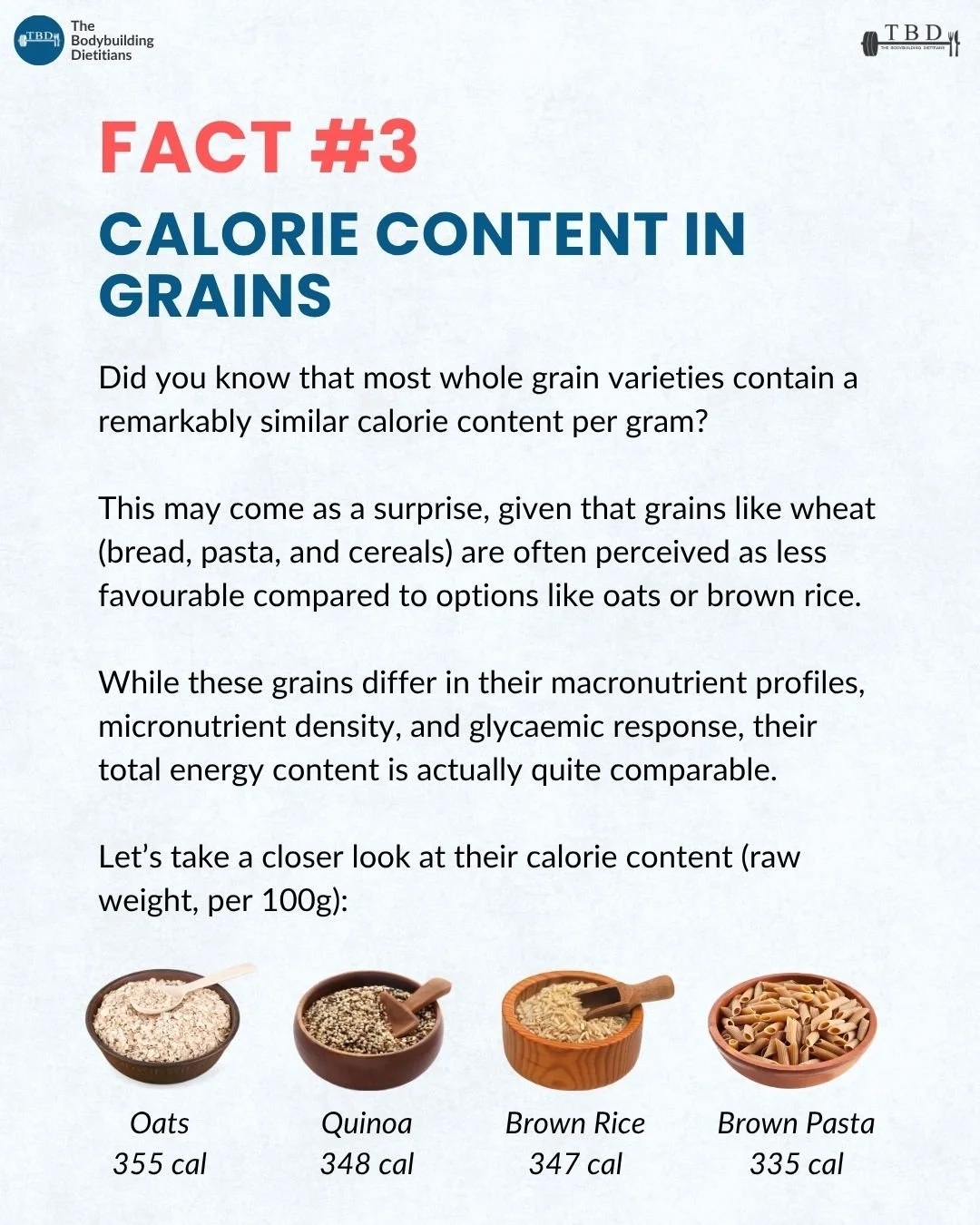
Yes, more than most people expect. Measured by raw, dry weight, most common whole grains sit within a narrow calorie range. Oats come in at around 355 calories per 100 grams, quinoa around 348, brown rice around 347, and wholemeal pasta around 335, which is a smaller spread than the reputations of these foods would suggest.
Grains are often ranked against each other as though some are inherently more fattening, with wheat-based foods such as bread and pasta frequently viewed less favourably than oats or brown rice. On energy content per gram of raw weight, that hierarchy does not hold. Where these grains genuinely differ is in their micronutrient density, their fibre content, and their glycaemic response, which is the speed and degree to which they raise blood glucose. Those differences matter for health, satiety, and how a food fits into a day, but they are separate from calories.
One practical point makes this easier to apply. These figures are for raw weight, and cooked calorie density varies because different grains absorb different amounts of water during cooking. Rice and pasta take on more water than oats per gram of dry product, so a cooked cup of one is not calorie-equivalent to a cooked cup of another even though the dry weights were similar. Weighing grains dry, or knowing the cooked conversion for the specific product, keeps calorie tracking accurate. For a broader reference on how foods compare across macronutrients, our macro reference guide sets out where common foods sit.
Do You Need Dietary Fat to Absorb Certain Vitamins?
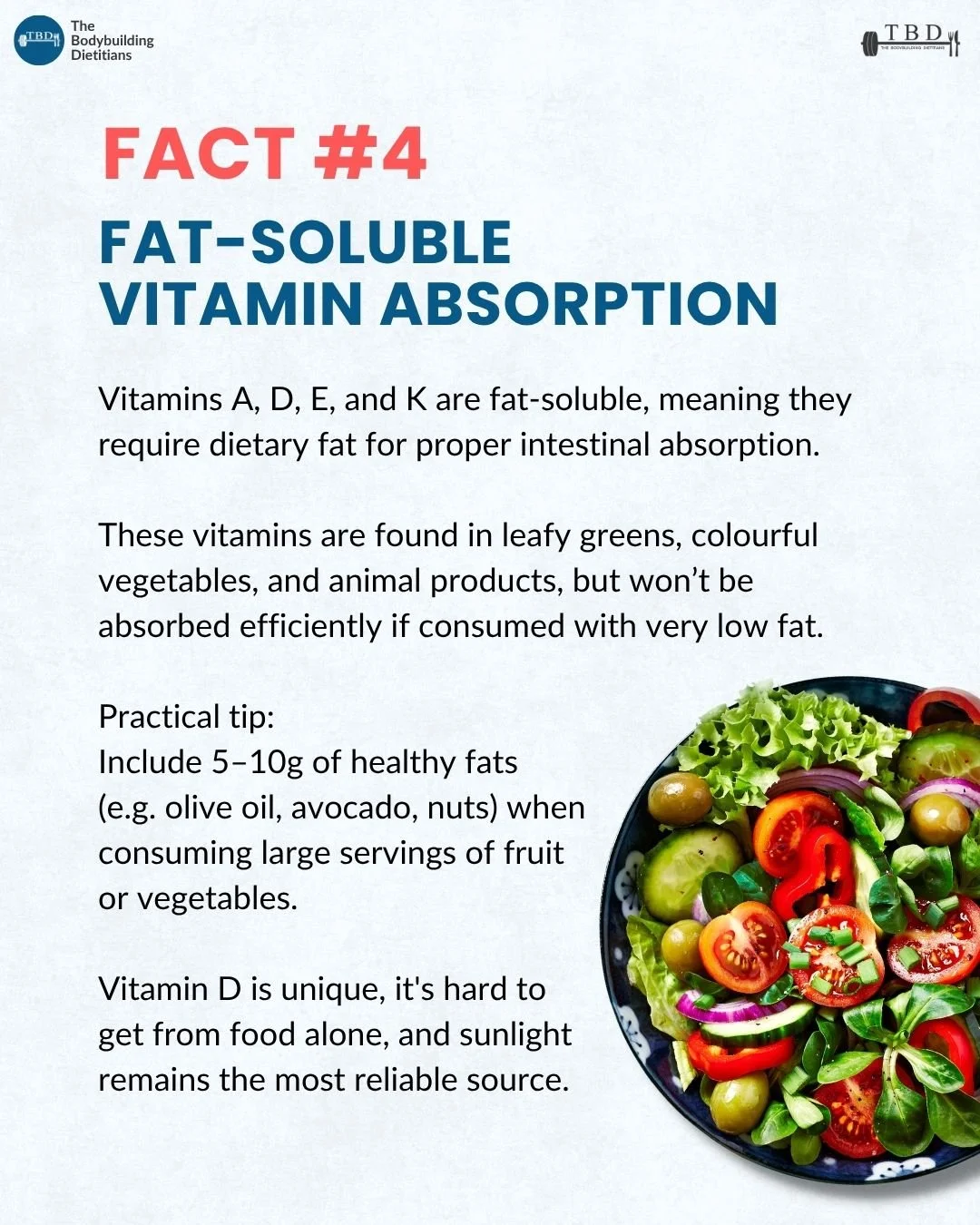
Yes, for some of them. Vitamins A, D, E, and K are fat-soluble, which means the body absorbs them more effectively in the presence of dietary fat. A meal built around vegetables and fruit with very little fat can leave a portion of these vitamins under-absorbed, even when the food itself is rich in them.
Fat-soluble vitamins are vitamins that dissolve in fat and are absorbed through the intestinal wall alongside dietary fat, in contrast to water-soluble vitamins such as vitamin C and the B group. They are found in leafy greens, brightly coloured vegetables, and animal products, and the carotenoids in vegetables that the body converts toward vitamin A are a good example of nutrients whose absorption improves markedly when some fat is present.
In practice, this is straightforward to account for. Including around 10 to 15 grams of fat with a large serving of vegetables or fruit, from a source such as olive oil, avocado, nuts, or seeds, supports the absorption of the fat-soluble vitamins in that meal. This is one of the quieter arguments against very low-fat approaches to eating, since they can compromise the nutritional return on an otherwise excellent plate of vegetables. Vitamin D deserves a separate note, because it is difficult to obtain in meaningful amounts from food, and sunlight exposure remains the most reliable source for most people.
Does Hydration Come Only From Plain Water?
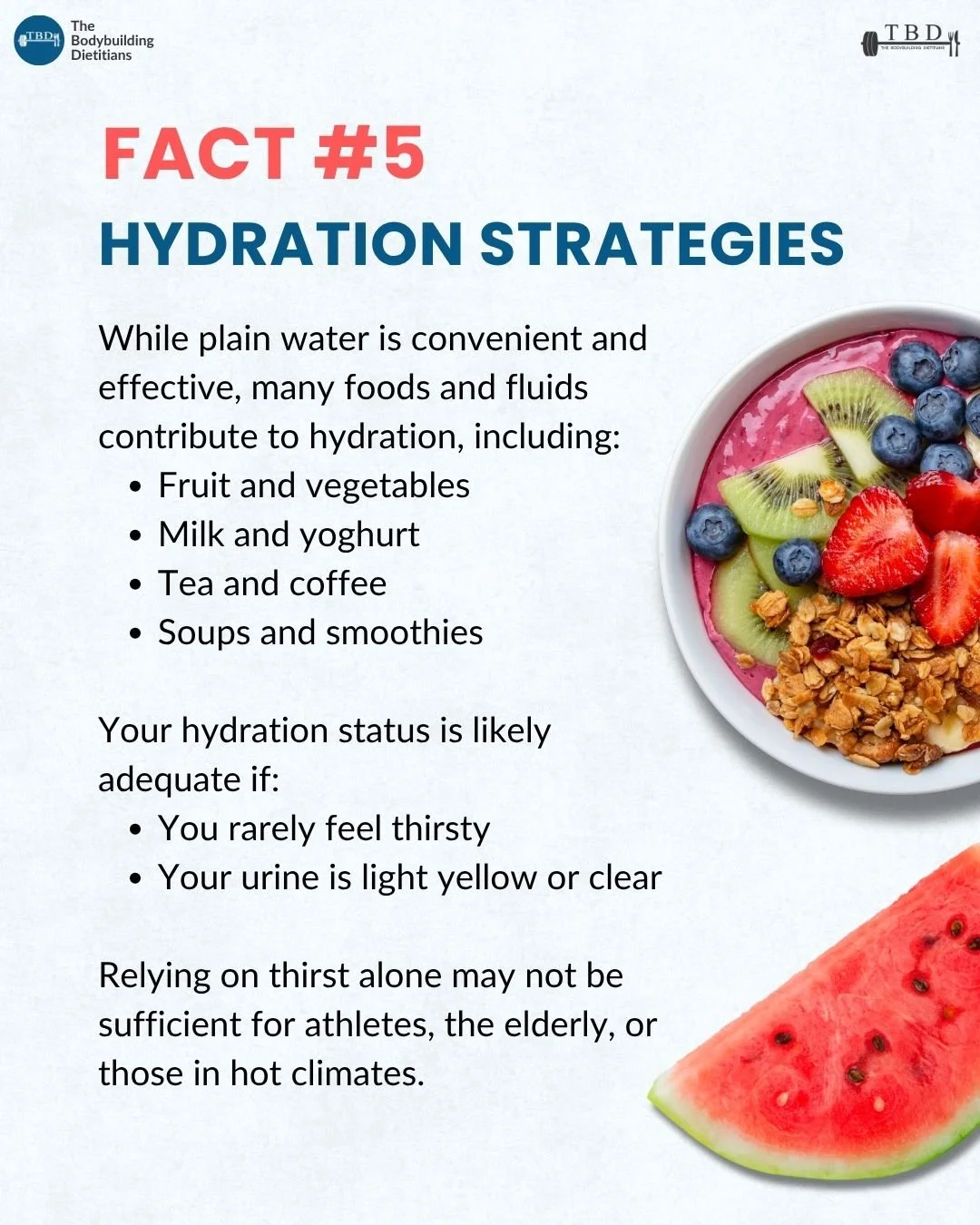
No. Plain water is a convenient and effective way to stay hydrated, but it is far from the only contributor. A large share of daily fluid comes from food and other drinks, including fruit and vegetables with high water content, milk and yoghurt, soups and smoothies, and, contrary to a common belief, tea and coffee.
The idea that caffeinated drinks are net dehydrating does not hold at normal intakes. The mild diuretic effect of moderate caffeine is outweighed by the fluid volume of the drink itself, so a coffee or tea counts toward hydration for most people. This broadens the picture usefully, because it means hydration is rarely as fragile or as effortful as it is sometimes made to sound.
For everyday purposes, two simple markers cover most people. Rarely feeling thirsty, combined with urine that is a pale yellow, suggests hydration is adequate. Urine that is consistently clear can indicate drinking somewhat more than needed rather than a target to aim for, so pale yellow rather than colourless is the more useful goal. Thirst is a reliable enough guide for the general population, but it becomes less dependable for athletes with high sweat losses, for older adults whose thirst signalling weakens with age, and for anyone in a hot climate, where fluid needs can rise faster than thirst keeps up. In those situations, drinking to a plan rather than to thirst alone is the safer approach.
Practical Takeaways
The body absorbs far more than 25 grams of protein per meal. Muscle protein synthesis peaks at around 20 to 40 grams, but total daily intake of roughly 1.6 to 2.4 grams per kilogram matters more than any per-meal amount.
Processed meat's Group 1 classification reflects the strength of the evidence that it can cause colorectal cancer, not that its risk matches smoking. Around an 18 percent relative increase per 50 grams daily is meaningful at a population level but modest individually, so moderation rather than elimination is the sensible response.
Common whole grains contain similar calories per gram of raw weight, so choose between oats, rice, quinoa, and pasta on fibre, micronutrients, and glycaemic response rather than calories. Weigh grains dry for accurate tracking, since cooked calorie density varies with water absorption.
Vitamins A, D, E, and K are absorbed better with dietary fat, so include around 10 to 15 grams of fat with large vegetable or fruit servings. Vitamin D is hard to get from food, and sunlight remains the most reliable source.
Hydration comes from many foods and drinks, including tea and coffee at normal intakes. Infrequent thirst plus pale yellow urine is a reasonable everyday guide, though it is less reliable for athletes, older adults, and those in hot climates.
Frequently Asked Questions
How much protein can the body actually use in one meal?
The body digests and absorbs far more than the commonly cited 25 grams per meal. What has a ceiling is the rate at which a single meal maximally stimulates muscle building, which peaks at around 20 to 40 grams of high-quality protein. Protein beyond that amount is still used for functions such as tissue repair, immune support, and energy, so total daily intake is the priority over any per-meal limit.
Is processed meat really as dangerous as smoking?
No. Processed meat and tobacco share the same Group 1 classification because the evidence that both can cause cancer is strong, but the classification says nothing about the size of the risk. Smoking raises cancer risk enormously, whereas processed meat is associated with roughly an 18 percent higher relative risk of colorectal cancer per 50 grams eaten daily, which is modest at the individual level.
Are oats lower in calories than rice or pasta?
Not meaningfully, by raw weight. Oats, quinoa, brown rice, and wholemeal pasta all sit within a narrow calorie range per 100 grams dry. The genuine differences between them are in fibre, micronutrients, and glycaemic response rather than energy, so grain choice is better guided by those factors than by calories.
Why should I add fat to a salad or vegetable meal?
Vitamins A, D, E, and K are fat-soluble and absorbed more effectively when some dietary fat is present. Adding around 10 to 15 grams of fat, from olive oil, avocado, nuts, or seeds, to a large serving of vegetables or fruit helps the body absorb the fat-soluble vitamins in that meal, which is one reason very low-fat eating can reduce the nutritional return on an otherwise healthy plate.
Do tea and coffee count towards hydration?
Yes, at normal intakes. The mild diuretic effect of moderate caffeine is outweighed by the fluid volume of the drink, so tea and coffee contribute to daily hydration for most people. Fruit, vegetables, milk, yoghurt, soups, and smoothies also contribute meaningfully alongside plain water.
How do I know if I am drinking enough water?
For most people, rarely feeling thirsty combined with pale yellow urine is a reasonable indication that hydration is adequate. Consistently clear urine can suggest drinking more than needed rather than a target to aim for. Thirst is less reliable for athletes with high sweat losses, older adults, and people in hot climates, who benefit from drinking to a plan rather than to thirst alone.
If you would like help turning nutrition principles like these into a plan that fits your training, preferences, and goals, our team can build that structure with you. Enquire about coaching or book a consultation to get started.