The first time you diet is the hardest, because you are learning how you respond while also trying to get a result. This guide covers why dieting is a skill rather than a fixed set of rules, the specific skills that make it easier, and why each phase you complete makes the next one more manageable.
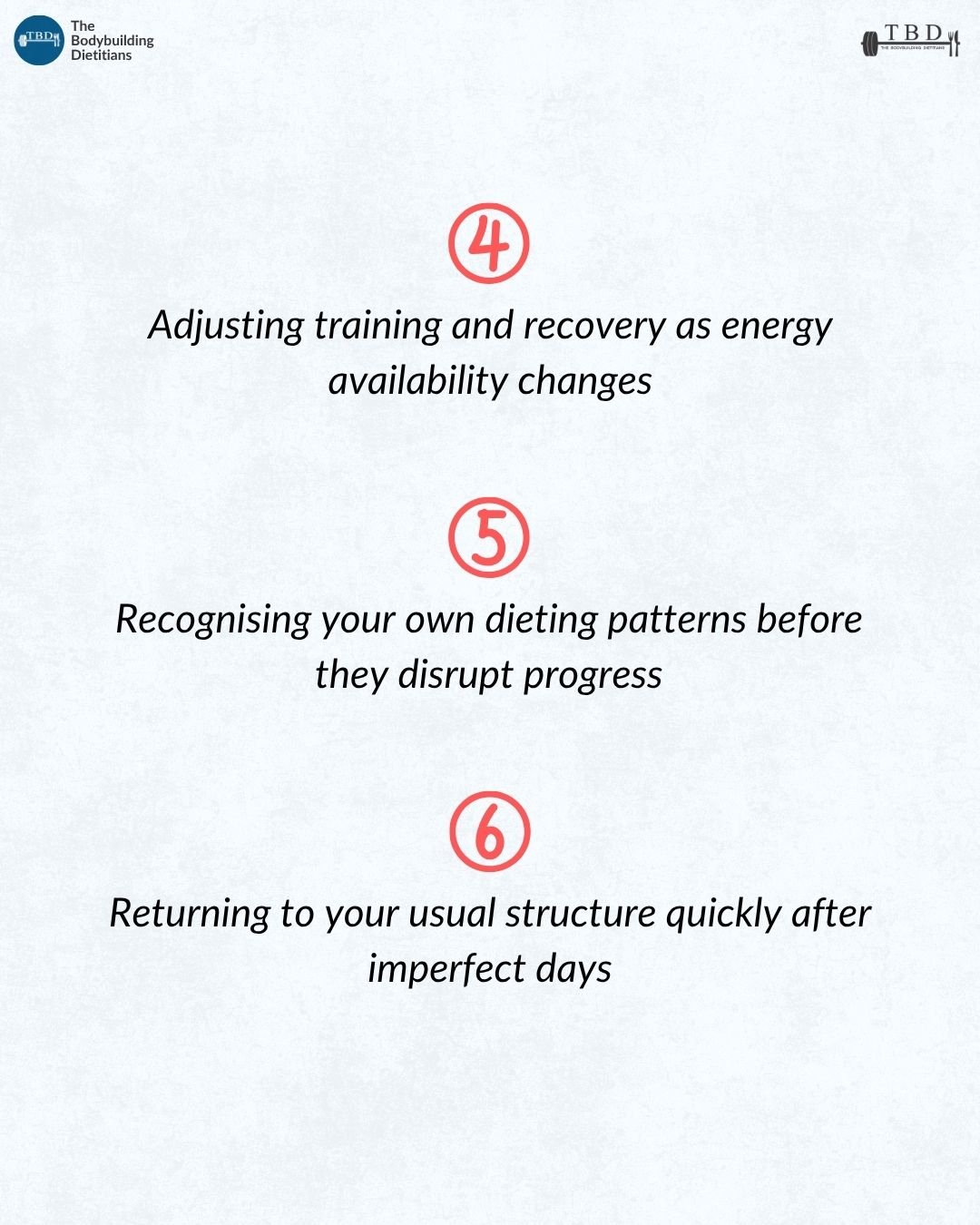
Dieting is a skill that improves with experience rather than a fixed set of rules you either follow or fail. The first time through is the hardest, because you are still learning what nutrition structure suits you, how your appetite changes as calories come down, how much flexibility you handle well, and which parts of your routine become harder to maintain. Over repeated phases, those things become much easier to recognise and manage. The specific skills that make dieting easier include managing hunger and fatigue without reactive eating, building meals and routines that make adherence easier, navigating weekends, restaurants, and social events while staying consistent, adjusting training and recovery as energy availability falls, recognising your own dieting patterns before they disrupt progress, and returning to your usual structure quickly after an imperfect day. These matter more as a diet becomes more demanding, because hunger rises, energy can fall, and staying consistent starts to require more thought. Every phase teaches you something about how you respond, which is what lets you spot problems earlier and manage the next phase better. This is also where coaching adds value beyond a calorie target, since an experienced coach has seen the common patterns, can anticipate where things get difficult, and helps build the skills that make each future phase easier.
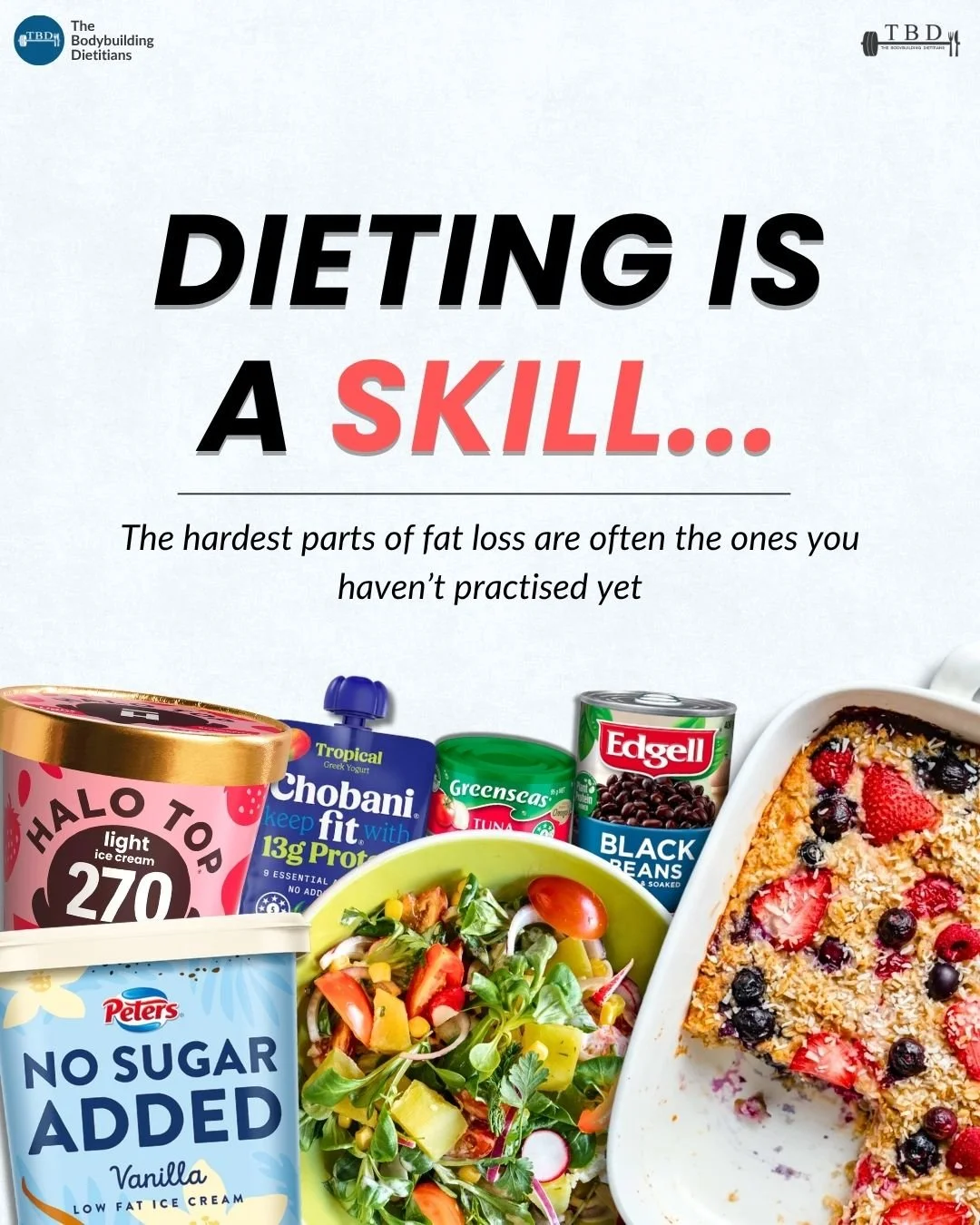
Dieting is a skill you can get better at. The first time you do anything, there is naturally more uncertainty, because you are still learning what works for you, and dieting is no different. That first phase means working out what nutrition structure suits you, how your appetite changes as calories come down, how much flexibility you handle well, what happens to your training and recovery, and which parts of your routine become hardest to maintain. All of that is being learned at the same time as you are trying to get a result, which is why the first diet usually feels the most confronting.
Over time, those things become much easier to recognise and manage. This article covers why dieting is a skill rather than a fixed set of rules, the specific skills that make it easier, why each phase you complete makes the next one more manageable, and where experience and coaching add value beyond a calorie target. For the technical side of executing a fat loss phase, such as setting the deficit, protein, and tracking, our four-skill framework for losing fat while keeping muscle covers the levers; this piece is about the experiential skills that develop around them.
Adaptive responses to dieting are the physiological and behavioural changes that build as a calorie deficit continues, including rising hunger, falling energy, and increased focus on food, all of which make the later stages of a diet more demanding than the early ones.
Why Is Dieting a Skill Rather Than a Set of Rules?
Dieting is a skill because the hard parts are not knowledge problems, they are execution problems that improve with practice. The things that make dieting hard are usually fairly predictable, and knowing the rules of a calorie deficit is rarely the limiting factor. Applying them consistently while hungry, tired, and busy is.
The longer a diet runs, the more hunger, food focus, and everyday disruptions start to influence the decisions you make around food. These are not failures of willpower or understanding, they are the normal consequences of a sustained deficit, and managing them well is a skill built through experience rather than a fact you can be told. Someone can know exactly what they should eat and still find the execution difficult when their appetite is elevated and their energy is low, which is the gap between knowing and doing that experience gradually closes.
This also explains why the difficulty is not constant. As a diet becomes more demanding, these skills start to matter even more. Hunger increases, energy can fall, and staying consistent starts to require more thought and planning than it did in the early weeks when the deficit was modest and motivation was high. The skills that carried you through the comfortable start are not always the ones that carry you through the harder middle and end, which is where practised skill makes the largest difference.
What Are the Skills That Make Dieting Easier?
Six skills do most of the work of making a diet manageable, and they tend to develop together across phases. They fall into three broad areas: managing the internal demands of a deficit, building structure that supports consistency, and understanding your own responses.
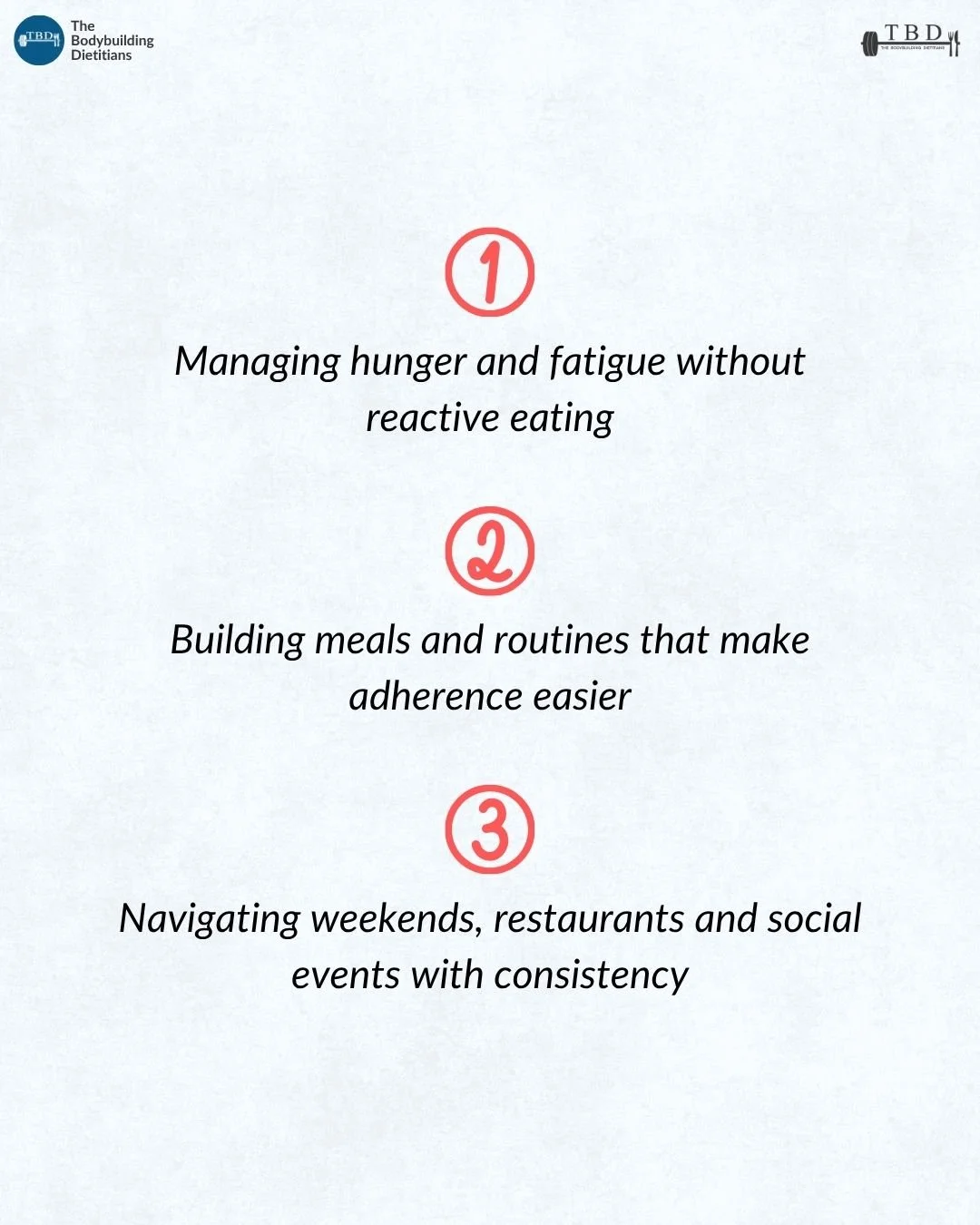
The first area is managing the internal demands. Managing hunger and fatigue without reactive eating is the skill of responding to elevated appetite and low energy with a plan rather than an impulse, which draws on understanding what is driving the urge to eat, a topic our guide to hunger and appetite covers in depth. Adjusting training and recovery as energy availability changes is the related physical skill of knowing when to hold training intensity, when to trim volume, and how to protect recovery as the deficit deepens.
The second area is building structure that supports consistency. Building meals and routines that make adherence easier is the skill of designing a way of eating you can sustain, rather than one that relies on willpower each day. Navigating weekends, restaurants, and social events with consistency is the skill of staying on track in the situations that most often derail a diet, without either avoiding social life or abandoning the plan. Returning to your usual structure quickly after imperfect days is the skill of treating an off day as a single data point rather than a reason to abandon the phase, which protects the consistency that drives results.
The third area is self-awareness. Recognising your own dieting patterns before they disrupt progress is the skill of spotting the specific ways your own dieting tends to come undone, whether that is reactive calorie cutting, weekend overshoot, or dropping training quality, before they cost you progress. The common patterns that show up here are covered in our article on the five lifter archetypes, which describes the recurring profiles that stall progress.
Why Does Each Dieting Phase Make the Next One Easier?
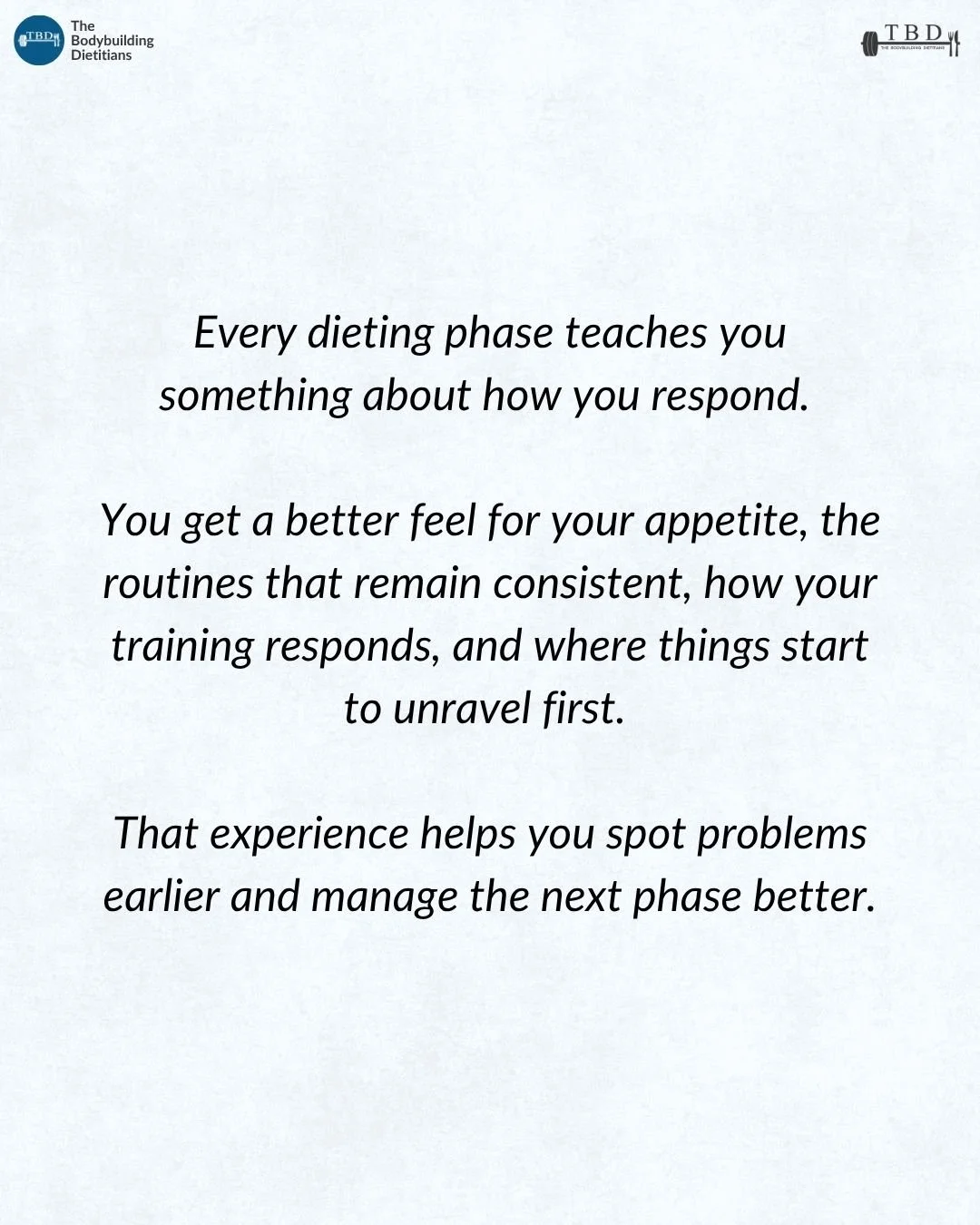
Every dieting phase teaches you something about how you respond, and that accumulated self-knowledge is what makes each subsequent phase more manageable. The physiology of a deficit does not get easier, but your ability to anticipate and manage it does.
With each phase, you get a better feel for your appetite and how it changes as calories come down, the routines that stay consistent for you and the ones that fall apart, how your training responds to lower energy, and where things tend to start unravelling first. That last point matters most, because knowing your own failure points in advance lets you build around them before they become problems rather than reacting after progress has already stalled. A competitor on their fifth prep is not working with better willpower than they had on their first, they are working with a map of how they personally respond, drawn from experience.
This is why the process still takes effort but feels far less confronting once you have been through it a few times. The uncertainty that made the first phase so demanding is largely replaced by familiarity. You know roughly what to expect, you have routines that have worked before, and you can tell the difference between a normal hard day and a genuine signal that something needs to change. That experience helps you spot problems earlier and manage the next phase better, which compounds over a training career.
Feel Like Every Diet Starts From Scratch?
If each fat loss phase feels as hard as the first, or you keep running into the same problems without quite knowing why, the missing piece is usually the skills rather than the plan. We help clients build those skills deliberately, and bring the pattern recognition from having guided many people through the same situations, as part of our weekly coaching.
What Can Experience and Coaching Add Beyond a Calorie Target?
The value of coaching lies less in the calorie target or meal plan, which can be calculated, and more in the guidance through the process and the skills a good coach helps you build. Setting a sensible deficit is the part that is easiest to work out and the part a tool could solve for you. The harder and more valuable part is everything that comes after the number is set.
An experienced coach has already helped many people through the same situations and has seen the common patterns that tend to arise along the way. That means they can use proven systems and frameworks, anticipate where things are likely to become difficult for a given person, and adjust the plan based on how you are responding, rather than leaving you to work everything out through trial and error over several uncomfortable phases. The experience shortcut is real: a coach can often recognise a pattern forming in a week that might otherwise take someone a full phase to learn the hard way.
This is the broader distinction between being handed instructions and being coached through a process, which our article on being told versus being coached covers in full. For a fat loss phase specifically, the practical value is having someone who can make sense of what is happening, guide you through the difficult stretches, and help you build the skills that make each future phase easier to manage on your own. That skill-building is ultimately what makes coaching worth more than the plan it produces, because it stays with you.
Practical Takeaways
Dieting is a skill that improves with experience, not a fixed set of rules. The first phase is hardest because you are learning how you respond while trying to get a result.
The hard parts of dieting are usually execution problems rather than knowledge problems, and they intensify as the deficit deepens and hunger rises.
Six skills make dieting easier: managing hunger and fatigue without reactive eating, building supportive meals and routines, navigating social situations, adjusting training and recovery, recognising your own patterns, and returning to structure after an off day.
These skills matter more as a diet becomes more demanding, when hunger increases, energy falls, and consistency requires more thought.
Every phase teaches you how you personally respond, which lets you spot problems earlier and manage the next phase with far less uncertainty.
Coaching adds value beyond the calorie target by bringing pattern recognition, proven systems, and guidance that builds the skills which make each future phase easier.
Frequently Asked Questions
Does dieting get easier the more you do it?
Yes, though not because the physiology changes. The hunger, lower energy, and food focus of a deficit are similar each time, but your ability to anticipate and manage them improves with experience. You learn which routines work for you, how your appetite behaves, and where your own dieting tends to come undone, which makes each phase feel far less confronting than the first.
Why is my first diet so hard?
The first diet is usually the hardest because you are learning how you respond at the same time as trying to get a result. You do not yet know what nutrition structure suits you, how your appetite will change, how much flexibility you handle well, or where your routine will come under strain. That uncertainty adds difficulty on top of the deficit itself, and it is largely replaced by familiarity in later phases.
What skills make fat loss easier?
The main skills are managing hunger and fatigue without reactive eating, building meals and routines that make adherence easier, staying consistent around weekends and social events, adjusting training and recovery as energy falls, recognising your own dieting patterns before they disrupt progress, and getting back to your usual structure quickly after an imperfect day. These develop together across phases and matter more as a diet becomes more demanding.
How do I stop one bad day from ruining my diet?
The skill is treating an off day as a single data point rather than a reason to abandon the phase, and returning to your usual structure at the very next meal rather than writing off the day or the week. Consistency across weeks drives fat loss, so one imperfect day has little impact unless it triggers a longer slide. Building the habit of a quick, calm return to structure protects the overall trend.
Is a coach worth it if I already know how to diet?
Knowing how to diet and executing it well through a demanding phase are different things, and that gap is where a coach adds value beyond a calorie target. An experienced coach brings pattern recognition from guiding many people through the same situations, can anticipate where things will get difficult for you, and adjusts the plan based on your response rather than leaving you to learn through trial and error. The value is in the guidance and skill-building, not the number itself.
Why does hunger get worse the longer I diet?
A sustained calorie deficit produces adaptive responses that increase hunger and food focus over time, alongside falling energy, as the body responds to reduced energy intake and loss of body fat. This is a normal physiological process rather than a failure of discipline. It is also why the skills of managing hunger and staying consistent matter more in the later stages of a diet than in the comfortable early weeks.
If you would like that kind of support through your own fat loss phase, with guidance that builds the skills to make each future diet easier rather than just a number to hit, our team can help. Enquire about our weekly coaching or book a discovery call to get started.