A second set of nutrition facts that are more useful than they first appear, covering why nuts may contain fewer calories than the label says, what the number on a fish oil bottle tells you, and four more worth understanding. Each one changes a practical decision, from reading a supplement label to meal prepping rice.
Six nutrition facts are worth understanding more precisely than they are usually presented. First, whole nuts often provide fewer absorbable calories than their label states, because some fat stays trapped within the cell walls and passes through undigested, with studies finding whole almonds deliver around 20% less energy than traditional calorie calculations predict. Second, a 1,000mg fish oil capsule may contain only around 300mg of the EPA and DHA that matter, so the combined EPA + DHA figure on the label is the number to compare, not the total fish oil. Third, lactose-free milk tastes sweeter because the added enzyme lactase splits lactose into glucose and galactose, which taste sweeter than lactose itself. Fourth, a supplement listing 1,000mg of a magnesium compound such as magnesium glycinate provides far less than 1,000mg of actual magnesium, since the elemental magnesium is only a fraction of the compound, so the elemental dose and the form are what matter. Fifth, cooling cooked rice forms resistant starch through retrogradation, which is less digestible in the small intestine, feeds gut bacteria, and can modestly lower the post-meal glucose response. Sixth, protein carries a higher energy cost to digest than carbohydrate or fat, with roughly 20 to 30% of its energy used in processing, which along with its strong effect on fullness makes it particularly useful during a fat loss phase.
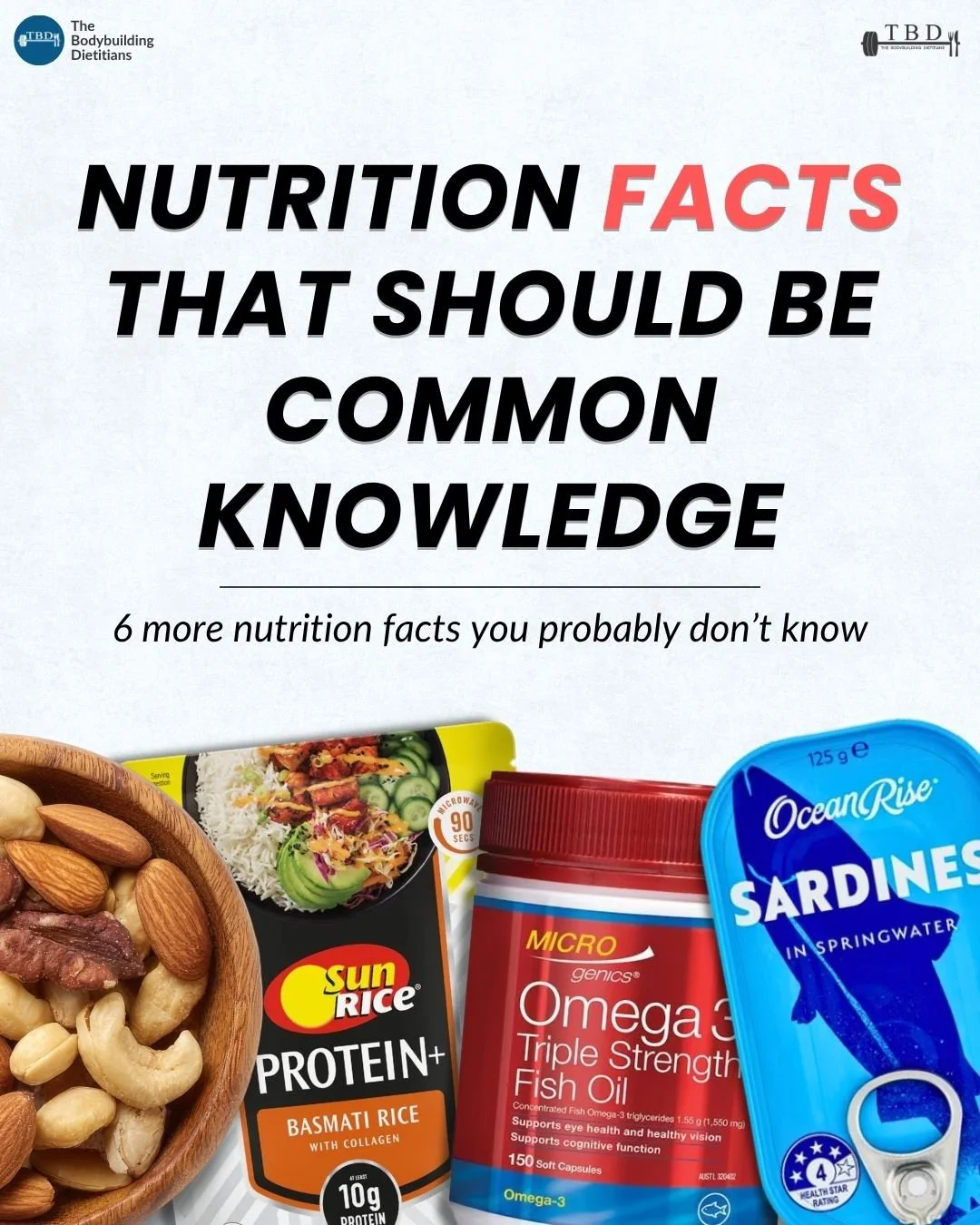
This is a second set of nutrition facts worth understanding more precisely than they usually get, following the first instalment in the series. As with the first, the point of each is not trivia but the practical decision it changes, whether that is how you read a supplement label, how you think about the calories in a handful of nuts, or how you prep your rice. For the first set, covering protein absorption, processed meat, grains, and more, our earlier article on nutrition facts worth knowing is the companion to this one.
None of what follows requires a background in nutrition science. Each fact is explained with the context that makes it useful, and the deeper articles are linked where a topic has one.
Do Nuts Have Fewer Calories Than the Label Says?
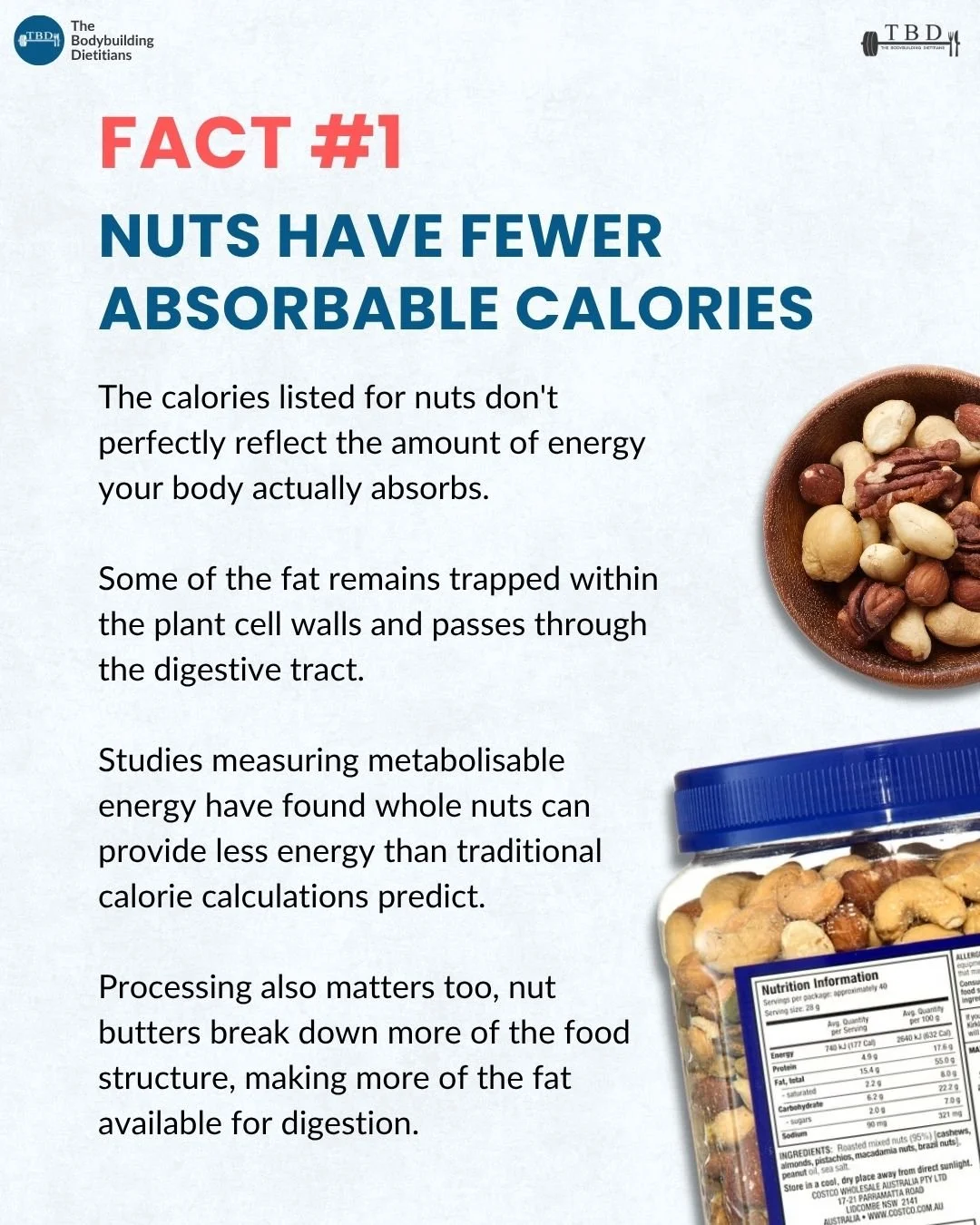
Often, yes. The calories listed for whole nuts do not perfectly reflect the energy your body absorbs from them, because some of the fat stays locked inside the nut's rigid cell walls and passes through the digestive tract without being absorbed.
Metabolisable energy is the energy a food actually provides after accounting for what is lost in digestion, which can differ from the calories calculated by the traditional Atwater system used on labels. For whole nuts, the difference is meaningful. The fat in a nut is held within intact plant cell walls, and unless those walls are broken down, a portion of that fat is never released for absorption and is excreted instead. Studies measuring metabolisable energy have consistently found that whole nuts deliver less energy than their labels predict.
This also means processing matters. The more a nut's structure is broken down, the more of its fat becomes available for digestion, so chopped nuts, and especially nut butters, release more of their energy than whole nuts do. A tablespoon of peanut butter is closer to its labelled calories than the equivalent weight of whole peanuts, because the grinding has already ruptured the cell walls that would otherwise trap some of the fat. This is a small effect rather than a reason to treat nuts as calorie-free, but it is a genuine one, and it is part of why whole nuts tend to be more forgiving in a diet than their calorie density suggests.
Whole almonds have been found to provide around 20% fewer calories than the traditional Atwater calculation predicts, because a portion of their fat remains within the cell walls and is not absorbed. Walnuts show a similar effect of around 21%. Source: Novotny et al., 2012, American Journal of Clinical Nutrition; Baer et al., 2016, Journal of Nutrition.
What Does 1,000mg of Fish Oil Actually Contain?
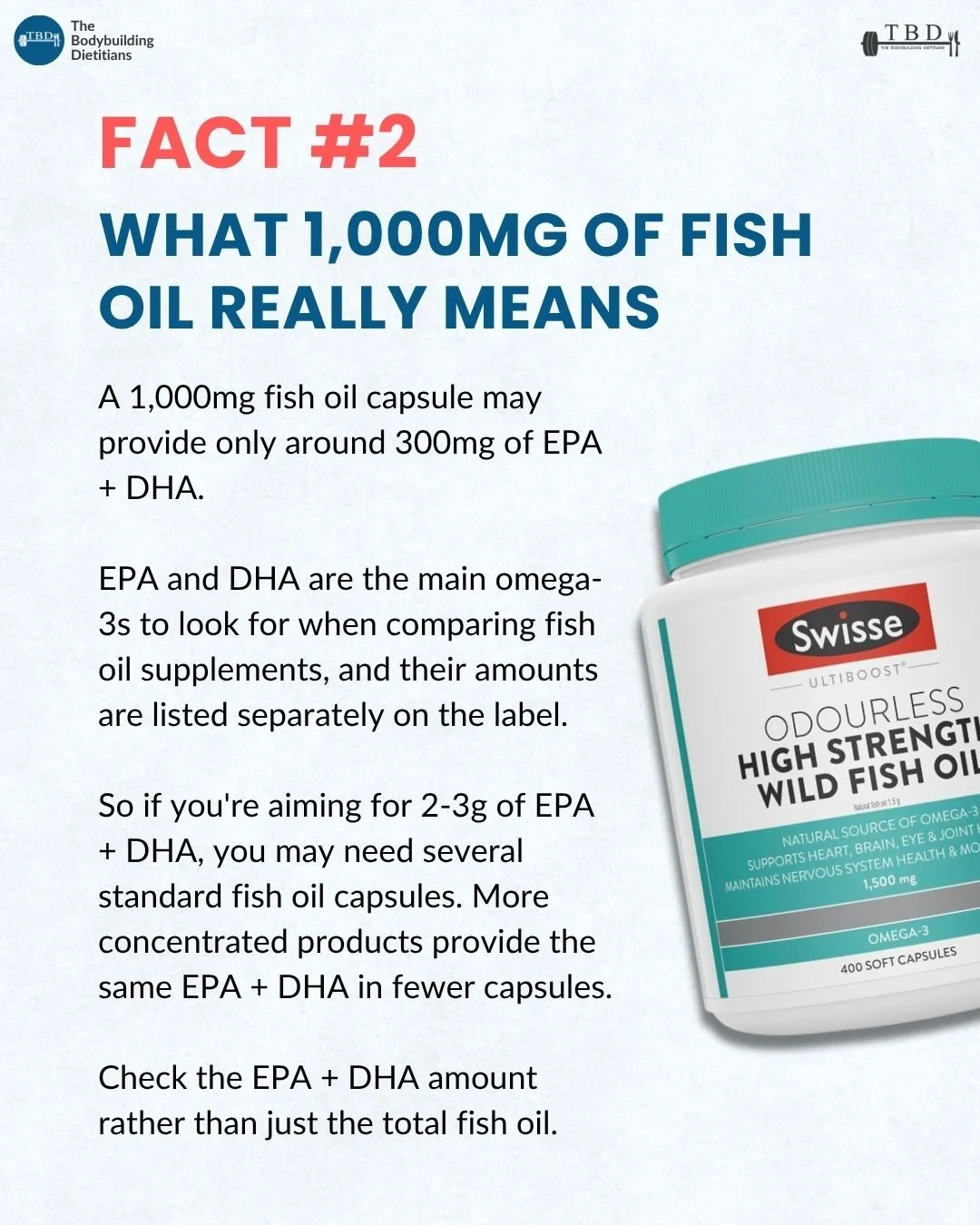
Less of the useful part than most people assume. A 1,000mg fish oil capsule may provide only around 300mg of the EPA and DHA that carry the benefits, with the rest being other fats that make up the fish oil.
EPA and DHA are the two long-chain omega-3 fatty acids responsible for most of fish oil's cardiovascular, brain, and joint benefits, and they are listed separately on a supplement label, usually below the total fish oil figure. The headline "1,000mg fish oil" on the front of a bottle is the total oil, not the amount of EPA and DHA, which is the number that matters. This is why two products with the same total fish oil can deliver very different doses of the active omega-3s.
The practical consequence is that reaching a target intake, such as 2 to 3 grams of combined EPA and DHA per day, can take several standard capsules, while a more concentrated product provides the same amount in fewer. The habit worth building is to turn the bottle over and read the combined EPA + DHA per serve rather than the total fish oil on the front. For a fuller look at omega-3, including dosing, food sources, and what the evidence supports, our guide to fish oil and omega-3 covers it in depth.
Why Does Lactose-Free Milk Taste Sweeter?
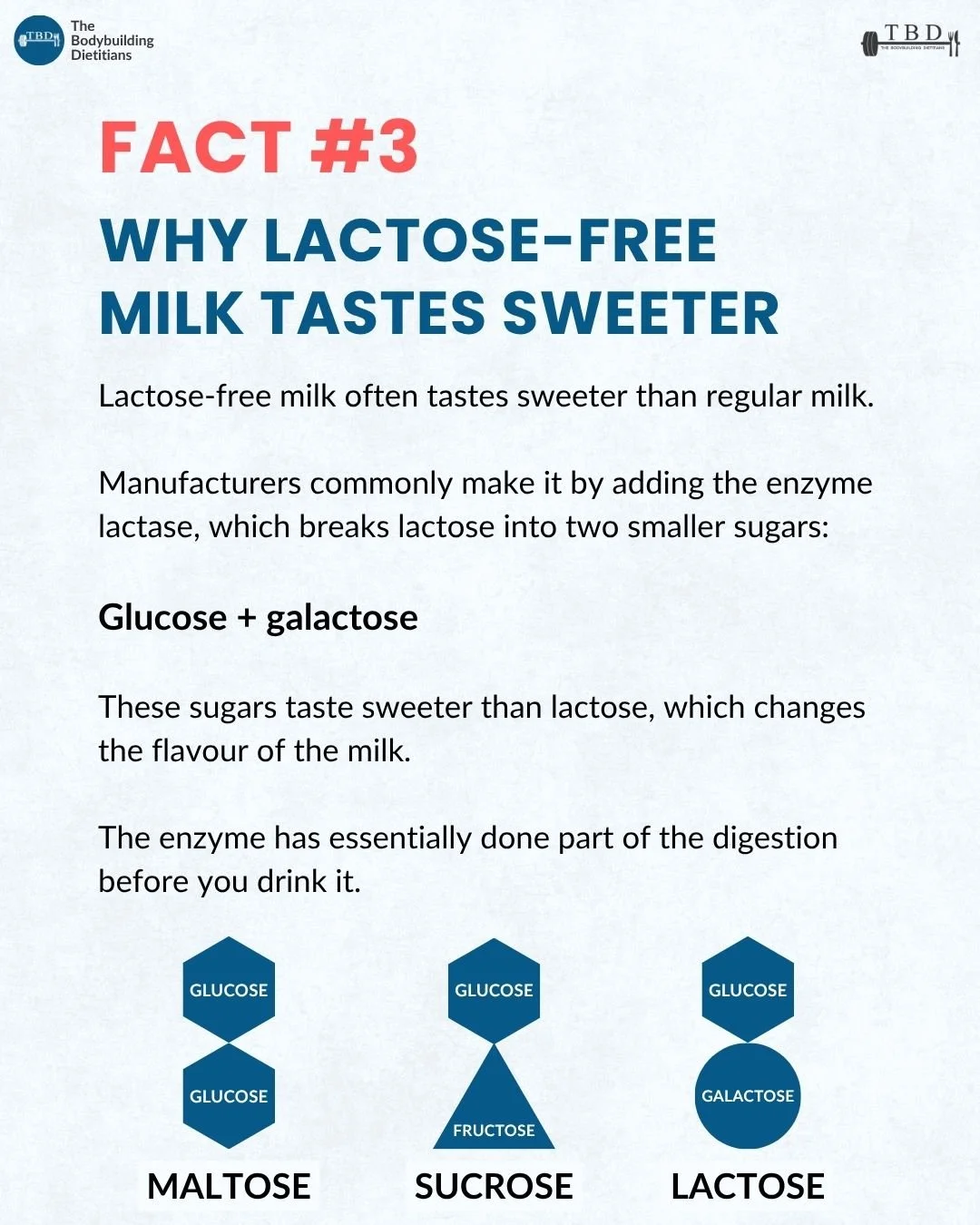
Lactose-free milk often tastes sweeter than regular milk despite having no added sugar, and the reason is the process used to make it rather than anything added. Manufacturers commonly produce it by adding the enzyme lactase, which breaks the milk sugar lactose into two smaller sugars.
Lactose is a disaccharide, meaning it is made of two sugar units joined together, in this case glucose and galactose. Lactase splits that bond, releasing the glucose and galactose as separate single sugars. Those two sugars taste noticeably sweeter on the tongue than intact lactose does, so the milk tastes sweeter even though the total sugar content has not changed, only its structure. The enzyme has essentially carried out part of the digestion of the milk before you drink it, which is also why lactose-free milk is easier to tolerate for people who do not produce enough lactase of their own. For how sugars and their structures fit into the wider carbohydrate picture, our guide to the carbohydrate hierarchy covers how single and double sugars relate.
What Is Elemental Magnesium, and Why Does It Matter on a Label?
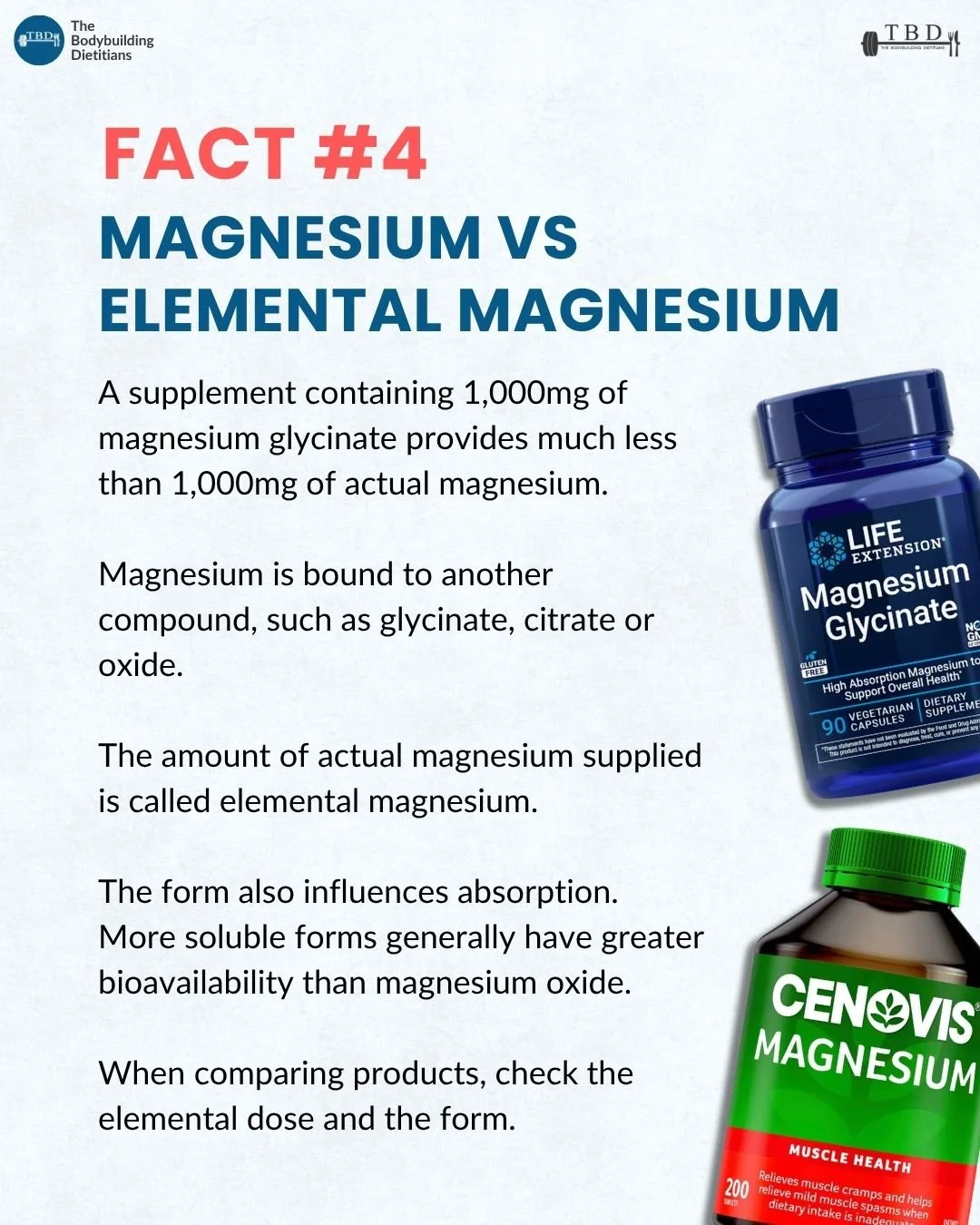
Elemental magnesium is the amount of actual magnesium a supplement provides, as opposed to the total weight of the magnesium compound, and it is usually much smaller than the headline number. A supplement listing 1,000mg of magnesium glycinate provides far less than 1,000mg of magnesium itself.
The reason is that magnesium in a supplement is always bound to another compound, such as glycinate, citrate, or oxide, and the label figure often refers to the weight of the whole compound rather than the magnesium within it. Elemental magnesium is the term for the actual magnesium content, and depending on the form it can be a small fraction of the total. A chelated form like magnesium glycinate carries a relatively low percentage of elemental magnesium by weight, so a large compound dose can translate to a modest magnesium dose.
The form also influences how well the magnesium is absorbed, which adds a second layer to the comparison. More soluble forms generally have greater bioavailability than magnesium oxide, which is high in elemental magnesium by weight but relatively poorly absorbed. The practical step when comparing magnesium products is to check two things rather than one: the elemental magnesium dose, and the form it comes in.
Buying Supplements BASED on the Number on the Front?
Fish oil and magnesium are two of the clearest cases where the headline figure on the label is not the number that matters. If you are not sure whether your supplements are dosed usefully or just marketed well, our team audits exactly this with clients, matching each supplement and its real dose to what the person needs, as part of how we structure nutrition and supplementation.
Does Cooling Cooked Rice Change Its Starch?
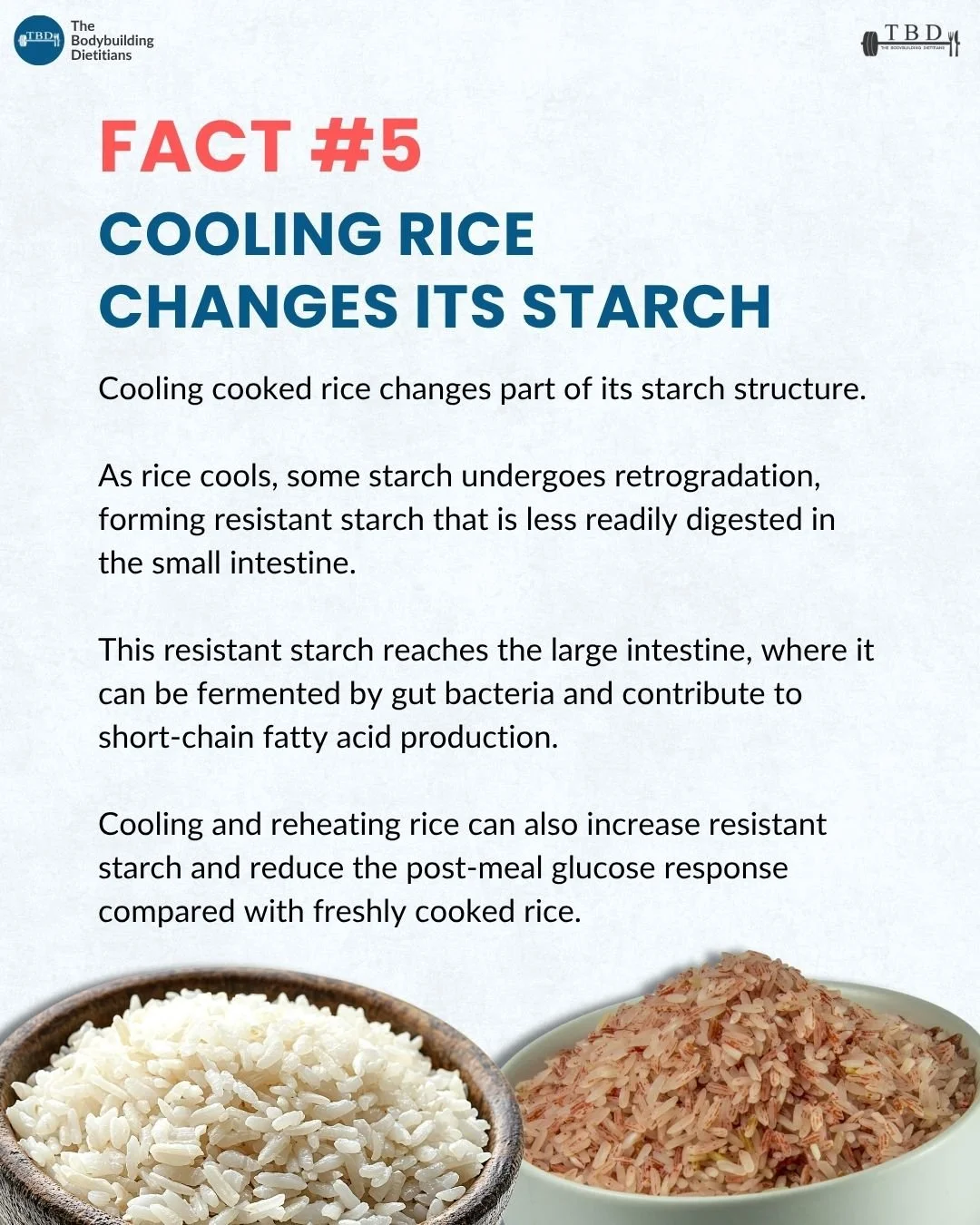
Yes. Cooling cooked rice changes part of its starch structure in a way that affects how it is digested. As the rice cools, some of its starch undergoes a process called retrogradation, forming resistant starch that is less readily digested in the small intestine than freshly cooked starch.
Resistant starch is starch that resists digestion in the small intestine and passes through to the large intestine, where it is fermented by gut bacteria and contributes to the production of short-chain fatty acids that support gut health. When cooked rice is cooled, and particularly when it is cooled and then reheated, its resistant starch content increases, which can modestly reduce the post-meal glucose response compared with rice eaten immediately after cooking. The effect is real but moderate, so it is better understood as a small, free improvement from a meal-prep habit you may already have than as a reason to overhaul how you eat rice. For the full detail on resistant starch and the other fibre types, our complete guide to dietary fibre covers how they behave and why variety matters.
Why Does Protein Have a Higher Energy Cost Than Carbs or Fat?
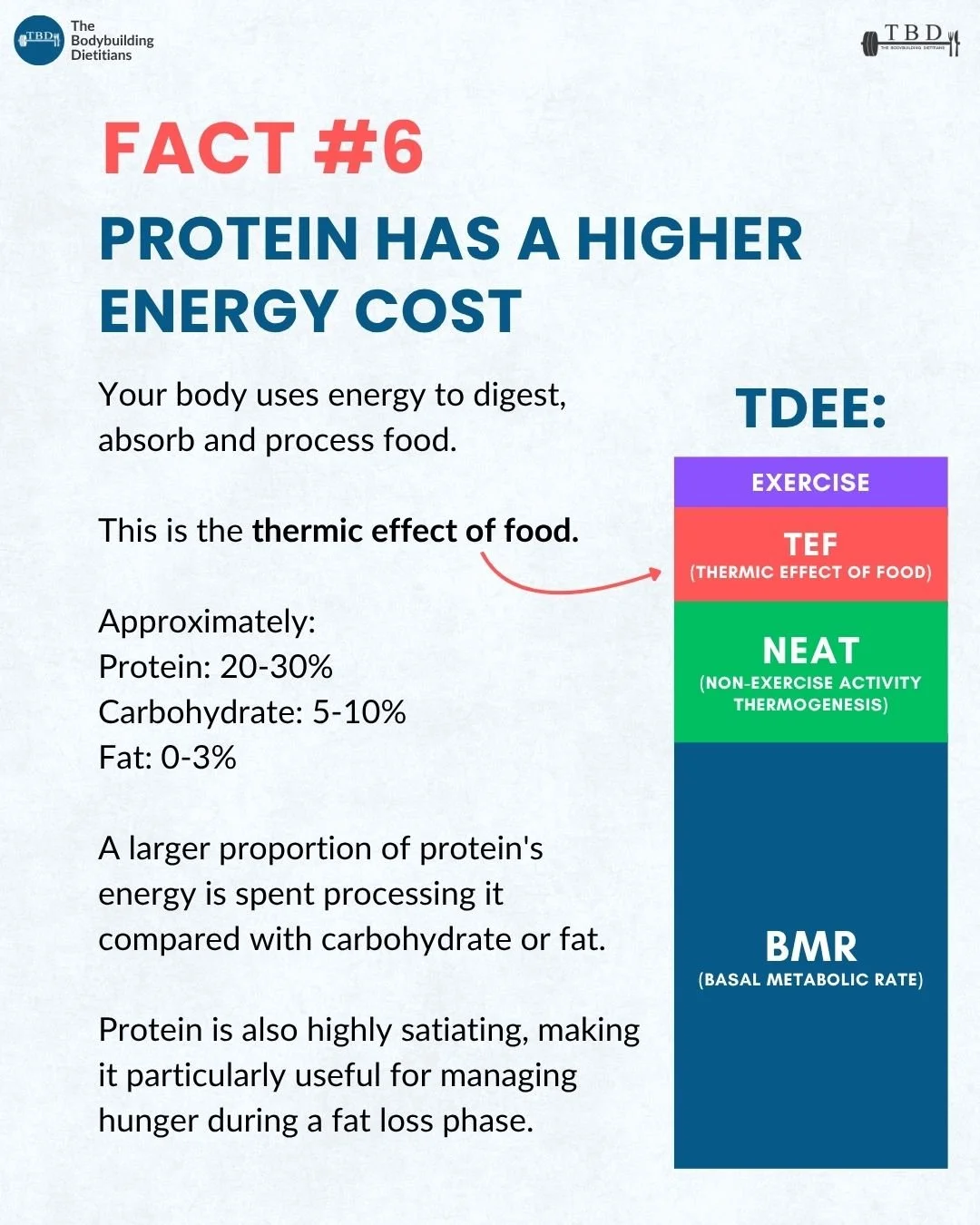
Protein costs the body more energy to digest and process than carbohydrate or fat, which is one of several reasons it is so useful in a fat loss phase. Your body expends energy breaking down and absorbing everything you eat, and protein is the most expensive macronutrient to handle.
The thermic effect of food is the energy the body uses to digest, absorb, and process a meal, and it varies considerably by macronutrient. Roughly 20 to 30% of the energy in protein is used in processing it, compared with about 5 to 10% for carbohydrate and only around 0 to 3% for fat. In practical terms, a larger share of the calories in protein is spent handling the protein, so the net energy the body retains from it is lower than the label figure implies, more so than for the other macronutrients.
That higher energy cost is a modest effect on its own, but it combines with protein's other properties to matter more than the number suggests. Protein is also highly satiating, meaning it supports fullness more effectively per calorie than carbohydrate or fat, which makes it particularly useful for managing hunger during a deficit. The thermic effect and the satiety effect together are a large part of why a higher protein intake is one of the most reliable adjustments in a fat loss phase.
Practical Takeaways
Whole nuts provide fewer absorbable calories than their label states, with almonds delivering around 20% less than predicted, because some fat stays trapped in the cell walls. Nut butters release more, since grinding breaks that structure down.
A 1,000mg fish oil capsule may contain only around 300mg of EPA and DHA. Compare the combined EPA + DHA per serve, not the total fish oil on the front.
Lactose-free milk tastes sweeter because the added enzyme lactase splits lactose into glucose and galactose, which taste sweeter, with no added sugar.
A magnesium supplement's label often lists the compound weight, not the elemental magnesium, which is much smaller. Check both the elemental dose and the form, since more soluble forms absorb better than oxide.
Cooling cooked rice forms resistant starch through retrogradation, which is less digestible, feeds gut bacteria, and can modestly lower the post-meal glucose response.
Protein uses roughly 20 to 30% of its energy to digest, far more than carbohydrate or fat, and is highly satiating, which makes it especially useful in a fat loss phase.
Frequently Asked Questions
Do nuts really have fewer calories than the label says?
Whole nuts often provide fewer absorbable calories than their label states, because some of their fat stays trapped within intact cell walls and passes through undigested. Studies have found whole almonds deliver around 20% less energy than traditional calorie calculations predict, with walnuts similar. The effect shrinks as nuts are processed, so chopped nuts and nut butters release more of their calories than whole nuts.
How much EPA and DHA is in a fish oil capsule?
A standard 1,000mg fish oil capsule may contain only around 300mg of combined EPA and DHA, with the rest being other fats. EPA and DHA are the omega-3s that carry the benefits, and they are listed separately on the label below the total fish oil. To compare products or reach a target dose, read the combined EPA + DHA per serve rather than the total fish oil figure.
Why does lactose-free milk taste sweeter if it has no added sugar?
Lactose-free milk is usually made by adding the enzyme lactase, which splits the milk sugar lactose into glucose and galactose. Those two single sugars taste sweeter than intact lactose, so the milk tastes sweeter even though the total sugar content is unchanged. The enzyme has effectively done part of the digestion before you drink it, which is also why it is easier to tolerate.
What is elemental magnesium and why does it matter?
Elemental magnesium is the amount of actual magnesium a supplement provides, as distinct from the total weight of the magnesium compound such as glycinate, citrate, or oxide. The compound weight on the label is usually much larger than the elemental magnesium within it, so a 1,000mg compound dose can supply far less actual magnesium. The form also affects absorption, so it is worth checking both the elemental dose and the form.
Is it healthier to eat rice that has been cooled?
Cooling cooked rice increases its resistant starch through a process called retrogradation, and cooling then reheating increases it further. This resistant starch is less digestible in the small intestine, feeds gut bacteria, and can modestly reduce the post-meal glucose response. The effect is real but moderate, so it is a small benefit from a meal-prep habit rather than a major change.
Does protein really burn more calories to digest?
Yes. The thermic effect of food is the energy used to digest and process a meal, and it is highest for protein at roughly 20 to 30%, compared with about 5 to 10% for carbohydrate and 0 to 3% for fat. This means the body retains slightly less net energy from protein than its label figure suggests. Combined with protein's strong effect on fullness, this is part of why a higher protein intake is so useful during fat loss.
If you would like help turning nutrition facts like these into a plan that fits your training, preferences, and goals, including getting your supplement choices and doses right, our team can help. Enquire about coaching or book a consultation to get started.