Five inherited bodybuilding nutrition practices that do not hold up under scrutiny, and the evidence-informed alternatives that produce better outcomes with less risk.
Several bodybuilding nutrition practices continue to circulate despite being based on outdated logic or oversimplified reasoning. These include the belief that athletes are primed for muscle gain immediately after a show, that training should be overhauled during a fat loss phase, that cheat meals meaningfully boost metabolism, that specific foods have unique fat loss properties, and that water restriction improves stage presentation. In each case, the evidence supports a more structured and effective alternative that produces better outcomes while reducing unnecessary risk.
Bodybuilding has evolved significantly over the past decade in terms of coaching quality, access to research, and general nutritional literacy. Yet certain beliefs continue to circulate, largely because they have been passed down through gym culture for so long that they feel like established truths. In many cases, the original reasoning behind these practices was not unreasonable given what was understood at the time. The issue is that the evidence has moved forward while the practices have not, and in each of the five areas covered below, there are now more effective, evidence-informed alternatives available.
None of these beliefs come from bad intentions. Most originate from coaches and athletes trying to optimise their results with the information available to them. Understanding why they persist and what produces better outcomes is more useful than simply labelling them as wrong, because the underlying goals (recovering well after a show, retaining muscle during a cut, managing hunger, improving conditioning) are all legitimate. The problem lies in the methods, not the intentions.
The five practices covered in this article span the full competitive cycle, from post-show recovery through to peak week, and each one has a direct impact on how effectively an athlete navigates the process.
Is Your Body Primed for Muscle Gain Immediately After a Show?
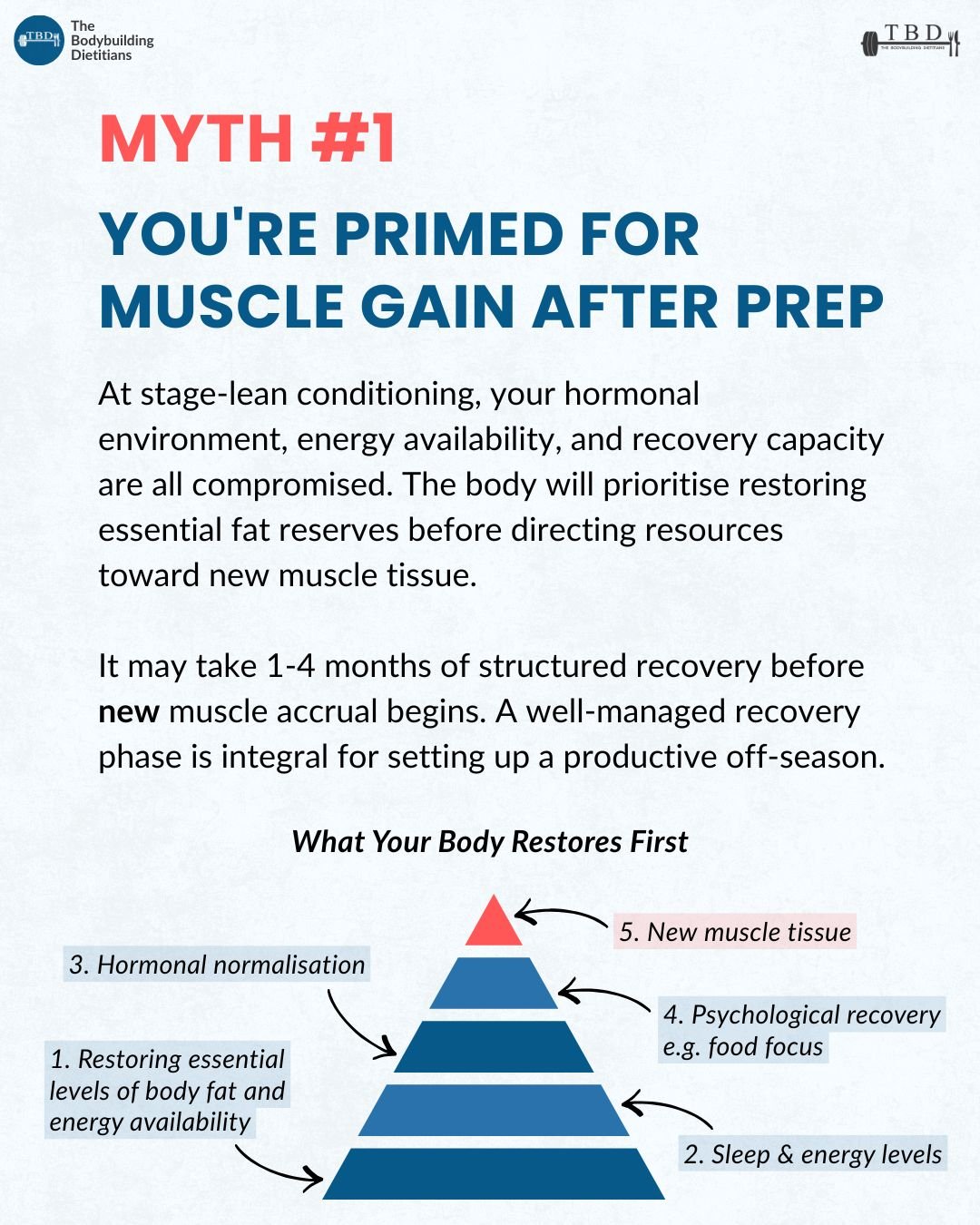
The body is not in an optimal state for building new muscle tissue immediately after reaching stage conditioning. The recovery process must come first, and it typically takes one to four months before new muscle accrual begins.
This is one of the most persistent beliefs in competitive bodybuilding, and the reasoning behind it is understandable. After months of disciplined dieting, the athlete is lean, motivated, and eager to shift into a growth phase. The assumption is that the body, having been in a deficit for so long, will respond aggressively to a calorie surplus and channel those resources into muscle tissue. In reality, the physiological picture at stage-lean conditioning is considerably less favourable.
At the end of a prep, the hormonal environment is typically suppressed. Testosterone, thyroid hormones, and leptin are all reduced, while cortisol tends to be elevated. Energy availability is low, recovery capacity is diminished, and the psychological toll of extended restriction often manifests as heightened food focus and reduced motivation. In this state, the body's priority is restoring essential physiological function, not building new tissue.
Energy availability refers to the amount of dietary energy remaining after accounting for the energy cost of exercise, expressed relative to lean body mass. Low energy availability is associated with a range of physiological disruptions including hormonal suppression, impaired bone health, reduced immune function, and decreased training adaptation.
The recovery hierarchy that the body follows after a show tends to proceed in a relatively predictable order. The first priority is restoring essential body fat reserves and normalising energy availability. Sleep quality and energy levels tend to improve next, followed by hormonal normalisation (which can take weeks to months depending on the severity and duration of the deficit). Psychological recovery, particularly around food focus and the relationship with eating, develops alongside these physiological changes. Only once these foundational systems have been substantially restored does the body begin to direct resources toward building new muscle tissue.
Research on the recovery period following competitive bodybuilding preparation has documented persistent hormonal and metabolic disruptions for weeks to months following the competition, including suppressed testosterone, elevated cortisol, and reduced resting metabolic rate. These findings support the recommendation for a structured, gradual recovery phase before transitioning into a dedicated muscle gain phase.
Source: Trexler, Smith-Ryan, and Norton, 2014, Journal of the International Society of Sports Nutrition.
The practical alternative is to plan a structured recovery phase of one to four months between the end of competition and the beginning of a dedicated improvement season. During this period, calories are gradually increased toward maintenance and then into a mild surplus, with the rate of increase guided by how the athlete is responding physically and psychologically. Rushing this transition, particularly through aggressive post-show eating, often leads to rapid and excessive fat regain that undermines the subsequent improvement season and creates a longer, harder prep for the next competition.
In coaching settings, one of the most common patterns following a show is the athlete who gains a significant amount of body fat in the first four to six weeks post-competition because the transition was not managed deliberately. A well-structured recovery phase prevents this by providing enough food to support restoration without the kind of uncontrolled surplus that creates problems downstream. This is one of the areas where our bodybuilding coaching provides the most value, because the post-competition period is one of the highest-risk phases of the competitive cycle if left unmanaged.
Should You Switch Up Your Training During a Fat Loss Phase?
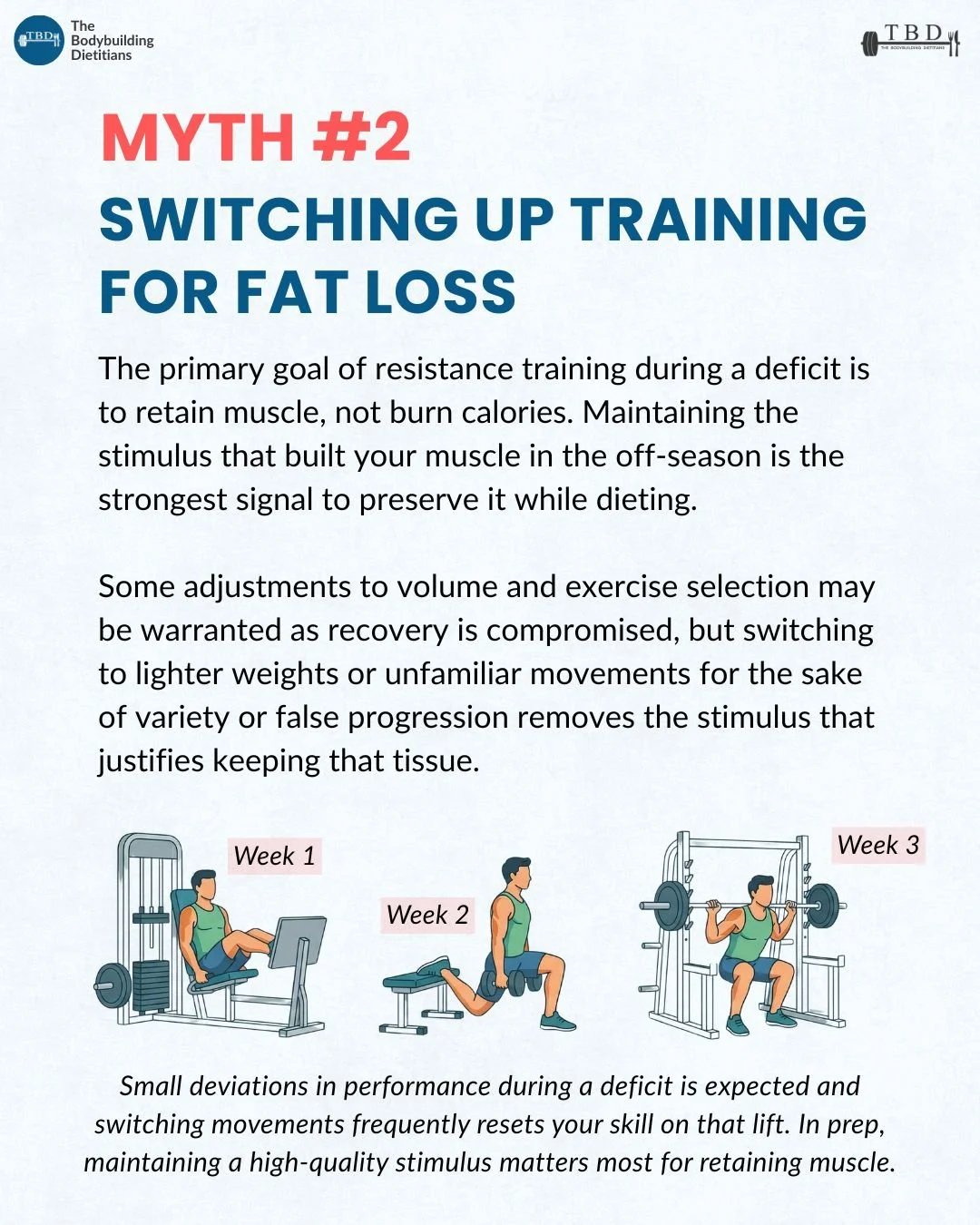
The primary goal of resistance training during a calorie deficit is to retain muscle, not to burn additional calories. Maintaining the stimulus that built the muscle in the off-season is the strongest signal to preserve it while dieting.
The instinct to change training during a deficit is common and comes from a reasonable place. As the diet progresses and energy levels decline, it can feel logical to switch to lighter weights, higher reps, or different exercises in pursuit of variety, calorie burn, or a sense of renewed progression. The problem is that these changes often remove the very stimulus that justifies the body retaining its muscle tissue.
Muscle protein synthesis is the biological process through which dietary protein stimulates the repair and growth of skeletal muscle. During a calorie deficit, the rate of muscle protein synthesis is reduced, which makes the quality and specificity of the training stimulus more important, not less, for preserving lean mass.
From a physiological perspective, the body retains muscle tissue because it receives a signal that the tissue is needed. That signal comes from resistance training, specifically from the mechanical tension, volume, and progressive overload that characterise effective hypertrophy-focused programming. When an athlete switches to lighter weights, unfamiliar movements, or high-rep circuits during a deficit, the training stimulus changes in ways that may no longer provide a strong enough signal to preserve the muscle that was built under heavier, more demanding conditions.
This does not mean that training should remain entirely unchanged during a deficit. Some adjustments to volume and exercise selection are often warranted as recovery capacity decreases with lower calorie intake. Reducing total weekly volume by 20 to 40 per cent, removing exercises that create excessive joint stress or fatigue, and prioritising compound movements that provide the greatest stimulus relative to their recovery cost are all sensible modifications. The key distinction is between strategic reduction (doing less of the same quality work) and wholesale change (switching to a fundamentally different style of training).
Small deviations in performance during a deficit are expected and should not be interpreted as a signal to change the program. A slight decline in strength, particularly on isolation movements, is normal as the deficit progresses. What matters is maintaining the quality and intensity of the key lifts that provide the strongest muscle-retention stimulus, rather than chasing performance markers that are inevitably affected by reduced energy availability.
Research on resistance training during energy restriction supports maintaining training intensity (load) as the primary variable for muscle retention, with modest reductions in volume as needed to manage recovery. Studies comparing high-load versus low-load training during calorie deficits consistently favour higher loads for lean mass preservation, suggesting that the mechanical tension signal is more important than training volume or metabolic stress during periods of energy restriction.
Source: Murphy and Koehler, 2022, Strength and Conditioning Journal.
Do Cheat Meals Actually Boost Your Metabolism?
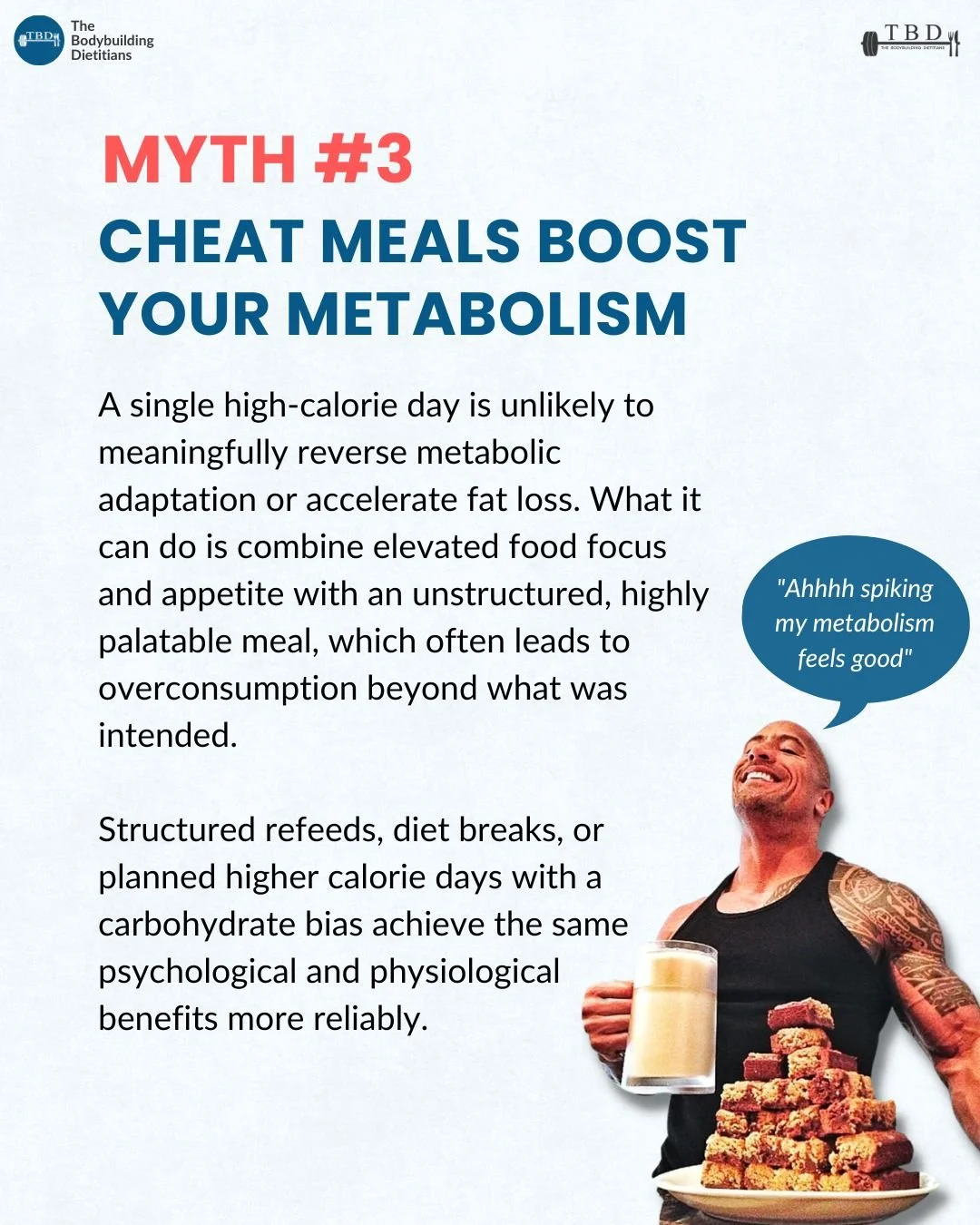
A single high-calorie, unstructured meal is unlikely to meaningfully reverse metabolic adaptation or accelerate fat loss. Structured refeeds and diet breaks achieve the intended benefits more reliably and with less risk.
The cheat meal concept has deep roots in bodybuilding culture, and it persists partly because it addresses a real need: the psychological and physiological desire for relief during extended periods of dietary restriction. The problem is not the idea of eating more on occasion during a deficit. The problem is the unstructured, highly palatable, often excessive nature of what a "cheat meal" typically becomes in practice.
Adaptive thermogenesis refers to the body's tendency to reduce energy expenditure in response to sustained energy restriction, through mechanisms including decreased non-exercise activity, reduced thermic effect of food, and hormonal adjustments. This adaptation is a normal physiological response that contributes to the plateau effect commonly experienced during extended fat loss phases.
The claim that a cheat meal "spikes the metabolism" is based on a simplified understanding of leptin, a hormone produced by fat cells that signals energy status to the brain. Leptin levels decrease during extended dieting, which contributes to increased hunger, reduced energy expenditure, and the adaptive responses that slow fat loss. A sharp increase in calorie intake can transiently elevate leptin, but a single meal does not produce a sustained or meaningful reversal of these adaptations. The effect is too brief and too small to alter the trajectory of a fat loss phase in any practical way.
What a cheat meal can do, however, is combine elevated food focus and suppressed satiety signals (both normal during a deficit) with an unstructured, highly palatable eating occasion. The result is often a calorie intake that significantly exceeds what was intended, potentially erasing several days of deficit in a single sitting. For athletes deep into prep, where food focus is already elevated and impulse control around food is more difficult, this pattern can become genuinely counterproductive.
The evidence-informed alternative is a structured refeed or diet break. A refeed involves a planned increase in calorie intake (typically through additional carbohydrate) on one or two days per week, with the amount and composition predetermined to support glycogen replenishment, training performance, and psychological relief without undermining the weekly deficit. A diet break extends this concept to a full one to two weeks at maintenance calories, providing a more substantial physiological and psychological reset.
Research comparing continuous dieting to intermittent approaches with structured diet breaks has found that planned periods at maintenance intake can improve fat loss outcomes, reduce metabolic adaptation, and support better lean mass retention compared to uninterrupted restriction. The MATADOR study, in particular, found that participants who alternated between two weeks of deficit and two weeks of maintenance lost more fat and experienced less metabolic slowdown than those who dieted continuously.
Source: Byrne et al., 2018, International Journal of Obesity.
Both refeeds and diet breaks achieve the psychological and physiological benefits that people are seeking from cheat meals, but they do so in a structured, repeatable way that keeps the overall plan on track. This is a clear example of where the underlying goal is sound but the method needs updating.
For athletes navigating a prep or structured fat loss phase, this is one of the areas where working with a coach makes a meaningful difference, because the timing, frequency, and structure of refeeds and diet breaks should be individualised based on how the athlete is responding rather than applied as a generic weekly schedule.
Do Specific Foods Have Unique Fat Loss Properties?
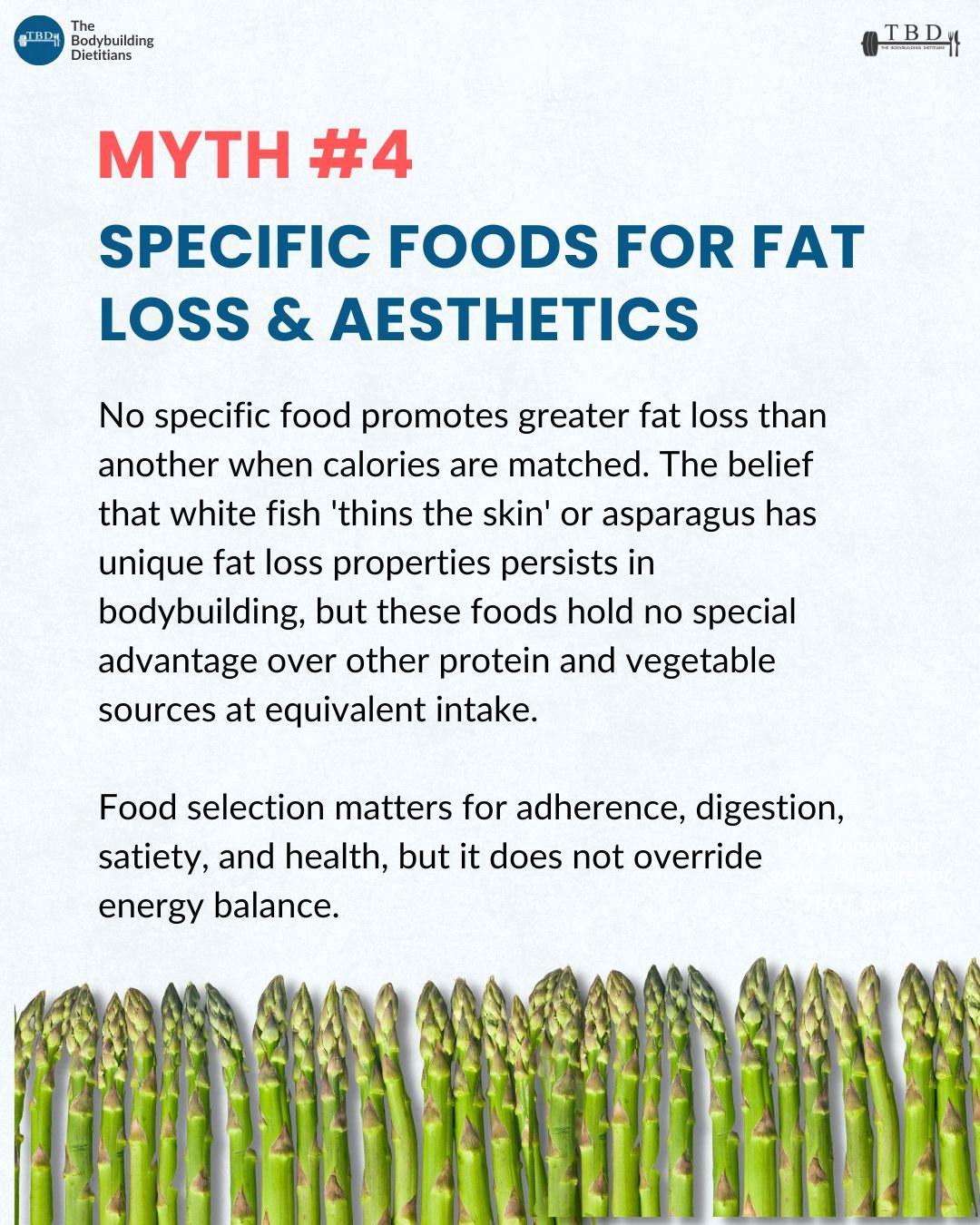
No specific food promotes greater fat loss than another when total calorie and macronutrient intake is matched. Food selection matters for adherence, digestion, satiety, and health, but it does not override energy balance.
The belief that certain foods have special fat-burning or skin-thinning properties is one of the most persistent ideas in bodybuilding nutrition. Tilapia, asparagus, and broccoli are frequently cited as "prep foods" with unique advantages for achieving lean conditioning, and the practice of switching to these specific foods during the final weeks of a prep remains surprisingly common.
Energy balance refers to the relationship between total energy intake and total energy expenditure. When intake is below expenditure, the body draws on stored energy (predominantly body fat) to meet the remaining demand. The composition of the diet influences the experience of the deficit (hunger, energy, adherence), but the deficit itself is what drives fat loss, regardless of which specific foods are consumed.
The origins of this belief are not difficult to trace. In traditional bodybuilding culture, successful competitors often ate tilapia, asparagus, and similar foods during their preps, and when they arrived on stage in excellent condition, the foods themselves were credited alongside the broader dietary approach. This is a classic example of correlation being interpreted as causation: the competitors were lean because they maintained a well-structured calorie deficit and training program, not because tilapia has properties that other lean fish do not.
In practical terms, food selection during a fat loss phase matters considerably, but for different reasons than the myth suggests. Choosing foods that are high in protein relative to their calorie content supports muscle retention and satiety. Choosing foods with high volume and low energy density (vegetables, fruits, lean proteins) supports hunger management. Choosing foods that digest well for the individual supports comfort and consistency. Choosing foods that the individual enjoys supports long-term adherence. All of these are evidence-based reasons to make thoughtful food choices during a deficit, and none of them require specific "magic" foods.
The practical alternative is to select foods based on their macronutrient profile, micronutrient contribution, energy density, palatability, and digestive comfort rather than on inherited beliefs about special properties. If an athlete enjoys tilapia and asparagus, there is nothing wrong with including them. The issue arises when athletes switch to foods they dislike or that do not suit their digestion simply because they believe those foods confer a special advantage. That belief creates unnecessary restriction without delivering the promised benefit.
Does Cutting Water Before a Show Improve Stage Presentation?
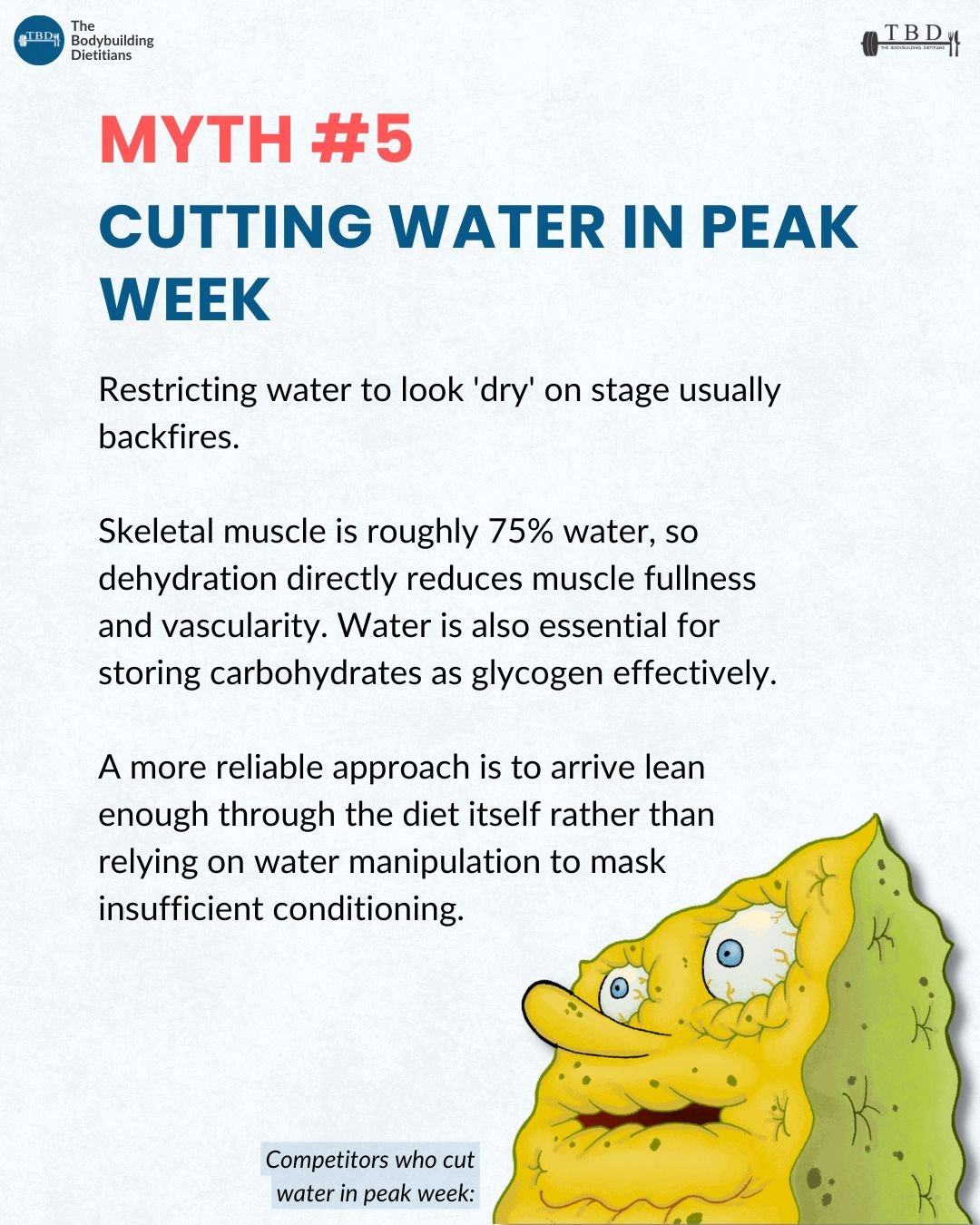
Restricting water intake before a competition usually compromises stage presentation rather than improving it. Adequate hydration supports the muscle fullness, vascularity, and glycogen storage that competitors are actually trying to optimise.
Water manipulation is perhaps the most persistent and potentially harmful of the five practices covered in this article. The logic behind it is straightforward in theory: reducing water intake before a show should reduce subcutaneous water (the water sitting beneath the skin), which would improve the appearance of leanness and conditioning on stage. In practice, the physiology does not work this way.
Skeletal muscle is approximately 75 per cent water by composition. When total body water decreases through deliberate dehydration, intracellular water (the water inside muscle cells that creates fullness and volume) is affected alongside extracellular and subcutaneous water. The result is often a flat, depleted appearance rather than the full, hard, vascular look that the athlete was trying to achieve. Water is also essential for the storage of glycogen in muscle tissue, with each gram of glycogen binding approximately three grams of water. Restricting water intake during peak week can therefore directly undermine carbohydrate loading strategies that depend on adequate hydration to maximise glycogen supercompensation.
Glycogen is the stored form of carbohydrate found primarily in muscle and liver tissue. Muscle glycogen is a primary fuel source during high-intensity exercise and contributes to the visual fullness and volume of muscle tissue on stage. Effective glycogen loading during peak week depends on adequate carbohydrate intake and sufficient hydration.
Severe voluntary dehydration before physique competitions has been associated with impaired cardiovascular function, reduced cognitive performance, and in extreme cases, serious medical events. Evidence-based approaches to peak week preparation generally emphasise maintaining adequate hydration to support glycogen storage, muscle fullness, and overall stage presentation, with adjustments to sodium and carbohydrate intake used to manage fluid balance rather than water restriction.
Source: Chappell and Simper, 2018, Journal of the International Society of Sports Nutrition.
The evidence-informed alternative is to arrive at stage-lean conditioning through a well-structured, sufficiently long prep rather than relying on water manipulation to mask insufficient body fat reduction. If the conditioning is there, adequate hydration will showcase it effectively. If the conditioning is not there, water restriction will not fix it and will likely make the overall presentation worse.
A practical peak week approach built around maintaining hydration, strategically adjusting sodium, and loading carbohydrates into depleted muscles tends to produce a more full, vascular, and conditioned appearance than any dehydration protocol. It also carries none of the health risks associated with severe fluid restriction, which in rare but documented cases has led to hospitalisation.
Why Do These Beliefs Persist Despite Better Alternatives?
These practices persist because they are embedded in a culture of apprenticeship, where knowledge is passed from coach to athlete and from athlete to athlete across generations, and because the successful outcomes of individuals who used these methods are interpreted as evidence that the methods themselves were responsible.
Bodybuilding has historically operated outside the mainstream of sports science and dietetics. For much of its history, the primary source of nutritional and training guidance was the experience of successful competitors, passed down through coaching relationships and gym culture. This apprenticeship model produced a body of practical knowledge that often worked well in aggregate, but it also preserved specific practices that were never tested against alternatives or evaluated for their independent contribution to outcomes.
When a competitor preps using tilapia, asparagus, water cutting, and cheat meals, and then steps on stage in excellent condition, every element of the approach is implicitly validated. The reality is that the outcome was driven primarily by the overall structure of the deficit, the quality and consistency of training, adequate protein intake, and the athlete's genetics and years of development. The specific foods, the water manipulation, and the cheat meals were largely incidental to the result, but they become part of the protocol that gets repeated and handed down.
The increasing involvement of qualified dietitians and sports scientists in bodybuilding coaching has begun to shift this, with more athletes and coaches now evaluating their practices against the available evidence. The goal is not to discard everything that came before, because much of traditional bodybuilding practice aligns well with current evidence. The goal is to identify the specific practices that can be improved and to replace them with alternatives that produce better outcomes, with less risk, and with a stronger evidence base.
This is at the core of how The Bodybuilding Dietitians approaches coaching: respecting the traditions of the sport while ensuring that every recommendation is grounded in the best available evidence and adapted to the individual athlete's context.
Practical Takeaways
The body is not primed for muscle gain immediately after a show. Plan a structured recovery phase of one to four months before transitioning into a dedicated improvement season, allowing the body to restore essential physiological function before pursuing new growth.
The primary goal of resistance training during a deficit is to retain muscle, not to burn calories. Maintain the stimulus that built the muscle (intensity and key exercises) while making strategic reductions in volume as recovery capacity decreases.
A single unstructured cheat meal is unlikely to meaningfully reverse metabolic adaptation and often leads to overconsumption. Structured refeeds and diet breaks provide the same psychological and physiological benefits with better control and consistency.
No specific food promotes greater fat loss than another when calories are matched. Choose foods based on their macronutrient profile, energy density, digestive comfort, and personal preference rather than inherited beliefs about special properties.
Water restriction before a competition compromises muscle fullness, vascularity, and glycogen storage. Arrive lean through a well-structured prep and maintain adequate hydration during peak week to support the best possible stage presentation.
These practices persist because bodybuilding knowledge has traditionally been passed through apprenticeship rather than evidence evaluation. Evaluating inherited practices against current evidence allows athletes to retain what works and replace what does not.
Frequently Asked Questions
Should you change your workout routine during a cut?
The core training stimulus should remain largely consistent during a cut, because the mechanical tension and intensity that built the muscle are the strongest signals to preserve it during energy restriction. Strategic reductions in total volume (20 to 40 per cent) and the removal of exercises that create excessive fatigue are appropriate, but switching to lighter weights, higher reps, or unfamiliar movements for the sake of variety removes the retention signal and increases the risk of muscle loss.
Do cheat meals help with fat loss?
A single unstructured high-calorie meal does not meaningfully reverse metabolic adaptation or accelerate fat loss. While brief increases in calorie intake can transiently elevate leptin, the effect is too small and too short-lived to alter the trajectory of a fat loss phase. Structured refeeds (planned higher-carbohydrate days) and diet breaks (one to two weeks at maintenance calories) provide the same psychological and physiological relief with better control, consistency, and outcomes.
Does tilapia OR ASPARAGUS help you get leaner for a bodybuilding show?
Tilapia is a lean protein source, but it does not have unique fat loss or skin-thinning properties. Any lean protein source with a similar macronutrient profile (such as chicken breast, white fish, egg whites, or lean beef) will produce equivalent results when consumed at the same calorie and protein intake. Food selection during prep matters for adherence, digestion, and satiety, but the specific foods chosen do not override the energy deficit that drives fat loss.
Is water cutting safe before a bodybuilding competition?
Severe water restriction before a competition carries genuine health risks, including impaired cardiovascular function, reduced cognitive performance, and in extreme cases, medical emergencies requiring hospitalisation. It also typically compromises the very outcomes the athlete is trying to achieve, because dehydration reduces intracellular water and muscle fullness. Evidence-based peak week approaches emphasise maintaining adequate hydration while using sodium and carbohydrate manipulation to optimise muscle volume and conditioning.
How long should recovery last after a bodybuilding show?
The recovery period after a show typically spans one to four months, depending on the duration and severity of the prep, the degree of physiological suppression, and the individual's response to increased calorie intake. During this time, calories are gradually increased toward maintenance and then into a mild surplus, with progress guided by improvements in energy, sleep, hormonal markers, and psychological wellbeing. Rushing this phase increases the risk of excessive fat regain and undermines the subsequent improvement season.
If you are preparing for a competition or navigating a fat loss phase and want your approach to be grounded in current evidence rather than inherited practices, our team of qualified dietitians can help.