Meal plans can be a genuinely useful tool or a meaningful setback depending on how they are designed, when they are used, and whether they build the skills needed to eventually move beyond them.
Meal plans work well as short-to-medium-term tools for reducing decision fatigue, improving dietary consistency, and providing structure during phases where precision matters, such as fat loss or contest preparation. However, they can become counterproductive when they reinforce all-or-nothing thinking, fail to build independent nutritional skills, or are poorly designed by practitioners without appropriate clinical knowledge. The most effective use of a meal plan is as a starting framework that is paired with education, so the individual develops the confidence and understanding to make good nutritional decisions without one over time.


Meal plans occupy an unusual space in nutrition coaching. They are simultaneously one of the most requested tools by clients and one of the most debated approaches among practitioners. The fitness industry tends to polarise on this topic: some coaches rely heavily on prescriptive meal plans as their primary coaching tool, while others dismiss them entirely in favour of flexible dieting or intuitive eating. The reality, as with most things in nutrition, sits somewhere in between.
A well-designed meal plan, used at the right time and paired with the right education, can meaningfully accelerate someone's progress. It can remove friction, build habits, and provide structure during phases where consistency and precision genuinely matter. A poorly designed plan, or a well-designed plan used in the wrong context, can reinforce rigidity, create dependence, and in more serious cases, contribute to a dysfunctional relationship with food that takes considerable time and effort to resolve.
The carousel above walks through four clear advantages and four clear limitations of meal plans. The sections below expand on each one in more detail, explore when meal plans are most and least appropriate, and outline what a well-structured alternative looks like for people who have outgrown the need for one.
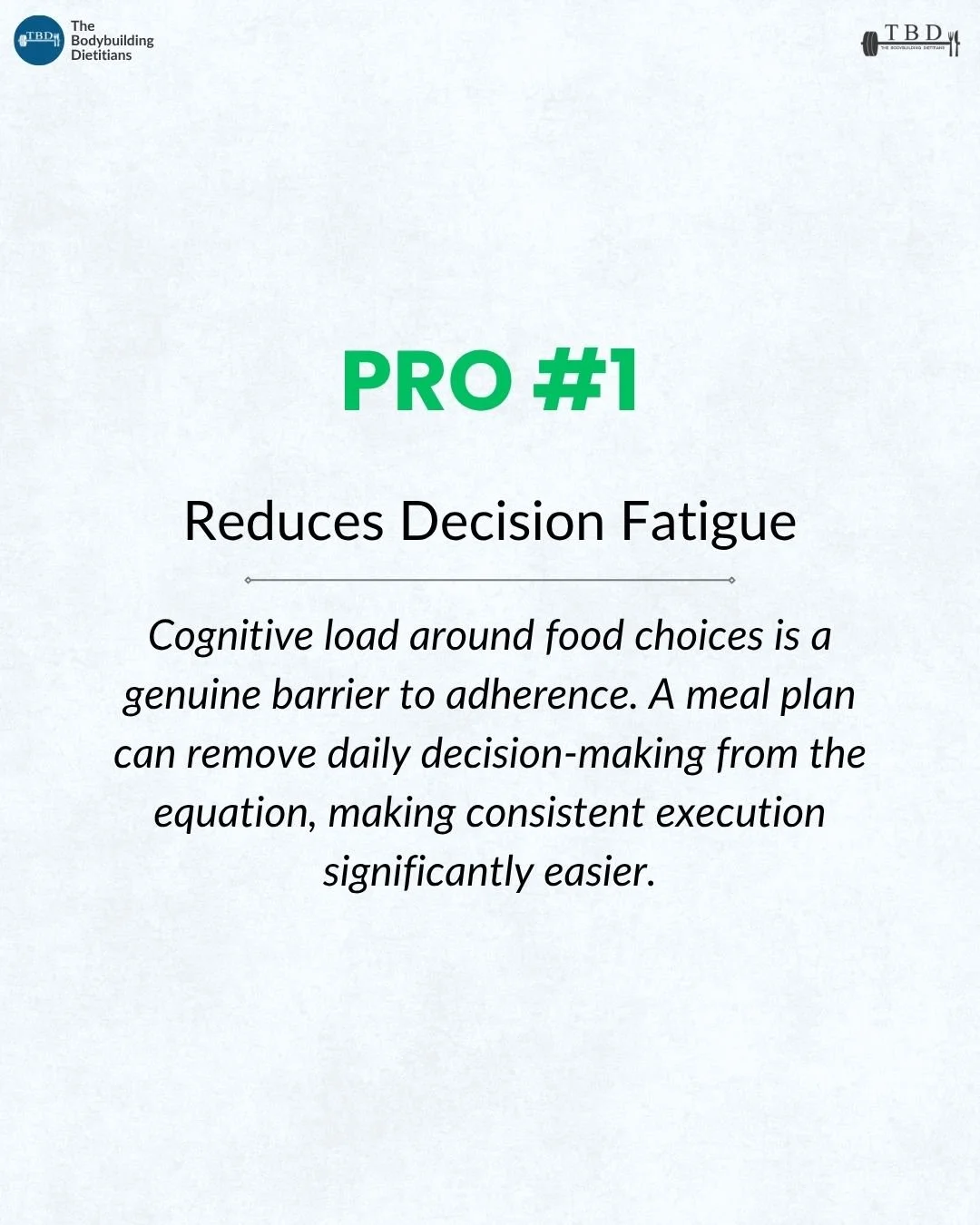
How Do Meal Plans Reduce Decision Fatigue?
A meal plan removes the daily cognitive load of deciding what to eat, how much, and when, which is a genuine and often underestimated barrier to dietary adherence.
Decision fatigue is not a trivial concept. The mental energy required to make repeated food choices throughout the day, every day, while trying to stay within specific nutritional parameters, adds up. For someone managing a calorie deficit, balancing macronutrient targets, and navigating the practical realities of meal preparation alongside work, training, and other responsibilities, the cumulative cognitive demand can be substantial. When that demand exceeds the individual's capacity on a given day, the default is often to make a poor food choice or to abandon the plan entirely.
Decision fatigue refers to the deterioration of decision-making quality after a prolonged period of making choices. In the context of nutrition, it manifests as the tendency to default to convenience, familiarity, or impulse when the mental energy required for deliberate food selection has been depleted.
A meal plan addresses this directly. When the decisions about what to eat and how much have already been made in advance, the daily task shifts from planning to execution, which is cognitively much simpler. This is one of the reasons meal plans tend to produce strong short-term adherence: the barrier to compliance is lower because the thinking has already been done.
This advantage is most pronounced during the first few weeks of a new nutrition phase, when the individual is adjusting to different calorie and macro targets and does not yet have a repertoire of meals that fit the new parameters. It is also particularly valuable during high-stress periods (work deadlines, exams, major life transitions) where mental energy is being directed elsewhere and the capacity for daily food decision-making is reduced.
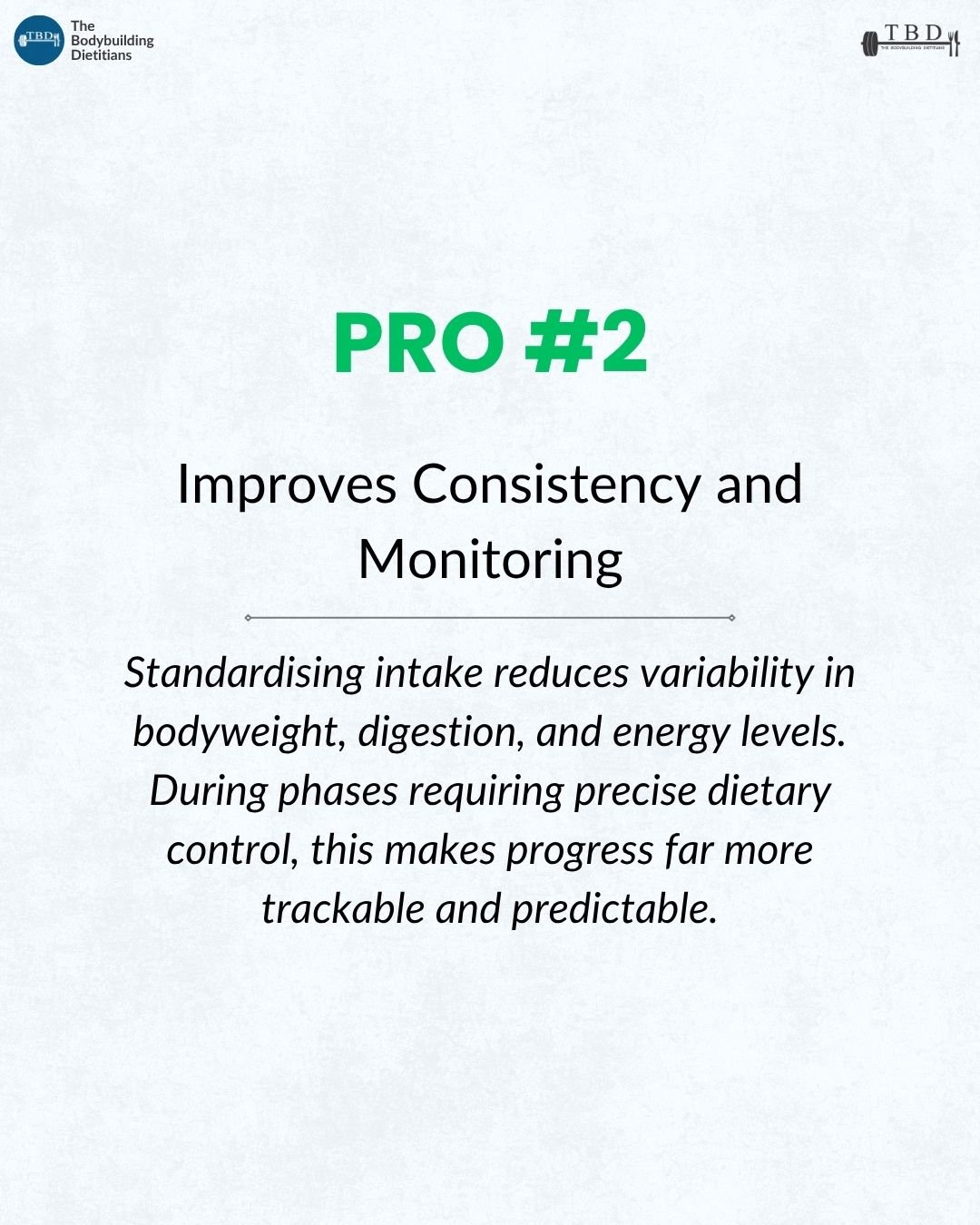
How Do Meal Plans Improve Consistency and Monitoring?
Standardising food intake through a meal plan reduces day-to-day variability in calorie and macronutrient intake, which makes progress more trackable and predictable.
One of the practical challenges of flexible dieting or intuitive eating, particularly during phases where precise dietary control matters, is that the natural variation in daily food choices creates noise in the data. Bodyweight fluctuates more when sodium, fibre, food volume, and meal timing vary significantly from day to day. Digestion becomes less predictable. Energy levels shift. For a coach or athlete trying to assess whether the current plan is working, this variability makes it harder to distinguish signal from noise.
A meal plan reduces this variability by holding most of the dietary inputs constant. When the same foods are consumed in roughly the same quantities at roughly the same times each day, the remaining sources of fluctuation (hydration, sleep, stress, menstrual cycle, training load) become easier to identify and interpret. This makes the feedback loop between nutrition and outcomes tighter and more actionable, which is especially valuable during contest preparation or structured fat loss phases where adjustments need to be made with confidence.
In coaching settings, this is one of the strongest practical arguments for using meal plans during the phases that demand precision. The plan provides a stable baseline against which the athlete's response can be assessed clearly, and adjustments can be made with greater certainty about what is actually driving the observed changes.
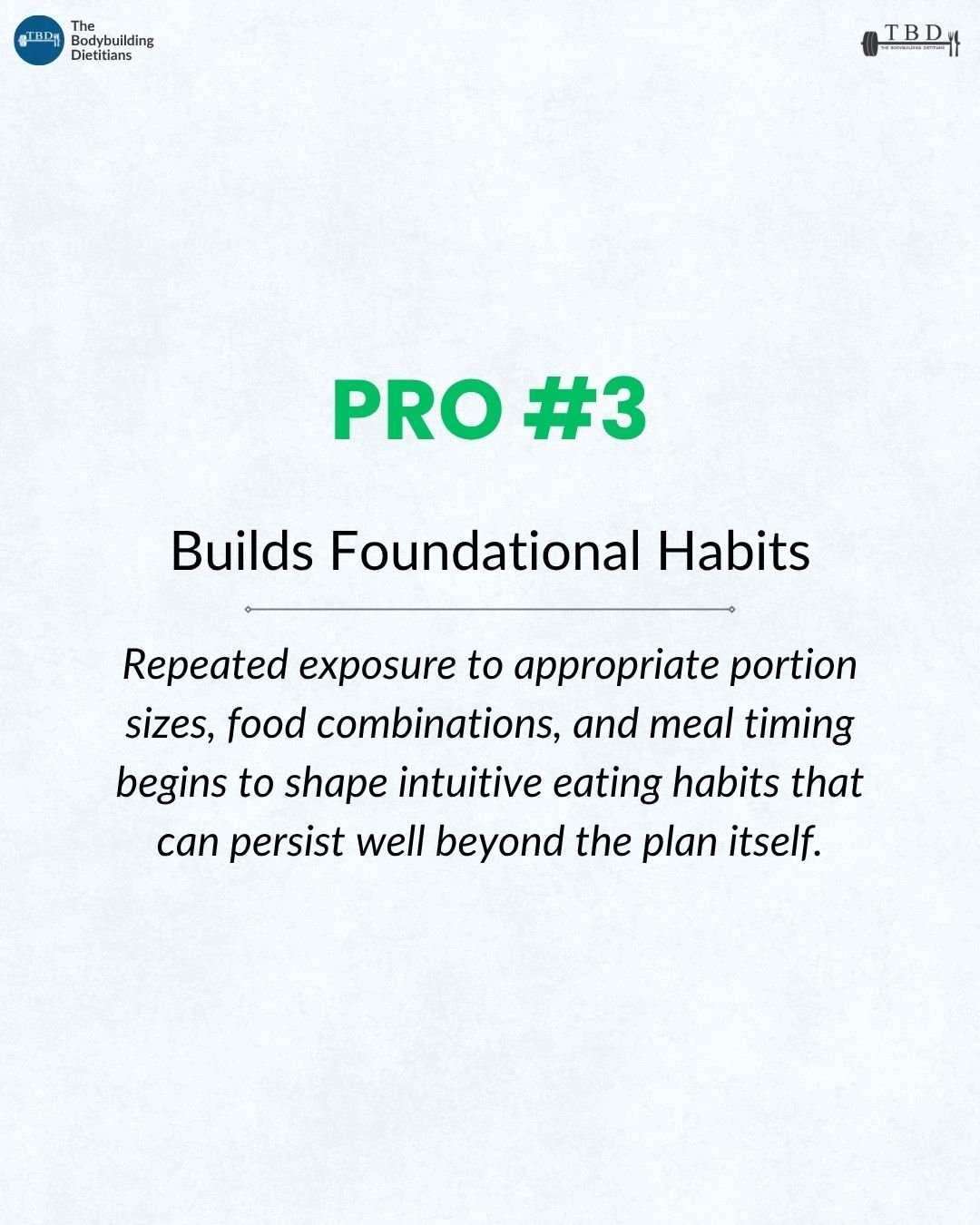
How Do Meal Plans Build Foundational Habits?
Repeated exposure to appropriate portion sizes, food combinations, and meal timing through a structured plan begins to shape intuitive eating habits that can persist well beyond the plan itself.
This is perhaps the most underappreciated benefit of a well-designed meal plan, and it is the bridge between the plan as a short-term tool and the long-term nutritional independence that should be the ultimate goal.
When someone follows a thoughtfully constructed meal plan for several weeks or months, they are not just eating specific foods in specific quantities. They are also internalising what a balanced meal looks like, how much protein a typical serve of chicken or fish provides, what a reasonable portion of carbohydrate feels like, and how to distribute their intake across the day in a way that supports energy, training, and satiety. These patterns become habitual through repetition, and the habits themselves have value that extends far beyond the life of the plan.
Nutritional literacy refers to the practical understanding of how different foods contribute to macronutrient and micronutrient intake, and the ability to apply that knowledge in real-world eating situations. A well-designed meal plan can accelerate the development of nutritional literacy by providing a concrete, experiential framework that abstract nutritional education alone often fails to deliver.
The distinction between a meal plan that builds habits and one that creates dependence often comes down to whether the plan is accompanied by explanation. When a client understands why their breakfast includes a certain amount of protein, why their pre-training meal is structured the way it is, and why their fat intake is distributed across the day in a particular pattern, the plan becomes a learning tool as well as an eating guide. When none of this is explained and the client simply follows instructions, the plan may produce results in the short term but leaves the individual no more capable of managing their nutrition independently than they were before they started.
This is one of the core principles of how our coaching uses meal plans, every plan is paired with the education needed to understand what it is doing and why, so the client is building capability alongside compliance.
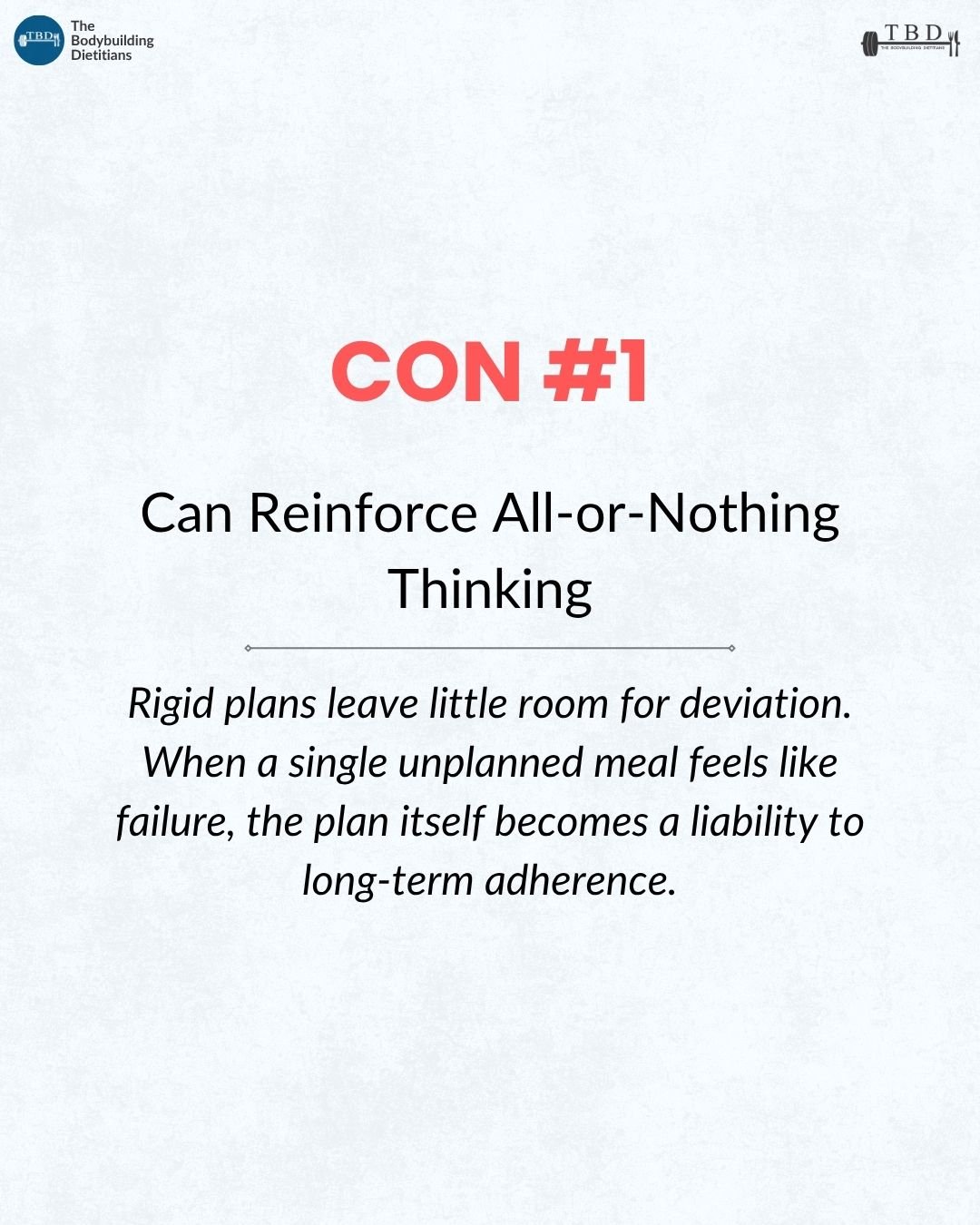
When Do Meal Plans Reinforce All-or-Nothing Thinking?
Rigid meal plans leave little room for deviation, and when a single unplanned meal feels like failure, the plan itself becomes a liability to long-term adherence.
All-or-nothing thinking is one of the most common psychological patterns that undermines fat loss and body composition goals. It manifests as the belief that a day is either "on plan" or "off plan," with no middle ground. A single deviation, whether it is an unplanned snack, a meal eaten at a restaurant, or a slightly different portion size, is interpreted as a failure that invalidates the rest of the day or week.
A highly prescriptive meal plan can reinforce this pattern by creating a binary framework where compliance means eating exactly what is specified and anything else constitutes non-compliance. For individuals who are already prone to rigid thinking around food, this structure can amplify the problem rather than resolve it. The paradox is that the plan was intended to support consistency, but the rigidity it creates actually undermines consistency by making the cost of any deviation feel catastrophic.
Research on dietary restraint has consistently found that rigid approaches to dietary control (characterised by strict rules, specific food prescriptions, and dichotomous thinking about compliance) are associated with greater eating-related distress and more frequent episodes of overeating compared to flexible approaches that allow for adaptation within broader guidelines. Flexible restraint, by contrast, is associated with better long-term weight management outcomes and a healthier psychological relationship with food.
Source: Westenhoefer, Stunkard, and Pudel, 1999, Appetite.
The practical solution is to build flexibility into the plan from the beginning. This might mean providing substitution options within each meal category, setting macro ranges rather than exact targets, or explicitly framing the plan as a guideline rather than a rigid prescription. The language used around the plan matters as much as the plan itself: a client who understands that eating 90 per cent of the plan correctly is still a successful day will respond very differently to deviation than one who believes anything less than 100 per cent compliance constitutes failure.
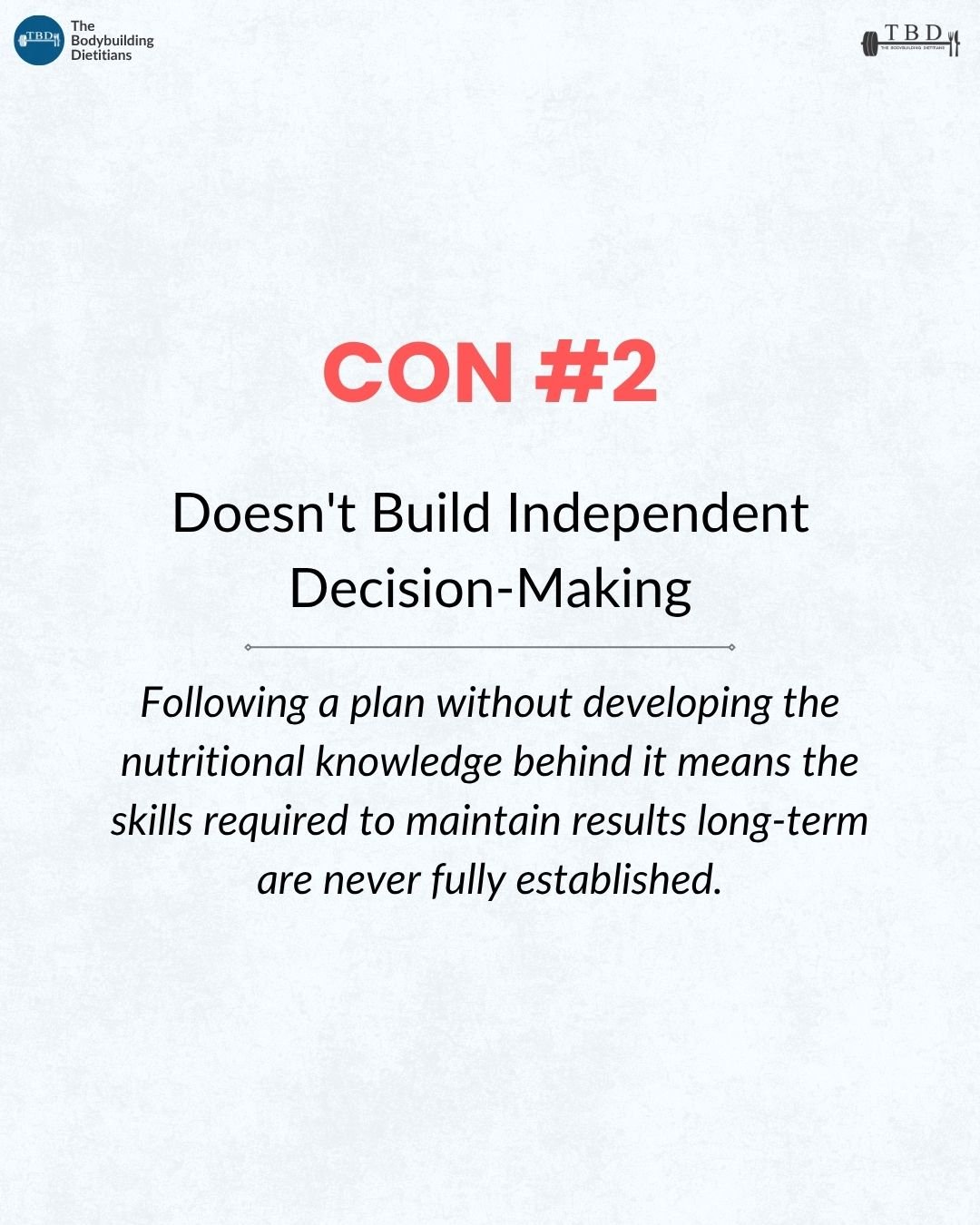
Why Don't Meal Plans Build Independent Decision-Making?
Following a plan without developing the nutritional knowledge behind it means the skills required to maintain results long-term are never fully established.
This is the most significant limitation of meal plans as a standalone coaching tool, and it is the reason that the fitness industry's widespread reliance on prescriptive meal plans (often without accompanying education) has come under increasing scrutiny from dietitians and nutrition researchers.
The issue is straightforward: a meal plan tells you what to eat, but it does not teach you why. If the only reason you eat 150 grams of chicken breast at lunch is because the plan says so, you have no framework for making an equivalent decision when the plan is no longer there, when you are travelling, when the specific food is unavailable, or when your nutritional needs change because you have moved into a different phase.
This creates a cycle of dependence that benefits the plan provider more than the individual. The client achieves results while following the plan, loses those results when they stop (because they were never equipped to maintain them independently), and returns for another plan. In the more concerning version of this pattern, the individual comes to believe that they are incapable of managing their nutrition without external instruction, which undermines their confidence and autonomy around food.
The alternative is not to abandon meal plans entirely but to ensure they are always paired with education that transfers knowledge and builds capability. Over time, the client should be able to answer questions like: "Why is my protein target set where it is?" "What would happen if I swapped this carbohydrate source for a different one?" "How should my intake change if I move from a fat loss phase to maintenance?" If the client cannot answer these questions after months of following a plan, the coaching has produced compliance without competence, and the long-term value is limited.
When Do Meal Plans Break Down in Real-World Conditions?
Highly prescriptive plans create friction in social, travel, and unpredictable environments, and a plan that cannot accommodate the realities of daily life rarely survives extended contact with them.
Life is not a controlled environment. Social meals happen. Travel disrupts routine. Work schedules change. Ingredients run out. Restaurants do not serve meals in weighed, macro-calculated portions. For a meal plan to function over the weeks and months required for meaningful body composition change, it needs to be robust enough to handle these situations without creating a sense of failure every time they occur.
The more prescriptive a plan is (specific foods, specific quantities, specific times), the more fragile it becomes in the face of real-world variation. An athlete who has been told to eat exactly 150 grams of basmati rice, 180 grams of chicken breast, and 100 grams of broccoli at 12:30 pm will struggle to adapt when they find themselves at a work lunch, a family dinner, or a hotel breakfast buffet. If the plan has not equipped them with the knowledge and flexibility to make reasonable substitutions in these situations, the entire structure can feel like it has collapsed.
This limitation becomes more pronounced over time. In the first few weeks of a plan, the novelty and motivation tend to carry people through. As the weeks extend into months, the accumulation of situations where the plan does not fit the reality of life creates progressively more friction. In coaching settings, this is often the point where adherence begins to drop, not because the individual lacks discipline, but because the tool they were given was too rigid for the context it needed to operate in.
A practical approach is to design plans with built-in flexibility from the start: substitution lists for each food category, guidance on how to estimate portions when weighing is not possible, and explicit permission to adapt meals to circumstances while staying within the broader nutritional framework. This preserves the structure that makes a plan useful while building the adaptability that makes it sustainable.
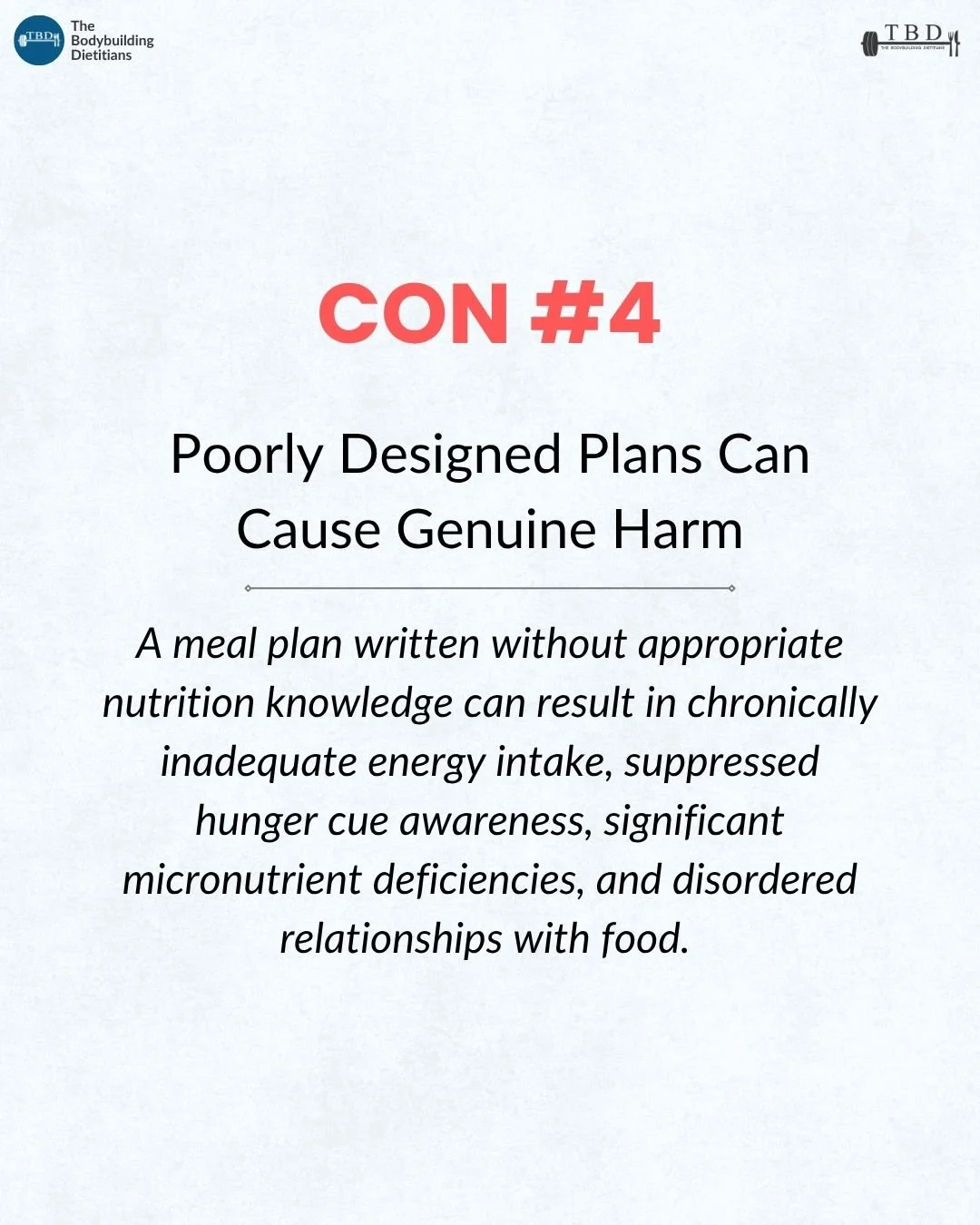
Can a Poorly Designed Meal Plan Cause Harm?
A meal plan written without appropriate clinical knowledge can result in chronically inadequate energy intake, micronutrient deficiencies, suppressed hunger cue awareness, and a disordered relationship with food.
This is the most serious concern in the conversation about meal plans, and it is more common than most people realise. The barrier to entry for writing and selling meal plans is essentially zero in most jurisdictions. Personal trainers, online coaches, social media influencers, and self-taught nutrition enthusiasts all produce and distribute meal plans, often without the clinical training needed to assess whether the plan is appropriate, safe, and nutritionally complete for the individual receiving it.
Low energy availability occurs when dietary energy intake is insufficient to support both exercise demands and basic physiological function. Chronic low energy availability is associated with a range of health consequences including hormonal disruption, impaired bone health, reduced immune function, menstrual irregularities, and decreased training adaptation. Meal plans that prescribe excessively low calorie intakes without clinical oversight are a common contributor to this condition.
The risks of a poorly designed plan include: energy intake set too low for the individual's needs, creating chronic under-fuelling that impairs health and performance; inadequate protein to support muscle retention during a deficit; insufficient dietary fat to maintain hormonal function; limited food variety that leads to micronutrient gaps (iron, calcium, zinc, B vitamins, and others); excessive restriction that disconnects the individual from their hunger and satiety cues; and a rigid structure that reinforces disordered patterns around food.
These outcomes are not hypothetical. They are patterns that dietitians and clinicians encounter regularly among clients who have previously followed plans from unqualified sources. The damage can take months or years to fully resolve, particularly when the individual's relationship with food has been fundamentally altered by a prolonged period of inappropriate restriction.
This is one of the reasons that working with an Accredited Practising Dietitian matters when it comes to structured nutrition, particularly for physique-focused goals where the temptation to push intake lower is built into the process. A qualified dietitian has the clinical training to assess whether a plan is safe, the expertise to ensure it is nutritionally complete, and the ethical obligation to prioritise the client's health alongside their physique goals.
What Does Moving Beyond a Meal Plan Look Like?
The goal for most people is to use a meal plan as a temporary framework that builds the awareness, habits, and confidence needed to manage nutrition independently over the long term.
The transition away from a meal plan is not a single moment but a gradual process of increasing autonomy. It typically begins with the individual making small modifications to the plan (swapping a food, adjusting a portion, rearranging meal timing) with guidance from their coach, and progresses toward independent meal construction within a set of macro or calorie guidelines.
A practical progression might look like this: in the first phase, the individual follows a structured plan closely to build consistency, learn portion sizes, and establish a baseline of habits. In the second phase, substitution options are introduced and the individual begins making choices within the plan's framework, developing confidence in their ability to construct meals that meet their targets. In the third phase, the plan gives way to broader guidelines (a daily protein target, a calorie range, a set of principles around food quality and meal structure) that the individual applies independently. In the fourth phase, the individual manages their nutrition largely through internalised habits and periodic self-assessment, returning to more structured approaches only during phases that demand it.
This progression mirrors the way that macro tracking often evolves, and the two processes can support each other. An individual who has both followed a meal plan and tracked their macros during different phases will typically develop a stronger and more practical nutritional literacy than someone who has only done one or the other, because the plan teaches structure and habit while tracking teaches measurement and awareness.
Research on self-regulation in dietary behaviour supports a progression from external regulation (following prescribed rules or plans) to identified regulation (understanding and endorsing the reasons behind dietary choices) to integrated regulation (dietary behaviour that is consistent with the individual's broader values and identity). This progression is associated with more sustainable dietary behaviour and better long-term outcomes compared to approaches that rely solely on external structure.
Source: Teixeira et al., 2012, International Journal of Behavioral Nutrition and Physical Activity.
In coaching settings, the athletes who maintain their results most successfully over the long term are generally those who have moved through this progression deliberately, not those who have followed a plan for years without developing the skills to function without one. The plan gets things moving in the right direction. Building the knowledge and confidence to eventually not need one is the whole point.
When Are Meal Plans Most and Least Appropriate?
Meal plans tend to add the most value during the early stages of a new nutritional phase, during periods requiring high precision, and for individuals who are new to structured nutrition. They tend to become less useful, and potentially counterproductive, as the individual's experience and confidence grow.
Most appropriate contexts for meal plans:
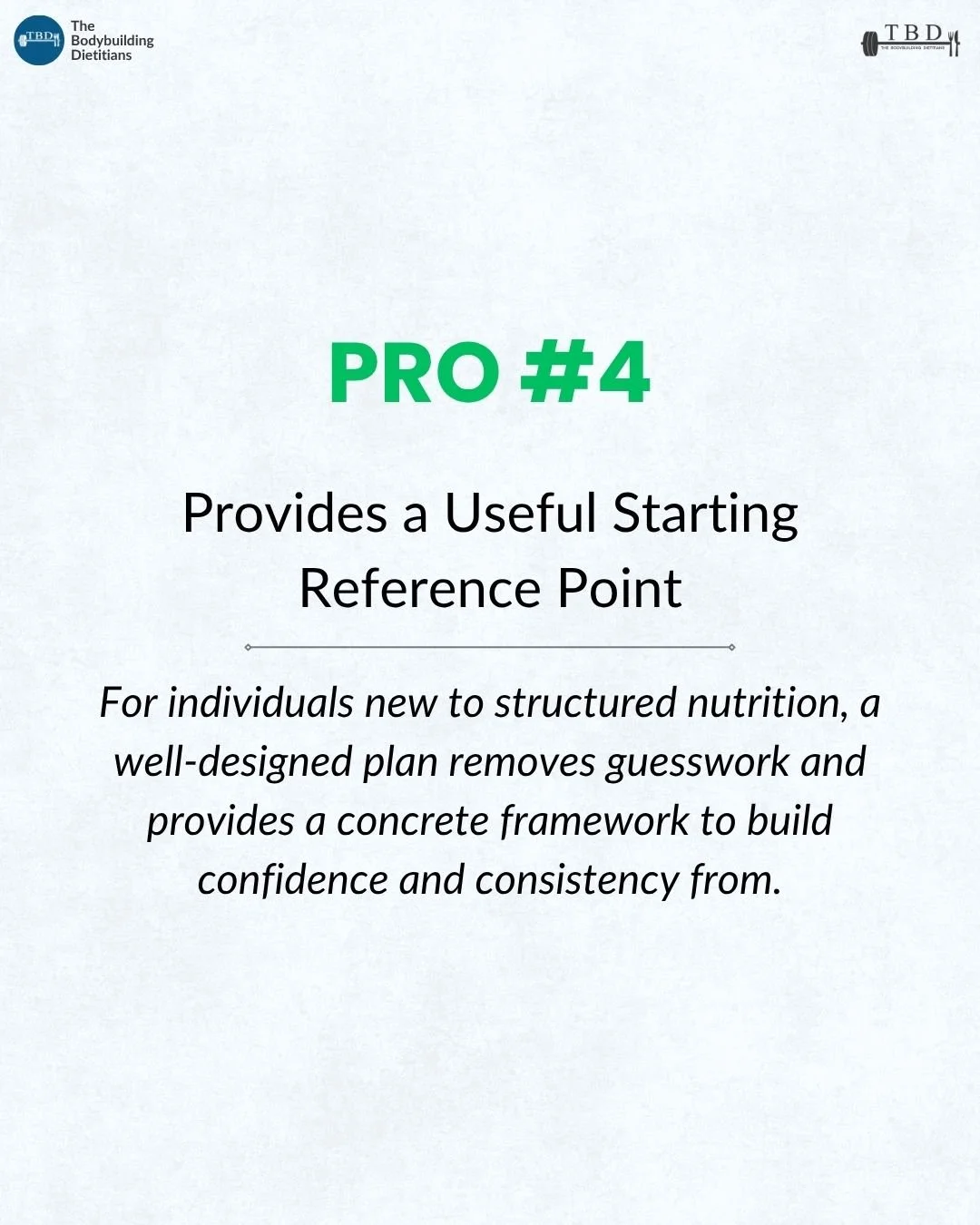
The first few weeks of a fat loss phase, when the individual is adjusting to new calorie and macro targets and benefits from having the decisions pre-made. Contest preparation, where the precision required and the stakes involved justify a higher level of dietary structure. The initial phase of working with a new coach, where a plan provides a concrete starting point and a shared reference for communication. Periods of high external stress (work, family, travel) where cognitive capacity for food decisions is reduced and a plan simplifies daily execution. Individuals who are entirely new to structured nutrition and need a concrete framework to build habits and confidence from.
Less appropriate contexts for meal plans:
Long-term maintenance, where the individual has the experience and skills to manage their nutrition through broader guidelines. Situations where the plan has become a source of anxiety or rigidity rather than a source of structure. Individuals with a history of disordered eating or an unhealthy relationship with food, where a prescriptive plan may reinforce problematic patterns. Contexts where the individual's lifestyle requires significant daily variation (irregular schedules, frequent travel, social eating) that a fixed plan cannot accommodate well.
Practical Takeaways
Meal plans are tools, not long-term solutions. They work best as short-to-medium-term frameworks that build habits, reduce decision fatigue, and provide structure during phases where precision matters.
The most significant limitation of meal plans is their tendency to create dependence rather than capability. A plan that is not paired with education produces compliance without competence, which limits long-term value.
Rigid plans can reinforce all-or-nothing thinking, making a single deviation feel like failure and undermining the consistency they were designed to support. Building flexibility into the plan from the beginning helps prevent this.
Poorly designed meal plans from unqualified sources can cause genuine harm, including chronic under-fuelling, micronutrient deficiencies, and disordered relationships with food. Working with a qualified dietitian reduces this risk significantly.
The goal is a gradual progression from following a structured plan, to making guided modifications within it, to managing nutrition independently through internalised habits and broader guidelines.
Meal plans are most valuable at the start of a new phase, during contest preparation, and for individuals new to structured nutrition. They become less appropriate as experience, confidence, and nutritional literacy develop.
Frequently Asked Questions
Do meal plans work for fat loss?
Meal plans can be effective for fat loss because they simplify adherence by removing daily food decisions and ensuring that calorie and macronutrient targets are consistently met. However, the plan itself is not what produces fat loss; the calorie deficit it creates is. Any approach that maintains a consistent deficit, whether through a meal plan, macro tracking, or portion-based guidelines, can produce comparable results. The best approach is the one the individual can sustain over the required timeframe.
How long should you follow a meal plan?
The optimal duration depends on the individual's goals and experience. For building initial habits and nutritional awareness, four to twelve weeks of consistent adherence to a well-designed plan is often sufficient to establish a foundation. During specific phases such as contest preparation, a more structured approach may be appropriate for the full duration. The key is to treat the plan as a temporary framework that builds toward eventual independence rather than as a permanent way of eating.
Are meal plans better than tracking macros?
Neither approach is inherently superior; they serve different purposes and suit different people. Meal plans reduce decision fatigue and provide structure, making them well suited for individuals who find daily food decisions overwhelming or who are new to structured nutrition. Macro tracking provides more flexibility in food choices while maintaining nutritional precision, making it better suited for individuals who want variety and have the experience to construct their own meals within guidelines. Many people benefit from using both at different stages.
Can a meal plan cause disordered eating?
A poorly designed or excessively rigid meal plan can contribute to disordered eating patterns, particularly in individuals who are already predisposed to an unhealthy relationship with food. The risks include reinforcing all-or-nothing thinking, disconnecting the individual from their hunger and satiety cues, creating anxiety around unplanned eating, and normalising inappropriately low energy intakes. These risks are significantly reduced when plans are designed by qualified professionals and paired with education and flexibility.
Should a bodybuilding coach give you a meal plan?
Whether a meal plan is appropriate depends on the individual's needs, experience, and preferences. For competitors in preparation, a structured plan can provide valuable precision and consistency. For general clients, a more flexible approach (such as macro guidelines with example meals) may be more appropriate and sustainable. The most important consideration is that whoever designs the plan has the clinical knowledge to ensure it is safe, nutritionally complete, and appropriate for the individual's goals and health status.
How do you transition off a meal plan?
The transition is best managed as a gradual progression rather than an abrupt change. Start by making small substitutions within the existing plan framework to build confidence in independent food decisions. Progress to constructing meals within macro or calorie guidelines without a fixed food list. Eventually, move toward managing nutrition through internalised habits, periodic self-assessment, and the broader nutritional literacy developed during the structured phase. Returning to more structure during specific phases (such as the start of a new cut) is a normal and healthy part of this process.
If you would like a nutrition approach that is tailored to your goals and designed to build your capability alongside your results, our team of qualified dietitians can help.