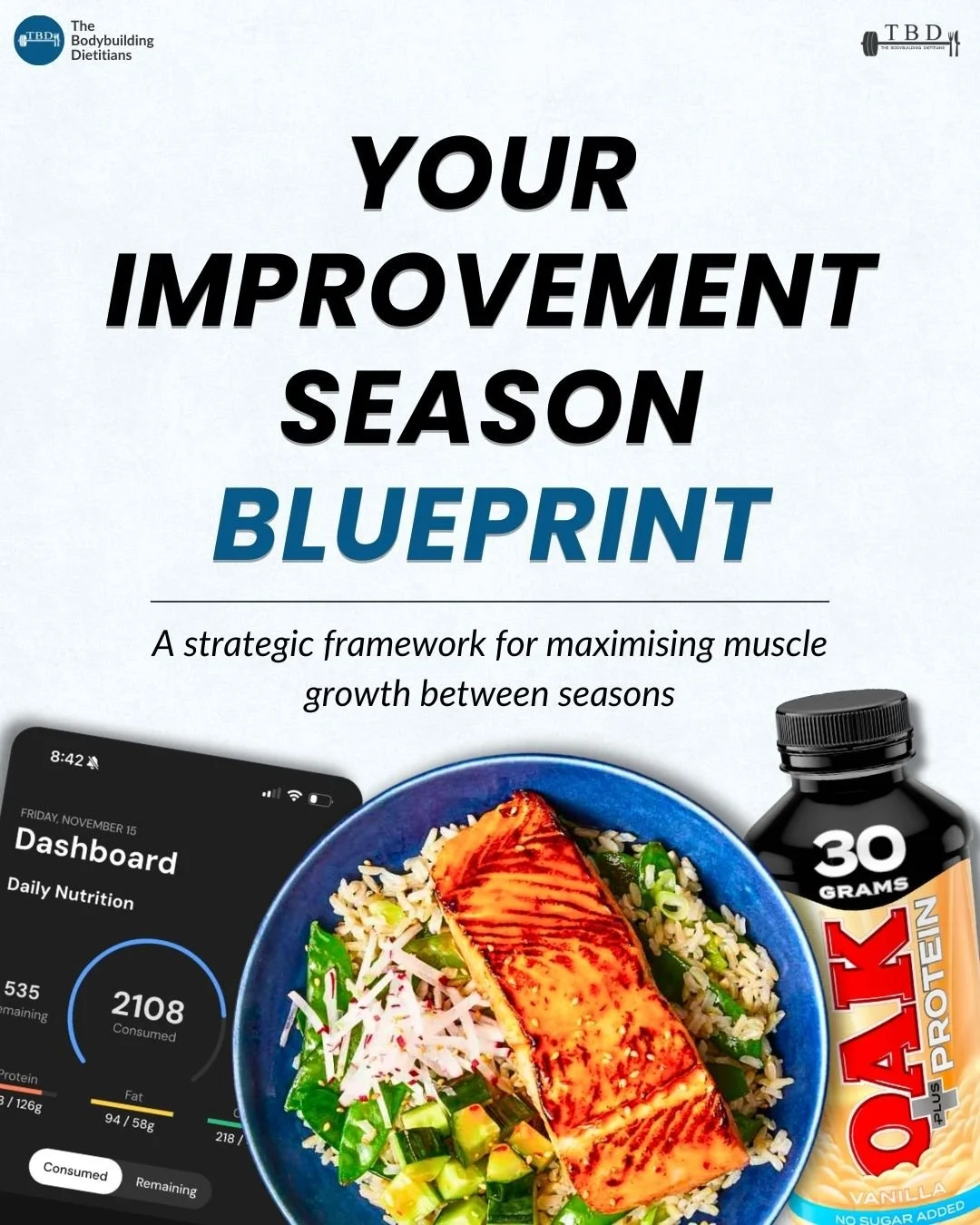
A Strategic Framework for Maximising Muscle Growth Between Seasons
Your improvement season largely determines how successful your next prep will be.
Most meaningful physique change occurs between shows. By the time contest prep begins, you are refining and revealing the muscle that has already been built. The improvement phase is where tissue is added, weak points are addressed, and long-term standards are established.
When structured well, this phase functions like compound interest. Small, consistent improvements in performance, nutrition, and recovery accumulate over months into visible change.
Below is a framework for approaching your improvement season with clarity and intent.
1. Performance-Driven Training
Muscle growth is driven by a progressive training stimulus applied consistently over time.
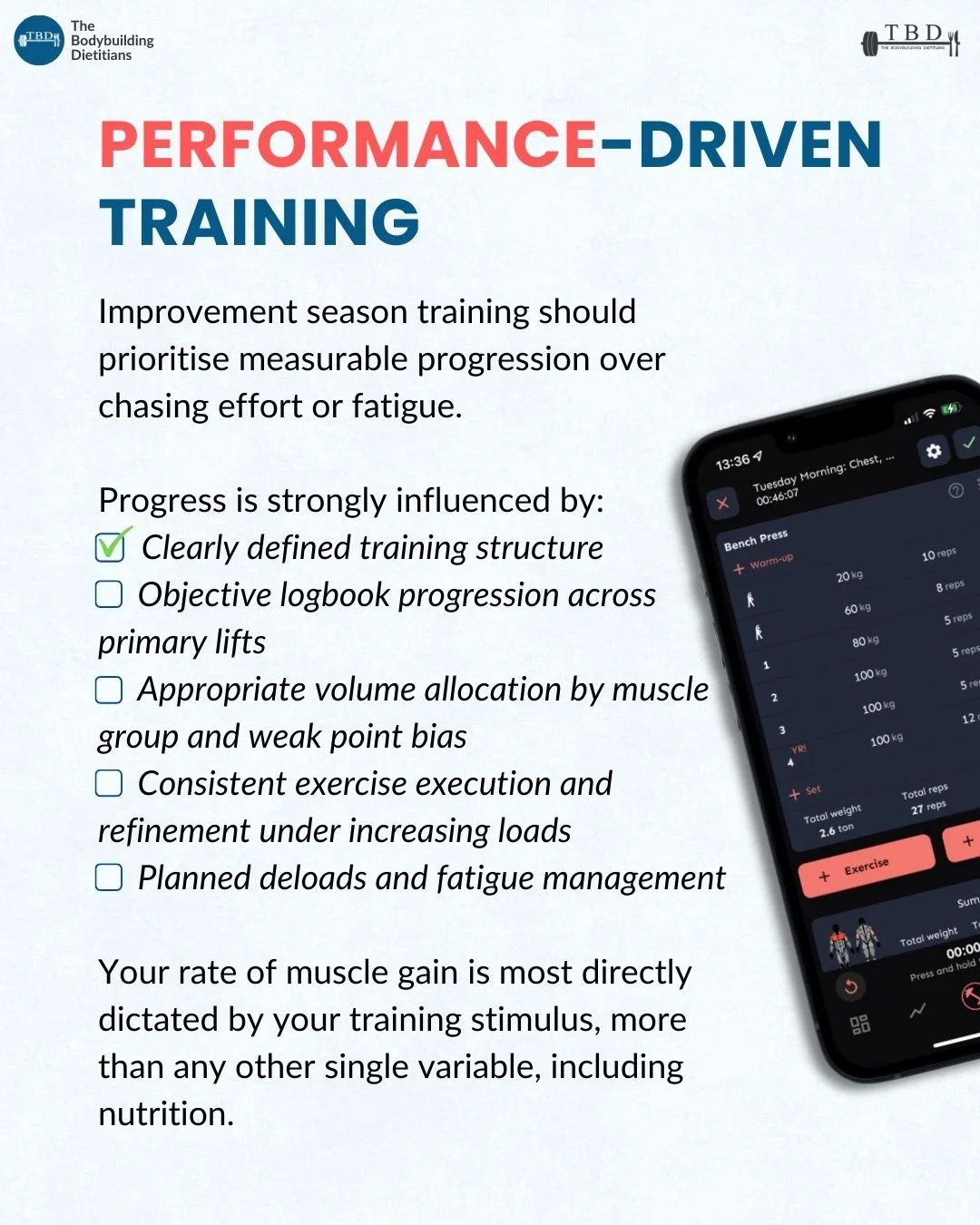
Improvement season training is most productive when it emphasises:
Clearly defined program structure
Objective logbook progression across primary lifts
Thoughtful volume allocation based on muscle group priority
Consistent technical execution under increasing loads
Planned deloads and fatigue management
When loads, reps, and execution quality trend upward over time, the mechanical stimulus required for hypertrophy is present. Nutrition and recovery then serve to support and amplify that stimulus.
The improvement phase is an opportunity to refine movement patterns, build strength within key rep ranges, and apply overload with patience.
2. Energy Availability and Fueling
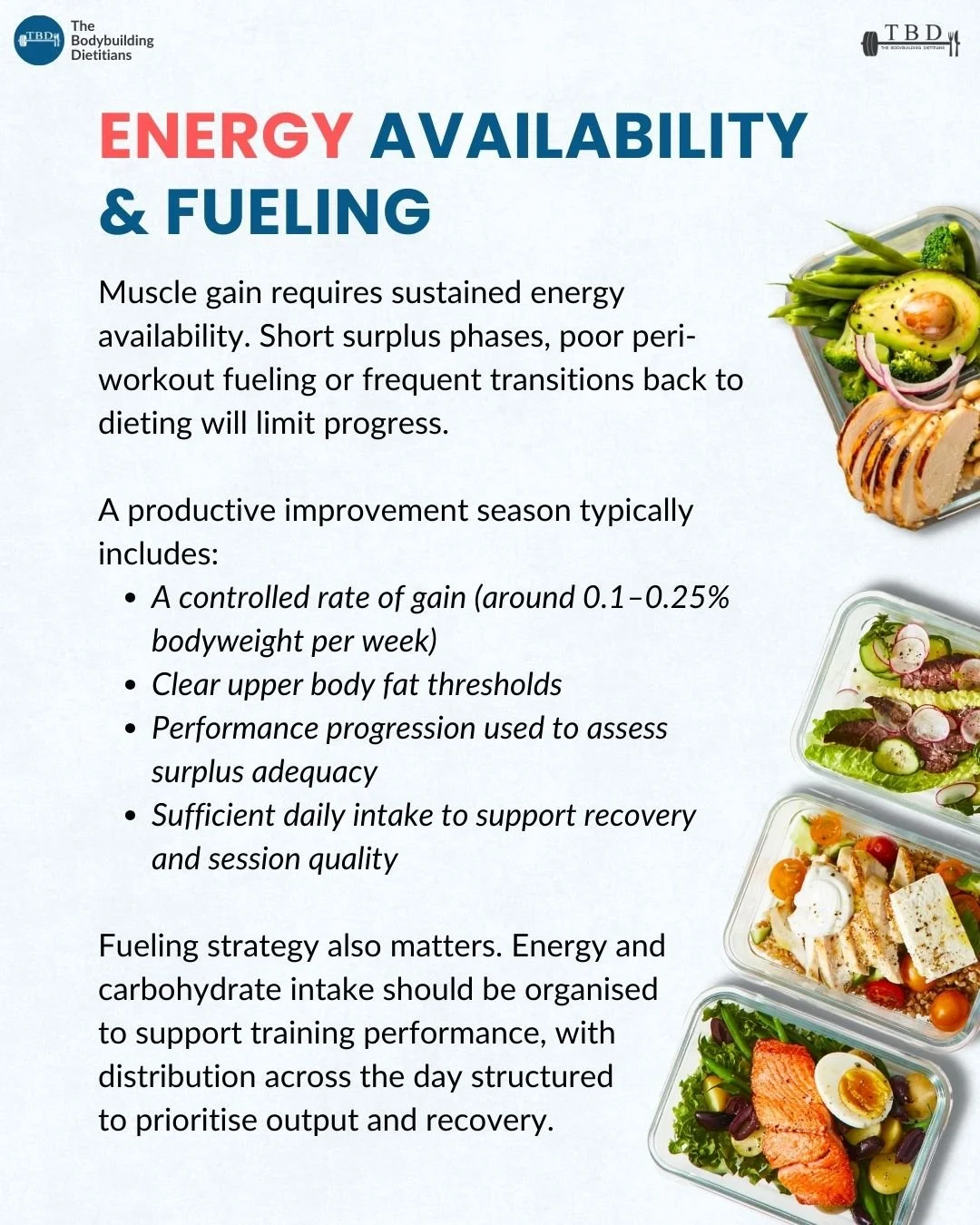
Muscle gain requires sustained energy availability.
A productive improvement season typically includes:
A controlled rate of gain, often around 0.1 to 0.25 percent of bodyweight per week
Defined upper body fat thresholds
Performance progression used to assess surplus adequacy
Sufficient daily intake to support recovery and session quality
Energy intake should create a stable internal environment that supports progressive overload. Carbohydrate intake and daily distribution can be aligned with training demands to optimise output and recovery.
The objective is steady, predictable progress. Controlled weight gain allows muscle tissue to accumulate while maintaining a composition that remains comfortable and manageable.
3. Long-Term Development Mindset
Improvement seasons represent the majority of an athlete’s timeline.
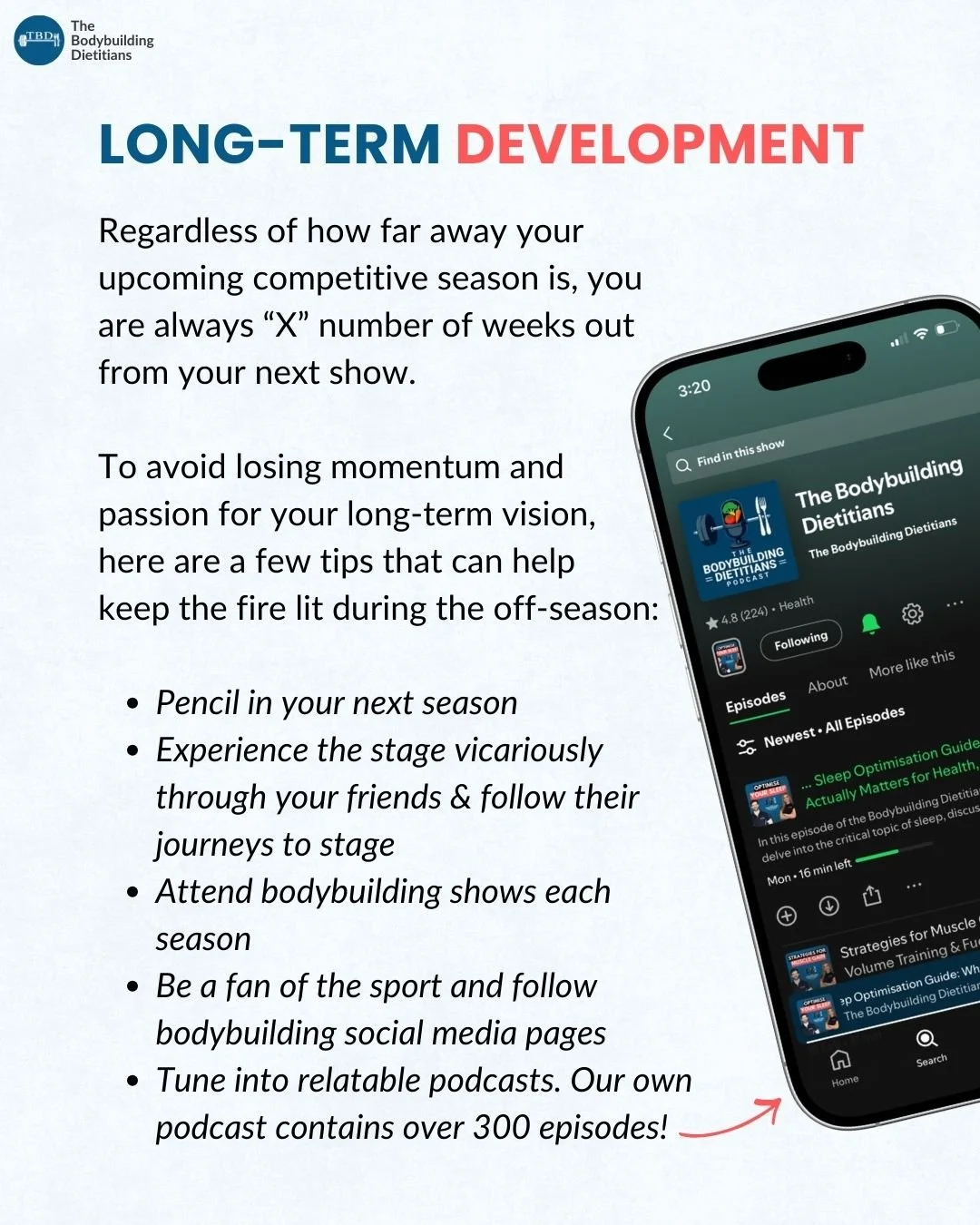
Regardless of how far away your next show is, development continues week by week. Anchoring your long-term vision helps maintain direction and consistency.
Practical strategies that support long-term engagement include:
Setting a tentative future season
Staying connected to the competitive standard
Following peers through their prep cycles
Consuming educational content that reinforces development
When the improvement phase is treated as an active building season, daily actions align naturally with long-term goals.
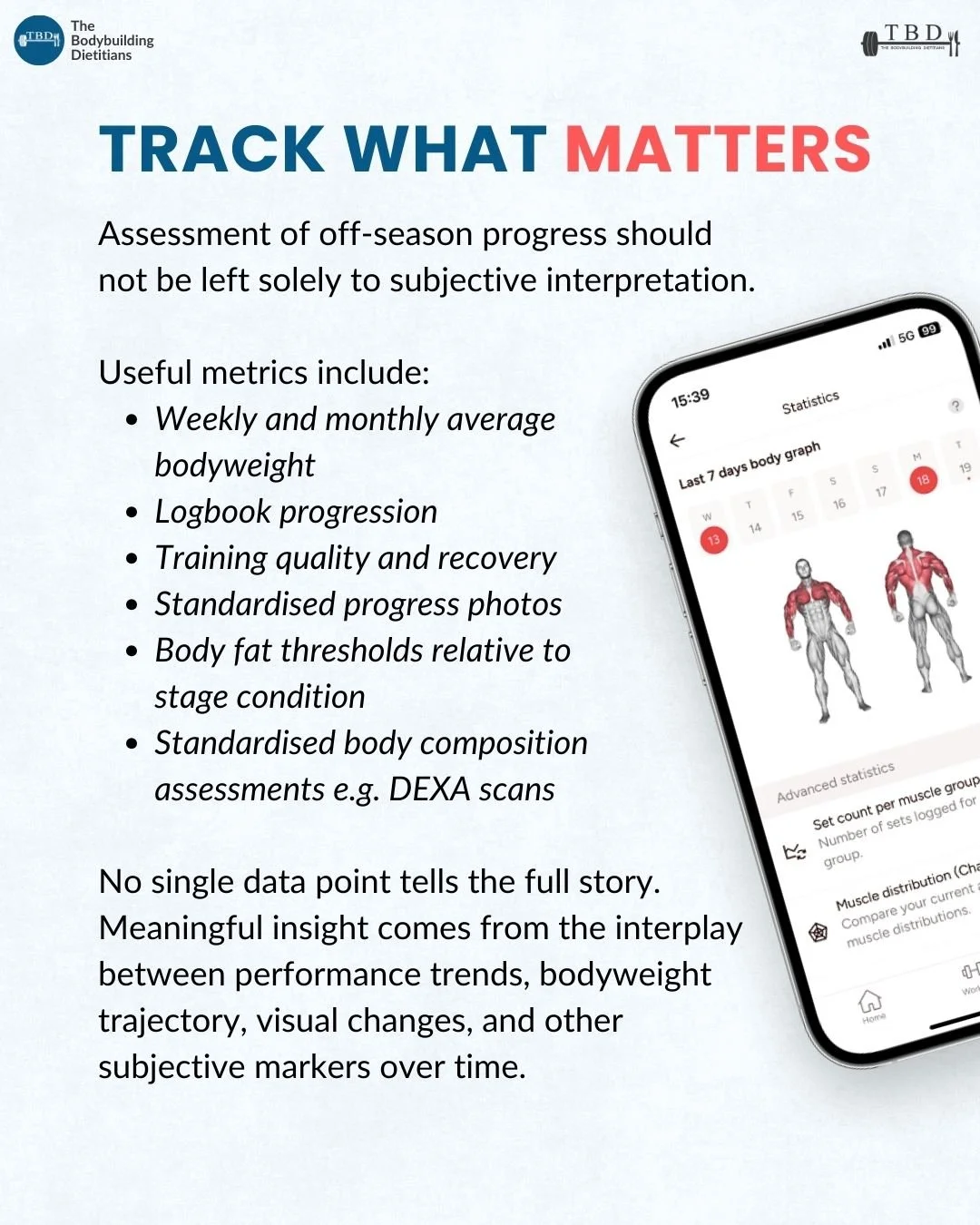
4. Track What Matters
Objective tracking strengthens decision-making.
No single metric captures the full picture of progress. Meaningful insight comes from the interaction between multiple data points observed over time.
Useful monitoring tools include:
Weekly and monthly average bodyweight
Logbook progression
Training quality and recovery trends
Standardised progress photos
Body fat thresholds relative to stage condition
Periodic body composition assessments where appropriate
When bodyweight trajectory, visual changes, and performance data align, confidence in the process increases. When trends shift, small adjustments can be made early and deliberately.
Tracking creates clarity. Clarity supports consistency.
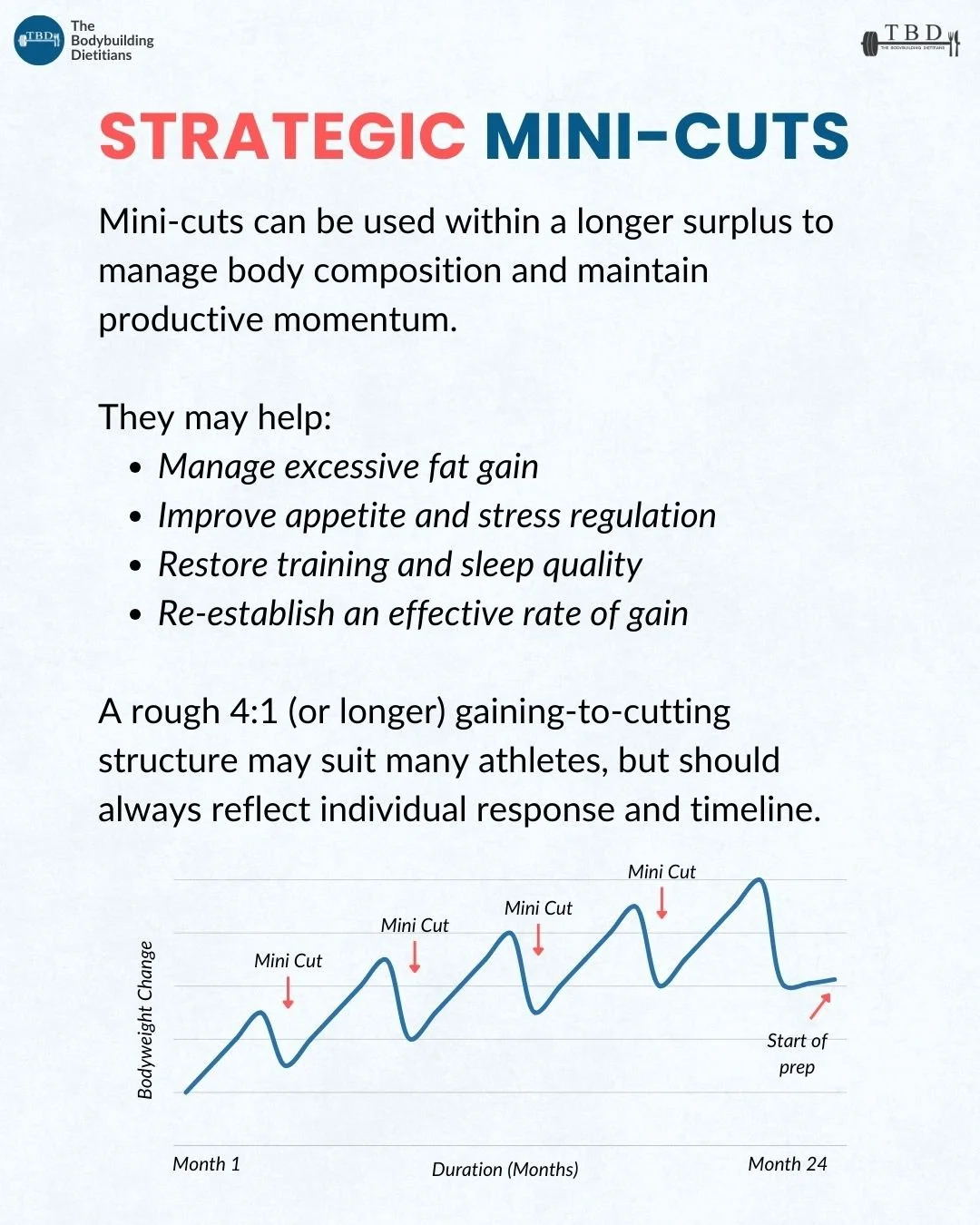
5. Strategic Mini-Cuts
Mini-cuts can be integrated within a longer surplus to maintain productive momentum.
These short recalibration phases can:
Refine body composition
Improve appetite regulation
Restore training quality and recovery
Re-establish a productive rate of gain
For many athletes, a gaining-to-mini-cut structure such as 4:1 or longer can work well, though individual response and timeline guide the specifics.
Over a multi-year horizon, alternating extended gaining phases with occasional recalibration periods supports steady net muscle gain while maintaining manageable body composition.
6. Maintain Your Standards
Extended periods away from the stage provide an opportunity to strengthen long-term habits.
Improvement seasons benefit from:
Defined off-season training goals
Consistent progress photos
Structured nutrition, whether tracked precisely or applied through well-established habits
Stable sleep and recovery routines
External accountability when helpful
Bodybuilding can coexist with everyday life while maintaining high standards. Balance and structure together create sustainability.
The Compounding Effect
Most athletes spend significantly more time building than dieting.
When progressive overload, controlled energy availability, and objective monitoring are applied consistently across years, stage improvements become increasingly noticeable. Contest prep then becomes a process of refinement rather than reconstruction.
Your improvement season shapes your competitive ceiling.
The quality of the work done between shows determines the physique that will eventually stand under the lights.
If you want your next prep to reflect measurable new muscle rather than simply improved conditioning, your improvement season deserves structure. Our team specialises in performance-driven off-season planning, structured rate-of-gain strategies, and long-term physique development.