Physique sports are often criticised as inherently unhealthy, but the reality is considerably more nuanced. Where an individual sits on the health spectrum depends less on the sport itself and more on how it is approached, who is supporting them, and what they bring to the process.
Participation in physique sport is not inherently healthy or unhealthy. The outcome depends on a range of factors including preparation methods, coaching quality, psychological resilience, recovery practices, and individual predispositions. When approached responsibly, with adequate preparation time, qualified professional support, and attention to both physical and psychological health, competitive bodybuilding can foster discipline, nutritional literacy, improved body composition, and genuine community. When approached poorly, with aggressive energy restriction, inadequate recovery, unqualified coaching, or pre-existing vulnerabilities around food and body image, the risks to both physical and psychological health are real and well-documented. The quality of professional support surrounding the athlete is one of the most significant variables in determining which outcome prevails.
“Bodybuilding is unhealthy.” From the outside looking in, this might be an easy conclusion to reach. The extended periods of calorie restriction, the focus on physical appearance, the regimented eating, and the images of competitors at extreme levels of leanness all contribute to a perception that the sport is fundamentally at odds with health.
The reality is considerably more nuanced than that framing suggests. Most things in life exist on a spectrum, and physique sport is no different. Participation can foster discipline, nutritional literacy, long-term health habits, improved body composition, and a genuine sense of community and purpose. It can also, when approached poorly or by individuals with certain predispositions, create or amplify problematic patterns around food, body image, and self-worth. The sport does not produce just one type of outcome.
What determines which outcome an individual experiences depends on a set of variables that are largely within the athlete's control or within the influence of the team supporting them. Preparation time, off-season body composition, psychological readiness, recovery between seasons, and the quality of professional support all play meaningful roles. This article examines each of these factors, acknowledges the genuine risks that deserve honest discussion, and outlines practical steps for competing in a way that supports rather than undermines long-term health.
What Makes a Sport Healthy?
Before assessing whether physique sport is healthy or unhealthy, it is useful to establish a framework for what "healthy" means in the context of competitive sport, because no sport at a competitive level is entirely free from health trade-offs.
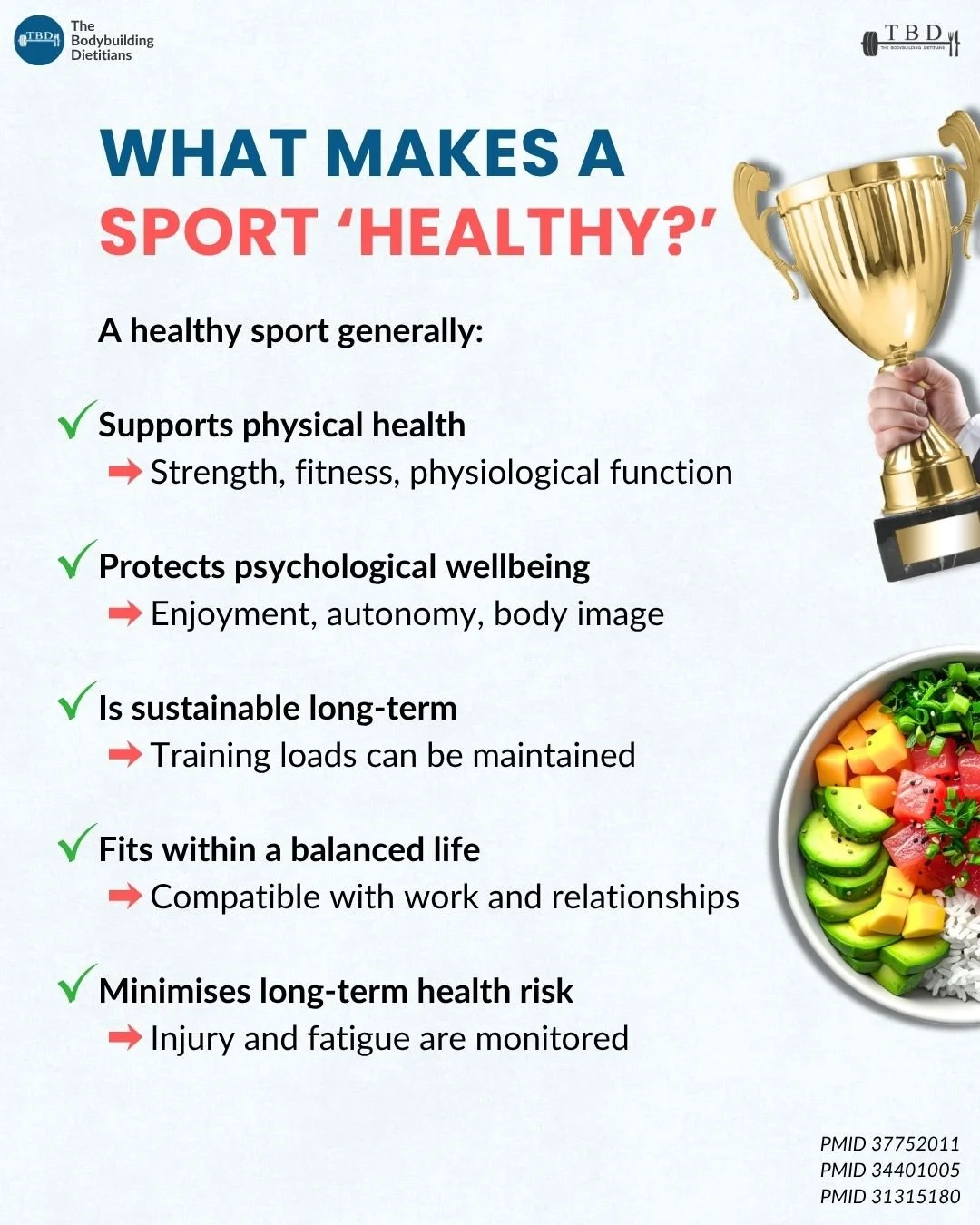
A healthy sport, in general terms, is one that supports physical health (building strength, fitness, and physiological function rather than systematically degrading them), protects psychological wellbeing (providing enjoyment, autonomy, and a positive relationship with the body rather than undermining them), is sustainable long-term (the training and competition demands can be maintained across years without cumulative harm), fits within a balanced life (remaining compatible with work, relationships, and other commitments), and minimises long-term health risk (with injury, fatigue, and physiological strain monitored and managed proactively).
By these criteria, no competitive sport achieves a perfect score. Distance running carries risks of overuse injury and relative energy deficiency. Contact sports carry risks of concussion and joint damage. Gymnastics and figure skating involve similar aesthetic pressures to physique sport. Swimming at an elite level demands training volumes that strain the body's recovery systems. The question is not whether physique sport carries risk (it does, as do all competitive sports), but whether the risks are inherent to the sport or whether they are a consequence of how the sport is approached.
The evidence suggests that most of the health risks associated with competitive bodybuilding are modifiable rather than inherent. They are consequences of insufficient preparation time, poor coaching, inadequate recovery, and individual predispositions that interact with the demands of the sport, rather than unavoidable outcomes of participation itself.
What Are the Genuine Risks of Competitive Bodybuilding?
The risks are real and deserve honest acknowledgement. Contest preparation places significant physiological and psychological demands on the body, and certain individuals carry predispositions that make those demands harder to navigate safely.
Physiological risks. Extended calorie restriction during contest preparation produces a range of well-documented physiological effects including suppressed testosterone and reproductive hormones, elevated cortisol, reduced resting metabolic rate, impaired immune function, decreased bone mineral density with prolonged low energy availability, and disrupted sleep. These effects are generally transient and reversible with adequate post-competition recovery, but they are more severe and slower to resolve when the deficit is aggressive, the prep is prolonged, or recovery is inadequate.
Relative energy deficiency in sport (REDs, formerly known as the Female Athlete Triad) is a clinical syndrome resulting from insufficient energy availability to support the physiological functions required for optimal health and performance. While originally described in female athletes, REDs is now recognised as affecting both sexes and is particularly relevant to physique sport, where deliberate energy restriction is a fundamental part of the competitive cycle.
A systematic review of the physiological and psychological effects of natural bodybuilding competition preparation found consistent evidence of hormonal disruption (suppressed testosterone, elevated cortisol, reduced thyroid hormones), metabolic adaptation (decreased resting metabolic rate), and psychological effects (increased food preoccupation, mood disturbance, and body dissatisfaction) during the latter stages of preparation. The review noted that the severity of these effects was related to the degree and duration of energy restriction, and that most markers recovered within three to six months post-competition with adequate nutritional rehabilitation.
Source: Helms, Aragon, and Fitschen, 2014, Journal of the International Society of Sports Nutrition.
Psychological risks. The psychological demands of physique sport are significant and distinct from most other sports. The extended focus on body composition, the subjective judging criteria, the dietary restriction, and the public nature of stage presentation all create psychological pressure that interacts with individual personality traits and predispositions.
The relationship between physique sport and disordered eating has received considerable research attention. The evidence suggests that the prevalence of disordered eating symptoms is elevated among competitive bodybuilders compared to the general population, though it is important to note that elevated symptom prevalence is not the same as a universal outcome. Many competitors navigate the process without developing disordered eating, and the risk is modulated by individual factors including pre-existing tendencies toward perfectionism, body image concerns, trait anxiety, and whether the primary motivation for competing is internal (self-testing, personal challenge) or external (validation, approval).
A systematic review and meta-analysis of disordered eating prevalence among athletes worldwide found that the pooled prevalence of self-reported disordered eating across all sports was approximately 19 to 25%, with higher rates in aesthetic and weight-class sports compared to non-aesthetic sports. The review noted that predisposing factors including perfectionism, body dissatisfaction, and external validation seeking were significant moderators of risk.
Source: Ghazzawi et al., 2024, Nutrients.
Who Is Most Vulnerable to the Risks?
Some individuals carry predispositions that make the demands of physique sport harder to navigate safely. Recognising these predispositions before entering the sport, rather than discovering them during a prep, is one of the most important steps an athlete or their coach can take.
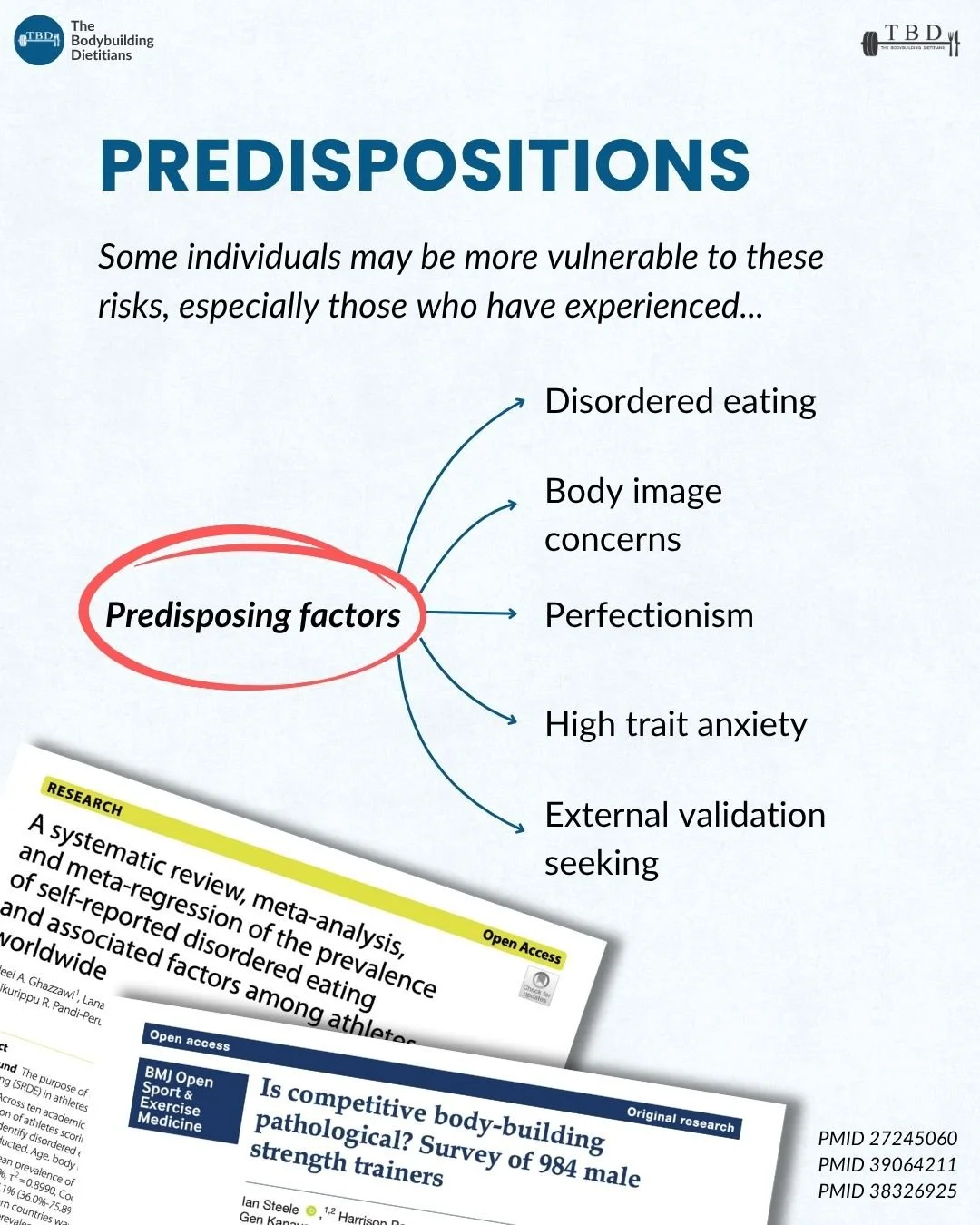
The predisposing factors most consistently identified in the research include a history of disordered eating or a current complicated relationship with food, pre-existing body image concerns or body dissatisfaction, high perfectionism (particularly the self-critical, socially prescribed form rather than healthy striving), high trait anxiety, and a tendency toward external validation seeking (where self-worth is heavily contingent on approval, recognition, or competitive outcomes).
These factors do not automatically preclude someone from competing. They do, however, increase the risk that the demands of preparation will interact with existing vulnerabilities in ways that produce harmful outcomes. For individuals who recognise themselves in one or more of these categories, the responsible approach is to address these concerns with appropriate professional support (a psychologist or counsellor with experience in sport or body image) before entering a prep, rather than hoping the structure and discipline of the sport will resolve them.
In coaching settings, one of the most important conversations that can happen before a prep begins is an honest assessment of the athlete's psychological readiness to compete. This is not about gatekeeping the sport. It is about ensuring that the experience of competing serves the individual's long-term wellbeing rather than undermining it, and that the right support structures are in place before the demands of prep begin.
What Are the Genuine Benefits of Physique Sport?
When approached responsibly, physique sport provides a range of physical, psychological, and social benefits that are often underrepresented in the conversation about whether the sport is healthy.
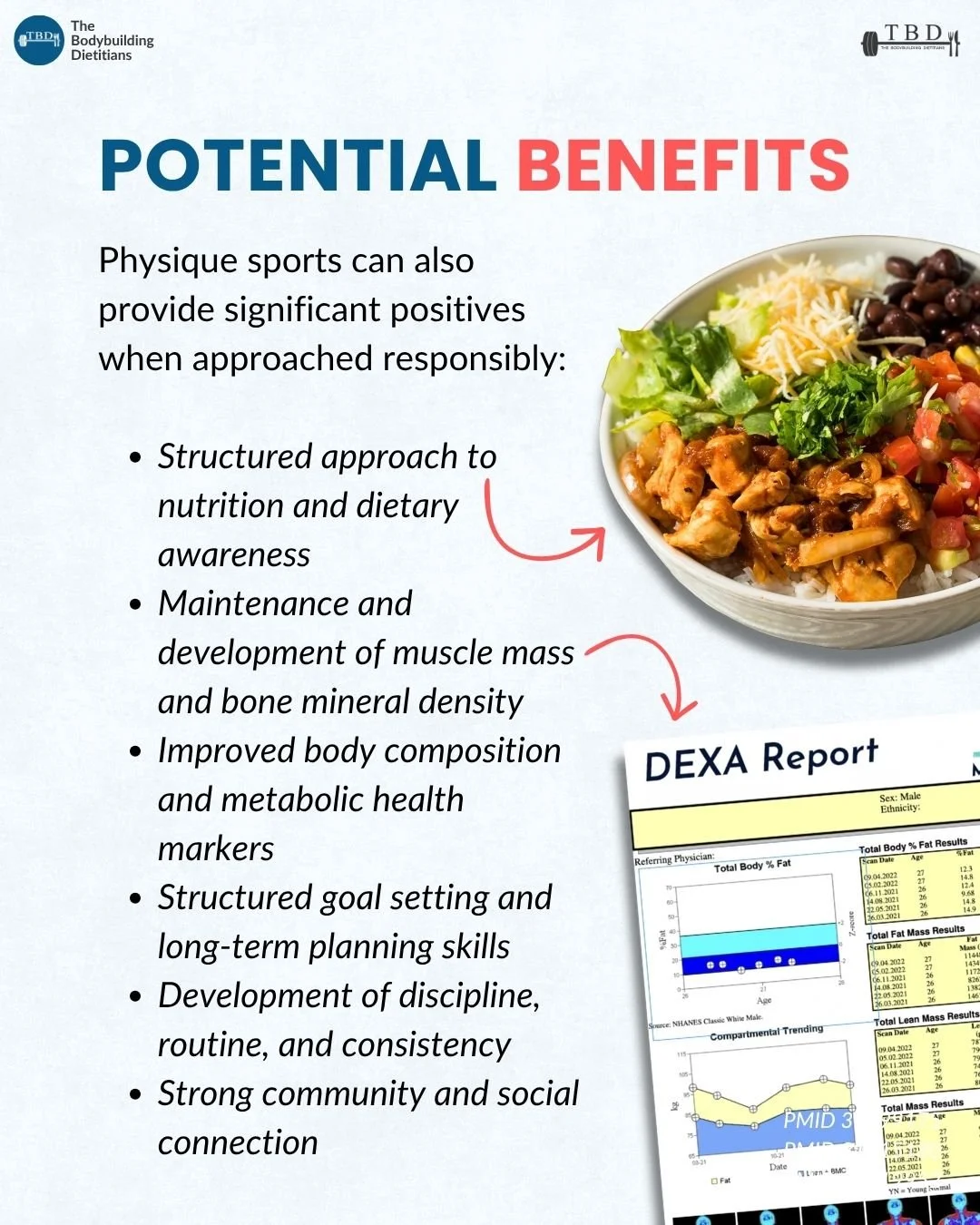
Nutritional literacy and dietary awareness. Few other pursuits develop the same depth of practical understanding about food, macronutrients, energy balance, and the relationship between nutrition and body composition. Competitors who have gone through structured preparation phases develop a level of dietary awareness that typically persists for life and positively influences their food choices, health behaviours, and ability to manage their nutrition independently.
Muscle mass and bone mineral density. Resistance training is one of the most well-evidenced interventions for preserving and building both muscle mass and bone mineral density, both of which become increasingly important for long-term health as individuals age. Competitors who maintain a consistent resistance training practice across years accumulate physical health benefits that extend well beyond their competitive career.
Body composition and metabolic health. Individuals who train consistently and manage their nutrition with the level of attention that physique sport demands tend to maintain healthier body compositions and more favourable metabolic health markers (insulin sensitivity, blood lipid profiles, blood pressure) than sedentary or recreationally active populations. These benefits accrue across the entire year, not just during competition phases.
Discipline, goal setting, and long-term planning. The process of preparing for a competition over 16 to 24 weeks, managing multiple variables simultaneously, and executing a plan with consistency develops skills in goal setting, delayed gratification, and long-term planning that transfer to other areas of life.
Community and social connection. The bodybuilding community provides a sense of belonging, shared purpose, and social connection that many competitors identify as one of the most valuable aspects of their involvement in the sport. The relationships formed through shared training environments, competition experiences, and the unique demands of the lifestyle provide a support network that can be genuinely meaningful.
Where Does Health Exist on the Spectrum?
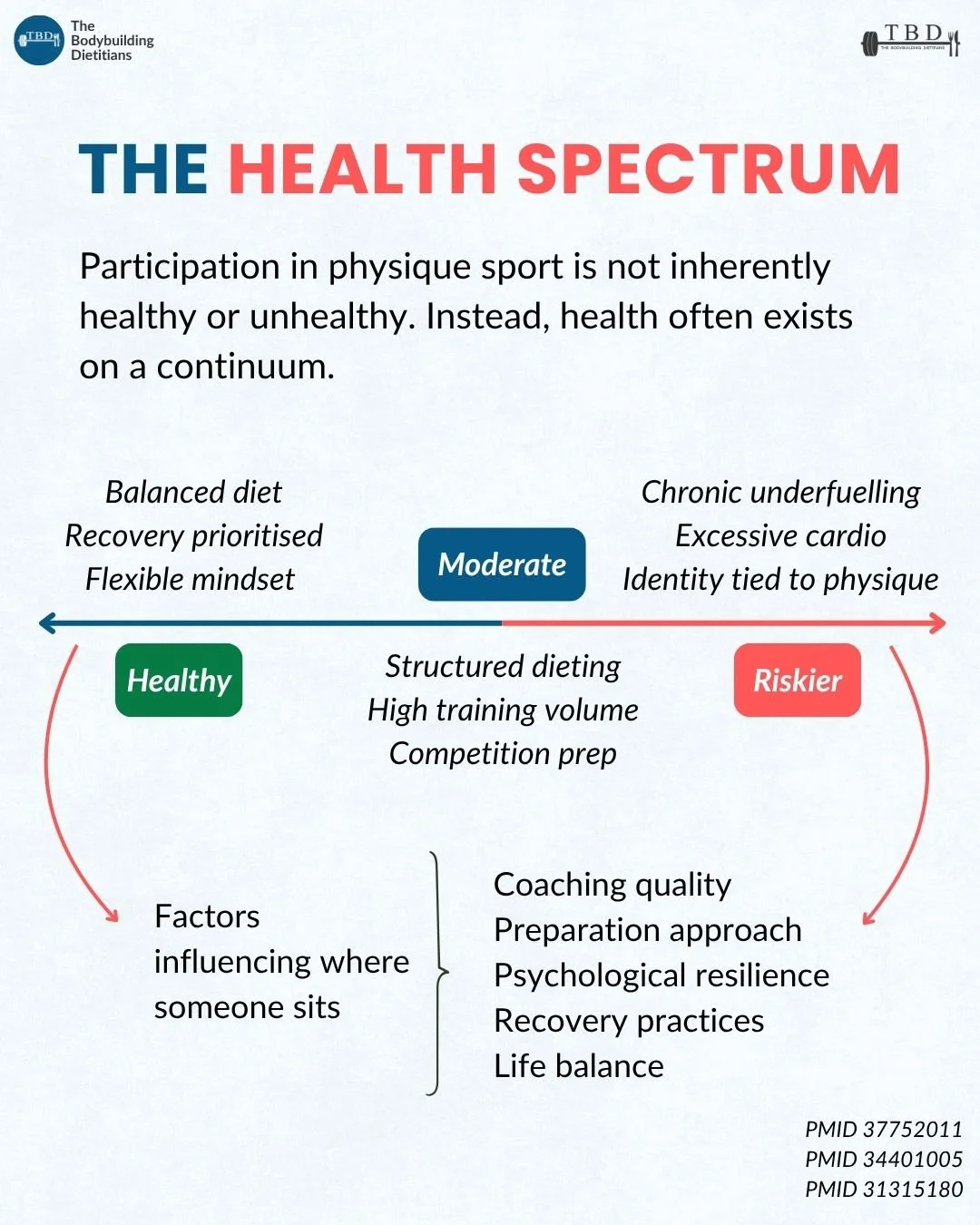
Participation in physique sport is not inherently healthy or unhealthy. Health exists on a continuum, and where an individual sits on that continuum depends on a set of modifiable factors rather than on participation in the sport itself.
At the healthy end of the spectrum, you find athletes who maintain a balanced diet in the off-season, prioritise recovery between competitive seasons, approach the sport with a flexible mindset, train at sustainable volumes, and have strong support networks both within and outside the sport. Their involvement in physique sport is a net positive for their physical and psychological health.
At the riskier end, you find individuals whose identity is heavily tied to their physique, who chronically underfuel rather than cycling through structured phases, who use excessive cardio as a compensatory behaviour, who lack qualified coaching support, and who return to competition without adequate recovery. Their involvement in the sport may be contributing to outcomes that are genuinely harmful to their health.
Most competitors exist somewhere in the moderate zone, where the structured dieting, high training volume, and competition preparation inherently involve some physiological stress, but where that stress is managed, temporary, and followed by adequate recovery. The factors that determine whether someone drifts toward the healthy or riskier end of the spectrum include coaching quality, preparation approach, psychological resilience, recovery practices, and the degree to which the sport fits within a balanced life.
Research examining the long-term health outcomes of natural bodybuilders suggests that competitors who approach the sport with adequate preparation time, moderate rates of weight loss, structured recovery between seasons, and qualified professional support tend to experience transient physiological disruption during competition preparation that resolves within months of returning to maintenance or surplus intake. Long-term harm is more consistently associated with chronic underfuelling, inadequate recovery, and the absence of appropriate professional guidance than with participation in the sport itself.
Source: Trexler, Smith-Ryan, and Norton, 2014, Journal of the International Society of Sports Nutrition.
What Are the Most Common Misconceptions About Bodybuilding and Health?
Several common tropes about physique sport persist in public discourse despite being oversimplifications or misrepresentations of what the evidence actually shows.
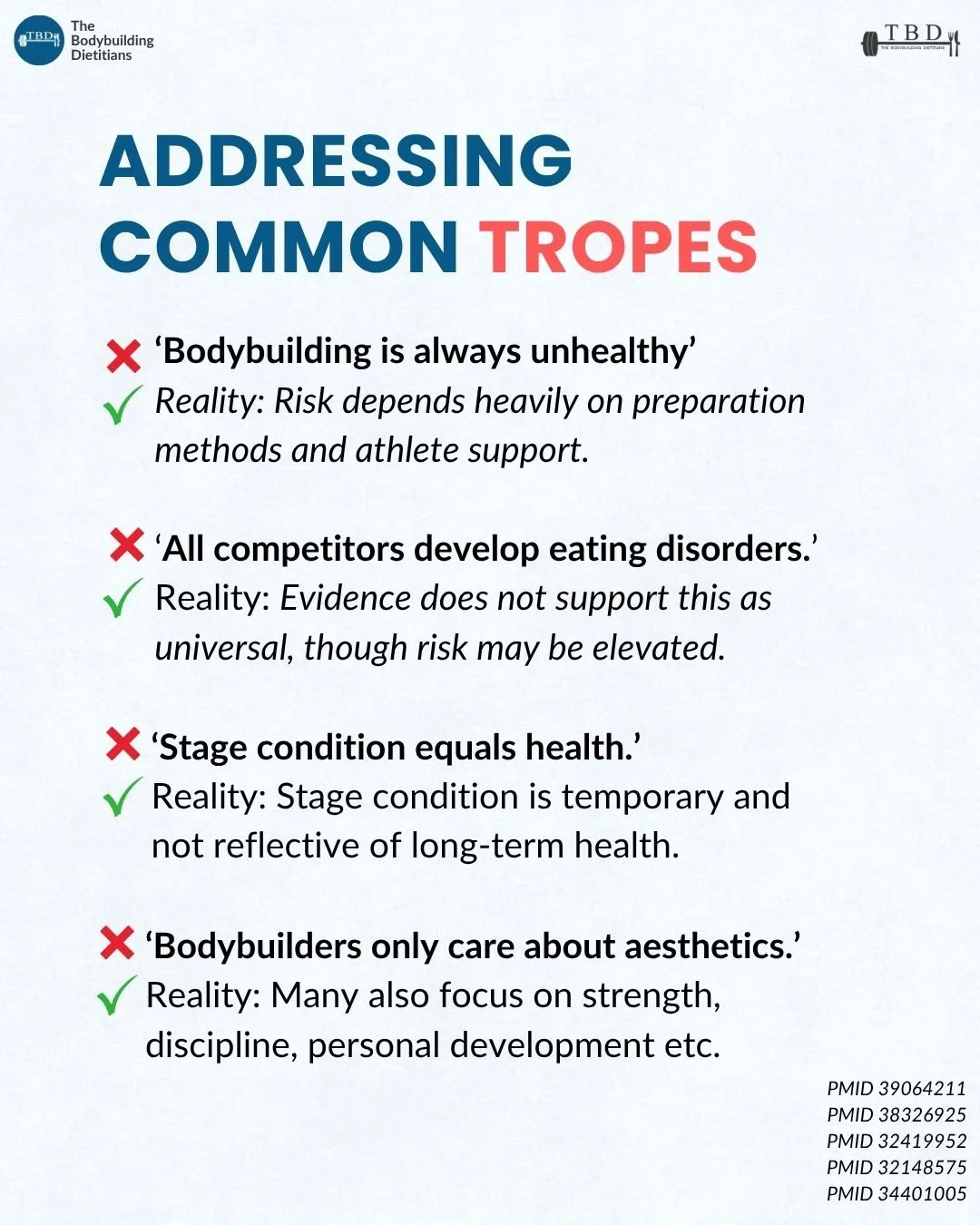
"Bodybuilding is always unhealthy." The evidence does not support a blanket statement that physique sport is inherently harmful. The health impact depends heavily on preparation methods, the quality of support surrounding the athlete, and individual predispositions. Many competitors derive significant physical and psychological benefits from their involvement, and the physiological stress of competition preparation is generally transient and reversible when managed appropriately.
"All competitors develop eating disorders." The prevalence of disordered eating symptoms is elevated in physique sport compared to the general population, but the evidence does not support the claim that all or even most competitors develop clinical eating disorders. Risk is modulated by individual factors, and many competitors navigate the sport with a healthy relationship with food, particularly when supported by qualified professionals.
"Stage condition equals health." Stage-lean conditioning is a temporary state achieved through deliberate energy restriction and is not reflective of the athlete's baseline health. Confusing the two creates unrealistic expectations about what a healthy body looks like and misrepresents the nature of competition preparation. Competitors who understand that stage condition is a transient performance state rather than a sustainable lifestyle tend to navigate the post-show transition more effectively.
"Bodybuilders only care about aesthetics." While the sport is judged on physical appearance, many competitors are also deeply invested in strength development, personal discipline, nutritional knowledge, and the broader process of long-term self-improvement. Reducing the sport to aesthetics alone overlooks the complexity of what motivates most serious competitors and the breadth of skills the sport develops.
How Can You Minimise Health Risk in Physique Sport?
The most significant variable in determining whether physique sport supports or undermines health is the quality of the approach, and the quality of professional support surrounding the athlete is arguably the single most important factor within that.
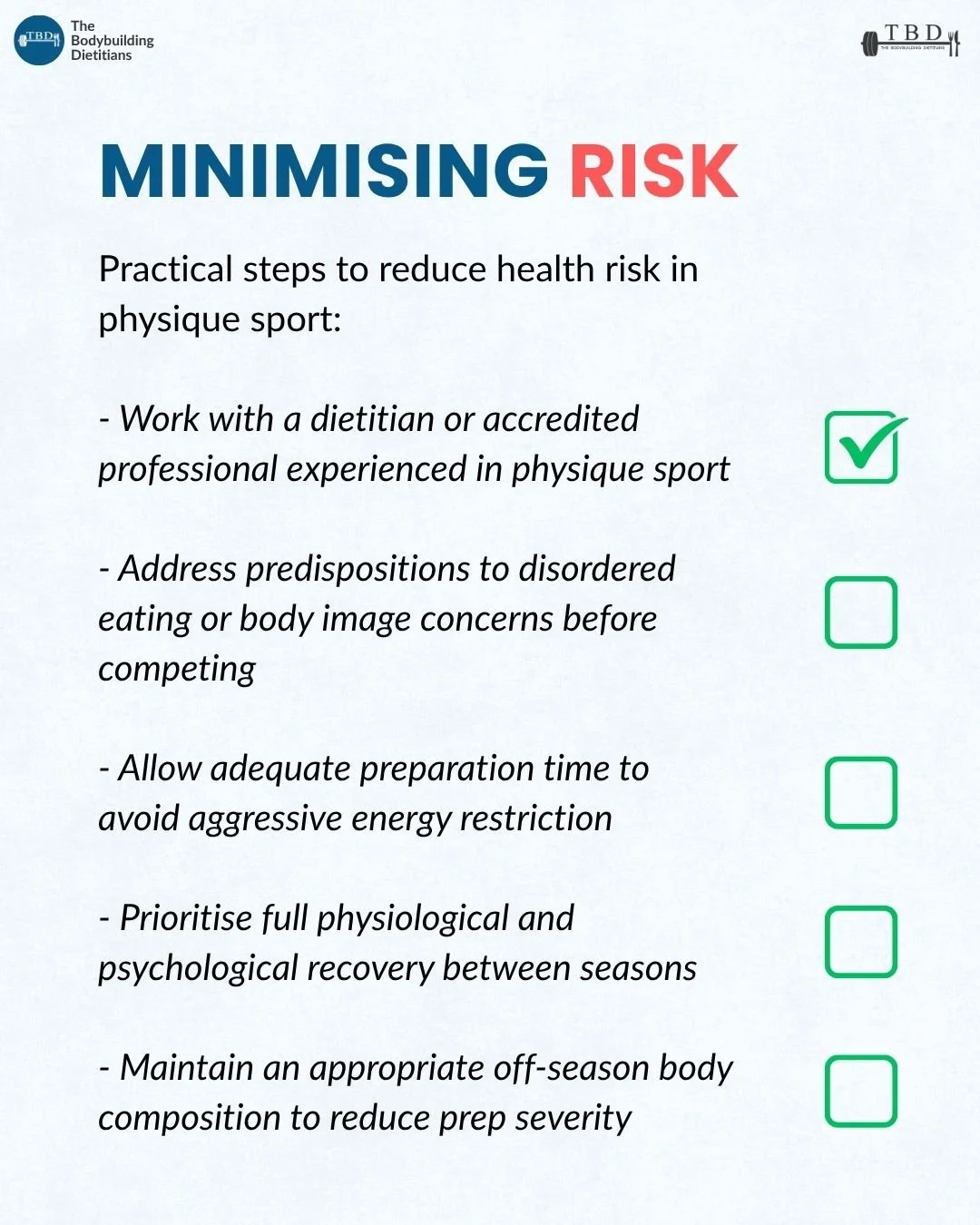
Work with a dietitian or accredited professional experienced in physique sport. A qualified professional who understands the specific intersection of nutrition, physiology, and psychology in physique sport can structure preparation in a way that manages physiological stress, preserves health markers, and identifies warning signs early. For someone who wants to compete in a way that genuinely supports their long-term health, this is a practical necessity rather than a luxury.
Address predispositions before competing. If you have a history of disordered eating, body image concerns, or other psychological vulnerabilities that may interact with the demands of prep, addressing these with appropriate professional support before entering the sport is essential. The structure and discipline of competition preparation can amplify existing patterns rather than resolve them, and entering a prep without this foundation creates unnecessary risk.
Allow adequate preparation time. Aggressive energy restriction (very large deficits maintained over short timeframes) produces more severe physiological and psychological consequences than moderate, well-paced approaches. Starting prep with enough time to diet at a moderate rate (approximately 0.5 to 1.0% of bodyweight per week) reduces hormonal disruption, supports muscle retention, and creates a more sustainable experience.
Prioritise full recovery between seasons. The post-competition period is one of the highest-risk phases of the competitive cycle. Allowing adequate time (one to four months) for physiological and psychological recovery before transitioning into a dedicated improvement season supports hormonal normalisation, healthy weight restoration, and the psychological reset needed to approach the next phase from a stable foundation.
Maintain an appropriate off-season body composition. Athletes who allow excessive fat gain during improvement seasons require more severe and prolonged deficits to reach stage condition, which increases the cumulative physiological cost of competing. Maintaining a body composition during the off-season that is within a reasonable range of a healthy and sustainable baseline reduces the severity of each subsequent prep.
This is the approach that our bodybuilding coaching is built around: structuring the entire competitive cycle, from improvement season through preparation to post-show recovery, in a way that supports long-term health and athlete development rather than treating each show as an isolated event with health costs to be absorbed.
If you are considering competing and want to discuss whether the timing, your readiness, and your support structures are in place to do so in a way that supports your health, a consultation with one of our dietitians can help you assess your situation honestly and make an informed decision.
Practical Takeaways
Participation in physique sport is not inherently healthy or unhealthy. The outcome depends on preparation methods, coaching quality, psychological resilience, recovery practices, and individual predispositions.
The genuine risks of competition preparation (hormonal suppression, metabolic adaptation, psychological stress, elevated disordered eating risk) are well-documented and deserve honest acknowledgement, but they are largely modifiable rather than inevitable.
The genuine benefits (nutritional literacy, muscle and bone health, metabolic health, discipline, community) are often underrepresented in the conversation and are real when the sport is approached responsibly.
Individuals with predispositions including disordered eating history, body image concerns, perfectionism, high trait anxiety, or external validation seeking carry elevated risk and should address these concerns with appropriate professional support before competing.
The quality of professional support surrounding the athlete is one of the most significant variables in determining health outcomes. Working with a dietitian or accredited professional experienced in physique sport is a practical necessity for managing risk.
Adequate preparation time, moderate rates of weight loss, full recovery between seasons, and appropriate off-season body composition management are the most impactful practical strategies for reducing the health cost of competing.
Frequently Asked Questions
Is bodybuilding bad for your health?
Bodybuilding is not inherently bad for health. The health impact depends on how the sport is approached, including preparation methods, coaching quality, recovery practices, and individual predispositions. When approached responsibly with adequate preparation time, qualified professional support, and attention to both physical and psychological health, competitive bodybuilding can be a net positive for long-term health. When approached poorly, the risks to both physical and psychological health are real and well-documented.
Does bodybuilding cause eating disorders?
The prevalence of disordered eating symptoms is elevated in physique sport compared to the general population, but the evidence does not support the claim that bodybuilding universally causes eating disorders. Risk is modulated by individual factors including pre-existing tendencies toward perfectionism, body image concerns, and external validation seeking. Many competitors navigate the sport with a healthy relationship with food, particularly when supported by qualified professionals.
Is contest prep safe?
Contest preparation involves deliberate energy restriction that produces transient physiological effects including hormonal suppression, metabolic adaptation, and psychological stress. These effects are generally reversible with adequate post-competition recovery. The safety of the process depends substantially on the severity of the deficit, the duration of preparation, the quality of coaching, and the athlete's psychological readiness. Moderate, well-paced preparations with qualified support are significantly safer than aggressive, poorly managed ones.
How long does it take to recover from a bodybuilding show?
Physiological recovery from competition preparation typically takes one to four months, with hormonal markers, resting metabolic rate, and psychological wellbeing gradually normalising during this period. The duration depends on the severity and length of the prep, the degree of physiological suppression at the end, and the quality of the post-show nutritional transition. Full recovery should be prioritised before entering a dedicated improvement season or beginning preparation for another competition.
Should you see a dietitian before competing in bodybuilding?
Working with a dietitian or accredited nutrition professional who has experience in physique sport is strongly recommended for anyone considering competing. A qualified professional can structure preparation in a way that manages physiological stress, ensure nutritional adequacy during energy restriction, monitor health markers throughout the process, and provide the informed decision-making support that reduces the risk of harm. For individuals with any predisposing risk factors, professional support is particularly important.
Can bodybuilding be good for mental health?
Bodybuilding can positively influence mental health through the structure, discipline, goal setting, and community it provides. Many competitors report that their involvement in the sport gives them purpose, builds confidence, and develops resilience. However, the psychological demands of competition preparation, particularly the focus on body composition and the subjective nature of judging, can also create psychological stress that negatively affects mental health in some individuals. The outcome depends on individual factors, motivation, and the quality of support surrounding the athlete.
If you are considering competing and want to ensure that your approach is structured to support your long-term health, or if you are already competing and want professional guidance on managing the process more safely, our team of qualified dietitians and coaches can help.