Hunger and appetite can feel identical in the moment, which makes it hard to know whether you are physically hungry or reaching for food for another reason. This guide explains the difference, walks through a simple test you can run before you eat, and covers what to do with the answer either way.
Hunger is the physical drive to eat, shaped by time since your last meal, energy expenditure, energy availability, body composition, and the makeup of previous meals. Appetite is broader: it includes physical hunger alongside taste, smell, food availability, routine, learned associations, emotion, and exposure to food, so it can appear even when hunger is low. A quick way to tell them apart is the apple test: asking whether a plain, unflavoured food such as an apple sounds appealing right now. A yes points toward genuine hunger, since most foods sound reasonable when the body needs energy. A no, especially alongside a strong pull toward one specific food, points toward appetite, since taste, habit, or reward is driving more of the urge than physical need. Neither answer is a problem to fix. The value of the test is in seeing what is influencing the decision, so you can respond with intention rather than assuming every urge to eat is physical hunger or dismissing it as something to override.
Hunger is just one of the reasons we choose to eat. Hunger and appetite overlap a great deal, and most of the time we do not stop to separate them, but understanding what is driving the urge to eat in a given moment can help you make a more informed decision about how to respond to it.
This article covers what distinguishes hunger from appetite, how to run a quick check called the apple test, the practical signs that point toward one or the other, and what to do once you have an answer. For the deeper physiology behind why hunger fluctuates day to day, including the hormonal, environmental, and mechanical factors involved, our full guide to what drives hunger covers those mechanisms in depth. This article is the quicker, practical companion: a tool for the moment itself rather than the full explanation behind it.
What Is the Difference Between Hunger and Appetite?
Hunger is the physical drive to eat, shaped by time since your last meal, energy expenditure, energy availability, body composition, and the makeup of previous meals. Appetite is broader, taking in physical hunger alongside taste, smell, food availability, routine, learned associations, emotion, and simple exposure to food.
The relationship between the two is not a clean split. Hunger sits inside appetite as one of several inputs, which is why the two so often show up together and feel indistinguishable. You might be physically hungry and also want a specific food, or you might feel like eating when hunger is genuinely low and something else, a smell, a routine, a stressful moment, is doing most of the work.
Hunger is the physical drive to eat driven by internal signals of energy need, while appetite is the broader desire to eat shaped by hunger together with sensory, environmental, and emotional cues. Sensory cues in particular can shift appetite and food wanting on their own, though how much they change what someone actually eats varies from person to person.
How Does the Apple Test Work?
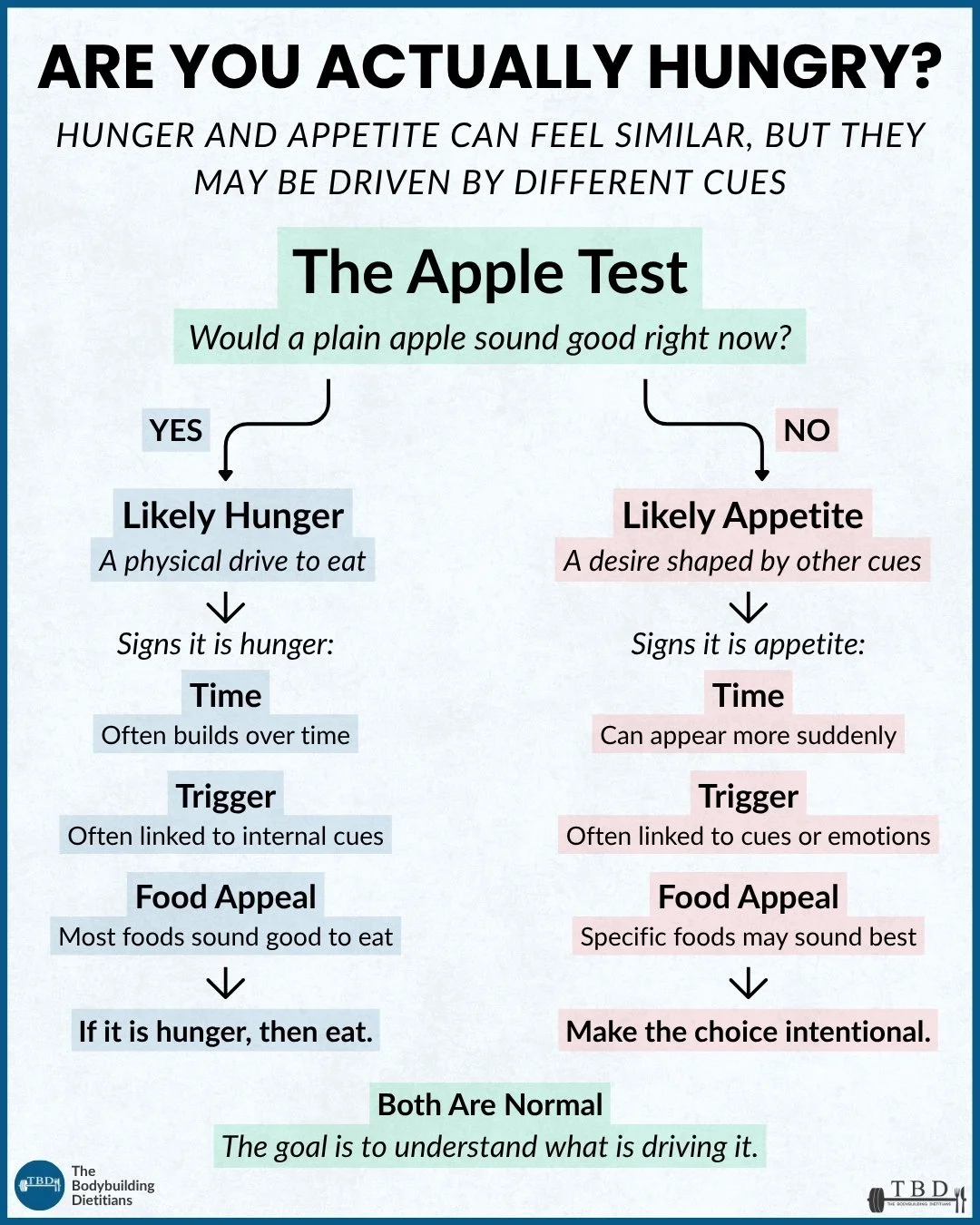
The apple test is a quick mental check: ask yourself whether a plain, unflavoured food, such as an apple, would sound appealing right now. The answer gives a fast read on how much of the urge to eat is physical hunger versus something else.
A yes answer points toward likely hunger. When the body genuinely needs energy, most foods sound reasonable, including plain and unexciting ones, because the drive is coming from an internal signal rather than a preference for flavour or reward. A no answer, particularly alongside a strong pull toward one specific food, points toward likely appetite. If only a particular food will do while a plain option holds no appeal, taste, habit, or reward is carrying more of the urge than physical need is.
The test works because it strips away the sensory and situational layers that appetite adds. Removing flavour, novelty, and specificity from the question leaves something closer to the physical signal underneath, which is exactly what makes it useful as a quick check before deciding how to respond.
What Are the Practical Signs of Hunger Versus Appetite?
Beyond the apple test itself, three patterns tend to separate hunger from appetite: how the urge builds over time, what triggers it, and how many foods sound appealing.
Hunger typically builds gradually, often linked to internal cues such as time since eating or the pattern of previous meals, and it tends to make most foods sound acceptable rather than pulling toward one in particular. Appetite can appear more suddenly, is often linked to external cues or emotions, such as walking past a bakery or feeling stressed, and it tends to narrow toward specific foods rather than food in general.
None of these signs work in isolation, and a moment of eating can easily involve both. Someone who is hungry and also walks past a bakery is likely to feel a stronger pull toward that specific food than they would from hunger alone. The signs are a way of noticing what is contributing to the urge, not a strict test that produces a single correct label.
Notice a Pattern You Cannot Quite Explain?
Some hunger and appetite patterns are more than a single moment of noticing a bakery smell, and they are worth understanding properly rather than guessing at. Our team works through what is driving hunger and eating patterns with clients, matched to their training, their deficit, and their individual context.
What Should You Do With the Result?
There is no right or wrong result from the apple test, and the value sits in the awareness rather than in the answer itself. Eating can be the right call regardless of which factor, hunger or appetite, is doing more of the driving.
If the result points toward hunger, the practical response is straightforward: eat. A physical need for energy is being signalled, and meeting it is the sensible response rather than something to second-guess or delay. If the result points more toward appetite, the useful next step is to make the choice intentional rather than automatic. That might still mean eating the food in question, it might mean choosing something else, or it might mean deciding the urge will pass. What matters is that the decision is made with awareness of what is behind it, not that appetite-driven eating is treated as a mistake to correct every time.
Building meals around protein and fibre earlier in the day also makes this check easier to run, since a well-structured diet keeps physical hunger more predictable and leaves appetite as the main variable to interpret. The food choices that support that kind of steady fullness are covered in our articles on protein, fibre, and satiety per calorie.
Practical Takeaways
Hunger is the physical drive to eat; appetite is broader and includes hunger alongside taste, smell, routine, emotion, and exposure to food.
The apple test asks whether a plain food would sound good right now. A yes points toward hunger; a no, especially with a pull toward one specific food, points toward appetite.
Hunger tends to build gradually and make most foods sound appealing; appetite can appear suddenly and narrow toward a specific food.
Neither result is a problem. The goal is understanding what is driving the urge to eat, not judging or overriding it.
If it is hunger, eat. If it is appetite, make the choice intentional rather than automatic.
A diet built around steady protein and fibre intake keeps physical hunger more predictable, making appetite easier to notice and interpret.
Frequently Asked Questions
What is the difference between hunger and appetite?
Hunger is the physical drive to eat, shaped by internal signals such as time since your last meal and energy need. Appetite is broader and includes hunger alongside taste, smell, routine, emotion, and exposure to food, which is why appetite can appear even when physical hunger is low.
What is the apple test?
The apple test asks whether a plain, unflavoured food such as an apple would sound appealing right now. A yes suggests the urge to eat is largely physical hunger, since most foods sound reasonable when the body needs energy. A no, especially with a strong pull toward one specific food, suggests appetite is playing a larger role.
Is it bad to eat when it is appetite rather than hunger?
No. Eating can be the right call regardless of whether hunger or appetite is driving it. The value of separating the two is in making the decision with awareness, not in treating appetite-driven eating as something to avoid or correct every time.
Why do hunger and appetite feel so similar?
Hunger sits inside appetite as one of several inputs, alongside sensory, environmental, and emotional cues, which is why the two so often show up together. A person can be hungry and also drawn to a specific food at the same time, making the two feel indistinguishable in the moment.
How can I make hunger easier to read day to day?
Building meals around adequate protein and fibre helps keep physical hunger more stable and predictable across the day. When hunger itself is well managed, appetite becomes easier to notice and interpret as the main variable behind an urge to eat.
Does the apple test work every time?
It is a quick guide rather than a precise diagnostic. Hunger and appetite frequently overlap, so the test is best used as a way of noticing what might be contributing to an urge to eat, not as a strict rule that produces a single correct answer every time.
If hunger and appetite feel harder to separate than a quick mental check can solve, especially during a diet phase, our team can help you work out what is driving it and build a plan around it. Enquire about coaching or book a consultation to talk it through.