Fibre Density Matters (And Why “Eating More Veg” Isn’t Always Enough)
Fibre is one of those nutrients that almost everyone agrees is important, yet many people still struggle to consistently hit recommended daily targets.
Vegetables are often positioned as the obvious solution, and to be clear, they absolutely play a critical role in a healthy diet. They provide micronutrients, antioxidants, phytochemicals, and contribute to overall diet quality. But when the specific goal is increasing fibre intake, not all vegetables contribute equally.
This is where the idea of fibre density becomes important.
What Do We Mean by Fibre Density?
Fibre density refers to how much fibre a food provides relative to the amount of food you need to eat. Some foods deliver a meaningful amount of fibre in a relatively small serving, while others require much larger volumes to make a noticeable contribution.
A practical example helps illustrate this.
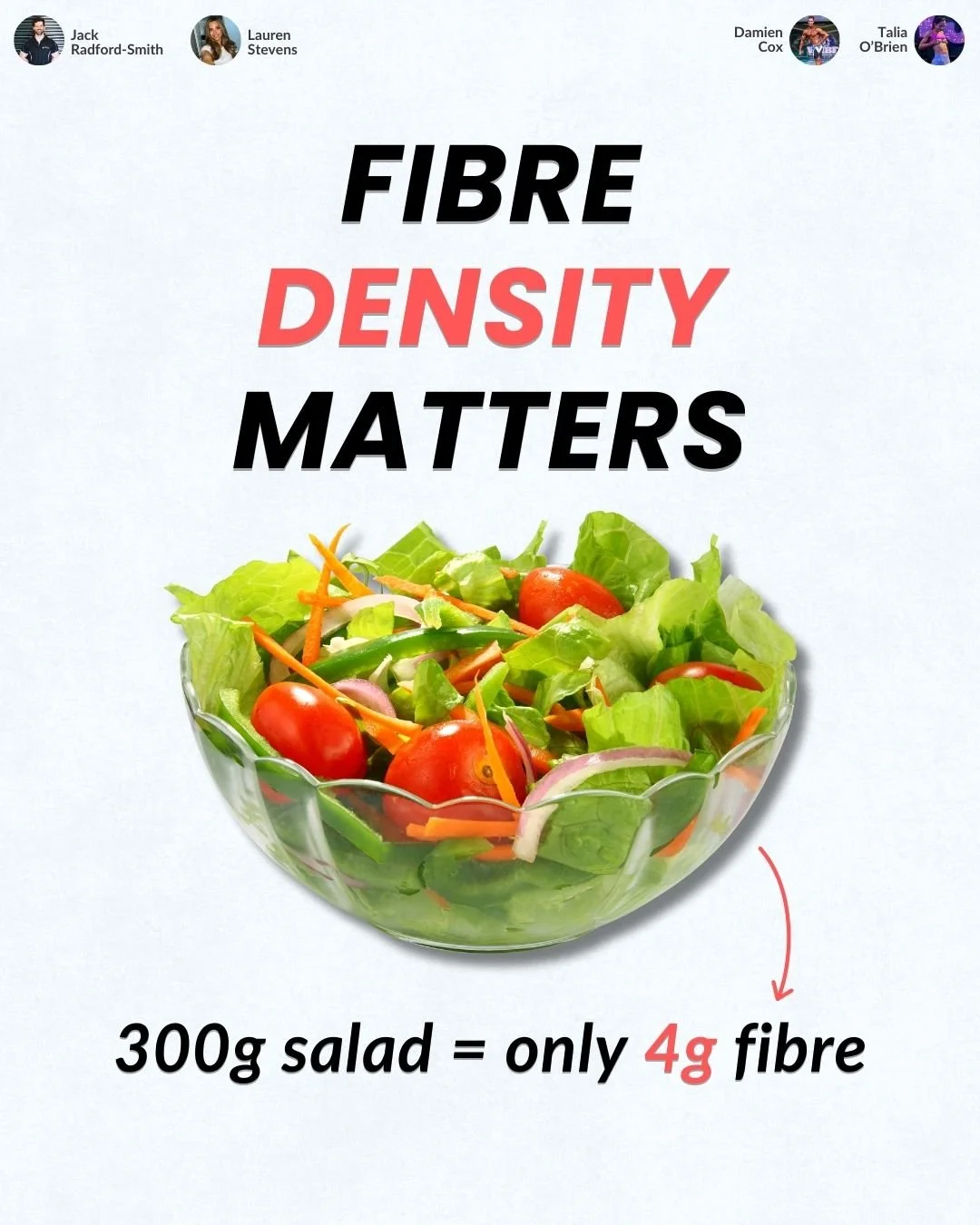
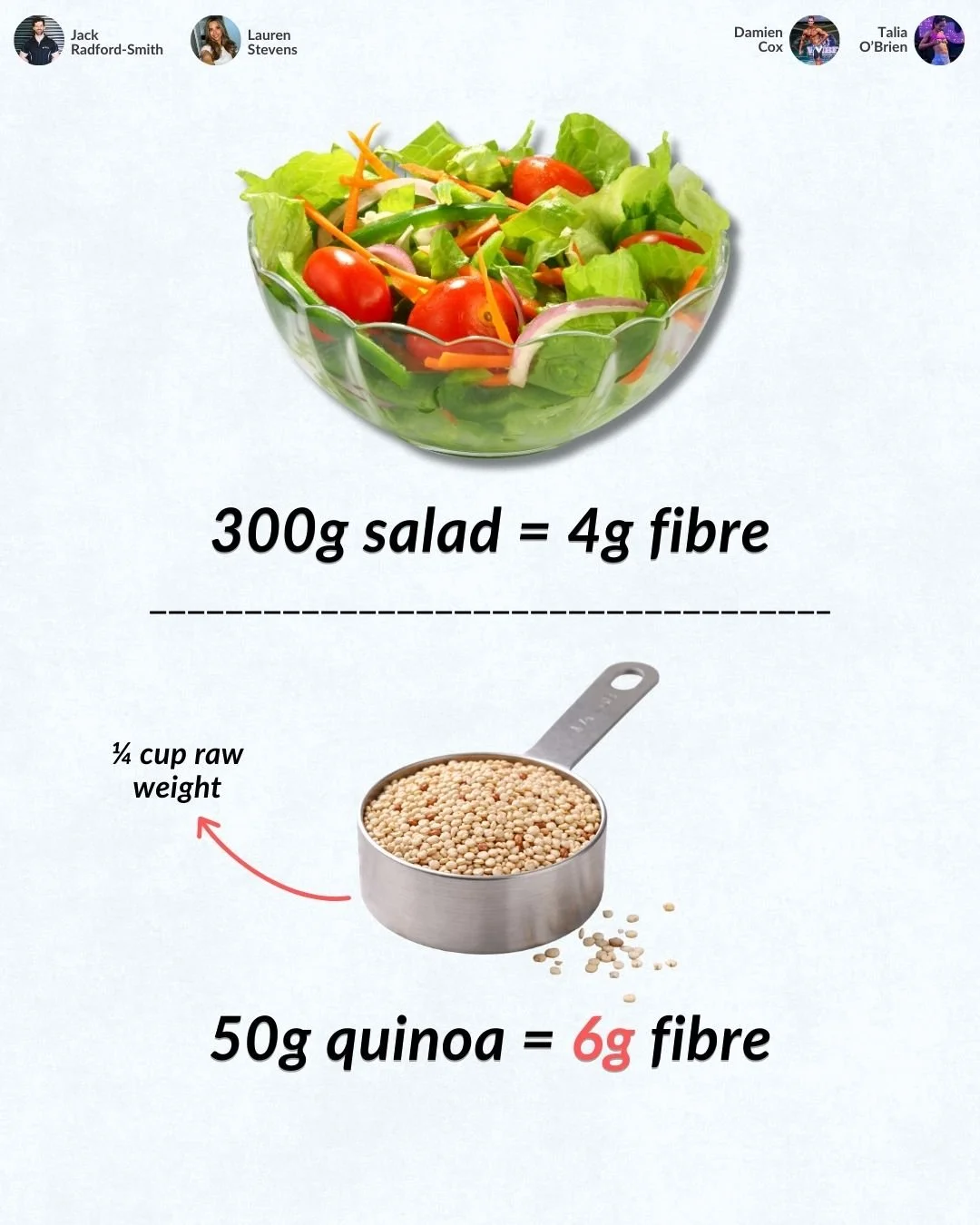
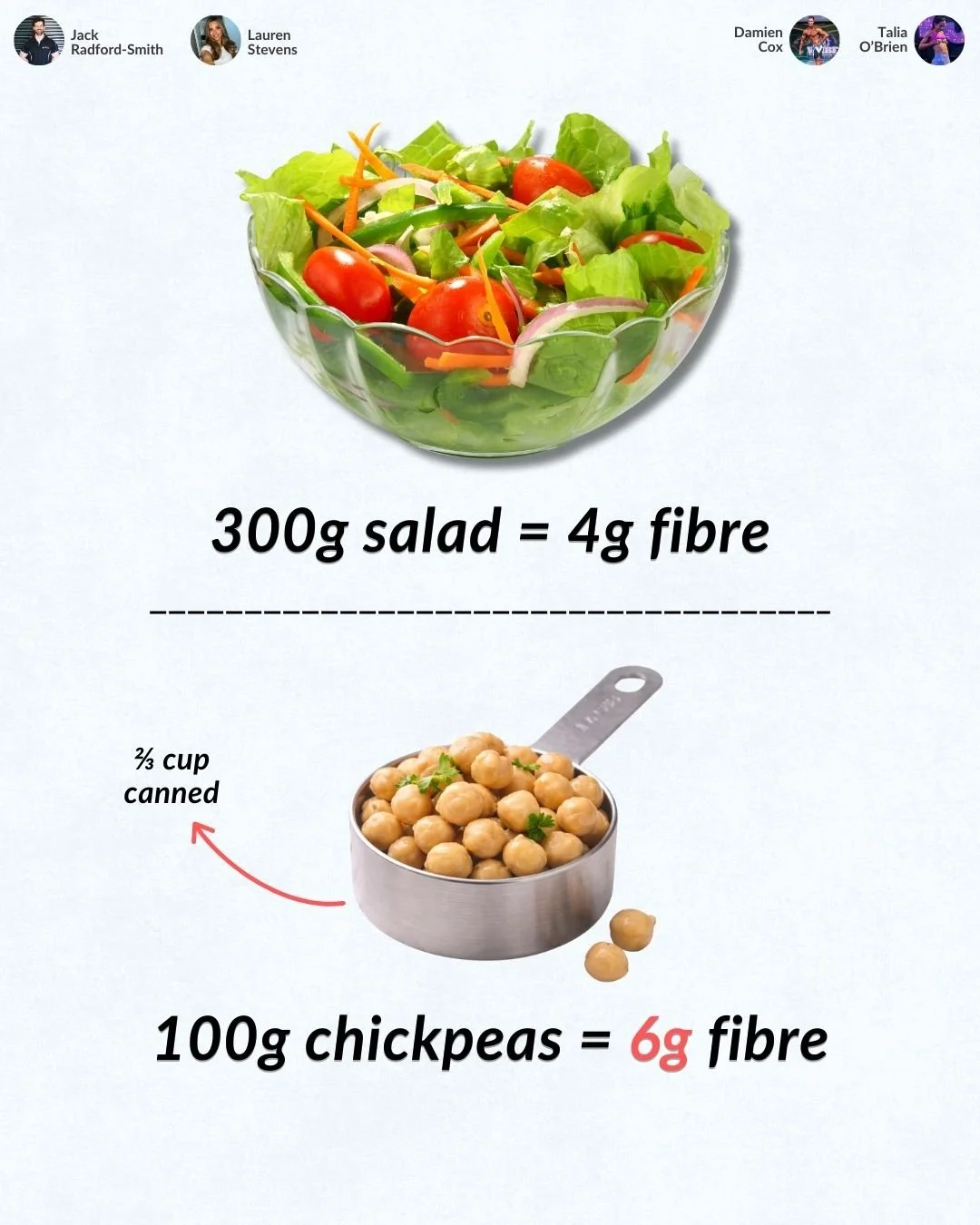
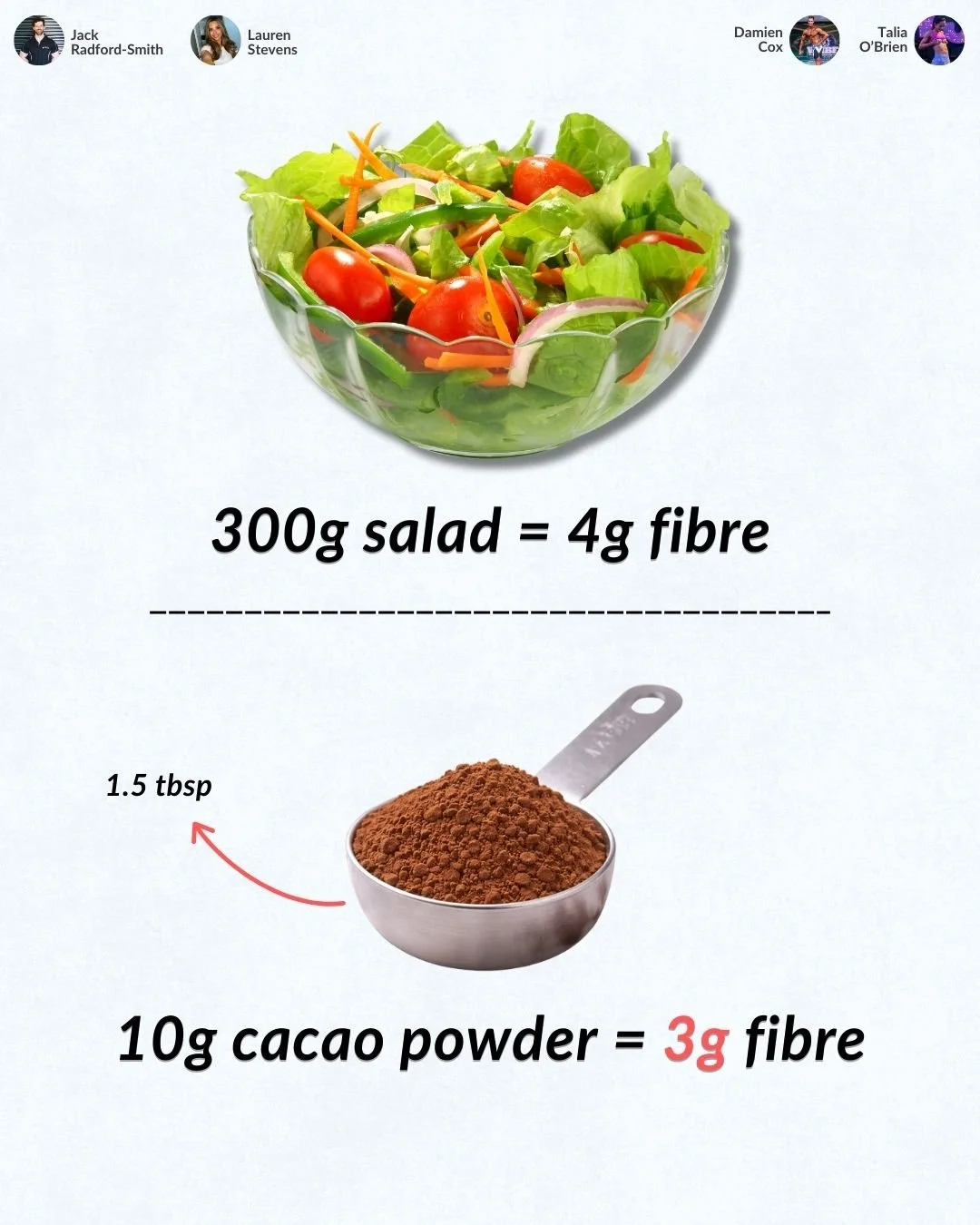
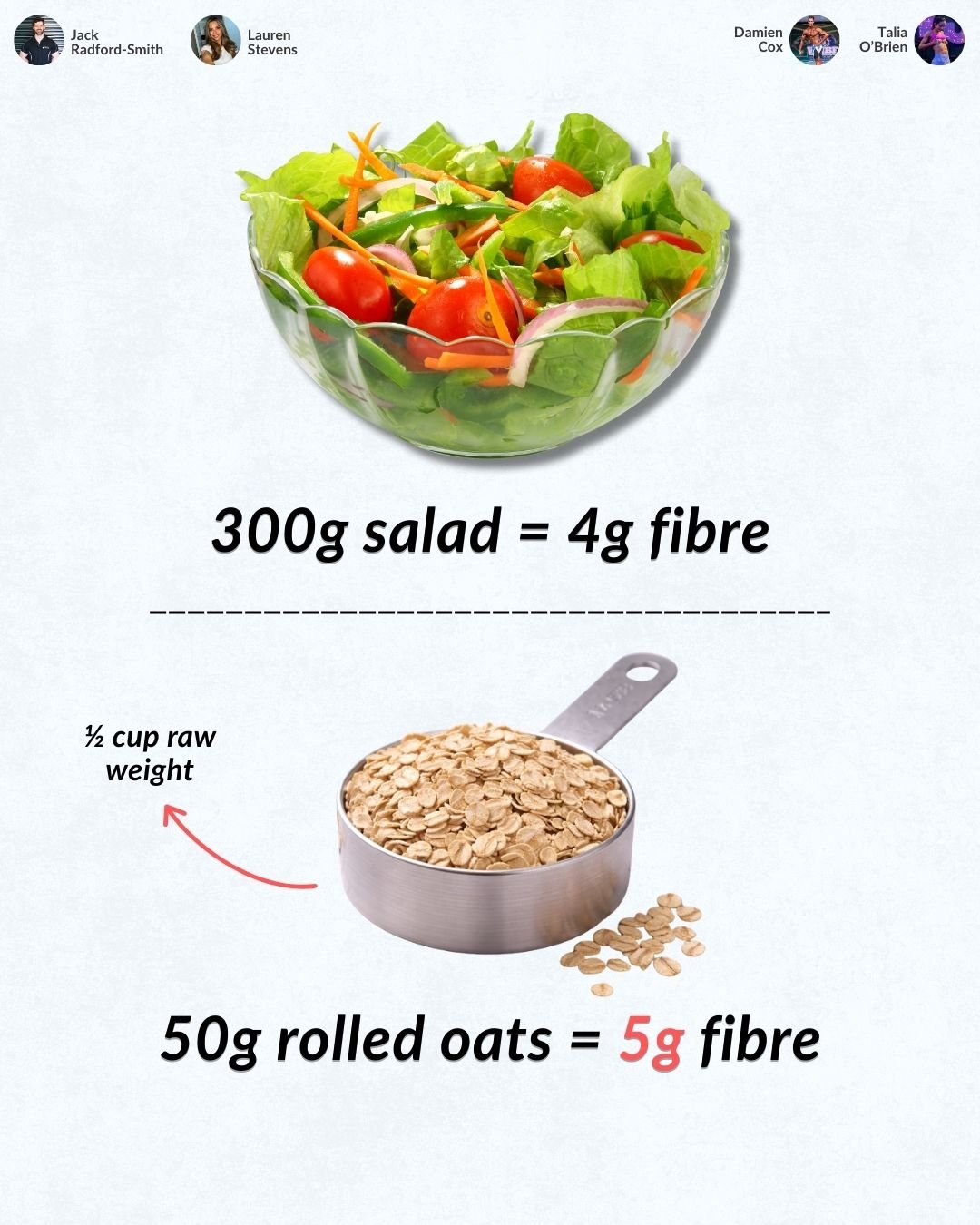
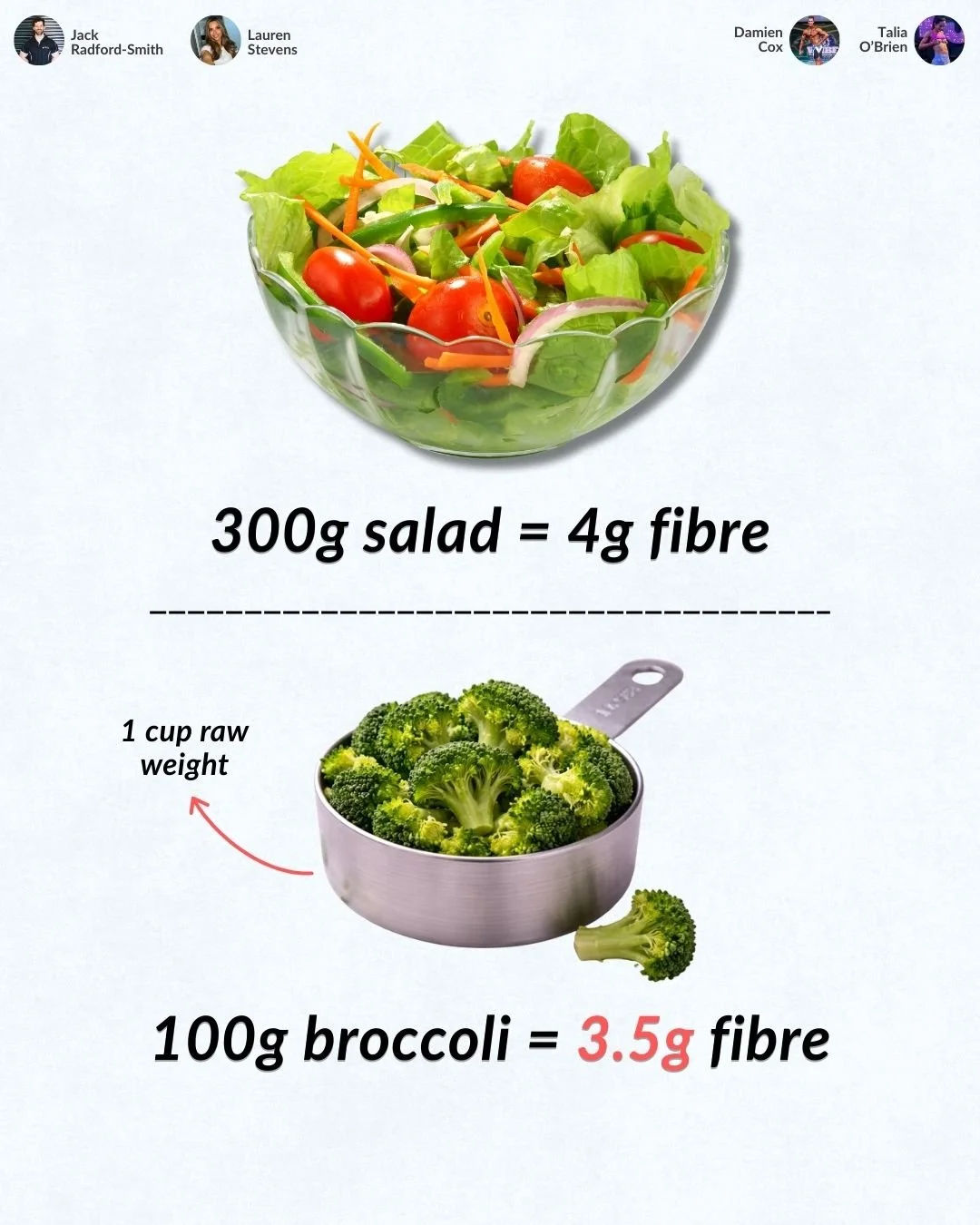
The salad shown in this post contains:
100g lettuce
100g tomato
50g green capsicum
25g red onion
25g carrot
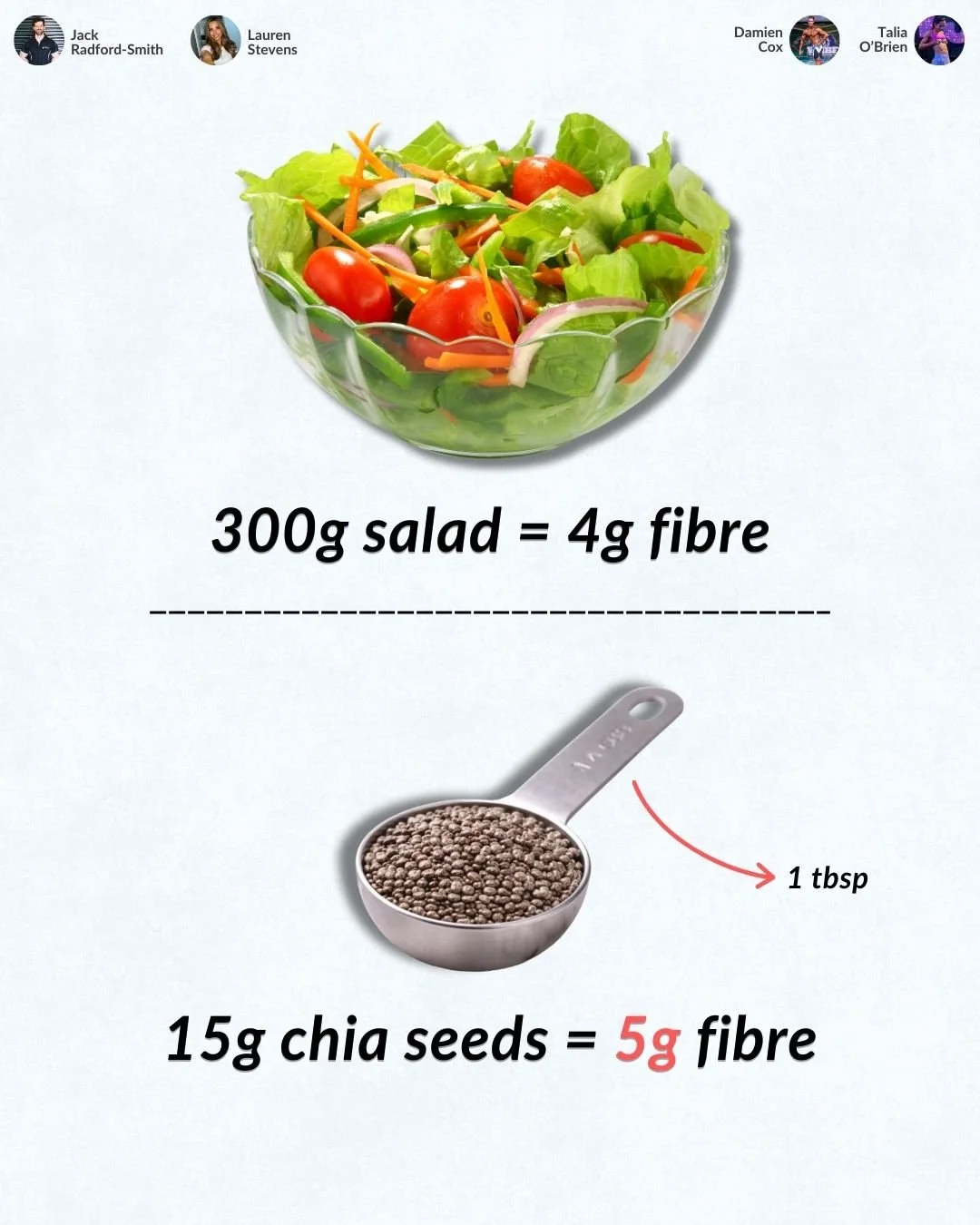
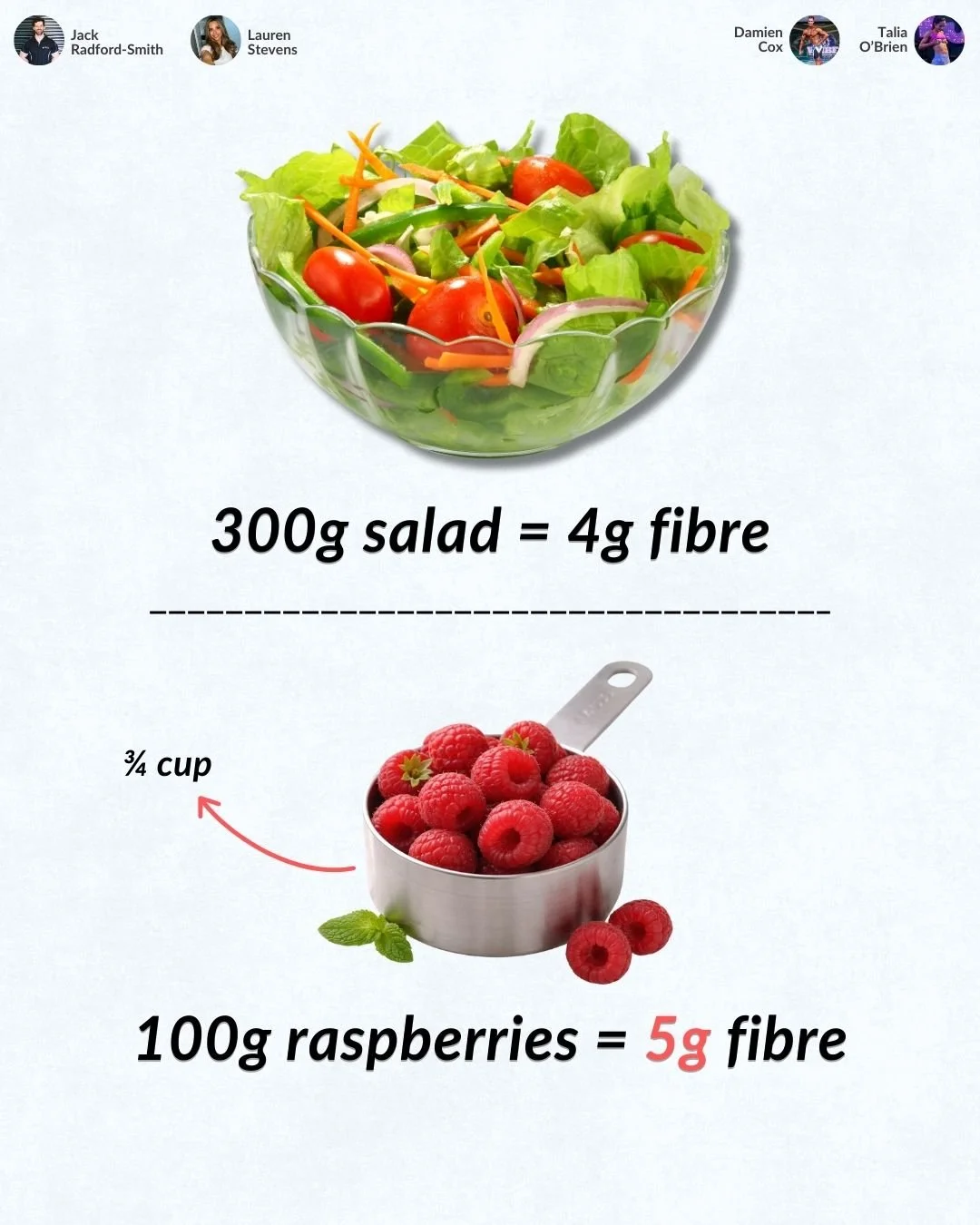
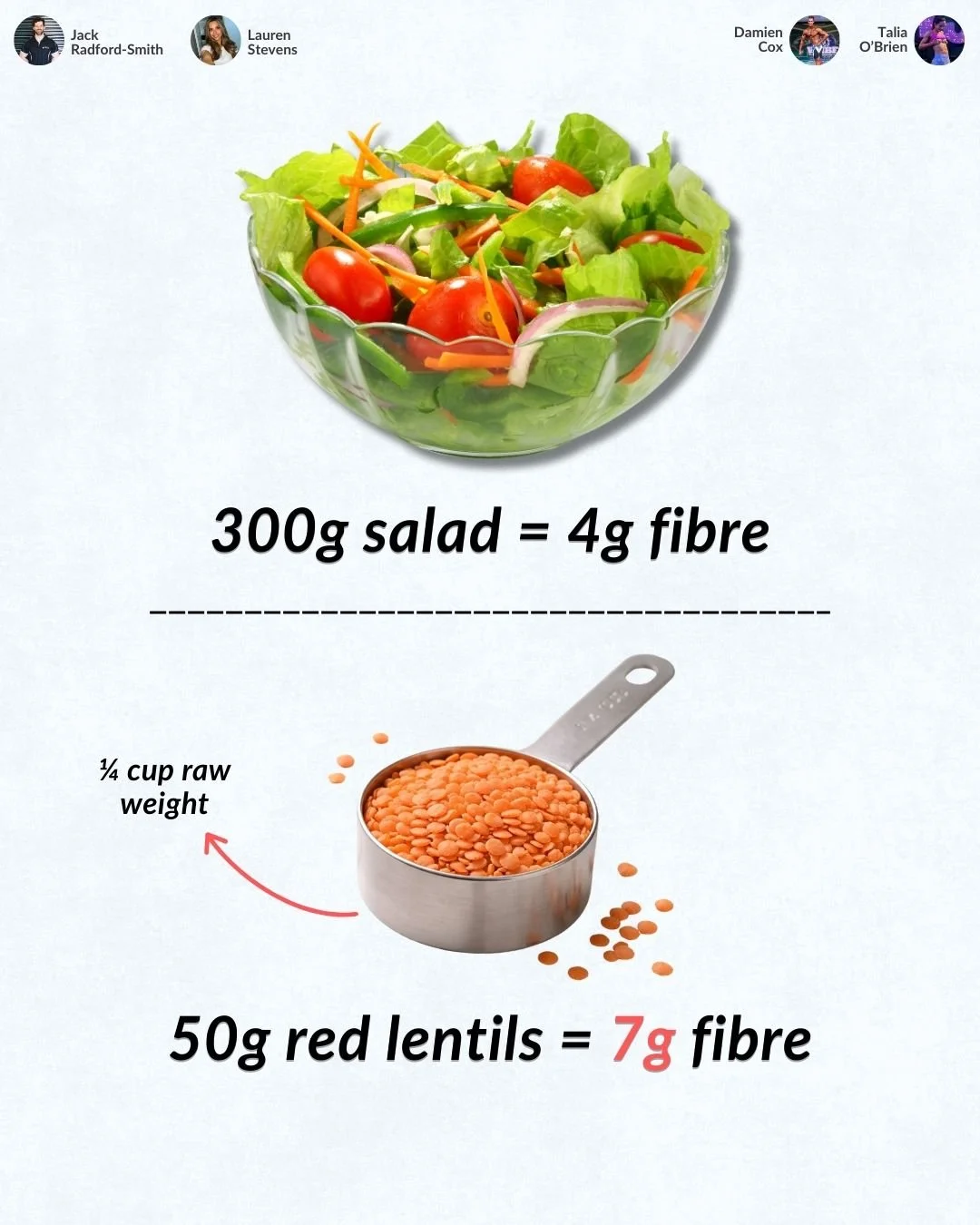
That adds up to 300g of plant matter, which visually looks like a solid, nutritious serve of vegetables. From a fibre perspective though, it provides roughly 4 grams of fibre in total.
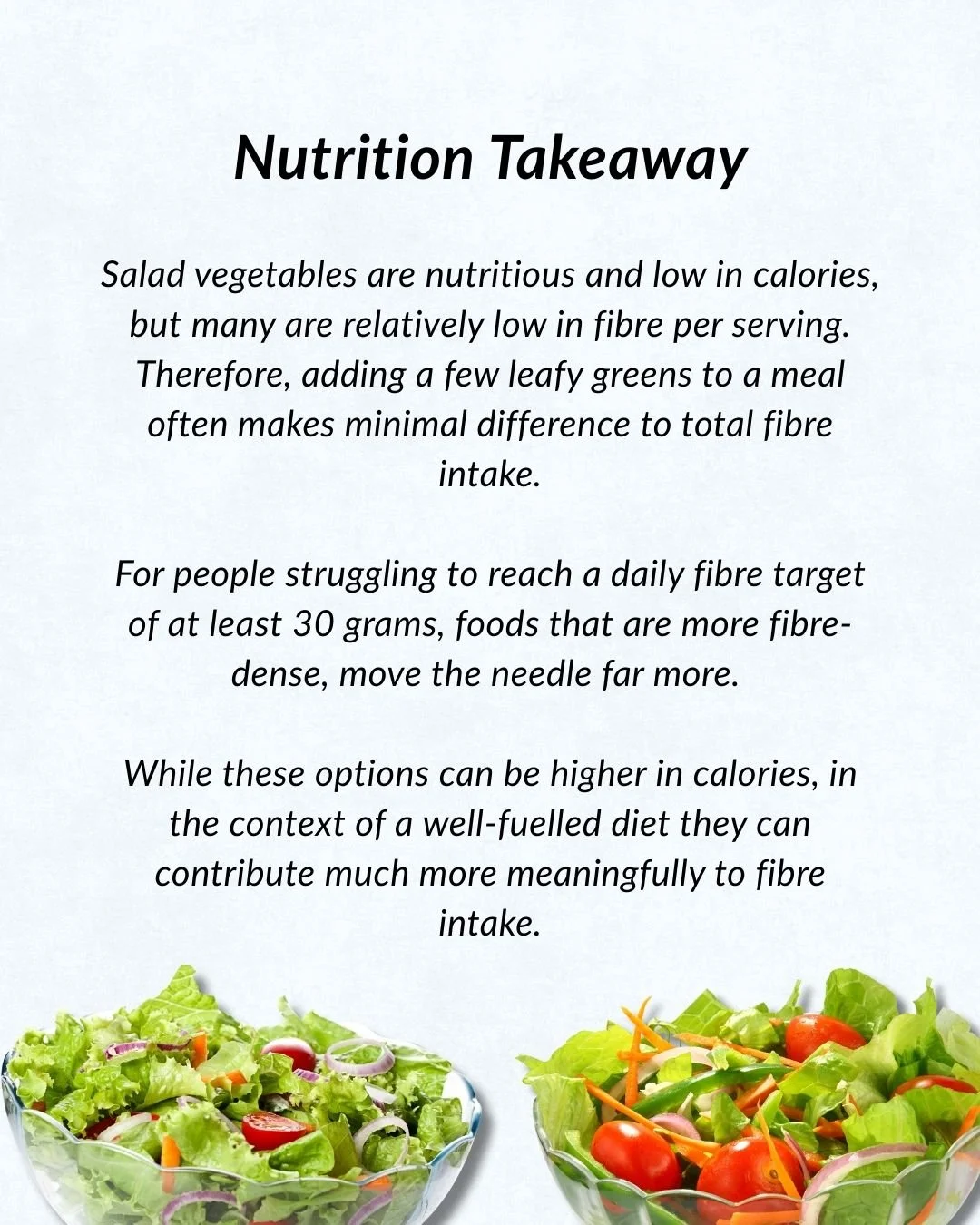
If someone is aiming for around 30 grams of fibre per day, which is a target commonly supported by large observational studies and meta-analyses, that salad accounts for only a small fraction of what’s required.
Again, this isn’t a criticism of salads or leafy vegetables. It’s simply acknowledging that volume and fibre contribution are not the same thing.
Why Fibre Intake Matters Beyond Digestion
Fibre is often reduced to digestive health alone, but its impact goes much further than regular bowel movements.
Higher fibre intakes are consistently associated with:
Improved cardiometabolic health
Better blood glucose regulation
Increased satiety and appetite control
Improved gut microbiota diversity
Reduced risk of all-cause mortality
For active individuals, adequate fibre can also support recovery, overall diet adherence, and long-term health outcomes that matter beyond just performance.
When fibre intake is low, it’s rarely because people aren’t eating any plant foods. More often, it’s because the foods chosen are relatively low in fibre per serve, making it difficult to accumulate enough across the day without eating very large volumes.
Foods That Move the Needle More Efficiently
If hitting fibre targets feels difficult, the solution usually isn’t just “add more salad”. It’s about being more strategic with food choices.
Foods that tend to be more fibre-dense include:
Legumes and lentils
Whole grains such as oats and quinoa
High-fibre fruits like raspberries and pears
Vegetables with higher fibre per serve, such as broccoli or sweet potato
Nuts, seeds, and even small additions like cacao powder
These foods deliver a greater fibre return per gram, meaning they contribute more meaningfully to daily intake without needing excessive volume.
This also explains why small additions, such as a tablespoon of chia seeds or a serve of lentils added to a meal, can sometimes increase fibre intake more than an entire extra bowl of salad.
Context Still Matters
It’s also important to acknowledge that many fibre-dense foods are higher in calories. This doesn’t make them “bad” or inappropriate, but it does mean they need to be considered within the broader context of someone’s energy needs, training demands, and overall diet structure.
In a well-fuelled diet, these foods can play a valuable role in improving fibre intake without compromising performance or recovery. The goal isn’t to replace vegetables, but to complement them with foods that provide more fibre per serve.
The Takeaway
Vegetables are nutritious and deserve their place in a healthy diet, but they’re not interchangeable when it comes to fibre.
If fibre intake is falling short, focusing on fibre density, not just vegetable volume, is often the missing piece. Small, strategic changes tend to be far more effective than simply eating more low-fibre options and hoping it adds up.
If you’re unsure how to structure your diet so that fibre intake, performance, and overall energy balance actually make sense together, this is exactly the kind of thing we help clients with.
If you’d like support with your nutrition, gut health, or performance goals, you can find more information about our coaching services via the link below.