Glycine and Sleep: A Practical, Evidence-Based Overview
Glycine is often discussed far less than other sleep supplements, despite having a growing body of human research behind it. Part of the reason is that it does not behave like a traditional sedative, nor does it reliably cause drowsiness in the way many people expect from a “sleep aid”.
Instead, glycine appears to support sleep by influencing several of the normal physiological processes that help the body transition into and maintain sleep.
Understanding that distinction is important, because it reframes how and when glycine may be useful, and who is most likely to benefit from it.
What is glycine?
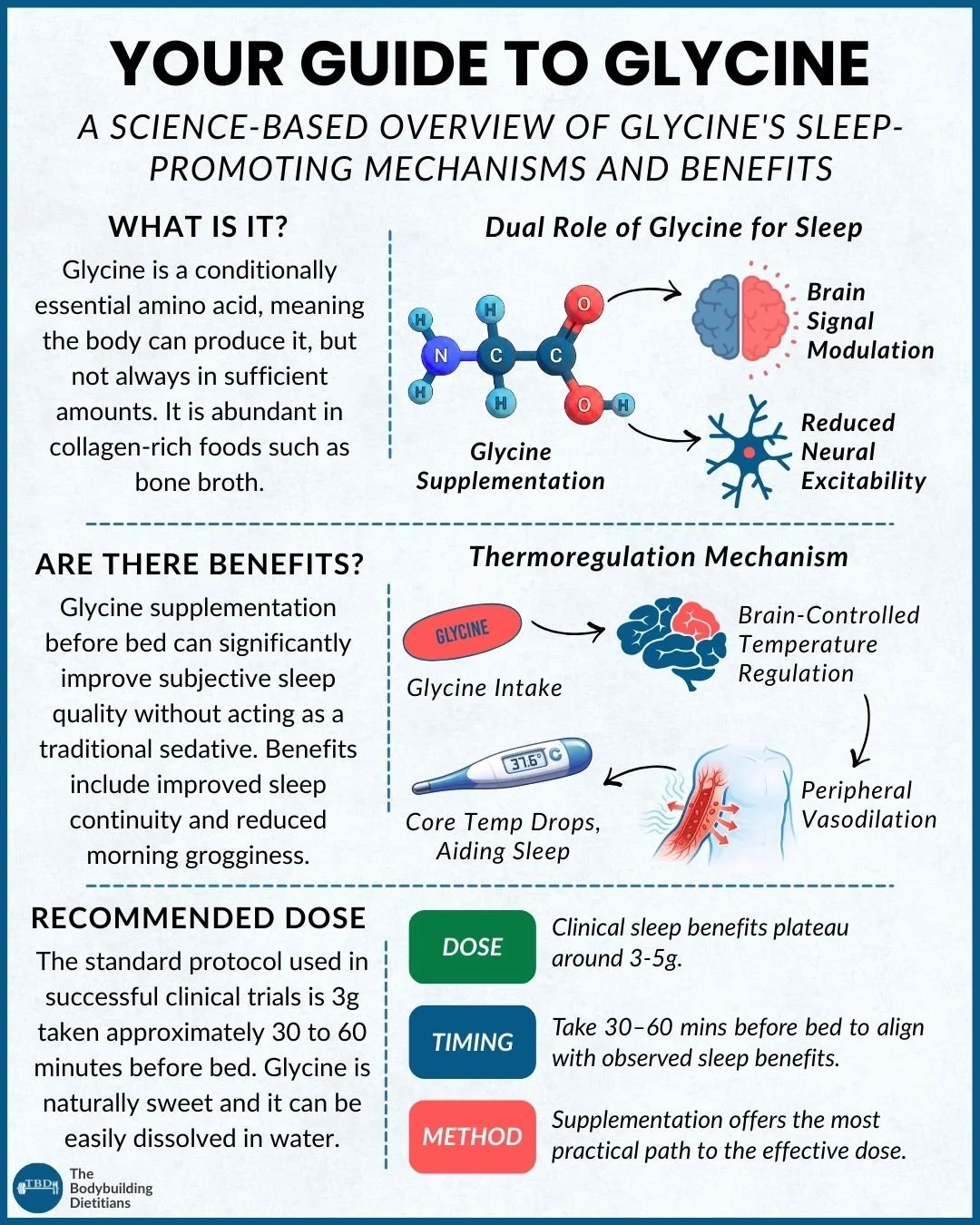
Glycine is a non-essential or conditionally essential amino acid. The body can produce glycine endogenously, but not always in quantities sufficient to meet all physiological demands, particularly during periods of high stress, training load, or recovery demand.
Dietary sources of glycine are typically collagen-rich foods such as bone broth, connective tissue, skin, and gelatin. Supplemental glycine provides a more concentrated and predictable dose than food sources alone, which is why most of the sleep research uses isolated glycine rather than dietary intake.
How glycine may support sleep
Rather than inducing sedation, glycine appears to influence sleep through two main pathways.
First, glycine acts as an inhibitory neurotransmitter within the central nervous system and also modulates NMDA receptor activity. This may contribute to a reduction in neural excitability, which can help quiet excessive cognitive or physiological arousal in the evening.
Second, and perhaps more consistently observed, glycine appears to influence thermoregulation. Normal sleep onset is associated with a small, centrally controlled reduction in core body temperature. Glycine supplementation has been shown to enhance this process by increasing peripheral vasodilation, allowing heat to dissipate more efficiently from the body.
This mechanism helps explain why glycine may improve subjective sleep quality without acting as a sedative. It supports a process that already occurs during healthy sleep rather than forcing the body into a state of drowsiness.
What the research shows
Human studies examining glycine and sleep typically use doses of around 3 grams taken before bed. Across multiple trials, glycine has been associated with modest but meaningful improvements in subjective sleep quality, reduced sleep latency in some individuals, improved sleep continuity, and reduced next-day fatigue or grogginess.
Importantly, these effects tend to occur without impairment of cognitive performance the following day, which differentiates glycine from many pharmacological or sedative sleep aids.
That said, the effects are not dramatic, and glycine is unlikely to overcome poor sleep hygiene, significant circadian disruption, or untreated sleep disorders on its own.
Dosing and timing considerations
Most clinical studies observe benefits with doses between 3 and 5 grams taken approximately 30 to 60 minutes before bedtime. Doses above this range do not appear to confer additional sleep benefits for most individuals.
Glycine has a naturally sweet taste and dissolves easily in water, making it relatively easy to use without capsules. It can also be taken alongside other non-sedating sleep supplements, depending on individual tolerance and context.
Who glycine may be most useful for
Glycine is best viewed as an adjunct, not a foundation. Individuals who already have reasonable sleep hygiene in place and are seeking incremental improvements in sleep quality or next-day alertness may be the most likely to benefit.
For athletes, particularly those training later in the day or experiencing heightened nervous system arousal, glycine may provide a subtle but useful support without interfering with recovery or next-day performance.
As with most supplements, responses vary, and ongoing research continues to refine our understanding of glycine’s mechanisms and its effects across different populations.
The takeaway
Glycine is not a sedative and should not be treated as one. Its value lies in supporting the body’s normal sleep-regulating physiology, particularly thermoregulation and neural excitability, rather than forcing sleep onset.
For those who have addressed the major drivers of sleep quality and are looking for an evidence-based supplement to fine-tune their sleep, glycine is a reasonable option to consider.
If sleep, recovery, and performance are ongoing challenges, they’re often best addressed as part of a bigger picture.
Our coaching focuses on building sustainable systems around training, nutrition, and recovery rather than relying on single interventions. You can learn more about our approach below.