Creatine Myths Debunked: What the Evidence Actually Shows
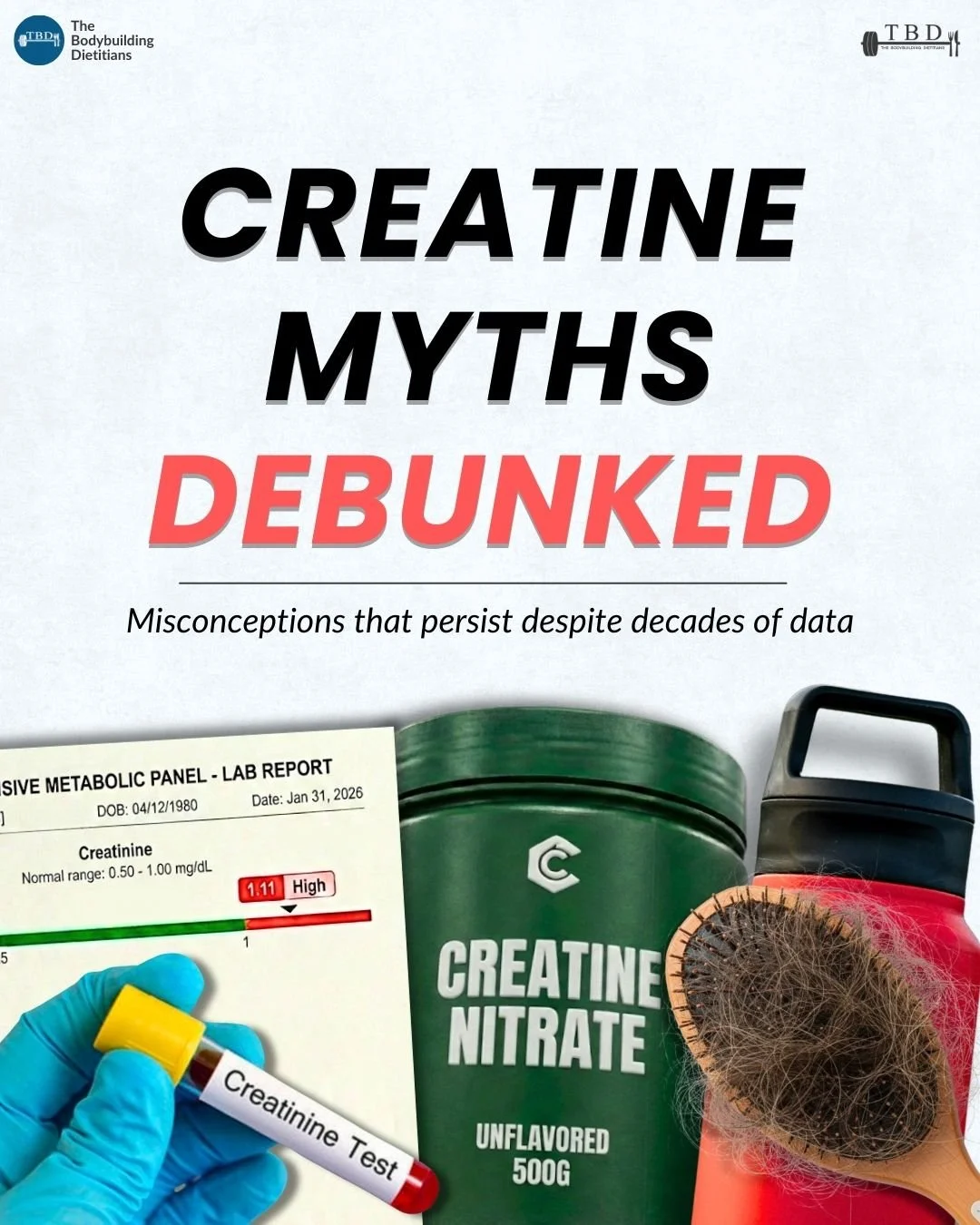
Creatine remains one of the most misunderstood supplements, despite decades of high-quality research.
Many of the concerns surrounding creatine stem from outdated beliefs, misinterpretation of laboratory markers, and marketing narratives that blur physiology with speculation. Over time, these ideas persist, even as the evidence base has continued to grow and refine our understanding of how creatine actually works in the body.
This article breaks down some of the most common misconceptions around creatine use and aligns them with what the research consistently shows.
What creatine actually does
At a physiological level, creatine plays a role in the phosphocreatine system, which supports the rapid regeneration of ATP during short-duration, high-intensity efforts. This is why creatine’s most consistent benefits are observed in strength, power, repeated-effort performance, and overall training capacity.
Creatine does not act hormonally, does not directly stimulate muscle protein synthesis, and does not independently cause muscle hypertrophy. Any long-term increases in muscle mass occur indirectly, through improved training output over time.
Understanding this mechanism alone clears up many of the myths that continue to circulate.
Myth 1: “Creatine damages your kidneys”
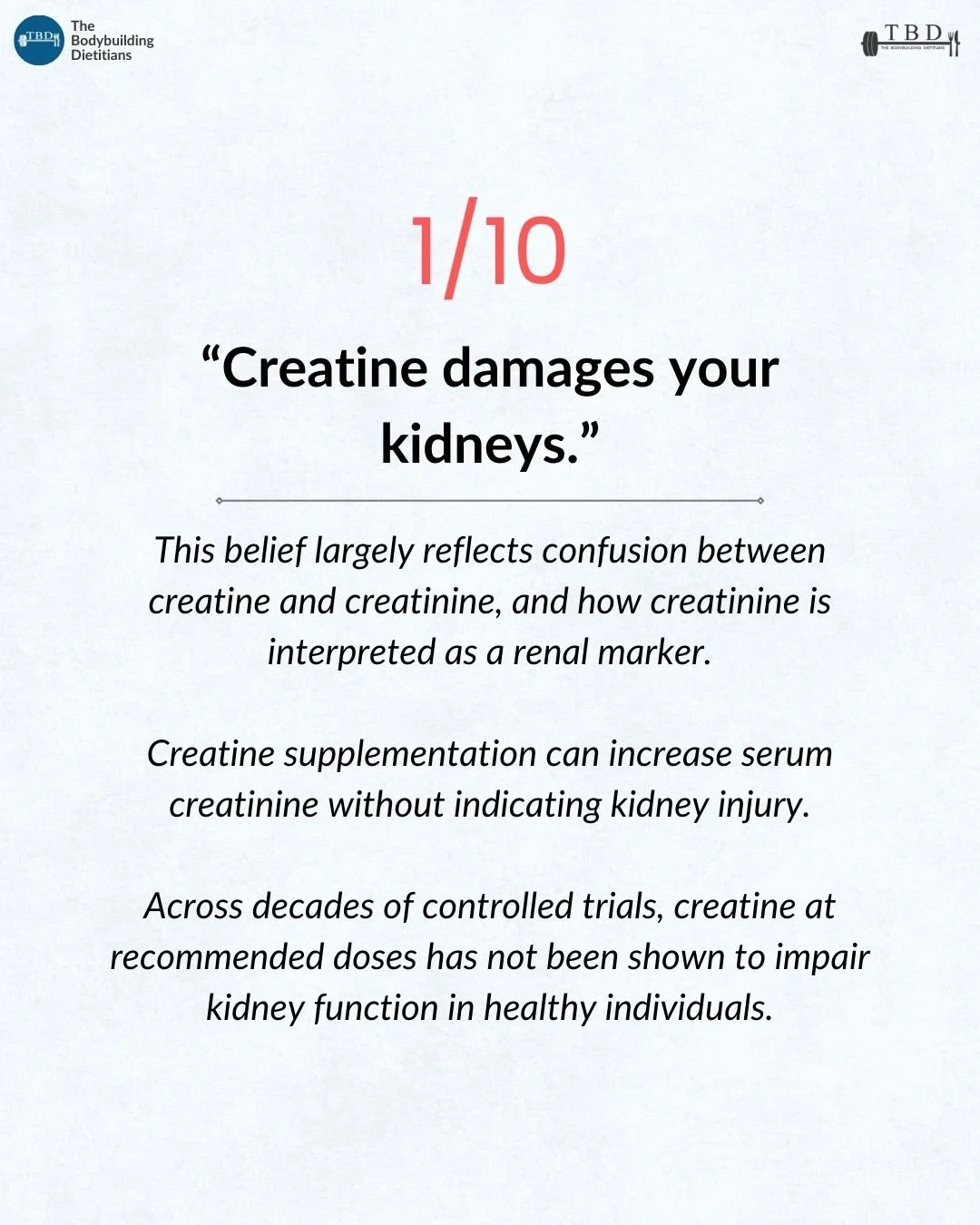
This belief largely reflects confusion between creatine and creatinine, and how creatinine is interpreted as a renal marker.
Creatine supplementation can increase serum creatinine without indicating kidney injury. Across decades of controlled trials, creatine supplementation at recommended doses has not been shown to impair kidney function in healthy individuals.
In people with pre-existing kidney disease, medical guidance is appropriate, but for healthy populations, the safety profile is well established.
Myth 2: “Creatine will make me bulky or overly muscular”
Creatine does not directly stimulate muscle hypertrophy and does not alter anabolic hormones.
Its primary role is to support training capacity. Any changes in muscle size are mediated through higher training volumes or intensities sustained over time, not through a direct growth-stimulating effect.
Creatine does not turn someone muscular in the absence of progressive training and adequate nutrition.
Myth 3: “Creatine causes water retention or bloating”
Short-term increases in body water can occur early in supplementation, but this reflects increased intracellular hydration within muscle tissue, not generalised fluid retention.
Over longer timeframes, research does not show disproportionate increases in total body water relative to lean mass. This distinction is important, particularly when creatine is blamed for changes in appearance that are often unrelated.
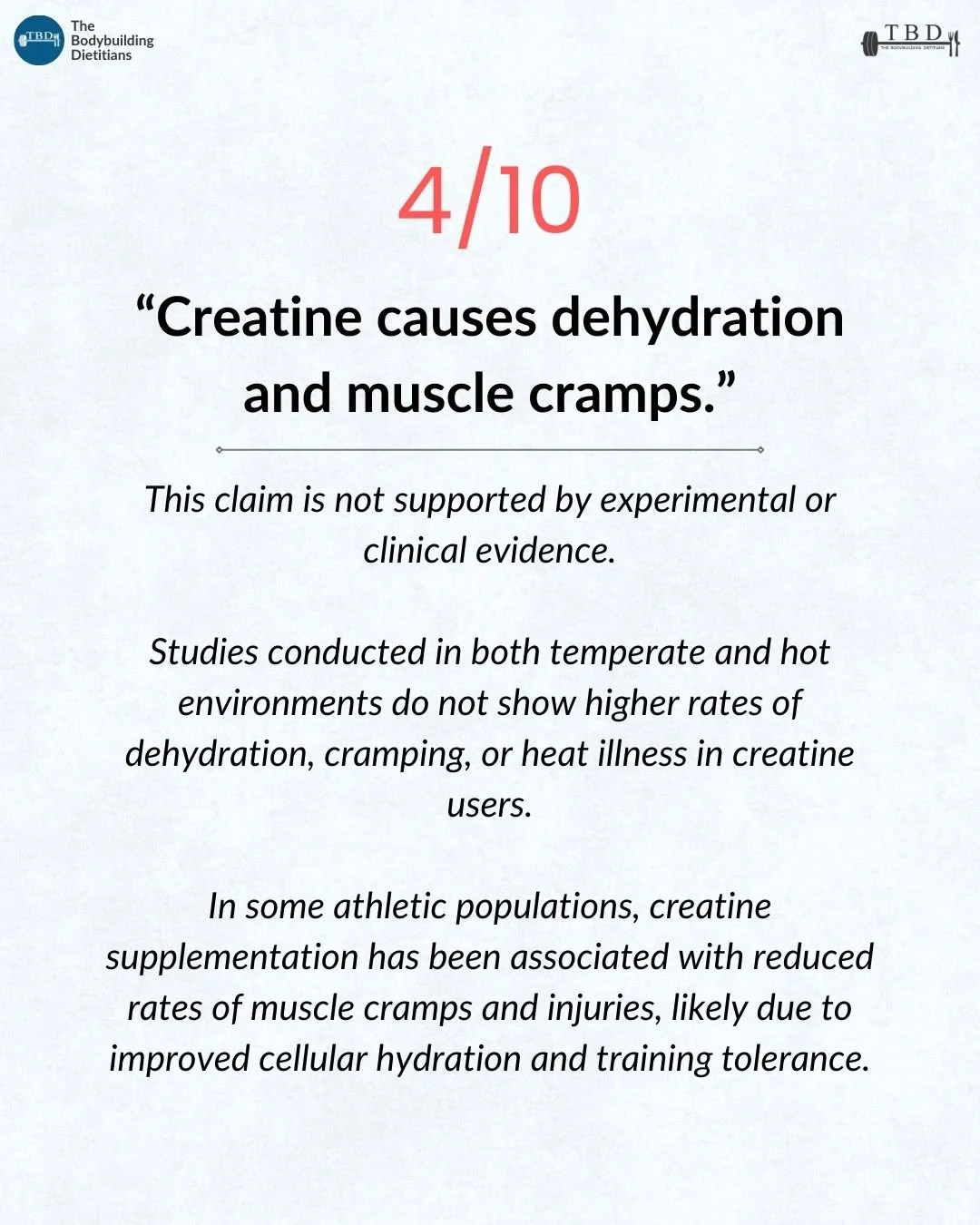
Myth 4: “Creatine causes dehydration or muscle cramps”
This claim is not supported by experimental or clinical evidence.
Studies conducted in both temperate and hot environments do not show higher rates of dehydration, cramping, or heat illness in creatine users. In some athletic populations, creatine supplementation has been associated with reduced rates of muscle cramps and injuries, likely due to improved cellular hydration and training tolerance.
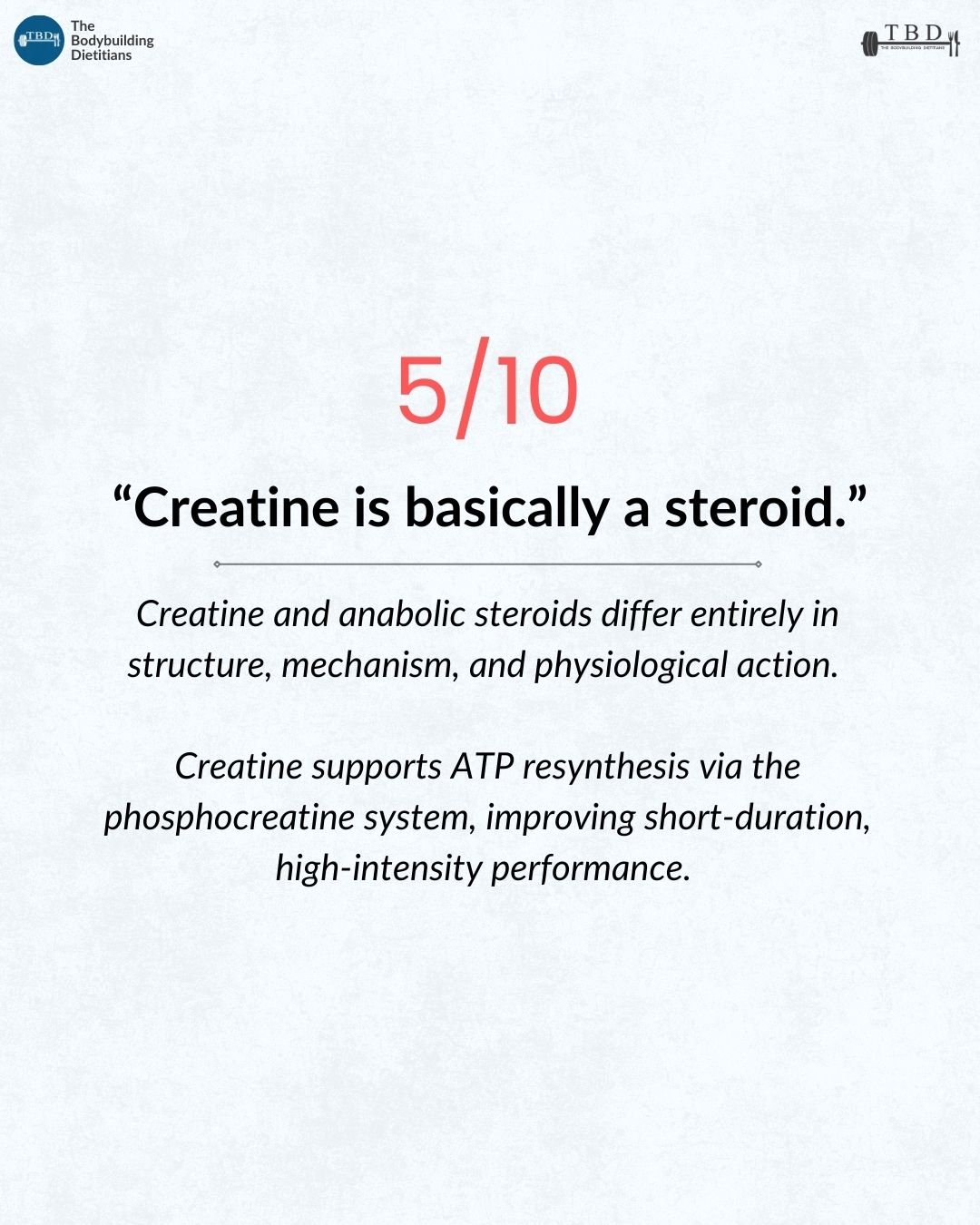
Myth 5: “Creatine is basically a steroid”
Creatine and anabolic steroids differ entirely in structure, mechanism, and physiological action.
Creatine supports ATP resynthesis via the phosphocreatine system, improving short-duration, high-intensity performance. It does not act on androgen receptors, does not alter hormone production, and does not share the risk profile associated with anabolic agents.
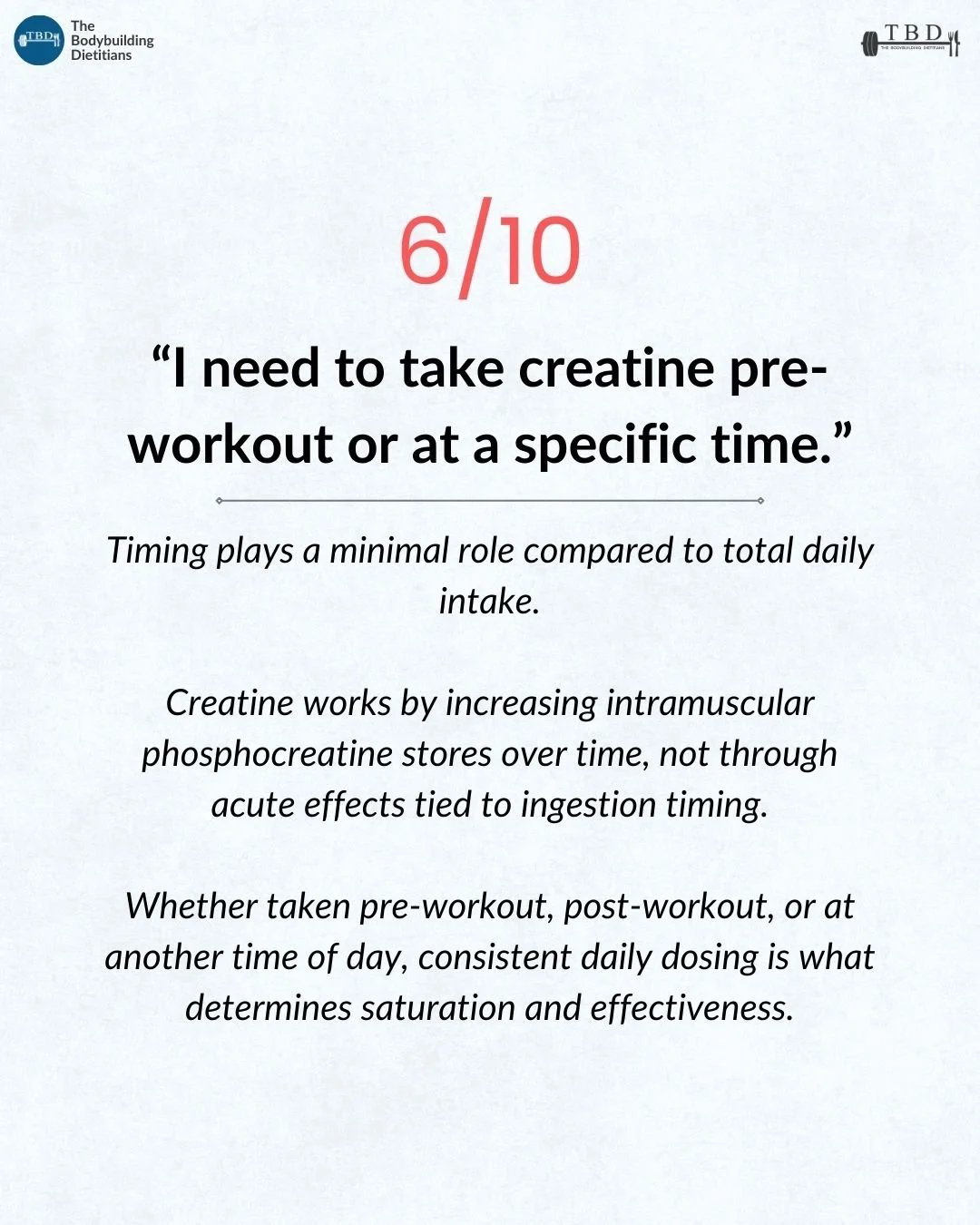
Myth 6: “I need to take creatine pre-workout or at a specific time”
Timing plays a minimal role compared to total daily intake.
Creatine works by gradually increasing intramuscular phosphocreatine stores, not through acute effects tied to ingestion timing. Whether taken pre-workout, post-workout, or at another time of day, consistent daily intake is what determines saturation and effectiveness.
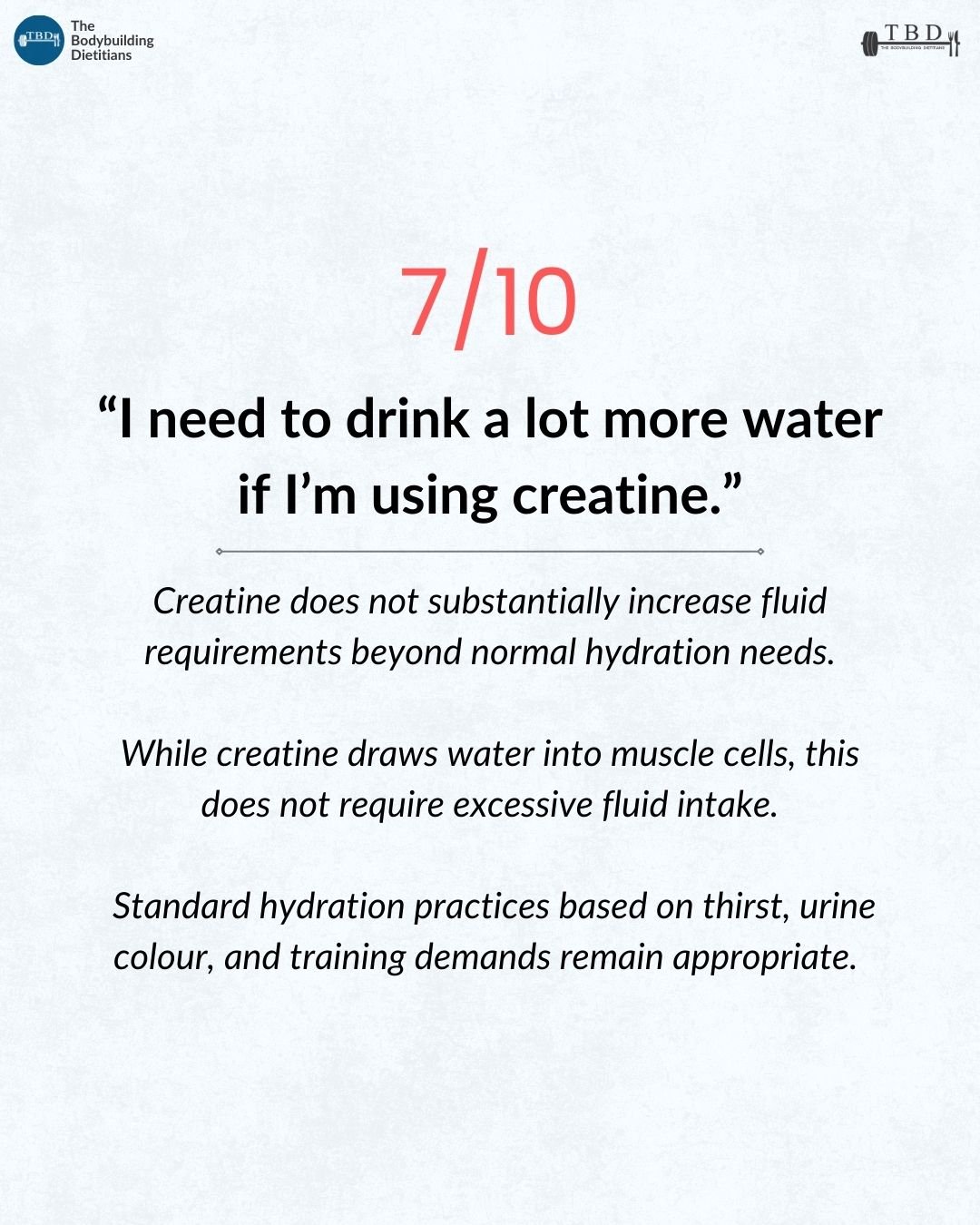
Myth 7: “I need to drink a lot more water if I’m using creatine”
Creatine does not substantially increase fluid requirements beyond normal hydration needs.
While creatine draws water into muscle cells, this does not require excessive fluid intake. Standard hydration practices based on thirst, urine colour, and training demands remain appropriate.
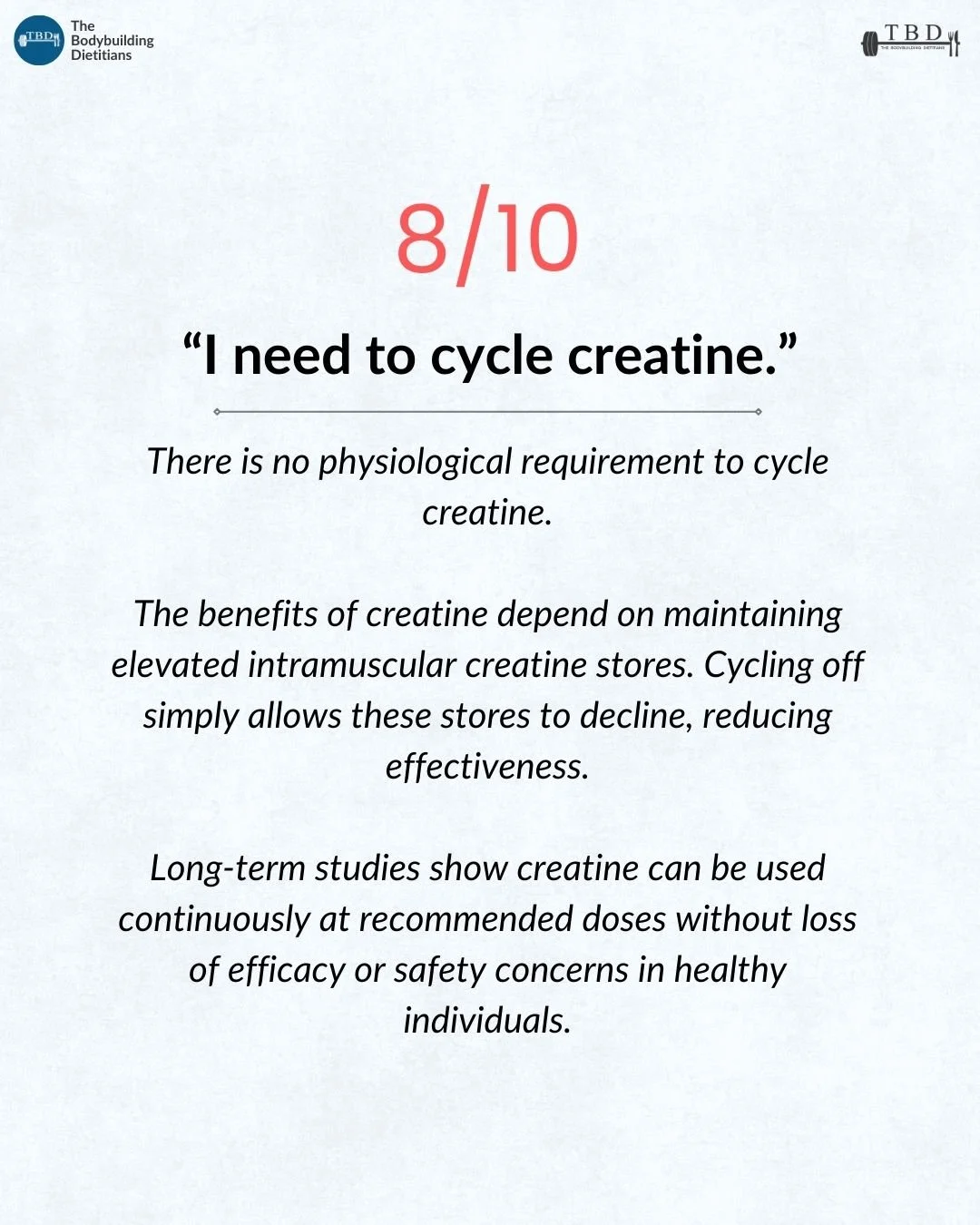
Myth 8: “I need to cycle creatine”
There is no physiological requirement to cycle creatine.
The benefits of creatine depend on maintaining elevated intramuscular creatine stores. Cycling off simply allows these stores to decline, reducing effectiveness. Long-term studies show creatine can be used continuously at recommended doses without loss of efficacy or safety concerns in healthy individuals.
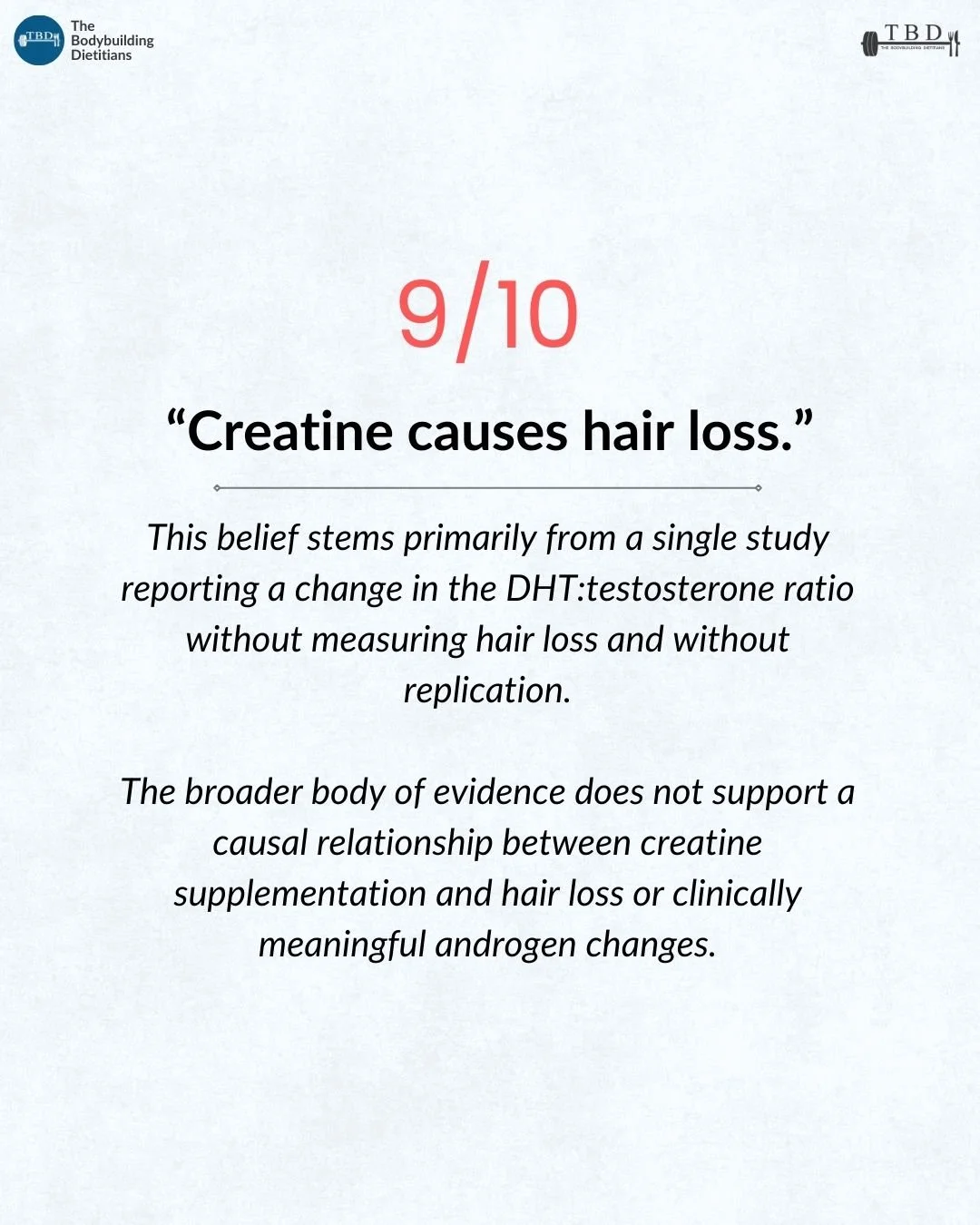
Myth 9: “Creatine causes hair loss”
This belief stems primarily from a single study reporting a change in the DHT:testosterone ratio, without measuring hair loss and without replication.
The broader body of evidence does not support a causal relationship between creatine supplementation and hair loss or clinically meaningful androgen changes.
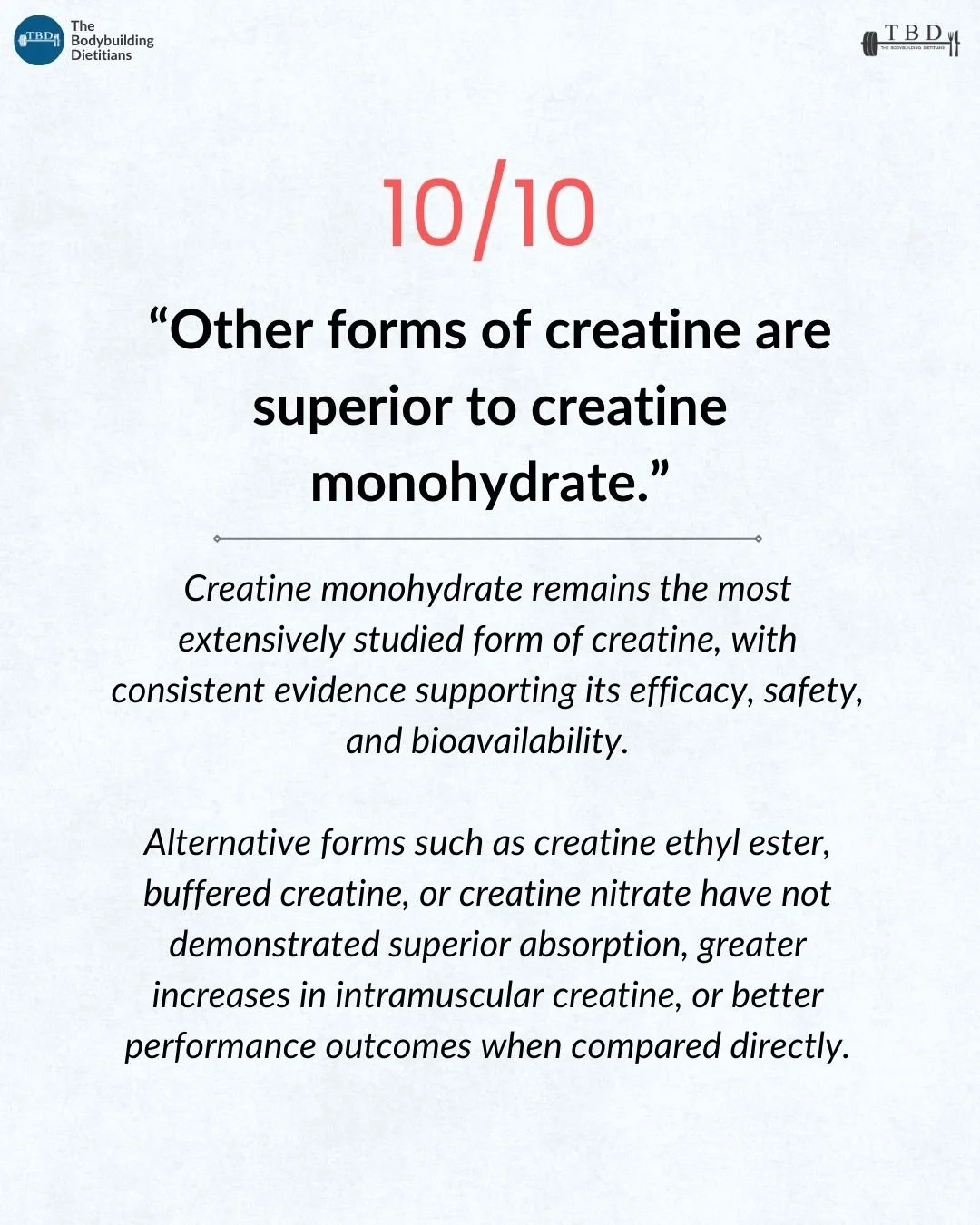
MYTH 10: Creatine MONOHYDRATE IS INFERIOR TO OTHER FORMS
Creatine monohydrate remains the most studied, most reliable, and most cost-effective form available.
Alternative forms have not demonstrated superior absorption, safety, or performance outcomes when compared directly. Current position stands continue to support creatine monohydrate as the reference standard.
Practical takeaways
Creatine use is relatively simple for most individuals. Loading phases are optional, timing is secondary, and consistency is the key driver of effectiveness. Emerging research around cognition, brain health, and resilience to sleep deprivation is promising, but these applications do not yet have the same level of certainty as the performance literature.
In most cases, clarifying what creatine does and does not do removes much of the unnecessary complexity surrounding its use.
Creatine is only one small piece of the performance puzzle. If you want your nutrition, supplementation, and training strategy aligned properly, this is exactly what we help with at The Bodybuilding Dietitians.