Fibre Efficiency: Getting More Fibre Without Blowing Your Calories
Fibre intake remains one of the most consistently under-achieved nutrition targets, even among people who are otherwise eating “well”.
That gap is rarely about a lack of intent. Most people actively try to include fibre-rich foods. The issue is usually food selection, not effort.
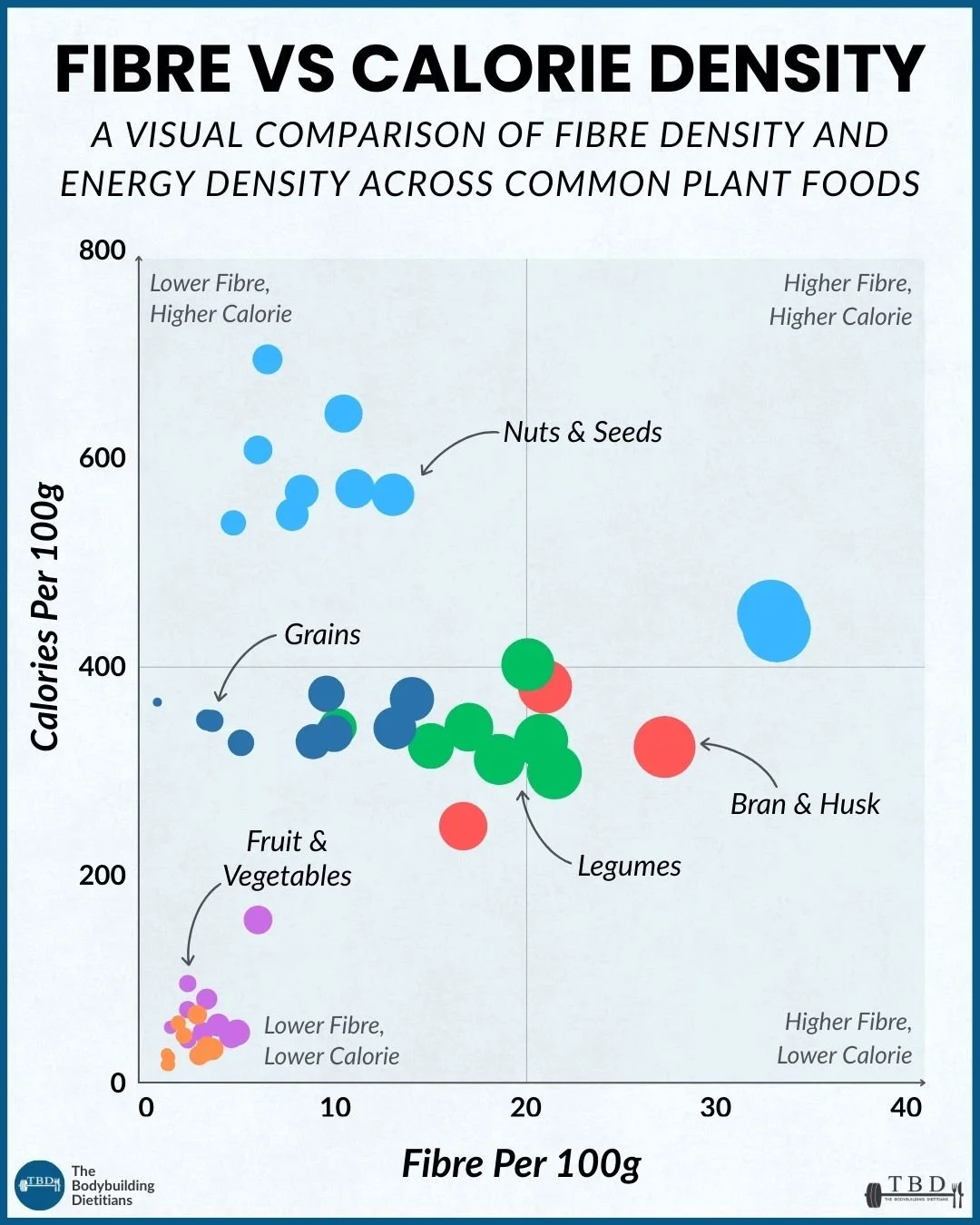
Many foods carry a health halo because they contain fibre, but the amount of fibre relative to calories varies massively between foods. Some options meaningfully move daily fibre intake with minimal energy cost. Others barely shift fibre totals while adding a significant calorie load.
That difference is what this post explores.
Want the complete list?
Our free Fibre Guide ranks over 80 foods by fibre-per-calorie, so you can hit your target without overshooting your calories. You’ll also receive occasional nutrition and training insights from our dietitians, with the option to unsubscribe at any time.

What Fibre Efficiency Actually Means
When we talk about fibre efficiency, we’re not talking about whether a food contains fibre at all. We’re looking at:
Fibre per 100 g
Calories per 100 g
The relationship between the two
A more fibre-efficient food delivers a higher fibre return for a given calorie investment. That matters in almost every context, but especially when calories are constrained.
Why Fibre Intake Is So Easy to Miss
Most fibre guidelines sit around:
~25–30 g (or more) per day
Most people would benefit from eating more fibre than these minimum guidelines
Yet intake consistently falls short.
Common reasons include:
Reliance on low-volume, calorie-dense foods
Overestimating the fibre contribution of grains and nuts
Under-utilising legumes, vegetables, and high-fibre fruits
Difficulty increasing fibre without increasing calories
This is where efficiency becomes practical rather than theoretical.
What the Data Shows Across Food Groups
Fruit
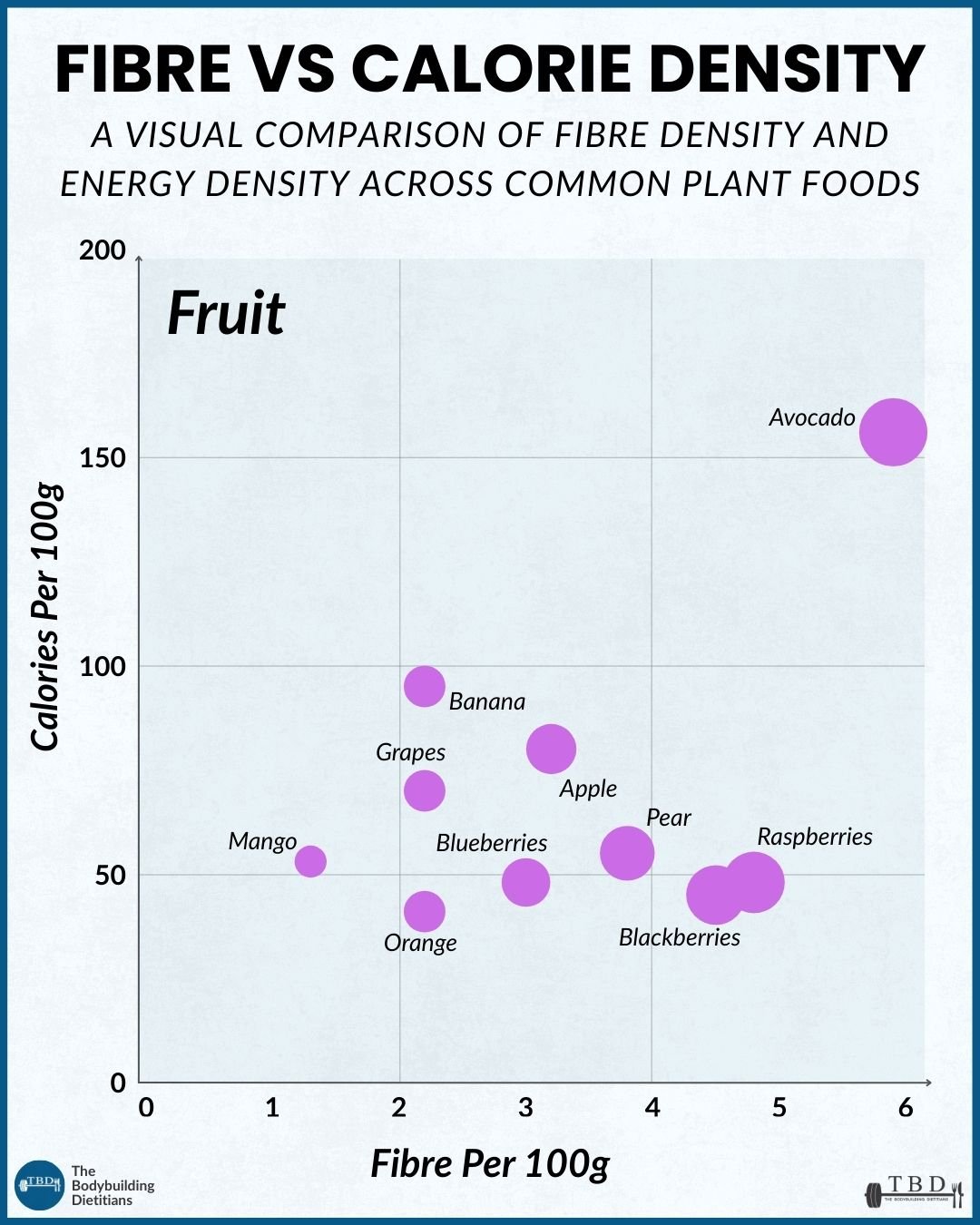
Fruit is often assumed to be a major fibre contributor, but the spread is wide.
Berries such as raspberries and blackberries are highly fibre-efficient
Apples and pears sit somewhere in the middle
Fruits like grapes and mango contribute relatively little fibre per calorie
Fruit can absolutely help fibre intake, but choice matters.
Vegetables
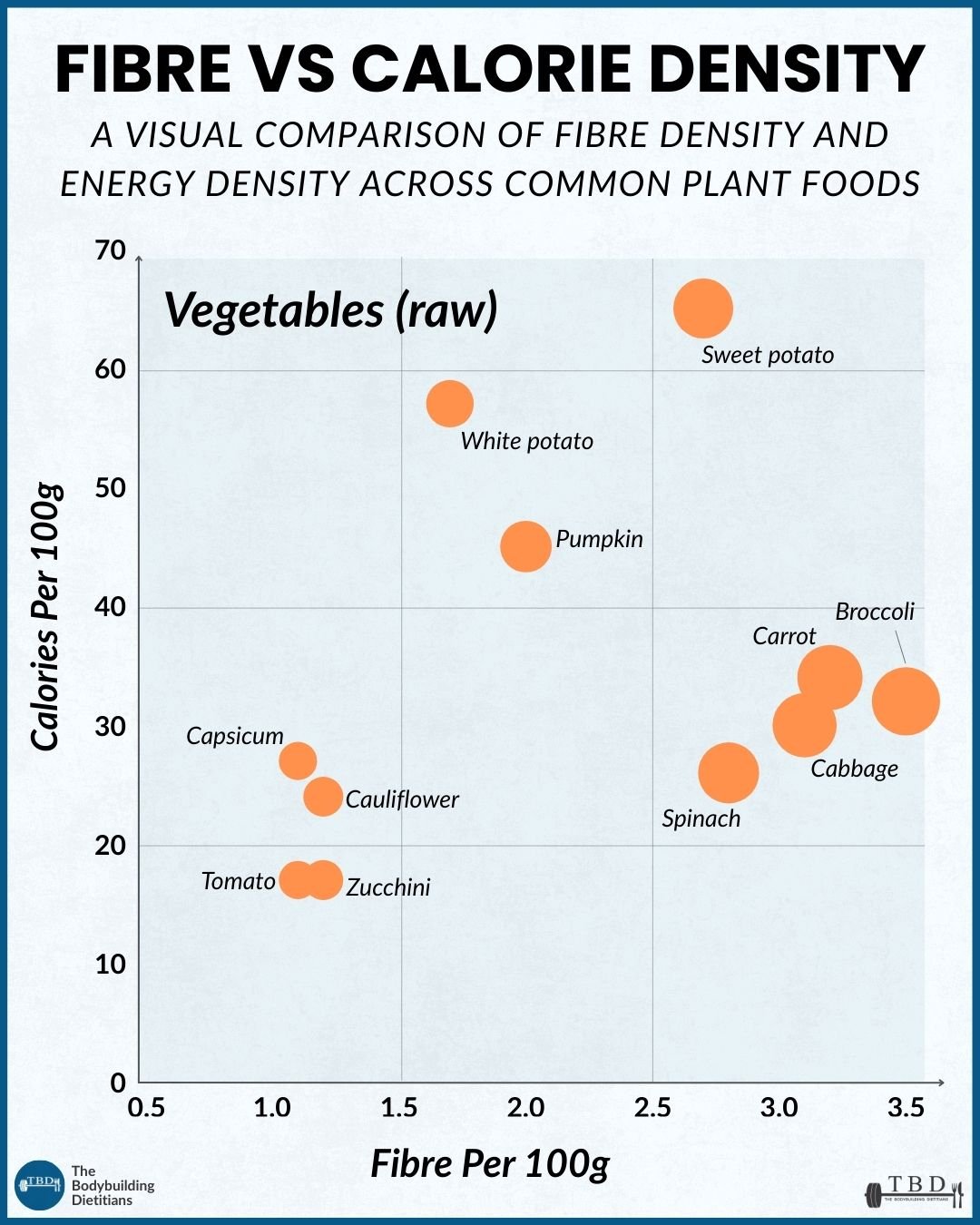
Vegetables are generally low-calorie, but fibre content still varies.
Leafy greens, cabbage, broccoli, and carrots offer strong fibre efficiency
Starchy vegetables contribute more calories for comparatively modest fibre increases
Vegetables tend to be excellent volume foods, but not all are equal fibre drivers.
Grains
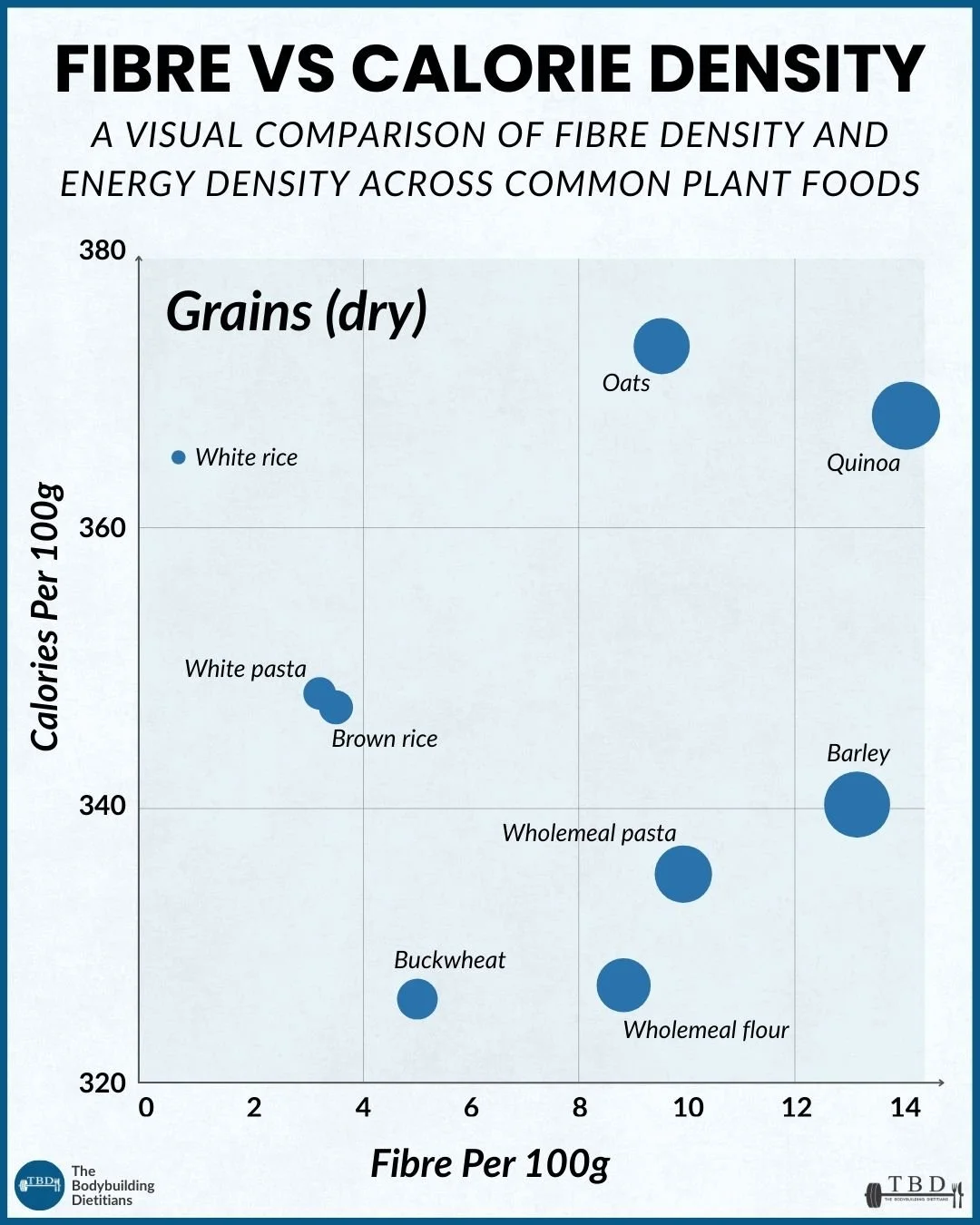
Grains are often chosen for fibre, yet many provide surprisingly little relative to calories.
White rice and white pasta contribute minimal fibre
Wholemeal options improve fibre slightly
Certain grains like barley and oats perform better, but still carry a higher calorie cost
Grains are useful for energy and training fuel, but they’re rarely the most efficient way to push fibre higher.
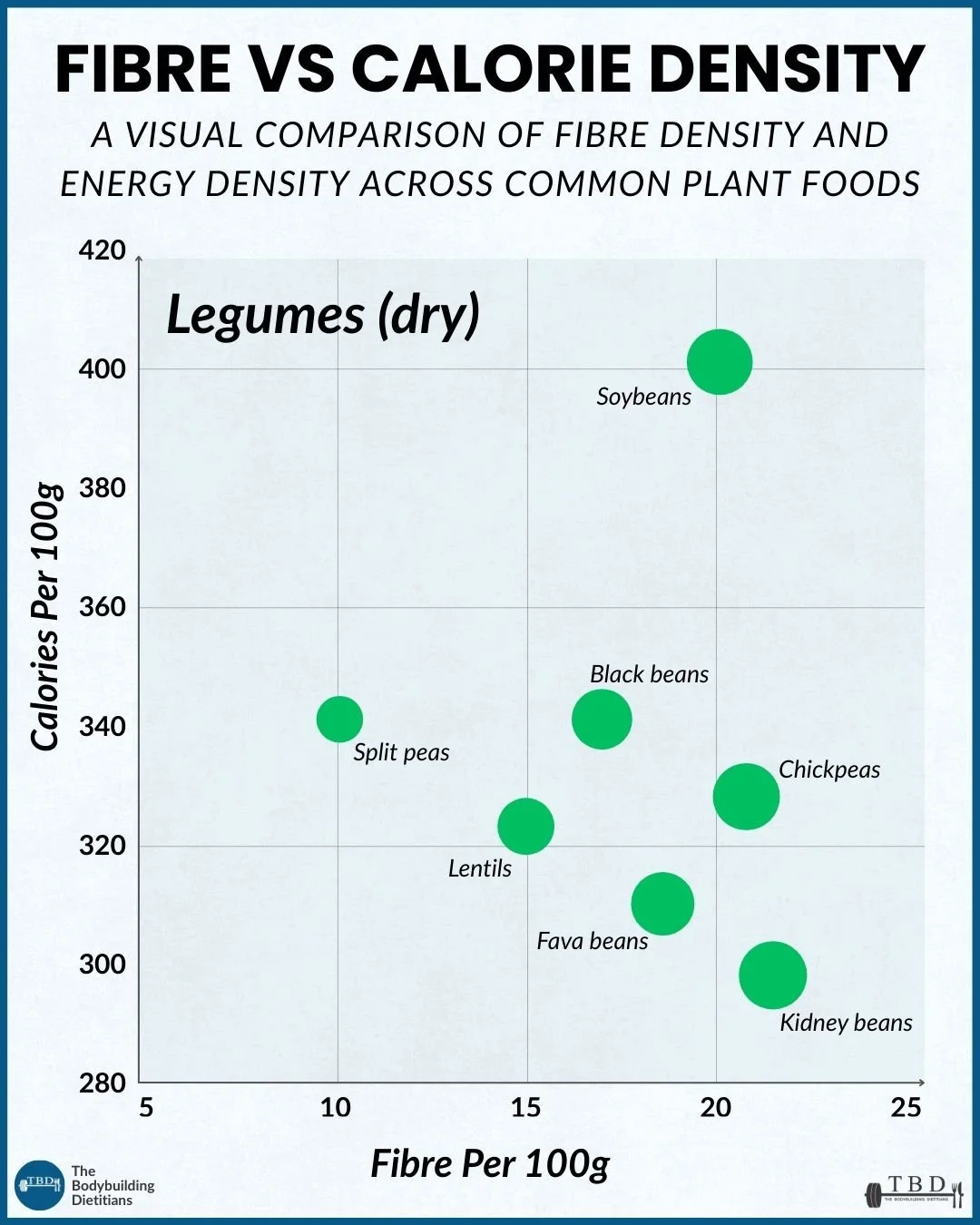
Legumes
Legumes stand out as one of the most consistently fibre-efficient categories.
Lentils, chickpeas, beans, and split peas offer high fibre with moderate calories
They also bring protein, micronutrients, and glycaemic benefits
For many people struggling to hit fibre targets, legumes are the missing piece.
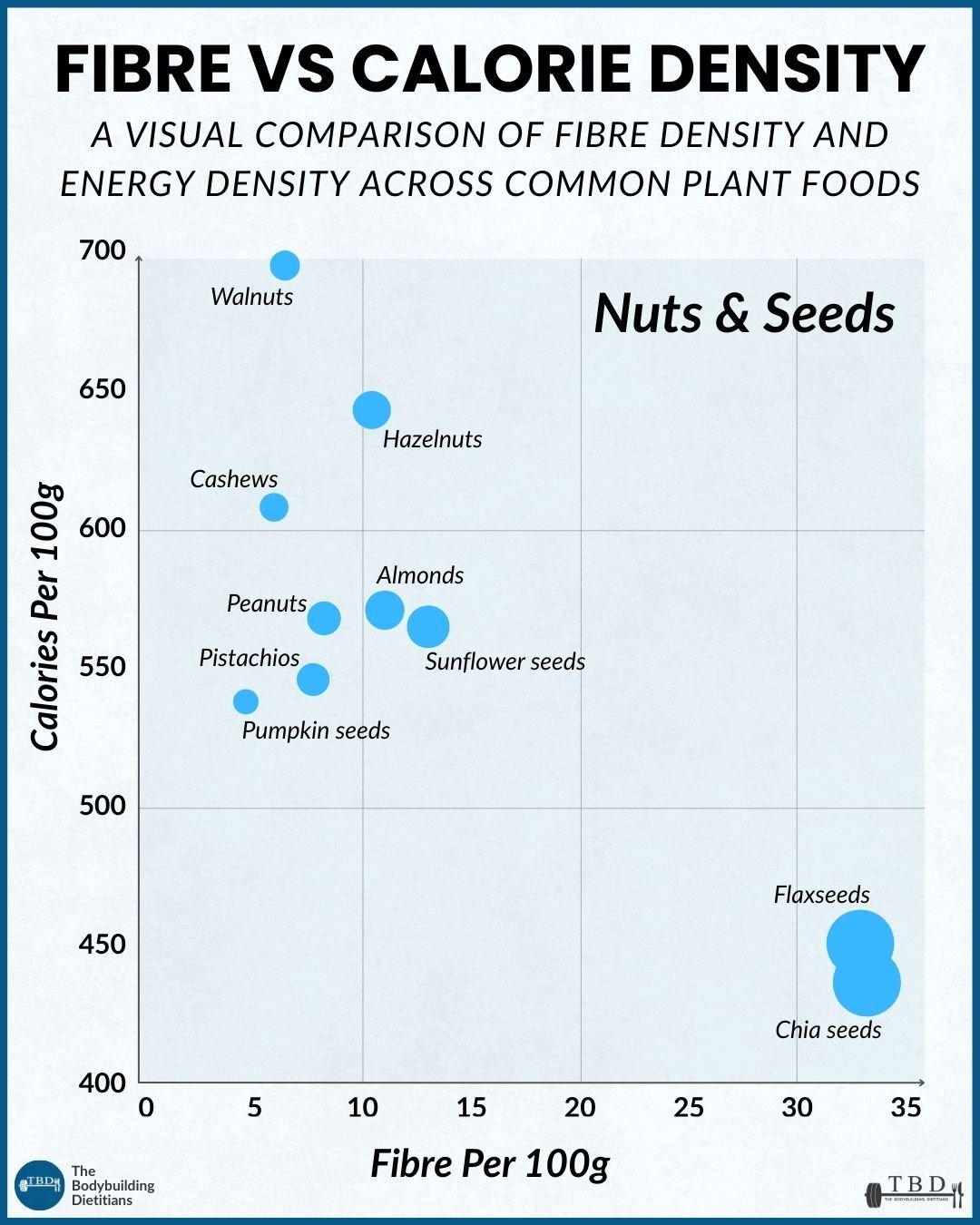
Nuts and Seeds
Nuts and seeds are fibre-rich on paper, but calorie dense.
Chia and flaxseeds deliver exceptional fibre density
Most nuts provide moderate fibre but at a high energy cost
They can absolutely support fibre intake, but portion control matters, especially during fat loss.
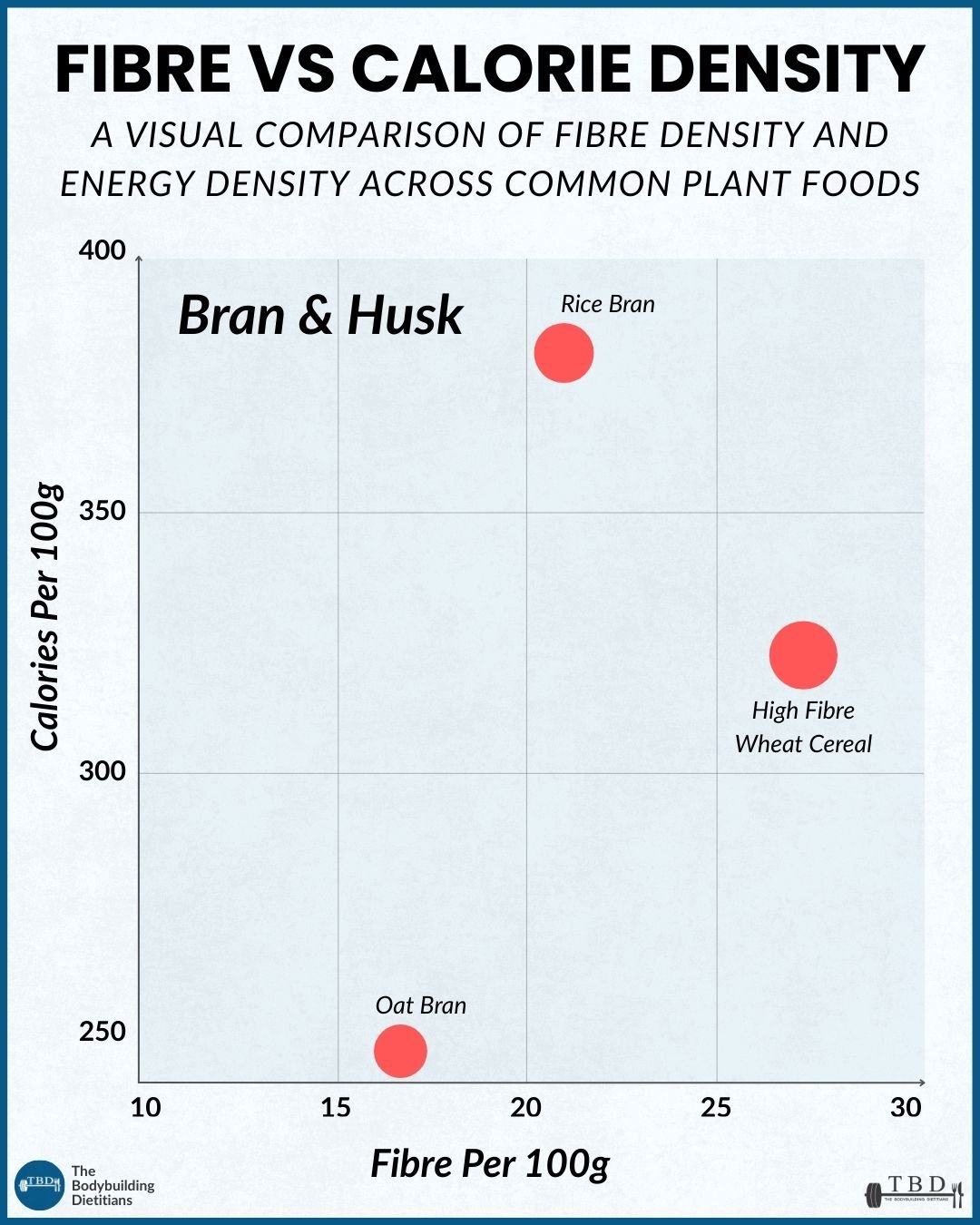
Bran and Husk Products
This category represents the extreme end of fibre efficiency.
Wheat bran, oat bran, and high-fibre cereals deliver large fibre doses per serving
They’re effective tools, but often less palatable and more situational
Useful strategically, not always practical as a primary fibre source.
Why Fibre Efficiency Matters in Different Phases
Fat Loss
Appetite regulation becomes more important
Fibre helps control hunger, glycaemic swings, and dietary adherence
Efficient sources allow fibre intake to stay high without squeezing calories
Muscle Gain
Calorie intake rises, but fibre still matters for gut health and metabolic control
The goal may shift toward maintaining fibre without excessive bulk or discomfort
In both cases, understanding efficiency improves decision-making rather than adding restriction.
This Is Not About “Good” or “Bad” Foods
Every category shown has a place.
This framework is not about eliminating:
Grains
Nuts
Higher-calorie fibre sources
It’s about knowing which foods actually move fibre totals, and using them intentionally rather than assuming fibre will “take care of itself”.
Most people don’t need more willpower. They need better levers.
How to Apply This Practically
Anchor fibre intake with legumes, vegetables, and berries
Use grains primarily for training fuel rather than fibre targets
Add seeds or bran strategically if fibre remains low
Adjust fibre density based on calories and phase of training
Small changes in food choice often outperform large changes in effort.
If you’re consistently struggling with hunger, digestion, or adherence, fibre intake is often part of the picture, but rarely in isolation.
If you want help structuring your nutrition so fibre intake supports your goals rather than complicates them, you can explore working with our team below.