
Not everyone is ready to compete
Deciding to wait longer before stepping on stage can be one of the most productive decisions an athlete makes. Not because competing is wrong, but because contest prep magnifies everything that already exists beneath the surface.
Prep isn’t a fresh start. It’s a stress test.
The behaviours, routines, coping strategies, and expectations you carry into prep don’t disappear when calories drop. They become louder. Fatigue, hunger, and prolonged focus on body composition don’t create new issues, they amplify the ones that are already there.
For athletes who have spent time building structure, consistency, and resilience, that amplification is manageable. For those who haven’t, prep often becomes chaotic very quickly.
The wrong reasons tend to show up early
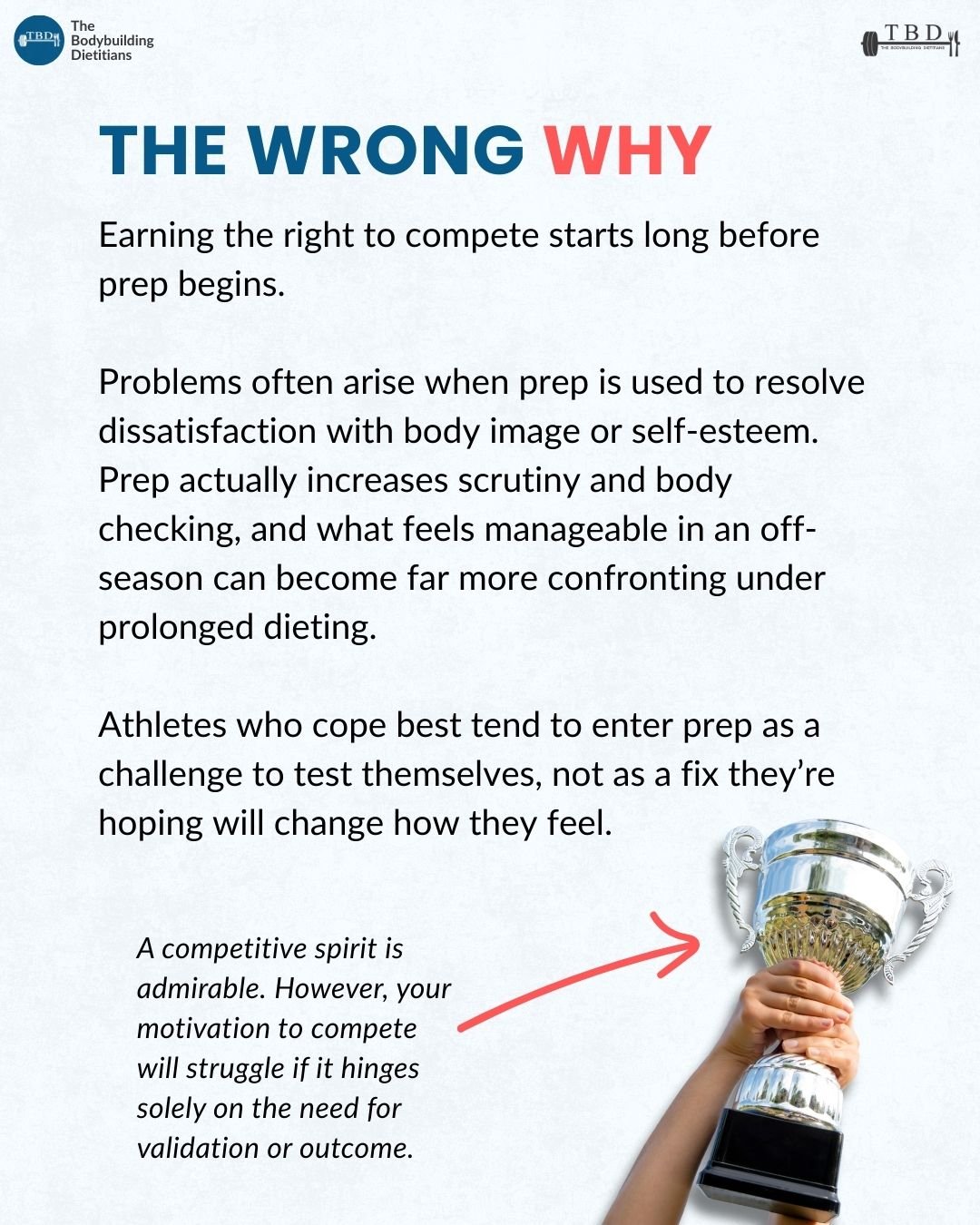
Problems commonly arise when prep is used as a solution rather than a challenge.
Athletes who enter prep hoping it will fix dissatisfaction with body image, motivation, or self-esteem often find the opposite happens. Contest prep increases scrutiny, comparison, and body checking. What felt tolerable in an off-season can become confronting under prolonged energy restriction.
Athletes who cope best tend to approach prep as a test of systems they’ve already built, not as a shortcut to feeling better about themselves.
Your environment matters more than most people expect
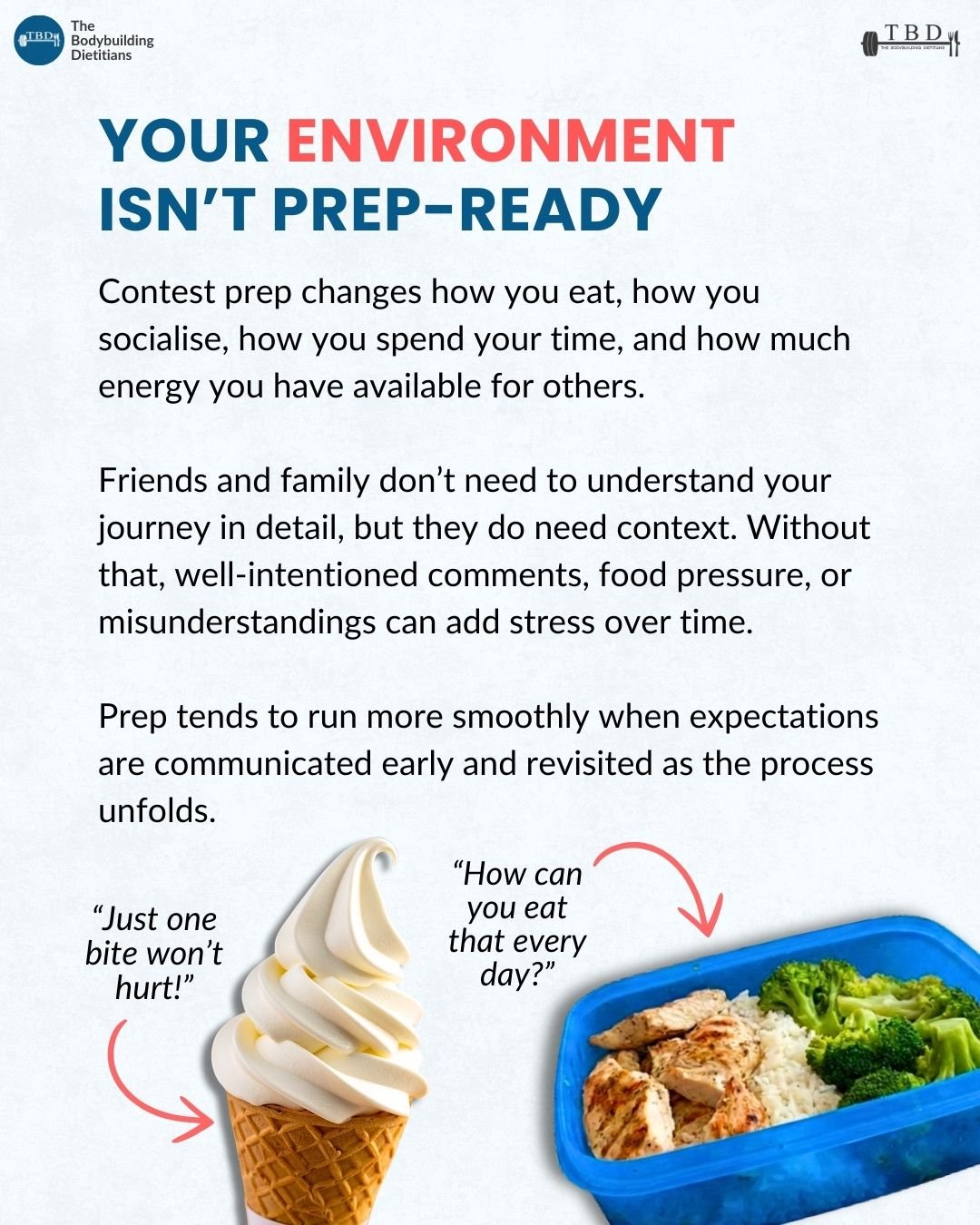
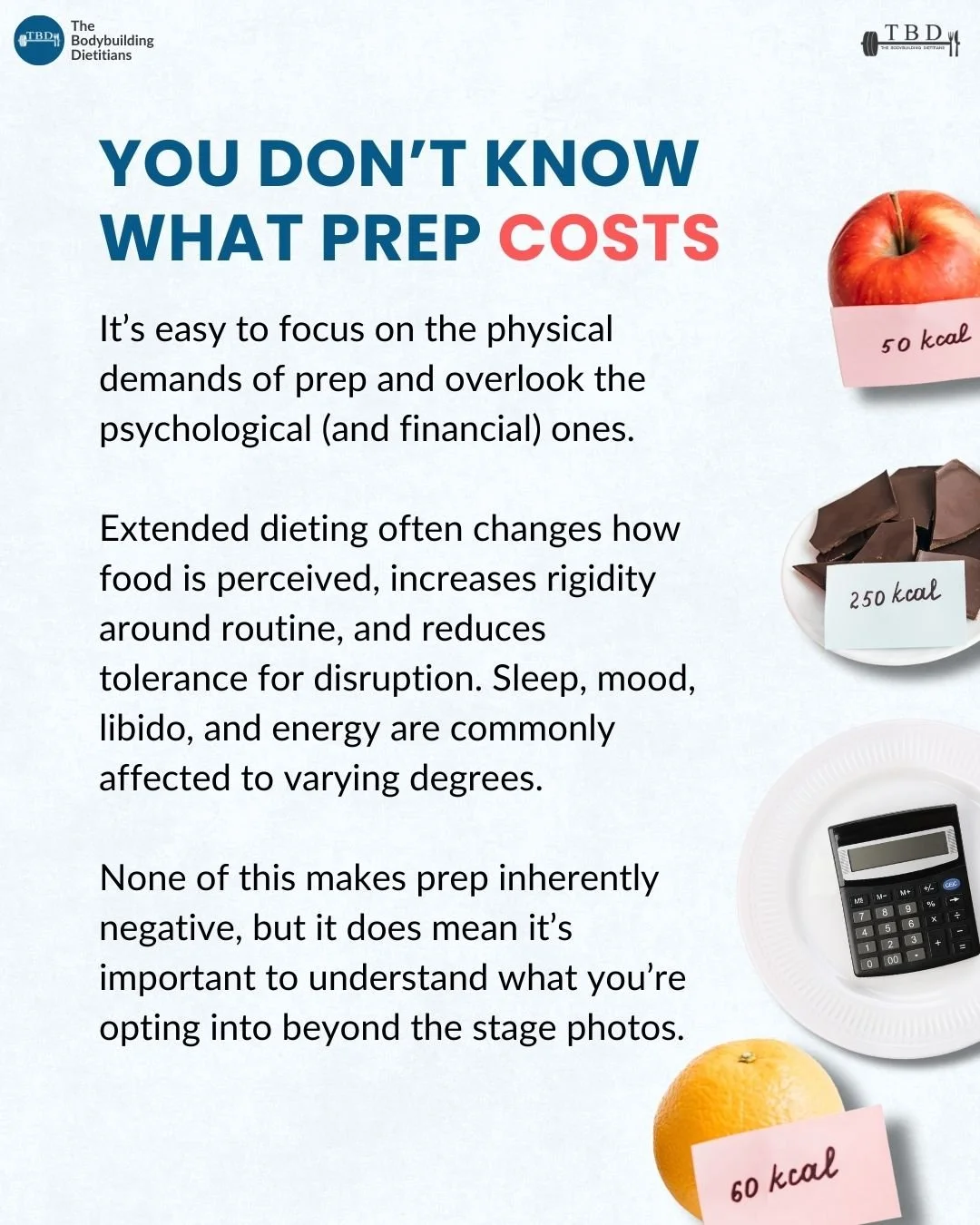
Contest prep changes how you eat, how you socialise, how you allocate time, and how much energy you have available for others. If the people around you don’t have context for that, even well-intentioned comments and pressures can accumulate into stress.
Prep runs more smoothly when expectations are communicated early and revisited as the process unfolds. Support doesn’t require full understanding, but it does require awareness.
Health markers don’t get a free pass
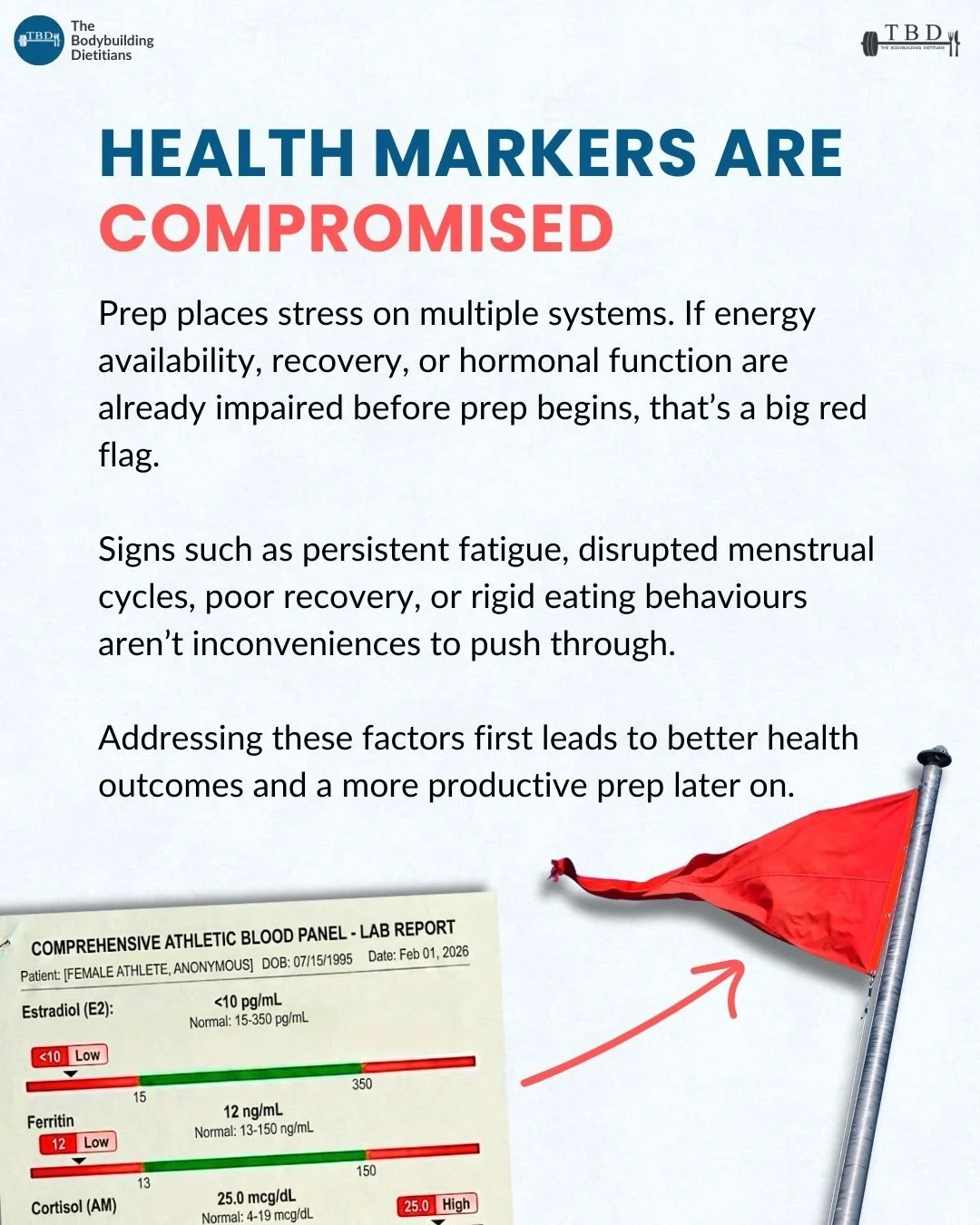
Prep places stress across multiple systems. If recovery, energy availability, hormonal function, or relationship with food are already compromised before prep begins, that’s a red flag, not something to push through.
Persistent fatigue, disrupted menstrual cycles, declining training performance, rigid eating behaviours, or elevated stress markers aren’t inconveniences. They’re signals. Addressing them before prep improves both health outcomes and the quality of any future physique outcome.
Prep doesn’t build habits, it exposes them
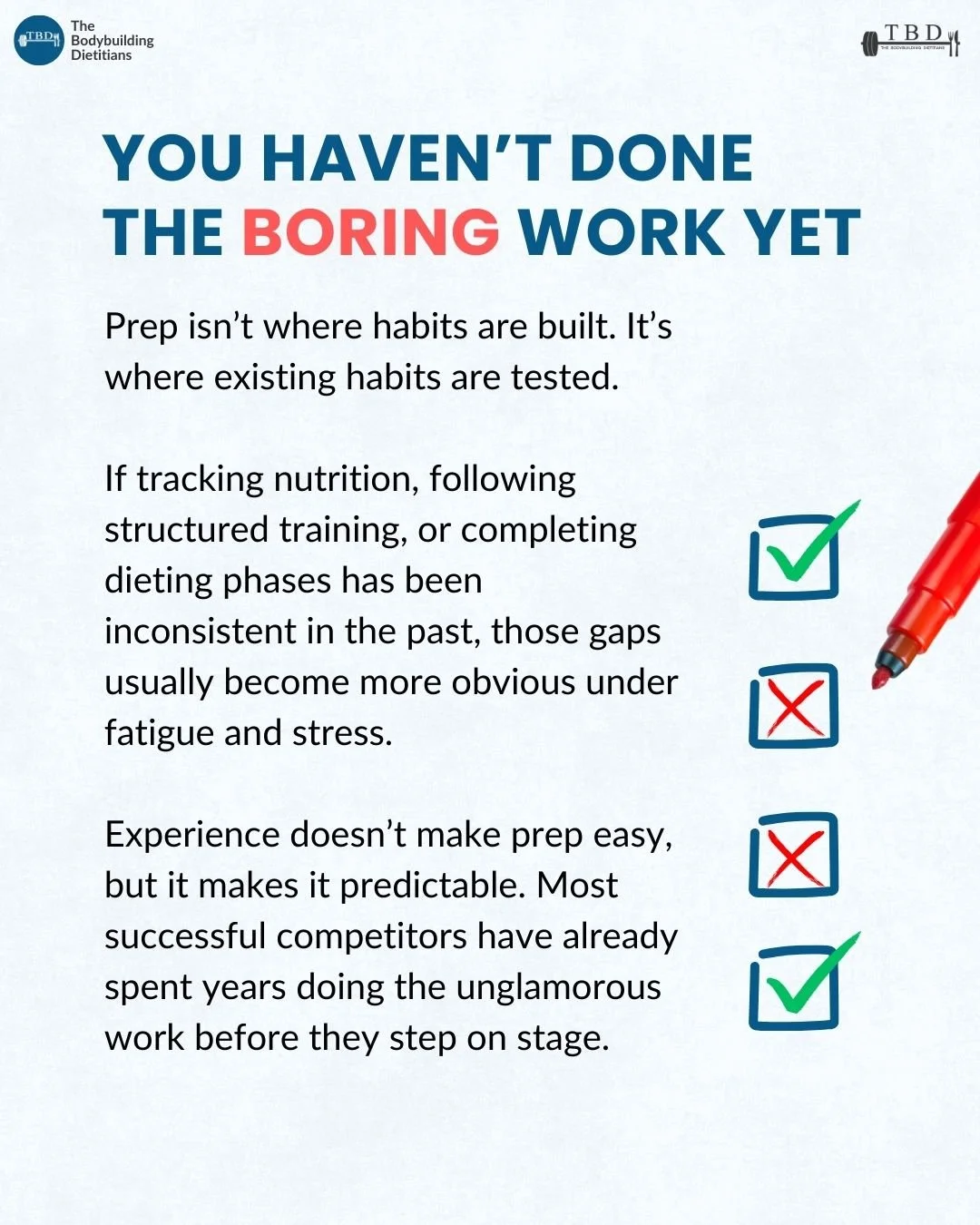
Prep is not where consistency is created. It’s where existing habits are tested.
If tracking, structured training, or adherence has been inconsistent in the past, prep tends to highlight those gaps under fatigue and pressure. Experience doesn’t make prep easy, but it makes it predictable. Most successful competitors have already spent years doing the unglamorous work long before they step on stage.
Motivation isn’t the foundation, habits are
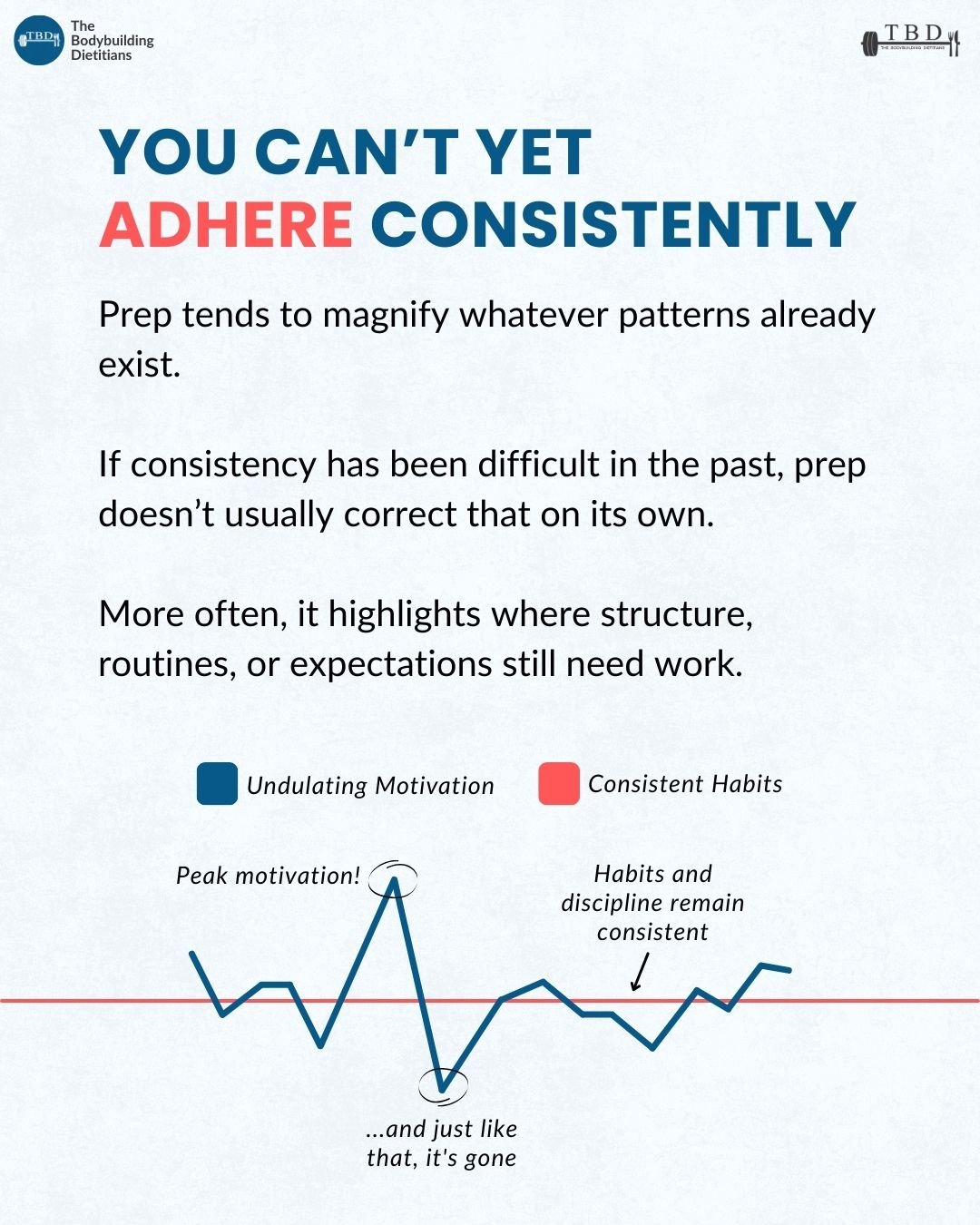
Prep magnifies patterns. If motivation has historically fluctuated, prep rarely stabilises it. Instead, it reveals where routines, expectations, or systems still need work.
Athletes who perform best long term aren’t driven by peaks of motivation. They rely on consistency, structure, and decision-making frameworks that hold when motivation fades.
Competing later often leads to better outcomes
Waiting doesn’t mean giving up. It means earning the right to compete by building the foundations that make prep sustainable.
When habits, health, environment, and expectations are in place, prep is still difficult, but it becomes purposeful rather than reactive. For most athletes, that difference determines whether competing becomes a positive long-term pursuit or a short-lived burnout cycle.
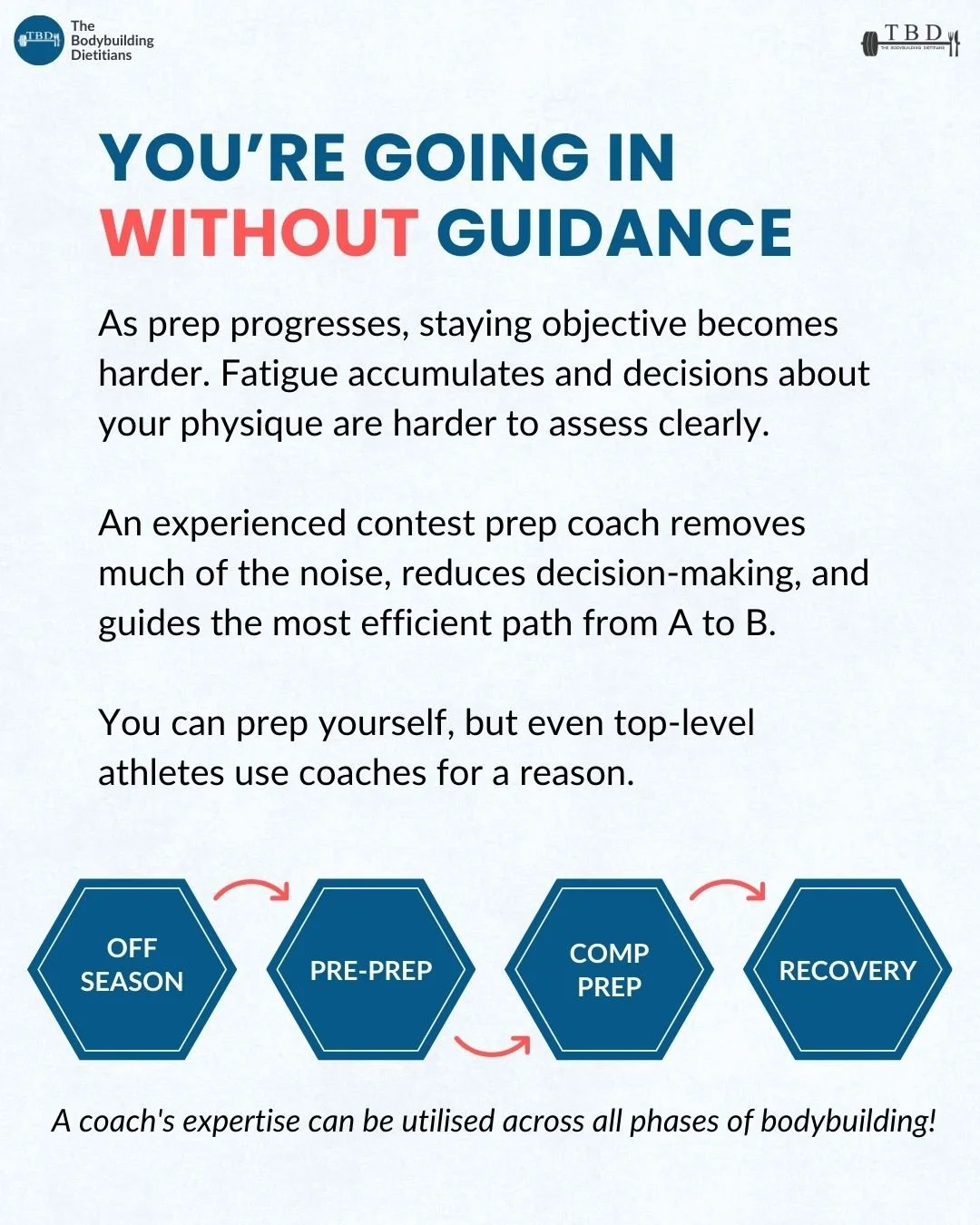
If you’re considering competing and want an objective assessment of whether the timing is right, structured guidance can make that decision far clearer.
Work with us to build the foundations for a sustainable prep, whether that’s now or later.