How a narrow diet can quietly compromise your digestion, and what practical steps you can take to support a more resilient gut without disrupting your nutrition plan.
Many lifters rely on a small number of familiar foods to simplify tracking and digestion, but over time this can reduce gut microbiome diversity and make the digestive system less resilient to dietary variation. Prioritising a wider range of plant foods, including at least 25 to 30 grams of fibre per day from varied sources, and incorporating fermented foods into the diet are practical, sustainable strategies that support both gut health and long-term body composition outcomes. A useful benchmark from current research is approximately 30 different plant types per week, which is more achievable than it initially sounds.

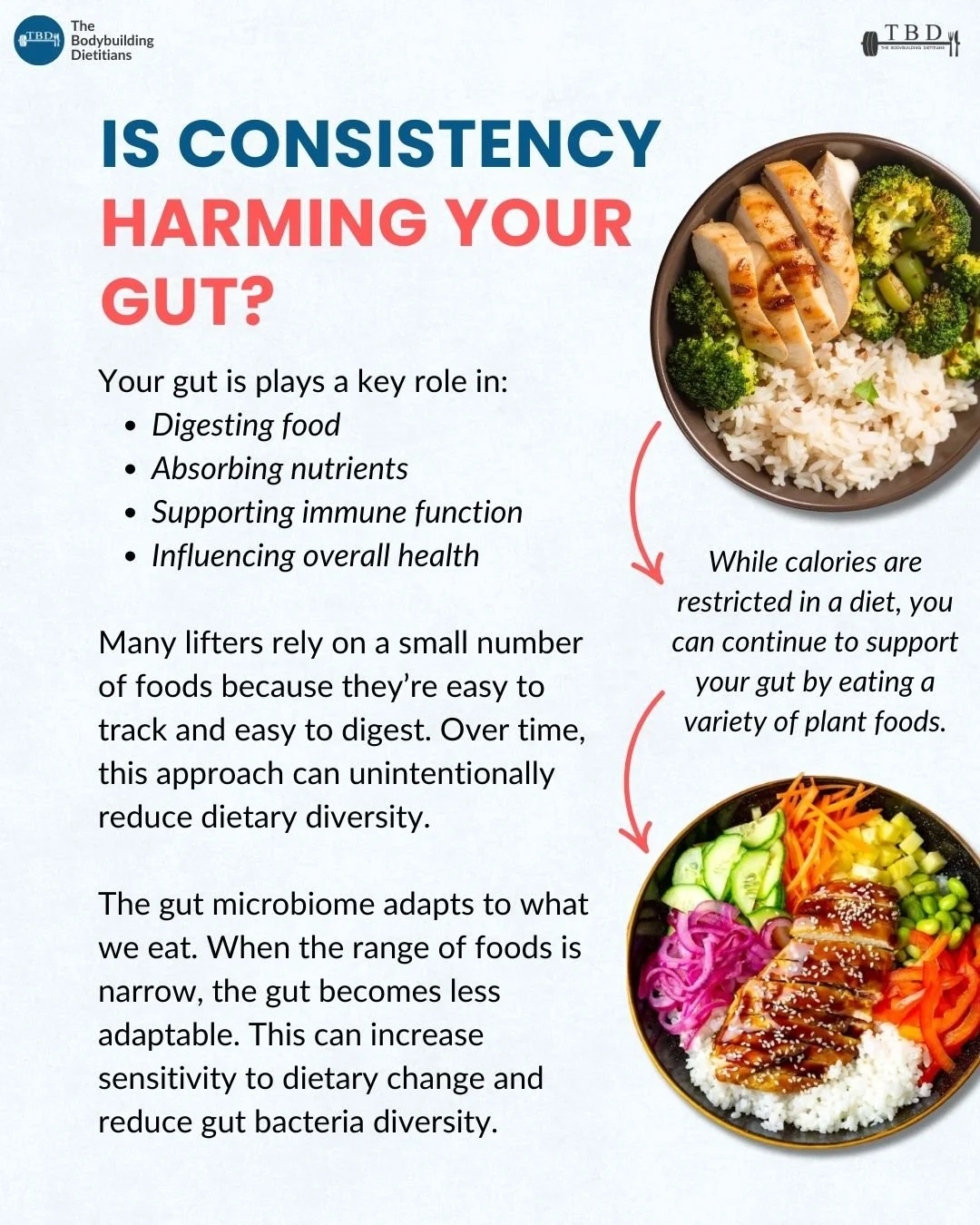



Gut health is arguably one of the most underutilised levers for getting more out of your nutrition. It plays a central role in nutrient absorption, digestive resilience, immune function, and even mood and cognition through the gut-brain axis. For anyone focused on body composition, these are not peripheral concerns. They are foundational to extracting the most value from the food you are already eating.
Despite this, gut health rarely receives the same strategic attention as protein intake, calorie targets, or training programming. In physique-focused nutrition, the priority tends to fall on hitting macros accurately and consistently, which is understandable and important. The unintended consequence, however, is that many lifters develop eating patterns that are excellent for tracking compliance but quietly undermine digestive function over time.
The carousel above walks through the key blind spots and practical strategies that are most relevant for lifters. The sections below expand on each one in more detail, covering why dietary diversity matters for the microbiome, how fibre intake supports gut function, what role fermented foods play, and how daily habits like meal timing, hydration, and eating pace influence digestion in ways that are often overlooked.
Why Does Eating the Same Foods Every Day Affect Your Gut?
A narrow, repetitive diet can reduce the diversity of the gut microbiome over time, making the digestive system less adaptable and more sensitive to dietary variation.
A common pattern among lifters and physique-focused individuals is relying on a small number of familiar foods. This makes practical sense: eating the same meals simplifies tracking, reduces decision fatigue, and makes digestion more predictable in the short term. The challenge is that the gut microbiome adapts to reflect whatever it is regularly exposed to. When the range of foods is narrow, the microbial community becomes less diverse, and certain bacterial populations that would otherwise be supported by a wider diet begin to decline.
The gut microbiome refers to the complex community of trillions of microorganisms, predominantly bacteria, that live in the digestive tract. These microorganisms play essential roles in digesting food, producing vitamins and short-chain fatty acids, regulating immune function, and maintaining the integrity of the gut lining.
This reduced diversity is often why athletes experience bloating, discomfort, reflux, or apparent food sensitivities the moment they deviate from their usual meals, whether that means eating out, travelling, adjusting macros during a phase transition, or simply trying a new food. The gut is not broken in these situations. It has simply adapted to a narrow food environment and lost some of its capacity to handle variation comfortably.
The graph in the carousel illustrates this well: digestion feels stable and predictable while the diet stays the same, but each time a new food or dietary change is introduced, the response becomes unpredictable. Over repeated cycles, this pattern can create a self-reinforcing loop where the athlete becomes increasingly reluctant to introduce new foods because they associate variety with discomfort, which further narrows the diet and further reduces microbiome diversity.
Research from the American Gut Project, one of the largest studies of the human microbiome to date, found that the single strongest predictor of gut microbiome diversity was the number of different plant types consumed per week. Participants who consumed 30 or more different plant types per week had significantly greater microbial diversity than those consuming 10 or fewer, regardless of whether they identified as omnivore, vegetarian, or vegan.
Source: McDonald et al., 2018, mSystems (American Society for Microbiology).
In coaching settings, this pattern tends to surface most clearly during transitions between nutritional phases. An athlete who has been eating a very consistent diet throughout an improvement season may encounter significant digestive disruption when shifting into a prep phase that requires different food volumes, different carbohydrate sources, or more vegetables to manage hunger at lower calorie intakes. Building and maintaining dietary diversity before these transitions makes them considerably smoother.
How Many Different Plant Foods Should You Eat Per Week?
A useful benchmark from current research is approximately 30 different plant types per week, which includes fruits, vegetables, grains, legumes, nuts, seeds, herbs, and spices.
This number can sound daunting at first, but most people are closer than they think once they account for the full range of what counts. A single mixed salad might include spinach, tomato, cucumber, red onion, and chickpeas, which already accounts for five different plants. A stir-fry with rice, broccoli, capsicum, garlic, ginger, and sesame seeds adds another six. Herbs and spices count individually, which means that a curry made with turmeric, cumin, coriander, and chilli contributes four more. When you start tallying these up across an entire week, reaching 30 is far more achievable than it initially appears.
The goal is not to overhaul the diet overnight. A more practical approach is to make small, incremental changes that gradually widen the range of foods the gut is exposed to without disrupting the broader nutrition plan. Some of the most effective strategies include:
Rotating carbohydrate sources across the week rather than eating the same one at every meal. If rice is the current default, alternating with oats, quinoa, sweet potato, pasta, or bread across different days introduces variety with minimal impact on macros.
Using mixed frozen vegetables rather than a single type. A bag of mixed frozen vegetables provides exposure to four or five different plants in a single serve, with no additional preparation time.
Rotating fruit choices rather than defaulting to the same one or two options. Seasonal availability naturally supports this if you allow it to, and frozen fruit (such as mixed berries) offers a convenient way to increase diversity without extra cost or waste.
Including different nuts, seeds, herbs, spices, and whole grains throughout the week. These additions are often small in volume and caloric impact but contribute meaningfully to both microbiome diversity and micronutrient intake.
Changing one element of a meal rather than overhauling everything at once. Swapping the vegetable in a familiar meal, or using a different grain, is a low-friction way to build diversity progressively while keeping the structure of the diet intact.
This is one of the areas where working with a dietitian through structured coaching adds value beyond just setting macro targets, because optimising food quality and diversity within a physique-focused plan requires a different kind of attention than simply hitting daily numbers.
Why Is Fibre So Important for Gut Health?
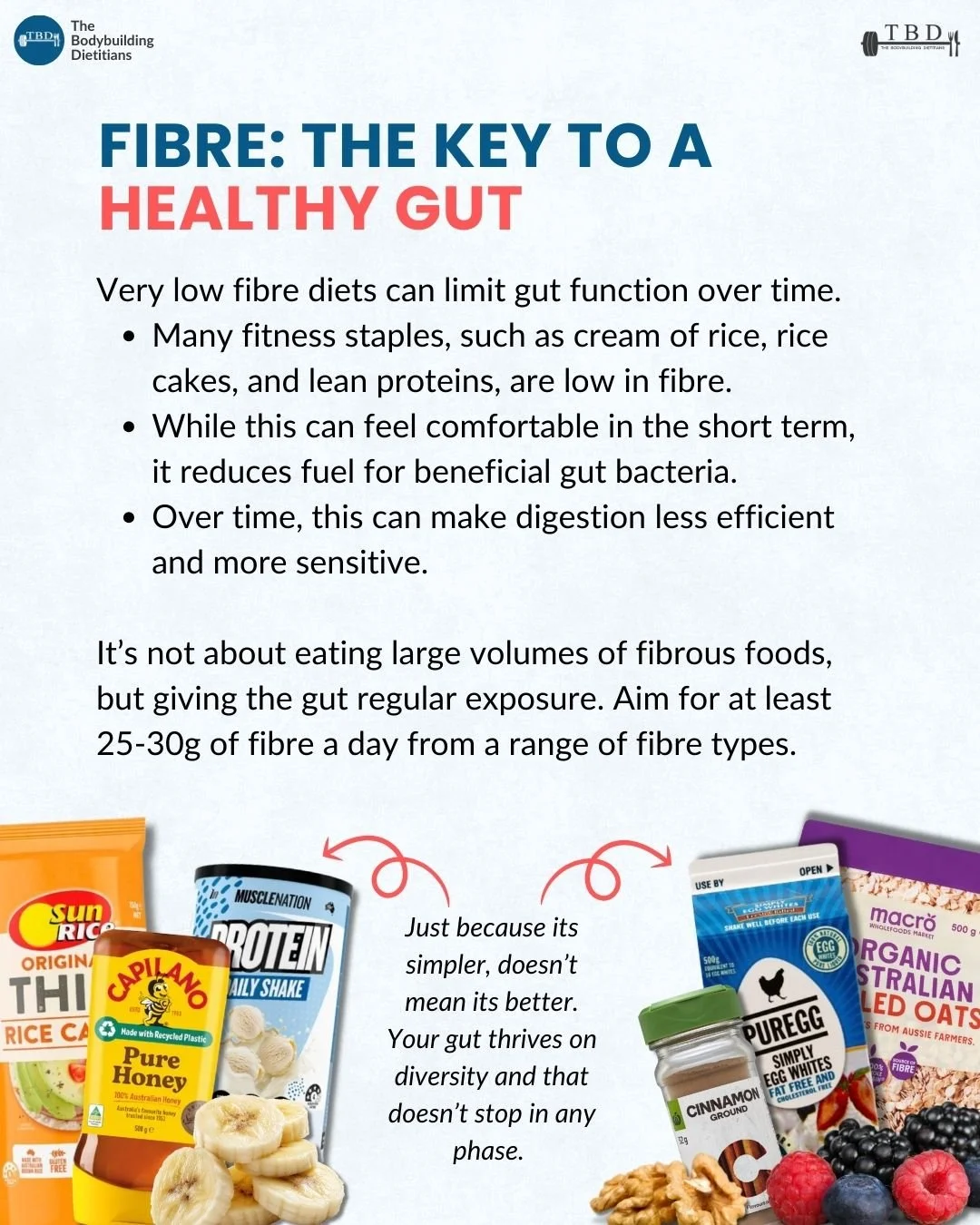
Fibre serves as the primary fuel source for beneficial gut bacteria, and consistently low intakes can reduce microbial diversity and impair digestive function over time.
Fibre is not a single substance. It encompasses a range of non-digestible carbohydrates, each of which interacts with the gut in different ways. Soluble fibre (found in oats, legumes, and some fruits) dissolves in water and forms a gel-like substance that slows digestion, supports blood sugar regulation, and provides substrate for bacterial fermentation in the colon. Insoluble fibre (found in vegetables, whole grains, and the skins of fruits) adds bulk to stool and supports regular bowel movements. Prebiotic fibres (found in foods like garlic, onion, leeks, bananas, and asparagus) specifically promote the growth of beneficial bacterial populations.
Short-chain fatty acids (SCFAs) are metabolic byproducts produced when gut bacteria ferment dietary fibre. The most well-studied SCFAs, including butyrate, propionate, and acetate, play important roles in maintaining the integrity of the gut lining, modulating inflammation, and supporting immune function. Butyrate in particular is the primary energy source for the cells lining the colon.
Many common fitness staples are low in fibre. Cream of rice, white rice, rice cakes, protein shakes, lean meats, and egg whites all provide useful macronutrient profiles for physique-focused nutrition, but they contribute very little to fibre intake. When these foods form the bulk of the diet, total daily fibre intake can fall well below the recommended threshold, and the diversity of fibre types consumed narrows significantly.
A practical target for most people is at least 25 to 30 grams of fibre per day, or roughly 12 to 15 grams per 1,000 kilocalories. Meeting this target from a range of different fibre sources is more important than hitting a specific number from a single food, because different fibre types support different bacterial populations and different aspects of digestive function.
A systematic review of dietary fibre and gut microbiota composition found that higher fibre intakes were consistently associated with greater microbial diversity, increased production of short-chain fatty acids, and improved markers of gut barrier function. The review also noted that the diversity of fibre sources mattered independently of total fibre intake, supporting the recommendation to consume fibre from a wide range of plant foods.
Source: So et al., 2018, Alimentary Pharmacology and Therapeutics.
In practice, the simplest way to increase fibre intake without dramatically altering the structure of a physique-focused diet is to make targeted substitutions: choosing rolled oats over cream of rice at breakfast, including a serve of legumes or lentils in one or two meals per week, adding mixed vegetables to meals that currently contain only a single vegetable, and selecting higher-fibre fruit options like berries, pears, or kiwi fruit. These changes are individually small but compound meaningfully when maintained consistently.
Do Fermented Foods Actually Help Gut Health?
Fermented foods introduce beneficial live microorganisms into the gut and have been shown to improve microbial diversity when consumed regularly.
Fermented foods have received increasing attention in gut health research over the past decade, and the evidence supporting their role in promoting microbiome diversity is now reasonably robust. Foods like yoghurt, kefir, kimchi, sauerkraut, miso, and tempeh contain live bacterial cultures that can contribute to the resident microbial community in the gut, particularly when consumed consistently over time rather than sporadically.
Probiotics are live microorganisms that, when consumed in adequate amounts, confer a health benefit on the host. While supplemental probiotics contain specific strains at standardised doses, fermented foods provide a broader and more varied spectrum of microbial exposure alongside the nutritional value of the food itself.
A randomised controlled trial at Stanford University found that participants assigned to a high-fermented-food diet (approximately six servings per day for 10 weeks) showed significant increases in gut microbiome diversity and reductions in several markers of inflammation, compared to a high-fibre diet group. The improvements in microbial diversity were sustained throughout the intervention period.
Source: Wastyk et al., 2021, Cell.
For lifters, incorporating fermented foods does not need to be complicated or calorically expensive. A small serve of yoghurt or kefir at breakfast, a tablespoon of kimchi or sauerkraut alongside a main meal, or the occasional inclusion of miso soup or tempeh provides meaningful microbial exposure without disrupting macro targets. The key is regularity rather than volume: a small daily serve is more beneficial than a large occasional one.
It is also worth noting that not all fermented foods contain live cultures at the point of consumption. Products that have been pasteurised after fermentation (such as shelf-stable sauerkraut or pickles processed with vinegar rather than through natural fermentation) may not provide the same probiotic benefit. Choosing refrigerated, traditionally fermented products where possible tends to maximise the microbial value.
What Daily Habits Support Better Digestion for Lifters?
Beyond food selection, several daily habits influence digestive function in ways that are often underestimated, including meal timing, eating pace, hydration, and post-meal movement.
Meal timing and calorie distribution. Concentrating most of the day's food intake into the evening, which is a common pattern among busy lifters, can overload the digestive system at a time when motility naturally slows. Spreading calorie intake more evenly across the day, with a reasonable proportion consumed earlier rather than later, tends to support more consistent digestion and reduce the likelihood of discomfort, bloating, or disrupted sleep from a large late meal.
Eating pace. Eating quickly is another common habit among lifters, particularly those fitting meals around training sessions and busy schedules. Digestion begins in the mouth, where chewing mechanically breaks food down and mixes it with salivary enzymes. Eating too quickly can result in larger food particles reaching the stomach and small intestine, which places greater demand on the digestive system and can contribute to bloating and discomfort. Slowing down, even modestly, tends to improve digestive comfort with no change to the food itself.
Hydration. Adequate water intake supports virtually every aspect of digestive function, from the production of saliva and digestive enzymes to the movement of food through the gastrointestinal tract and the formation of stool. Dehydration can slow gut motility and contribute to constipation, which is a surprisingly common issue among physique-focused individuals, particularly during lower-calorie phases where fluid intake sometimes decreases alongside food volume.
Post-meal movement. A short walk after eating, even 10 to 15 minutes at a casual pace, has been shown to support gastric motility and blood sugar regulation. This is a simple, low-effort habit that many athletes overlook but that can meaningfully reduce the sensation of heaviness or sluggishness after larger meals.
Reliance on processed diet foods. Protein bars, sugar-free confectionery, diet soft drinks, and similar products have a practical place in many physique-focused diets, particularly during periods of energy restriction where they support adherence. However, heavy reliance on these products can come at the expense of whole foods that provide fibre, micronutrients, and the substrates that gut bacteria depend on. The approach that tends to work best in practice is to use these products strategically where they serve a genuine purpose while ensuring the majority of the diet is built around minimally processed whole foods.
How Does Contest Prep Affect Gut Health?
The combination of progressive energy restriction, increased food structure, and heightened stress during contest preparation can place significant demands on the digestive system if gut health is not proactively managed.
Contest prep creates a unique set of conditions for the gut. Total food volume often changes substantially, either increasing (as athletes rely more heavily on high-volume, low-calorie foods to manage hunger) or decreasing (as total energy intake drops). Fibre intake may fluctuate, food variety tends to narrow as the athlete locks in a routine, and the psychological stress of the prep itself can independently affect gut motility and comfort through the gut-brain axis.
The gut-brain axis is the bidirectional communication network between the central nervous system and the enteric nervous system of the gastrointestinal tract. Psychological stress, anxiety, and sleep disruption can all influence gut motility, secretion, and permeability through this pathway, which is why digestive symptoms often intensify during periods of high psychological load even when the diet itself has not changed.
In coaching settings, a common pattern is for athletes to report increased bloating, irregular bowel habits, or apparent food sensitivities as prep progresses, particularly in the final four to eight weeks when energy intake is lowest and psychological pressure is highest. While some of this is an unavoidable consequence of the process, much of it can be mitigated by maintaining dietary diversity throughout prep rather than narrowing the diet unnecessarily, keeping fibre intake at a reasonable level rather than letting it decline alongside total calories, including fermented foods consistently, and managing stress and sleep as proactively as possible.
Building a resilient gut before prep begins is one of the most effective strategies available. An athlete who enters prep with strong microbiome diversity and good digestive habits has a significantly larger margin for error than one who arrives with an already-compromised gut from months of monotonous eating. This is one of the reasons our bodybuilding coaching considers gut health and food quality alongside macro targets throughout the improvement season, rather than treating them as secondary priorities that only become relevant once problems emerge.
Can You Improve Gut Health During a Calorie Deficit?
Improving gut health during a deficit is possible, though the scope for change is somewhat more limited than during periods of higher energy intake. The key is to focus on food quality and diversity within the calorie budget available.
Even when total food intake is restricted, it is still possible to rotate plant food sources across the week, maintain a reasonable fibre intake from varied sources, include small serves of fermented foods, and prioritise whole food sources over processed alternatives where practical. The changes do not need to be dramatic. Swapping one carbohydrate source, rotating vegetables, or adding a different fruit to a meal each day can contribute to microbiome diversity without requiring any change to overall calorie or macronutrient intake.
The more constrained the calorie budget, the more important food quality becomes. When there are fewer total calories to work with, every food choice carries more weight in terms of its contribution to fibre, micronutrients, and gut health. This is where thoughtful food selection within macro targets becomes a genuine skill.
Practical Takeaways
A narrow, repetitive diet can reduce gut microbiome diversity over time, making digestion less resilient to dietary variation and more prone to bloating, discomfort, and food sensitivities.
Aim for approximately 30 different plant types per week, including fruits, vegetables, grains, legumes, nuts, seeds, herbs, and spices. Most people are closer to this target than they expect once they start counting.
Target at least 25 to 30 grams of fibre per day from a range of different sources, prioritising whole food options over low-fibre fitness staples where practical.
Include fermented foods such as yoghurt, kefir, kimchi, or sauerkraut regularly, even in small serves, to support microbial diversity.
Pay attention to daily habits that influence digestion: eat at a moderate pace, stay consistently hydrated, spread calorie intake across the day rather than concentrating it in the evening, and consider short walks after meals.
Build and maintain gut health during improvement seasons so that the digestive system is more resilient heading into prep, when the demands on it increase.
Frequently Asked Questions
Why do bodybuilders get bloated when they change their diet?
Bloating after a dietary change is often a sign that the gut microbiome has adapted to a narrow range of foods and is less capable of handling variation. When new foods are introduced, the microbial community may not have the diversity needed to process them efficiently, which can lead to increased gas production and discomfort. This is usually temporary and tends to improve as the gut adapts, but it can be minimised by maintaining dietary diversity consistently rather than alternating between very rigid and very varied eating patterns.
How much fibre should lifters eat per day?
A practical target for most people is at least 25 to 30 grams of fibre per day, or approximately 12 to 15 grams per 1,000 kilocalories consumed. Meeting this target from a variety of different fibre sources (soluble, insoluble, and prebiotic) is more important than hitting a specific number from a single food, because different types of fibre support different aspects of digestive function and microbiome health.
Are probiotics worth taking for gut health?
For most people, incorporating fermented foods into the diet regularly is a practical and effective first step before considering supplemental probiotics. Foods like yoghurt, kefir, kimchi, and sauerkraut provide a broader spectrum of microbial exposure alongside nutritional value. If specific digestive issues persist despite dietary improvements, a targeted probiotic supplement may be worth discussing with a dietitian or healthcare professional who can recommend an appropriate strain and dose for the situation.
Can you eat for gut health while tracking macros?
Improving gut health does not require abandoning macro tracking. Most of the practical strategies, such as rotating carbohydrate and vegetable sources, choosing higher-fibre options, and including small serves of fermented foods, can be implemented within existing macro targets with minimal adjustment. The key is to prioritise food quality and diversity within the calorie and macronutrient framework rather than treating them as separate considerations.
Does stress affect gut health?
Psychological stress can meaningfully affect gut function through the gut-brain axis, influencing motility, secretion, and gut barrier permeability. This is one of the reasons digestive symptoms often intensify during high-stress periods such as contest preparation, work pressure, or sleep disruption, even when the diet itself has not changed. Managing stress through sleep, structured routine, and appropriate recovery is an important but often overlooked component of supporting digestive health.
How long does it take to improve gut health?
Measurable changes in gut microbiome composition can occur within days of dietary modification, though more meaningful and sustained improvements in diversity and digestive resilience typically develop over weeks to months of consistent dietary change. The speed of improvement depends on the starting point, the degree of dietary modification, and individual factors, but most people notice improvements in digestive comfort within two to four weeks of increasing dietary diversity and fibre intake.
If you would like guidance on structuring your nutrition to support both your physique goals and your digestive health, our team of dietitians can help. Please explore our coaching services below.