A reference list of common foods grouped by their primary macronutrient contribution, plus the mixed sources that deliver meaningful amounts of two or more macros in a single food. Use this as a quick lookup for building macro variety across every food group, whether cooking at home, eating out, travelling, or adjusting a meal without overthinking every ingredient.
Foods can be grouped by their primary macronutrient contribution, though many contribute meaningfully to more than one macro at once. Carbohydrate-primary foods include grains (oats, wheat, rice, corn, buckwheat, amaranth), starchy and non-starchy vegetables, fruit (fresh and dried), and sauces and spreads (honey, jam, marinades). Protein-primary foods include lean meats (chicken, beef, kangaroo, turkey, pork, lamb), seafood (fish, mussels, oysters, prawns, squid, scallops), low-fat dairy (low-fat yoghurt, cottage cheese), plant-based proteins (TVP, Quorn, tempeh), egg whites, and protein powders. Fat-primary foods include nuts and seeds, oils, cream and butter, dips and spreads (hummus, nut butters, tahini), avocado, dark chocolate, olives, and coconut. Mixed sources include carbohydrate-plus-protein foods (quinoa, seitan, legumes, light milk, flavoured yoghurts), protein-plus-fat foods (cheese, higher-fat meats and seafood, whole eggs, soy yoghurt), and carbohydrate-plus-protein-plus-fat foods (full-cream milk, soy milk, full-fat yoghurt, tofu, mock meats, edamame).
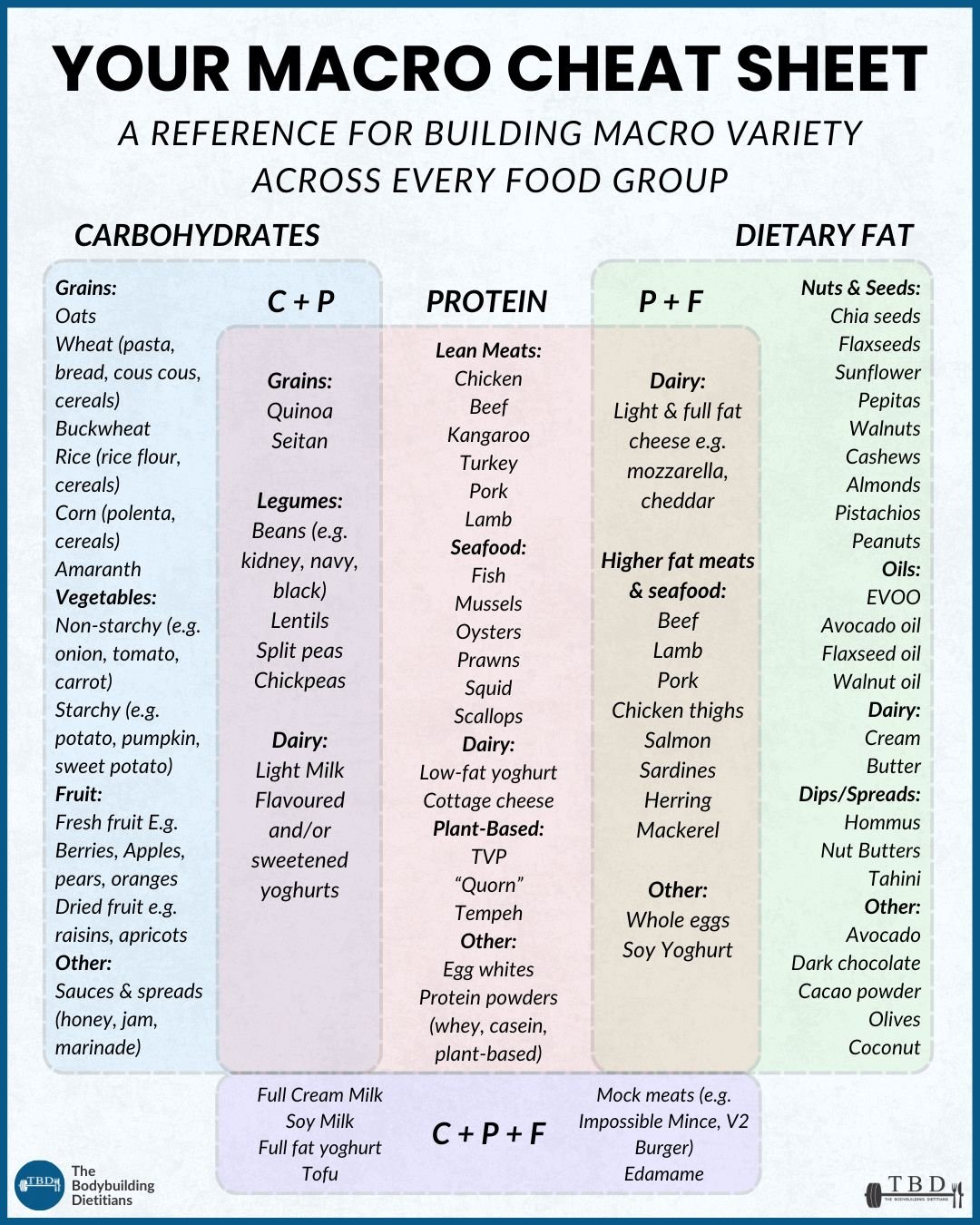
A macro cheat sheet showing common foods grouped by their primary macronutrient contribution, plus the mixed sources that deliver meaningful amounts of two or more macros at once.
Understanding where foods sit across the three macronutrients is one of the more useful skills for building meals efficiently. When you know which foods contribute primarily to carbohydrate, which contribute primarily to protein, and which contribute primarily to fat, meal planning becomes faster. The same skill helps when eating out, travelling, or adjusting a meal on the fly without needing to look up every ingredient.
Carbohydrate-Primary Foods
The carbohydrate-primary column includes foods that contribute predominantly to carbohydrate totals with limited protein and fat contribution.
Grains. Oats, wheat-based products (pasta, bread, couscous, cereals), buckwheat, rice-based products (rice, rice flour, cereals), corn-based products (polenta, cereals), and amaranth. These form the foundation of most main-meal carbohydrate contributions for lifters.
Vegetables. Non-starchy options (onion, tomato, carrot, capsicum, cucumber, leafy greens) provide small carbohydrate contributions alongside meaningful fibre and micronutrients. Starchy options (potato, pumpkin, sweet potato, taro, cassava) provide substantial carbohydrate at moderate calorie density and pair well as a main-meal carbohydrate.
Fruit. Fresh fruit (berries, apples, pears, oranges, tropical fruits) and dried fruit (raisins, apricots, sultanas, dates) both contribute carbohydrate at different densities. Dried fruit provides substantially more carbohydrate per gram of food due to water removal.
Sauces and spreads. Honey, jam, marinade, syrups, and similar condiment-style carbohydrate sources contribute meaningful carbohydrate in small volumes. These are useful for adding flavour and carbohydrate density without adding much food volume.
Protein-Primary Foods
The protein-primary column includes foods that contribute predominantly to protein totals with limited carbohydrate and fat contribution.
Lean meats. Chicken breast, kangaroo, turkey breast, lean beef (5 percent fat), lean pork, and lean lamb. These form the foundation of most main-meal protein contributions for lifters, particularly during fat loss phases where lean protein sources create macro budget for other foods.
Seafood. White fish (cod, hake, snapper), mussels, oysters, prawns, squid, and scallops. These are typically lean protein sources with minimal fat contribution, distinguishing them from the higher-fat seafood options in the mixed column.
Low-fat dairy. Low-fat Greek yoghurt, cottage cheese, low-fat quark, and skyr. These deliver substantial protein alongside modest carbohydrate and minimal fat.
Plant-based proteins. Textured vegetable protein (TVP), Quorn, and tempeh. These are the plant protein sources that deliver protein at concentrations comparable to lean animal sources without the meaningful fat or carbohydrate contribution of most other plant proteins.
Other. Egg whites and protein powders (whey isolate, casein, plant-based blends) are the highest-density near-pure protein sources available, useful for hitting protein targets when calorie budget is tight.
Fat-Primary Foods
The fat-primary column includes foods that contribute predominantly to fat totals, though many also carry meaningful protein alongside the fat.
Nuts and seeds. Chia seeds, flaxseeds, sunflower seeds, pepitas, walnuts, cashews, almonds, pistachios, and peanuts. These deliver substantial fat at high calorie density, with meaningful protein contributions alongside.
Oils. Extra virgin olive oil, avocado oil, flaxseed oil, walnut oil, and other cooking oils. These are essentially pure fat sources at the highest calorie density on the list.
Dairy fats. Cream, butter, ghee, and high-fat cheese blends. These deliver fat at high density with variable protein contribution depending on the specific source.
Dips and spreads. Hummus, nut butters (peanut butter, almond butter, cashew butter, tahini), and pesto. These contribute fat alongside variable protein and carbohydrate depending on the base ingredient.
Other. Avocado, dark chocolate, cacao powder, olives, and coconut products (coconut oil, coconut milk, desiccated coconut). These are the fat sources that don't fit cleanly into the nut, oil, or dairy categories but function similarly in meal planning.
Mixed Macro Sources: Carbohydrate Plus Protein
Some foods deliver meaningful carbohydrate and protein contributions in the same food, making them useful for meals where both macros need to come from a single source or where the food doubles as both a protein source and a starch.
Grains. Quinoa and seitan. Quinoa provides substantial carbohydrate alongside meaningful protein (approximately 13 grams per 100 grams raw). Seitan is a wheat-based plant protein that delivers high protein alongside carbohydrate, functioning as a plant-based alternative to lean meat with meaningful starch contribution.
Legumes. Beans (kidney, navy, black, cannellini, borlotti), lentils, split peas, and chickpeas. These deliver carbohydrate and protein at roughly comparable ratios, functioning as both a fibre-rich carbohydrate source and a modest protein contribution. Practical serving sizes deliver meaningful contributions to both daily totals.
Dairy. Light milk (1 to 2 percent fat) and flavoured or sweetened yoghurts provide carbohydrate from lactose and added sugars alongside protein at 3 to 5 grams per 100 grams.
Mixed Macro Sources: Protein Plus Fat
Some foods deliver meaningful protein and fat contributions in the same food, making them useful for meals where the fat contribution is welcome alongside the protein.
Dairy. Light and full-fat cheeses (mozzarella, cheddar, feta, halloumi, parmesan). These deliver substantial protein alongside meaningful fat, with the specific ratio depending on the fat content of the cheese.
Higher-fat meats and seafood. Beef (higher fat content), lamb, pork (higher fat cuts), chicken thighs and drumsticks, salmon, sardines, herring, and mackerel. These deliver protein alongside meaningful fat, distinguishing them from the lean protein column above. Oily fish specifically contribute omega-3 fatty acids alongside the general fat and protein contribution.
Other. Whole eggs and soy yoghurt. Whole eggs provide protein alongside substantial fat and are one of the more nutrient-dense protein sources available. Soy yoghurt (unsweetened varieties) provides plant-based protein alongside meaningful fat from the soy base.
Mixed Macro Sources: Carbohydrate Plus Protein Plus Fat
A smaller category includes foods that contribute meaningfully to all three macros in a single serving.
Full-cream milk, soy milk, and full-fat yoghurt. These deliver carbohydrate from lactose or added sugars, protein at 3 to 6 grams per 100 grams, and fat at moderate contribution.
Tofu. Firm and extra-firm tofu deliver protein alongside modest carbohydrate and meaningful fat, functioning as a mixed macronutrient plant protein.
Mock meats. Products like Impossible Mince, V2 Burger, Beyond Meat, and similar plant-based meat alternatives typically deliver protein alongside substantial carbohydrate and fat, with specific ratios varying by brand.
Edamame. Whole soybeans (young or mature) deliver protein, carbohydrate, and fat in near-balanced proportions, functioning as one of the more nutritionally complete single foods available.
How to Use This Reference in Practice
The cheat sheet is most useful as a food-selection tool rather than a strict prescription. Four practical applications tend to produce the most value.
Building macro variety across the week. Rather than defaulting to the same two or three protein sources, use the reference to identify options across the lean-to-mixed spectrum within each macro category. A rotation that includes lean animal proteins, plant proteins, mixed sources like whole eggs and salmon, and legumes covers a broader macro and micronutrient profile than a narrow rotation.
Matching sources to phase and context. Fat loss phases bias toward lean protein sources and higher-fibre carbohydrate sources for satiety per calorie. Muscle gain phases bias toward higher-density options across all three categories to make calorie targets hittable. Maintenance phases sit somewhere between, with flexibility to prioritise variety and preference over strict density optimisation.
Meal building on the fly. When cooking, eating out, or travelling, the cheat sheet helps identify what a specific food is contributing to the meal. A pasta dish delivers primarily carbohydrate. Adding chicken breast delivers primarily protein. Adding olive oil delivers primarily fat. Substituting quinoa for pasta shifts toward a mixed carbohydrate and protein contribution. Adding cheese to the same dish shifts the protein contribution toward a protein and fat mix.
Adding variety to a food rotation without overthinking it. Building a broad library of options within each macro category tends to support micronutrient intake, gut microbial diversity, and long-term adherence more effectively than a narrow rotation. The cheat sheet provides a menu of options to draw from when the current rotation feels limiting.
For a more detailed look at how these foods compare quantitatively (calorie density, macro distribution per 100g, and typical serving sizes), our macronutrient distribution reference article covers the visual breakdown across three stacked bar charts. For a fibre-focused food ranking, our fibre sources ranked article covers the specific fibre contributions.
Wondering How to Apply This to Your Own Rotation?
Translating a food reference into an actual weekly rotation that fits your training, calorie targets, budget, and personal preferences is where the practical work sits. If your current rotation feels limited or you're not sure which sources fit your current goals, our team works with clients on food selection audits and rotation building matched to individual context.
Practical Takeaways
Foods can be grouped by their primary macronutrient contribution, but many deliver meaningful amounts of two or more macros in a single food. Understanding the mixed sources is one of the more useful skills for building meals efficiently.
Carbohydrate-primary foods include grains, starchy and non-starchy vegetables, fruit, and sauces and spreads. Protein-primary foods include lean meats, seafood, low-fat dairy, plant-based proteins, and near-pure sources like egg whites and protein powders. Fat-primary foods include nuts and seeds, oils, dairy fats, dips and spreads, and mixed sources like avocado, olives, and dark chocolate.
Mixed macro sources include carbohydrate plus protein foods (quinoa, seitan, legumes, light milk, flavoured yoghurt), protein plus fat foods (cheese, higher-fat meats, oily fish, whole eggs, soy yoghurt), and carbohydrate plus protein plus fat foods (full-cream milk, soy milk, full-fat yoghurt, tofu, mock meats, edamame).
Use the cheat sheet as a food-selection tool for building macro variety across the week, matching source selection to phase and context, meal building on the fly when eating out or travelling, and adding variety to a food rotation without overthinking every ingredient.
A broader food rotation across the categories tends to support micronutrient intake, gut microbial diversity, and long-term adherence more effectively than a narrow rotation of the same two or three foods per macro category.
Frequently Asked Questions
What foods are highest in protein?
Lean animal proteins deliver the highest protein per 100 grams of food: chicken breast, egg whites, low-fat Greek yoghurt, cottage cheese, tuna, white fish, and lean beef. Near-pure protein sources like whey isolate protein powder and casein powder deliver even higher protein per gram of food but are typically used as supplements rather than as whole-food protein sources. Plant-based options that deliver protein at concentrations comparable to lean animal proteins include TVP, Quorn, and tempeh.
What foods are highest in fat?
Pure oils (olive oil, avocado oil, coconut oil, other cooking oils) are essentially pure fat at approximately 9 calories per gram. Nuts and seeds deliver substantial fat alongside protein and some carbohydrate. Cream, butter, ghee, and high-fat cheeses provide fat at high density with variable protein contribution. Dark chocolate and cacao products deliver fat alongside some carbohydrate. Whole avocado and olives are lower-density fat sources useful when fat volume is wanted alongside food volume.
What foods are highest in carbohydrate?
Grains (oats, rice, wheat products, quinoa, buckwheat), starchy vegetables (potato, sweet potato, pumpkin), fruit (fresh and dried), and refined sugars (honey, jam, syrups) all deliver substantial carbohydrate per 100 grams. Legumes deliver carbohydrate alongside meaningful protein. Dairy products (milk, yoghurt) deliver carbohydrate from lactose and sometimes added sugars.
Which foods count as both carbohydrate and protein sources?
Quinoa, seitan, and legumes (beans, lentils, chickpeas, split peas) all deliver meaningful carbohydrate and protein in the same food. Dairy products like light milk and flavoured yoghurts deliver both macros at moderate density. In meal planning, these foods can be counted as both a carbohydrate contribution and a protein contribution rather than being categorised as one or the other.
Which foods count as both protein and fat sources?
Cheese (mozzarella, cheddar, feta, parmesan), higher-fat meats (beef, lamb, pork, chicken thighs), oily fish (salmon, sardines, herring, mackerel), whole eggs, and soy yoghurt all deliver meaningful protein alongside meaningful fat. These are useful when the fat contribution is welcome alongside the protein, and they need to be counted for both macros rather than being categorised only as protein sources.
Which foods deliver all three macros meaningfully?
Full-cream milk, soy milk, full-fat yoghurt, tofu, mock meats (Impossible Mince, V2 Burger, Beyond Meat), and edamame deliver meaningful carbohydrate, protein, and fat in a single serving. These foods can function as complete mini-meals in some contexts and are useful when a single food should contribute across all three macros rather than requiring separate sources for each.
If you want help translating this reference into an actual weekly rotation that fits your training, calorie targets, budget, and personal preferences, our team can build a plan matched to your specific context. You can enquire about coaching or book a consultation with our team.