A food-first reference to eight nutrients that are commonly under-consumed, with realistic serving sizes, the amount each food delivers, and how to get the most out of what you eat.
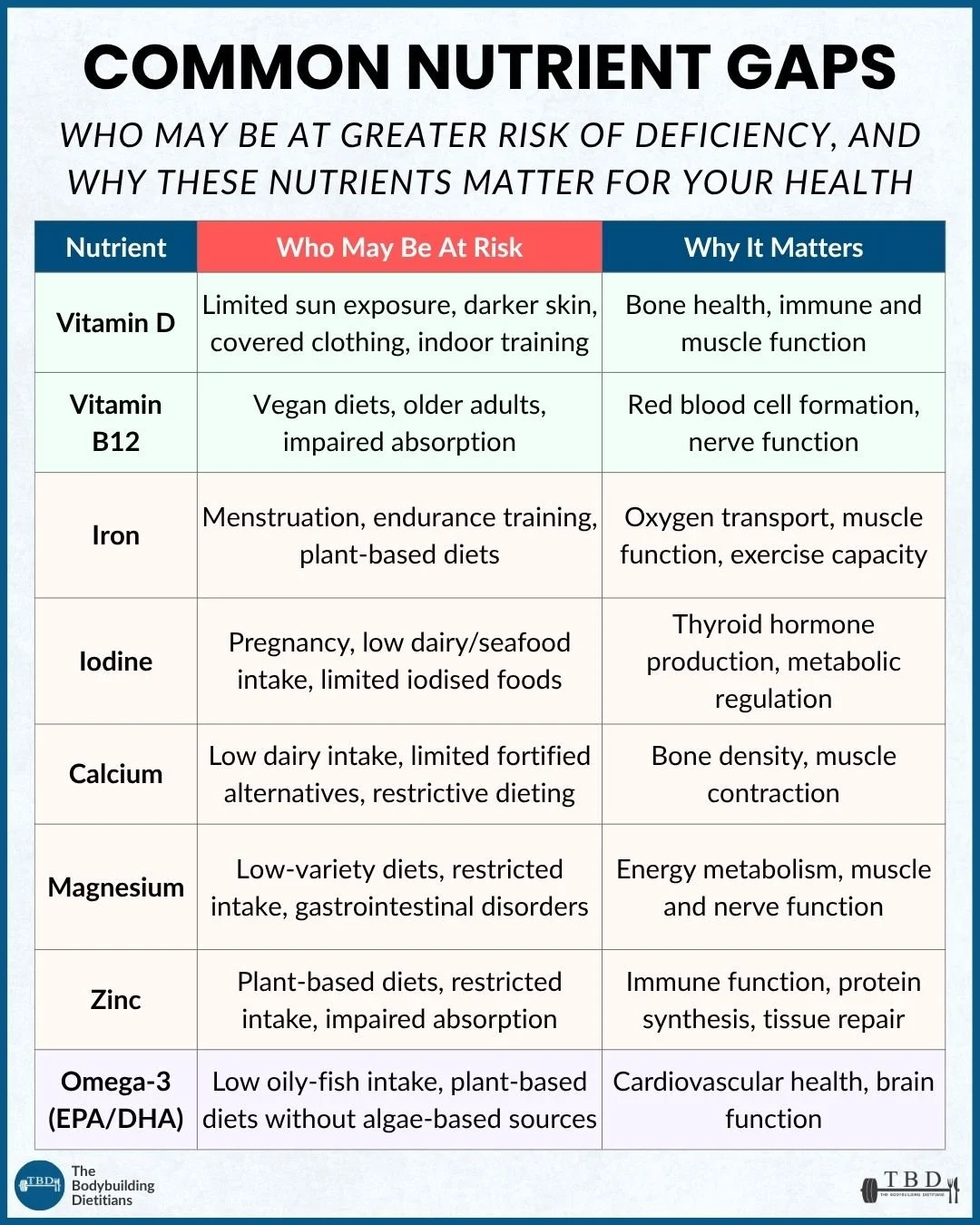
Falling short on key nutrients is common, and it often has less to do with effort than with variety. For people who track their nutrition closely, meal prep the same meals each week, or spend extended periods dieting, the range of foods eaten can narrow considerably, and a narrow rotation makes some nutrients harder to cover, particularly when entire food groups are restricted. The encouraging part is that most of these needs can be met from whole foods when the right ones are chosen deliberately.
This guide is a food-first reference to eight nutrients that tend to fall short: iron, zinc, calcium, magnesium, iodine, vitamin D, vitamin B12 and the omega-3 fats EPA and DHA. For each one, there is a table of common foods with realistic serving sizes and the amount that portion provides, measured against the Australian daily target. For the related question of who is most at risk of these gaps and when supplementation is worth considering, our guide to common nutrient deficiencies covers the risk and testing side, while this post focuses on the food.
Why Take a Food-First Approach?
A food-first approach works because whole foods deliver nutrients in forms and combinations the body is well equipped to use, and because most people can meet most of their requirements through food before supplementation becomes necessary. Food is the foundation, and supplements are most useful as a targeted top-up for the gaps that food cannot practically close.
Whole foods provide micronutrients alongside the protein, fats, fibre and other compounds that make up a complete diet, so improving nutrient intake through food tends to improve the overall quality of the diet at the same time. Supplementation has a clear place, particularly for nutrients that are difficult to obtain from the foods someone eats, such as vitamin B12 on a vegan diet or vitamin D with limited sun exposure. The practical sequence is to build the diet around good food sources first, then use supplements to cover what remains, which is a more efficient and often more effective approach than reaching for supplements before the food is addressed.
A Note on Serving Sizes, Targets and Absorption
The figures in this guide use realistic serving sizes, with nutrient values based on how foods are normally eaten, which makes the comparisons relevant to what you would eat rather than to a laboratory portion. This matters because a food that looks impressive per 100 grams can contribute little in a normal serve, and the reverse is also true.
The daily targets are largely based on established Nutrient Reference Values, which provide useful benchmarks for nutritional adequacy. Individual requirements vary with age, health, life stage and certain training demands, so the intake that best suits someone's health or performance goals may differ from these general figures. Absorption is a further consideration, and it is most significant for iron and zinc, where the proportion the body takes up differs considerably between food sources and is influenced by what is eaten in the same meal. The tables show what a food contains, while the notes alongside them cover how to improve what you absorb.
Hitting your macros but unsure about the rest?
A plan can hit its protein, carbohydrate and fat targets while falling short on iron, zinc, calcium or iodine, especially on a narrow food rotation or deep in a diet. Assessing usual intake, training and relevant blood results to find those gaps and decide which adjustments are worthwhile is part of what our dietitian-led coaching does, so your nutrition is complete rather than just macro-accurate.
Getting Enough Iron From Food
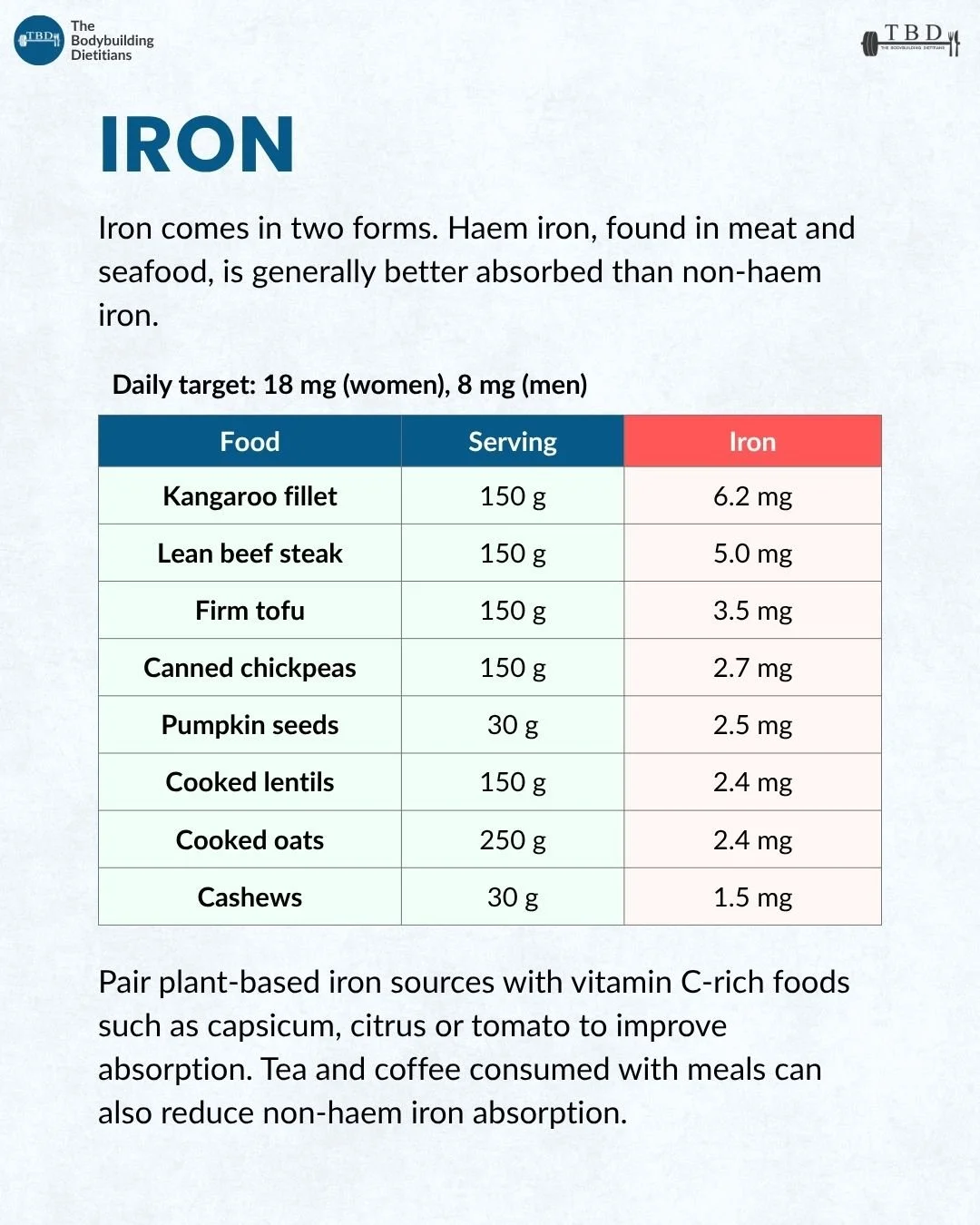
Iron is best obtained from a mix of sources, since it comes in two forms that the body absorbs differently. Haem iron, found in meat and seafood, is generally better absorbed than the non-haem iron found in plant foods, which is why a meal's composition matters as much as its iron content.
Daily target: 18 mg for women, 8 mg for men. To get more from plant-based iron, pair it with vitamin C-rich foods such as capsicum, citrus or tomato, which improves non-haem absorption. Tea and coffee taken with meals reduce non-haem iron absorption, so spacing them away from iron-rich meals helps.
Getting Enough Zinc From Food
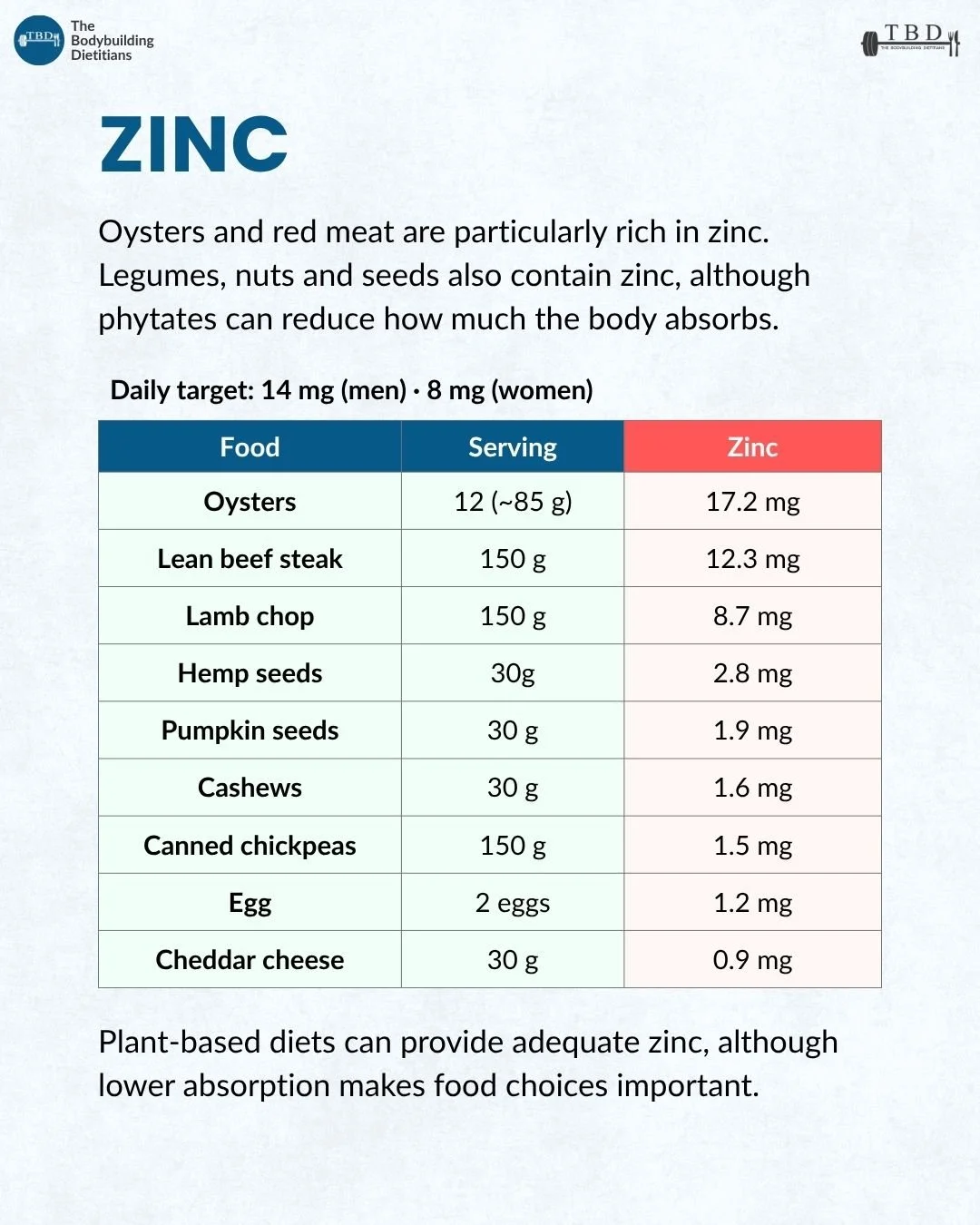
Zinc is most concentrated in oysters and red meat, with plant foods contributing smaller amounts that are less completely absorbed. Legumes, nuts and seeds all contain zinc, though the phytates they also contain reduce how much the body takes up.
Daily target: 14 mg for men, 8 mg for women. Plant-based diets can provide adequate zinc, though the lower absorption from plant sources makes deliberate food choices and larger portions more important. Including animal sources where they fit the diet makes the target considerably easier to reach.
Getting Enough Calcium From Food
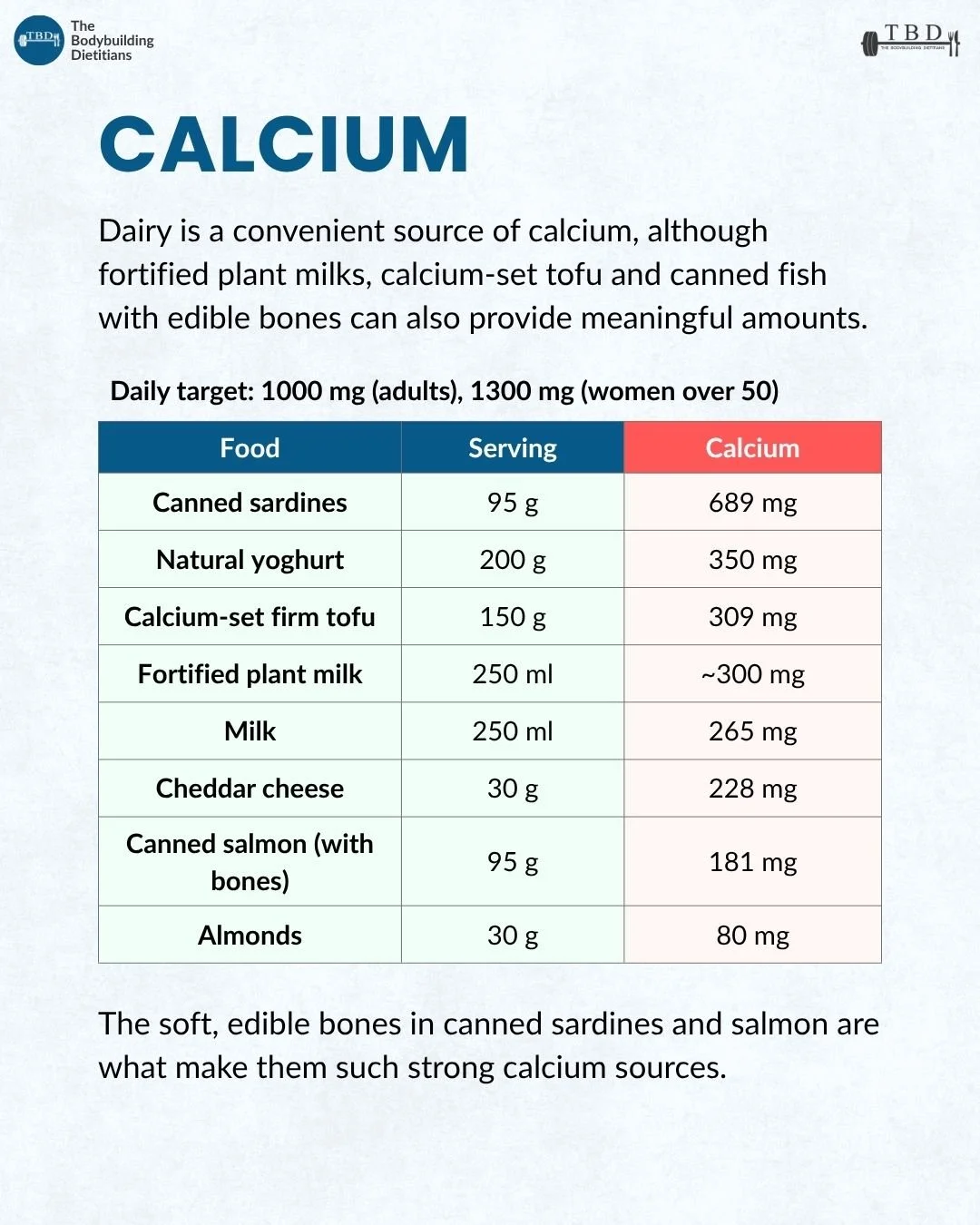
Calcium is easy to obtain from dairy, and several non-dairy foods provide meaningful amounts for those who eat little or none. Fortified plant milks, calcium-set tofu and canned fish with edible bones are the standouts beyond dairy itself.
Daily target: 1000 mg for adults, 1300 mg for women over 50. The soft, edible bones in canned sardines and salmon are what make them such strong sources, so mashing them through a meal rather than discarding them keeps the calcium in. Spreading calcium-rich foods across the day is more effective than relying on a single large serve.
Getting Enough Magnesium From Food
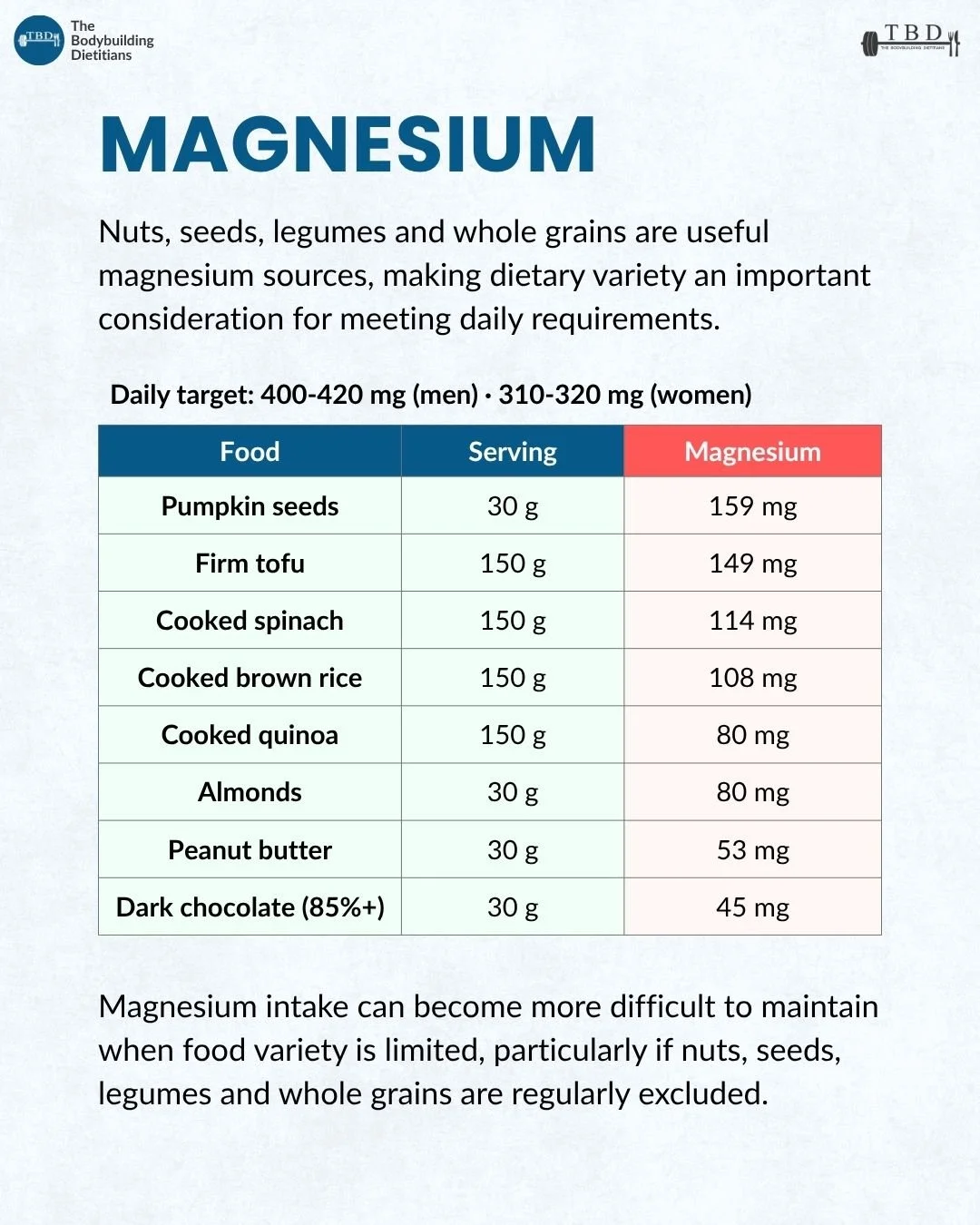
Magnesium is spread across nuts, seeds, legumes and whole grains, which makes dietary variety the main lever for meeting the target. No single food dominates the way sardines do for calcium, so a range of sources across the day does the work.
Daily target: 400 to 420 mg for men, 310 to 320 mg for women. Magnesium intake becomes harder to maintain when variety is limited, particularly if nuts, seeds, legumes and whole grains are regularly excluded, which is a common pattern in restricted or repetitive diets. Keeping a couple of these as staples covers most of the requirement.
Getting Enough Iodine From Food
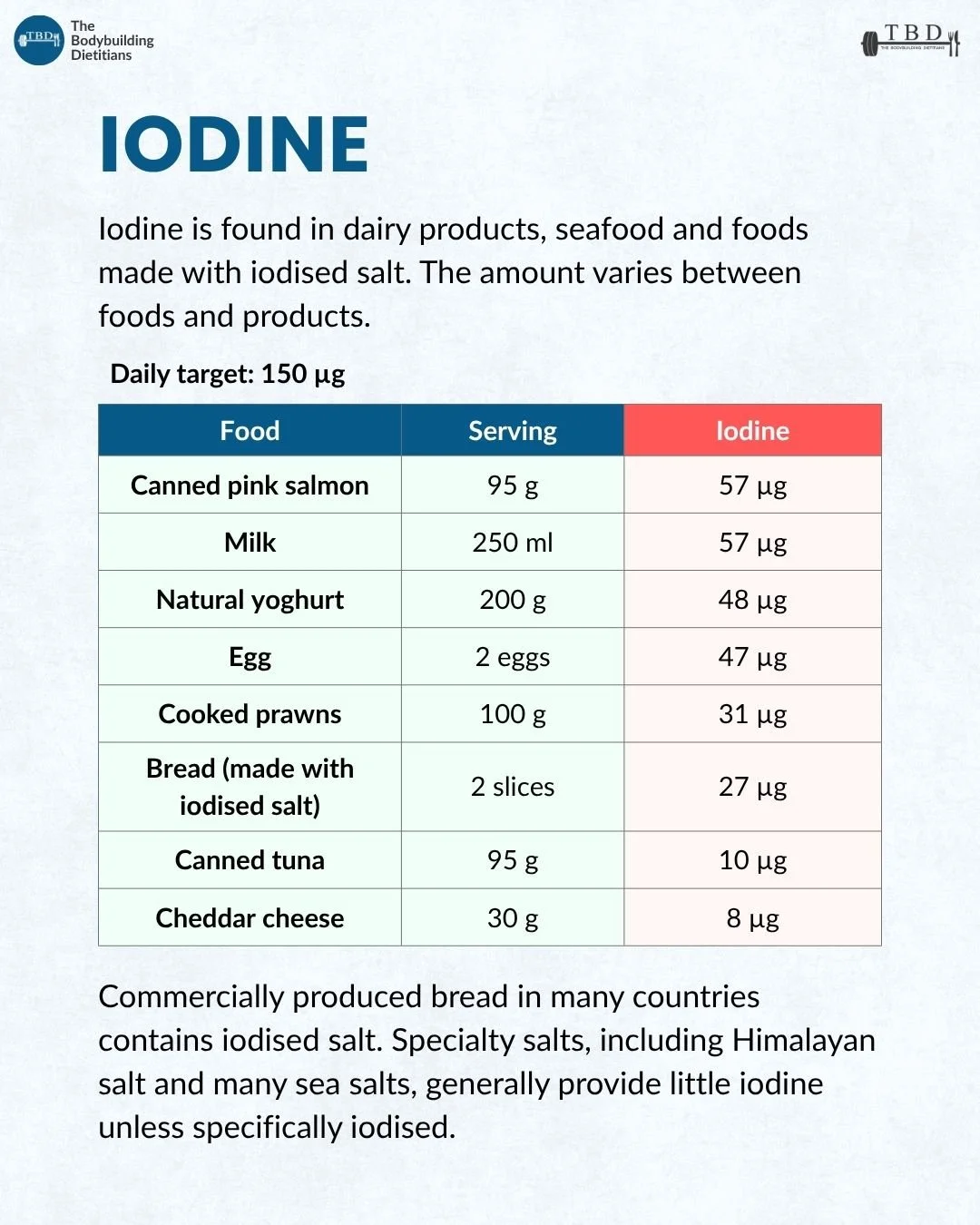
Iodine comes mainly from dairy, seafood and foods made with iodised salt, and the amount varies considerably between products. The salt point is the one most people overlook, since the type of salt used makes a large difference.
Daily target: 150 µg. Commercially produced bread in many countries, including Australia, is made with iodised salt, which makes it a quiet but reliable contributor. Specialty salts, including Himalayan salt and many sea salts, provide little iodine unless they are specifically iodised, so swapping iodised table salt for one of these can reduce intake without the change being obvious.
Getting Enough Vitamin D From Food
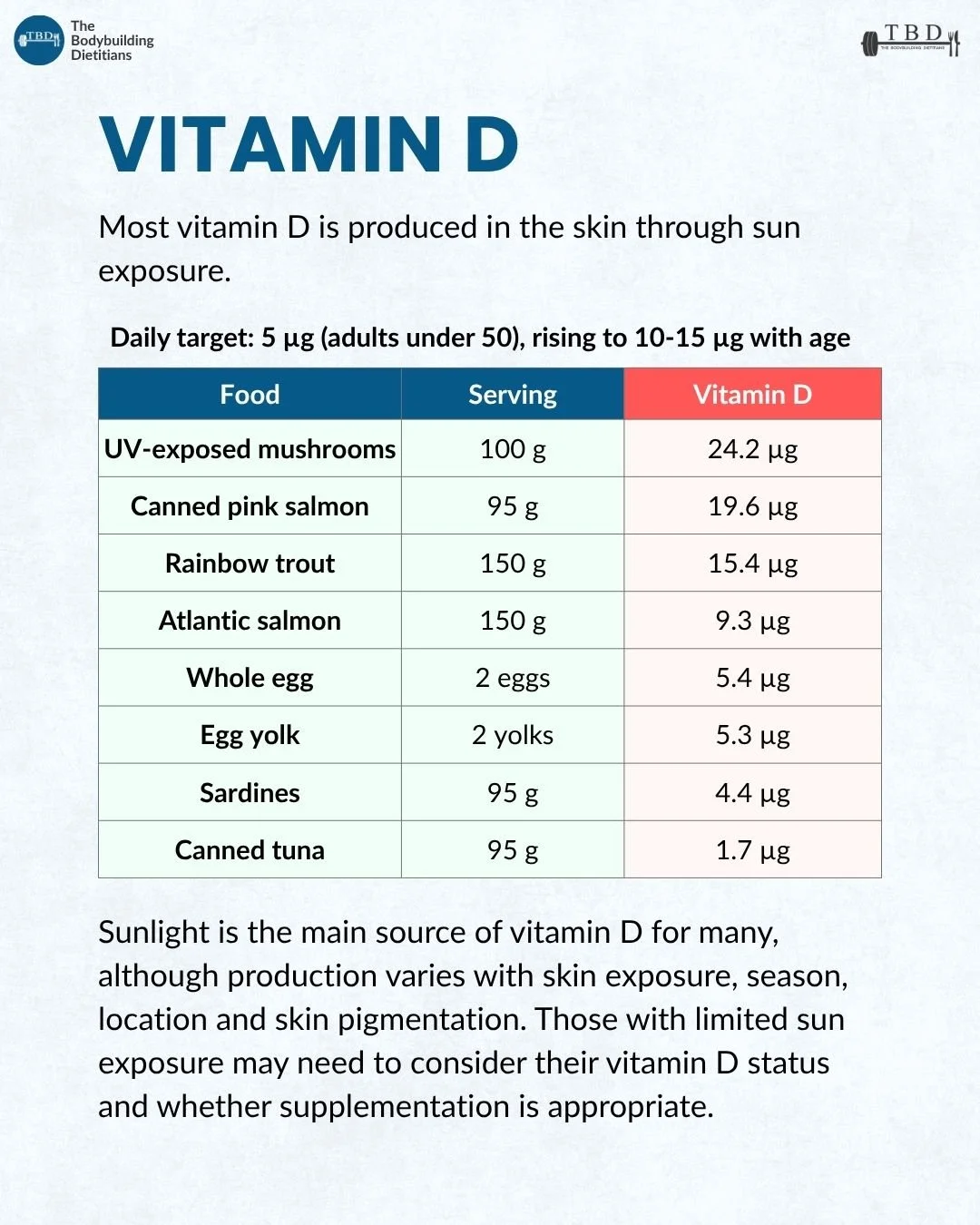
Vitamin D is unusual in that food is the secondary source for most people, since the majority is produced in the skin through sun exposure. Food matters most when sun exposure is limited, and oily fish and UV-exposed mushrooms lead the way.
Daily target: 5 µg for adults under 50, rising to 10 to 15 µg with age. Production from sunlight varies with skin exposure, season, location and skin pigmentation, so those with limited sun exposure may need to consider their vitamin D status and whether supplementation is appropriate. It is worth noting that the daily target is a floor for general adequacy, and correcting a confirmed low level often requires more than food alone provides.
Getting Enough Vitamin B12 From Food
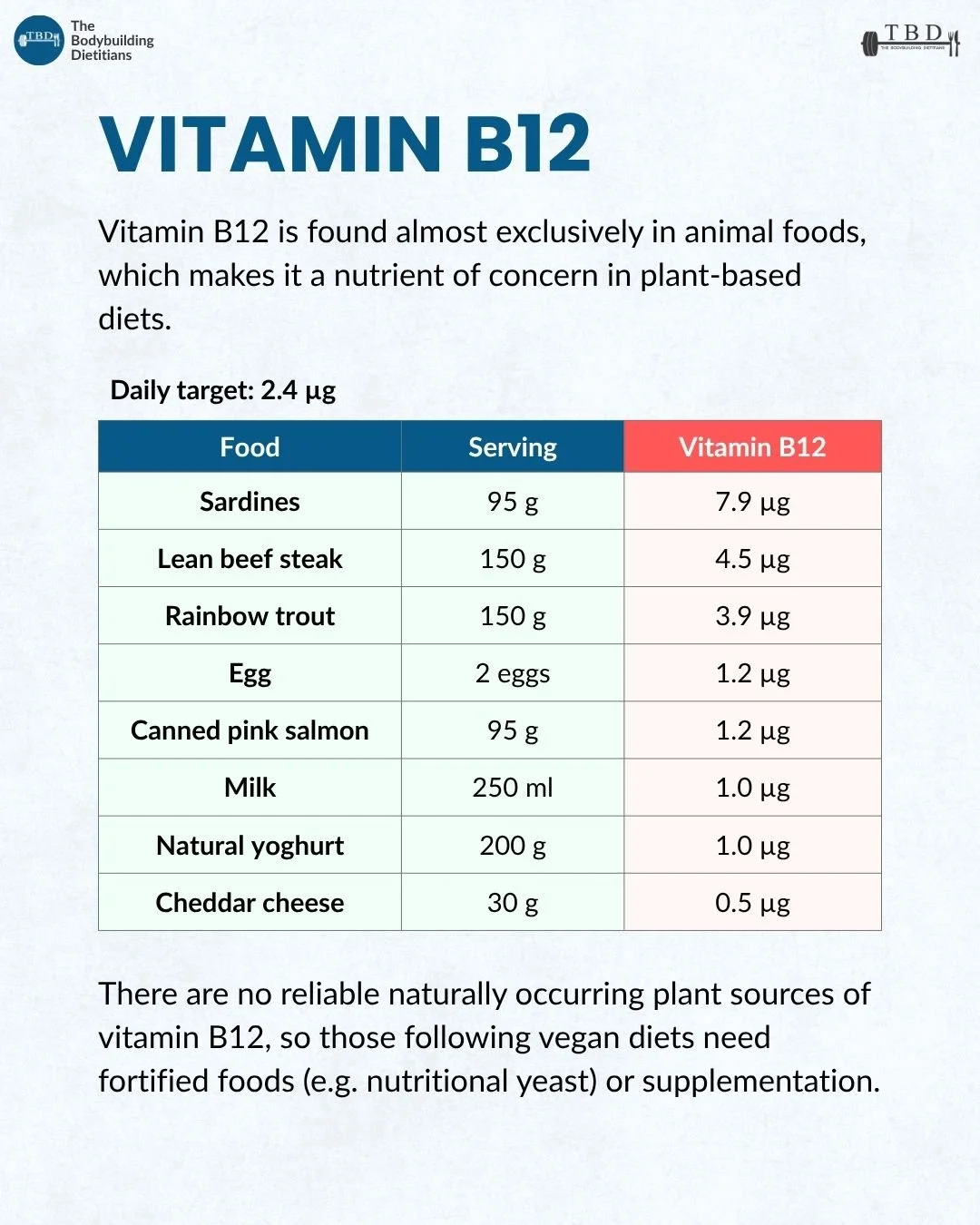
Vitamin B12 is found almost exclusively in animal foods, which makes it straightforward to obtain for most people and a genuine point of attention on a plant-based diet. A modest serve of fish, meat, eggs or dairy covers the daily target comfortably.
Daily target: 2.4 µg. There are no reliable naturally occurring plant sources of vitamin B12, so those following vegan diets need fortified foods such as some nutritional yeast products, or a supplement. This is one of the clearest cases where food choices alone cannot close the gap for everyone, and a supplement is the sensible tool rather than a fallback.
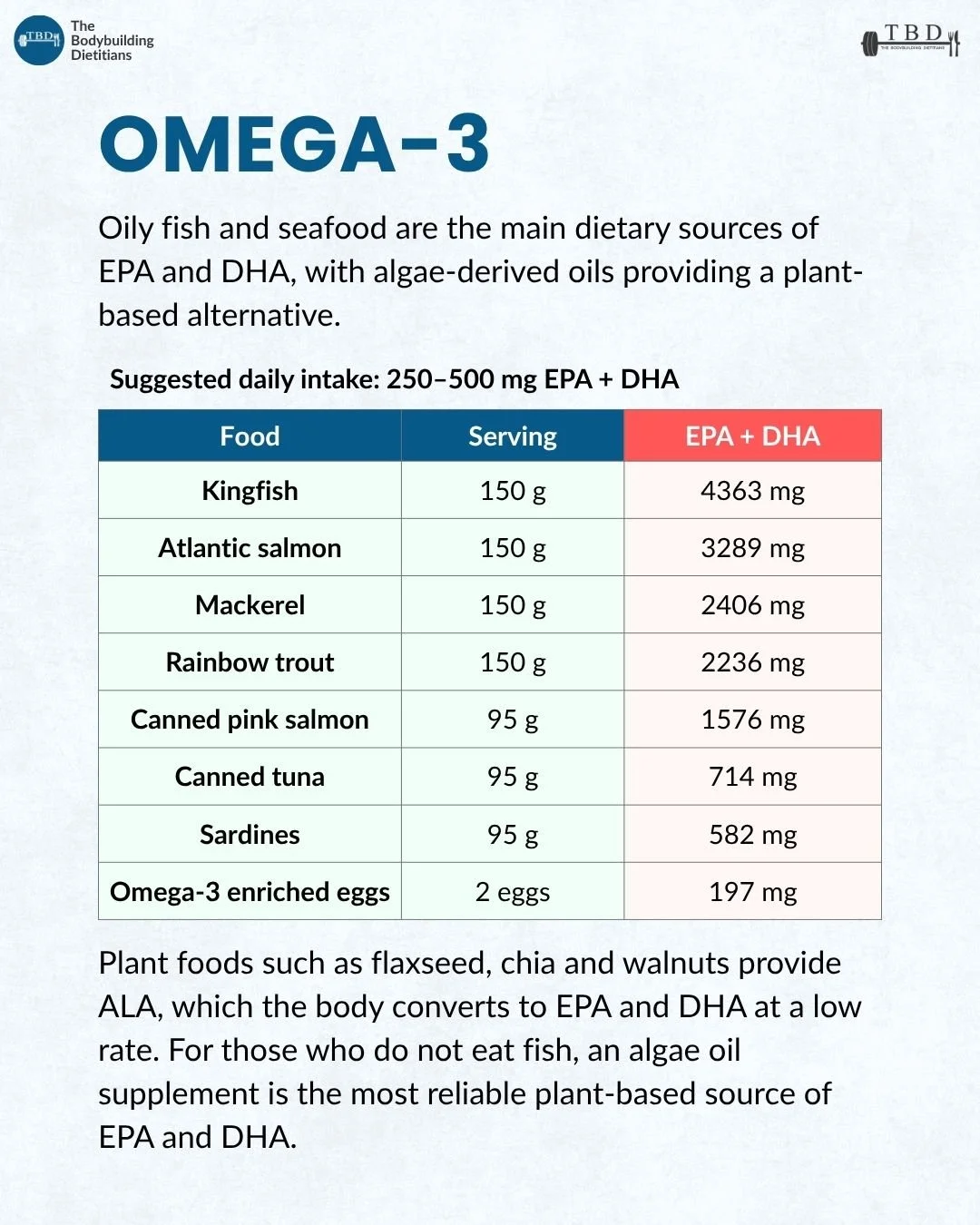
Getting Enough Omega-3 (EPA and DHA) From Food
The omega-3 fats EPA and DHA come mainly from oily fish and seafood, with amounts varying widely between species. A single serve of a high-source fish can exceed a week's suggested intake, which makes regular oily fish the simplest way to cover it.
Suggested daily intake: 250 to 500 mg of EPA plus DHA. Plant foods such as flaxseed, chia and walnuts provide ALA, which the body converts to EPA and DHA at a low rate, so they are a weaker route to meeting this target. For those who do not eat fish, an algae oil supplement is the most reliable plant-based source. The difference between the fish-derived omega-3s and the plant precursor is covered in more detail in our guide to omega-3 and fish oil.
Practical Takeaways
Most micronutrient needs can be met from whole foods with deliberate choices, with supplements best used as a targeted top-up for gaps that food cannot practically close.
Realistic serving sizes matter. A food that looks strong per 100 grams can contribute little in a normal serve, and the tables here reflect how foods are normally eaten.
Absorption is a real factor for iron and zinc. Pair plant-based iron with vitamin C, keep tea and coffee away from iron-rich meals, and use larger portions or animal sources to offset the lower absorption of plant zinc.
Canned fish with edible bones (sardines, salmon) are standout calcium sources, and magnesium is best covered through variety across nuts, seeds, legumes and whole grains.
Iodine depends heavily on using iodised salt, since specialty and most sea salts provide little unless iodised, and commercial bread is a reliable background source.
Vitamin B12 on a vegan diet, and vitamin D with limited sun exposure, are the two cases where food alone often cannot close the gap and a supplement is the sensible tool.
Frequently Asked Questions
What are the best food sources of iron?
Red meat and kangaroo provide the most readily absorbed iron, since the haem iron in meat and seafood is better absorbed than the non-haem iron in plants. Among plant sources, firm tofu, chickpeas, lentils, pumpkin seeds and oats all contribute meaningfully. Pairing plant-based iron with a vitamin C-rich food such as capsicum, citrus or tomato improves how much the body absorbs.
How can you get enough calcium without dairy?
Several non-dairy foods provide substantial calcium, led by canned sardines and salmon eaten with their soft edible bones, calcium-set firm tofu, and fortified plant milks. A 95 gram serve of canned sardines provides nearly 690 mg, more than a glass of milk. Spreading these sources across the day and choosing calcium-fortified products where possible makes meeting the target without dairy practical.
Do you need to eat fish to get omega-3?
Oily fish and seafood are the main dietary sources of the omega-3 fats EPA and DHA, and they make the target easy to reach. Plant foods such as flaxseed, chia and walnuts provide ALA, which the body converts to EPA and DHA only at a low rate, so they are a less reliable route. For those who do not eat fish, an algae oil supplement is the most dependable plant-based source of EPA and DHA.
Which nutrients are hardest to get on a plant-based diet?
Vitamin B12 is the clearest, since it is found almost exclusively in animal foods and has no reliable natural plant source, so fortified foods or a supplement are needed. Iron and zinc are also worth attention, because plant forms are less well absorbed, which makes food choices and portion sizes more important. The omega-3 fats EPA and DHA are a fourth, best covered with an algae oil supplement where fish is not eaten.
Does the type of salt affect iodine intake?
Yes. Iodised salt is a significant iodine source, while specialty salts such as Himalayan salt and most sea salts provide little iodine unless they have been specifically iodised. Commercially produced bread made with iodised salt is a reliable background contributor in many countries. Switching from iodised table salt to a non-iodised specialty salt can lower iodine intake without the change being obvious.
Are daily nutrient targets the same for everyone?
No. The daily targets here are based on established Nutrient Reference Values, which are useful general benchmarks for adequacy. Individual requirements vary with age, health, life stage and training demands, so the intake that best suits a person's health or performance goals can differ from the general figure. Assessing usual intake alongside relevant blood results is the reliable way to identify an individual's actual needs.
If you would like personalised guidance on meeting your nutrient needs through food and, where useful, targeted supplementation, our dietitian-led team can assess your intake, training and blood results and build a plan around them. Enquire about coaching or book a free discovery call to get started.