If you already strength train, you are doing more for your long-term health than you probably realise. This is a walk through the specific health outcomes that strength training influences beyond aesthetics and muscle gain, from all-cause mortality to bone density, glucose control, and independence in later life.
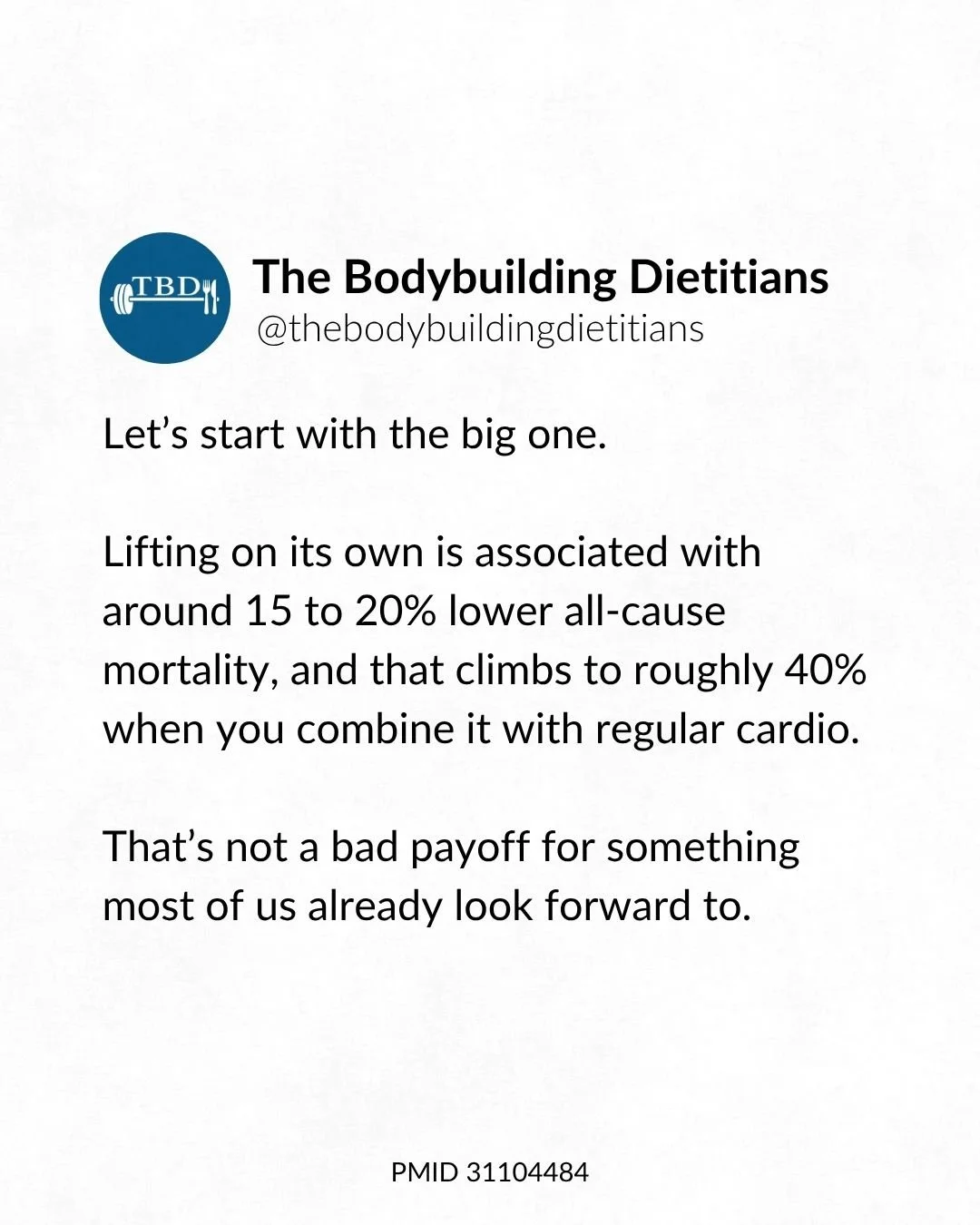
Strength training is one of the most underrated health interventions available. Meta-analyses consistently show that any resistance training is associated with approximately 15 to 20 percent lower all-cause mortality risk, and the reduction climbs to approximately 40 percent when combined with regular aerobic exercise. Beyond mortality, strength training preserves muscle mass and function through the natural sarcopenia curve (adults typically lose 3 to 8 percent of muscle mass per decade from their 30s onward), increases bone mineral density at the spine and hip and reduces fracture risk, improves walking speed, balance, and lower body function that support mobility and fall prevention into later life, and increases glucose disposal capacity through the expansion of muscle tissue (the largest site of glucose uptake in the body). The dose-response research suggests that as little as 60 minutes of resistance training per week is sufficient to capture most of the mortality and metabolic benefits, meaning most people who already lift are exceeding the threshold that produces meaningful health returns. What matters more than volume is consistency, and staying in the habit for as long as possible.
Strength training is one of the most underrated health interventions available. Most people take it up for aesthetic reasons, muscle gain, or general fitness, and the health effects tend to sit as an unstated background benefit rather than the primary motivation. What the research actually shows is that the health outcomes are arguably where the habit produces its most valuable returns, and that the returns compound quietly across decades of consistent training rather than showing up as visible short-term feedback.
This article walks through the specific outcomes that strength training influences beyond aesthetics and muscle gain: reduced mortality, preserved muscle mass with age, increased bone density, better balance and mobility, improved metabolic health, and sustained independence into later life. The purpose is not to convince existing lifters to keep going (most already will) but to make explicit what the habit is actually doing in the background, and to give readers on the fence about starting a clearer picture of the specific health payoffs the time investment produces.
What Does Strength Training Actually Do for Long-Term Health?
Strength training's most measurable and consistently documented health effect is a reduction in all-cause mortality risk. Meta-analyses across the research literature consistently show that any resistance training is associated with approximately 15 to 20 percent lower risk of dying from any cause, and the reduction climbs to approximately 40 percent when combined with regular aerobic exercise.
A systematic review and meta-analysis of eleven studies including over 340,000 participants found that any amount of resistance training was associated with approximately 21 percent lower all-cause mortality risk compared to no resistance training. When resistance training was combined with adequate aerobic activity, the combined risk reduction reached approximately 40 percent compared to individuals doing neither. Source: Saeidifard et al., 2019, European Journal of Preventive Cardiology, 26(15):1647-1665.
The 40 percent figure is not a small number in preventive medicine. Very few interventions produce that magnitude of mortality reduction, and the ones that do (not smoking, being non-obese, sustained aerobic exercise) are already widely recommended in public health guidance. Strength training tends to sit outside that primary conversation despite producing an effect of comparable magnitude when combined with aerobic exercise.
The mechanisms behind the mortality reduction are multifactorial, and this article walks through the specific systems that resistance training influences. The mortality reduction is best understood as the combined result of preserved muscle mass, improved metabolic health, better cardiovascular function, stronger bones, and sustained physical capability, rather than as a single pathway.
How Does Strength Training Preserve Muscle Mass With Age?
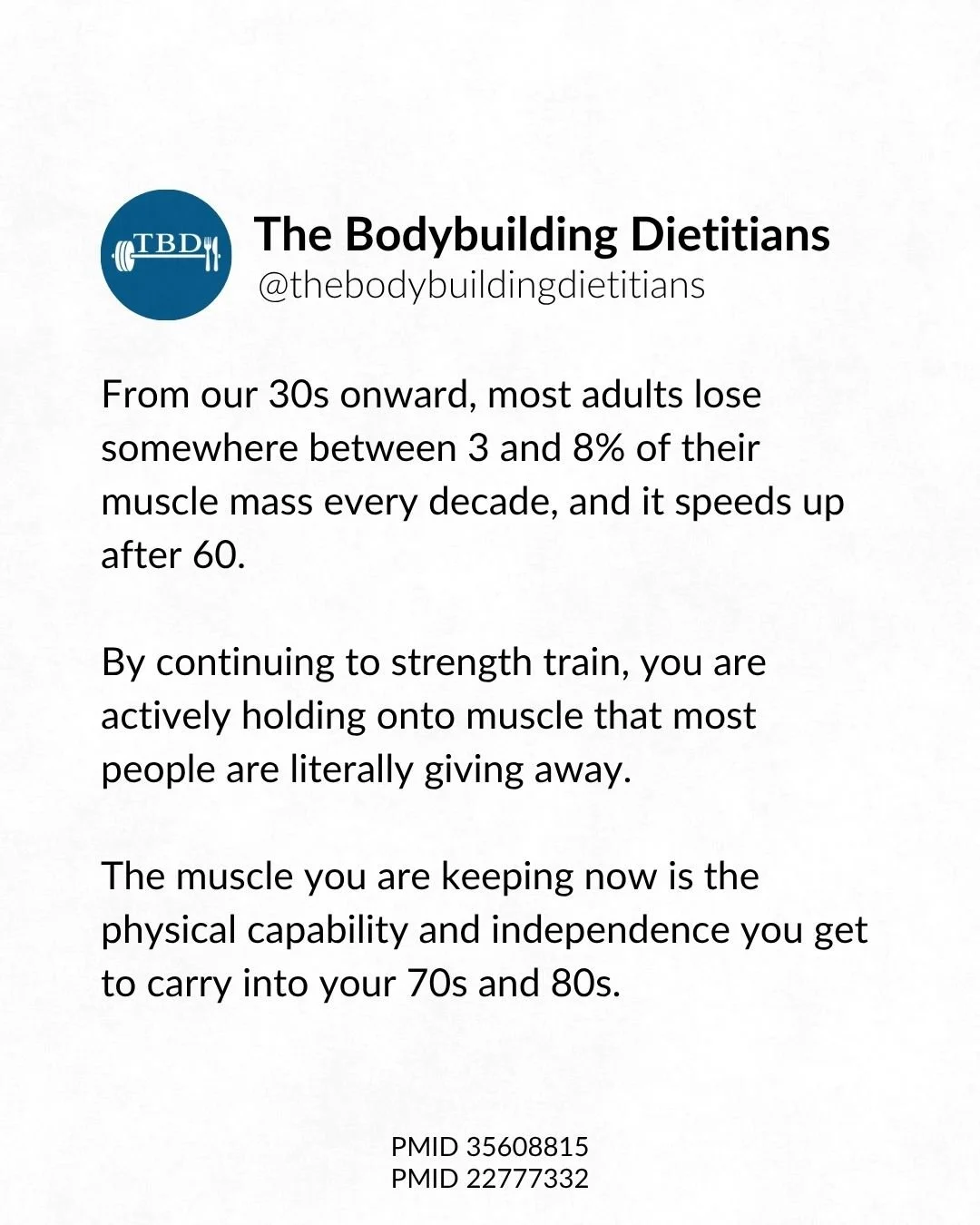
Sarcopenia is the age-related loss of muscle mass, strength, and function. It begins earlier than most people expect and progresses more meaningfully than most people realise.
Quantitative reviews of the sarcopenia literature indicate that most adults begin losing muscle mass from the third to fourth decade of life, at a rate of approximately 3 to 8 percent per decade. The rate of loss accelerates meaningfully after the sixth decade, with muscle strength typically declining faster than muscle mass. By the eighth decade, cumulative losses of 30 to 50 percent of peak muscle mass are common in inactive adults. Source: Mitchell et al., 2012, Frontiers in Physiology, 3:260; Volpi et al., 2004, Current Opinion in Clinical Nutrition and Metabolic Care, 7(4):405-410.
The 3 to 8 percent per decade figure is important because it means that adults who don't train are actively losing physical capability throughout their thirties, forties, and fifties without necessarily noticing the accumulation. The muscle that isn't being maintained is being lost, and the losses compound. An adult who spends their fourth, fifth, and sixth decades sedentary can enter their seventies with substantially less muscle mass and physical capability than an adult who spent those decades in consistent resistance training.
The value of strength training for muscle preservation isn't primarily about building new muscle in older adulthood, though this is possible. It's about not losing the muscle that was built earlier. Adults who continue lifting into their fifties, sixties, and seventies enter later life with substantially more muscle mass than adults who don't train, and the difference translates directly into the physical capability required for independent living. Walking speed, chair rise ability, stair climbing, grip strength, and general functional capacity all correlate with muscle mass and strength, and all of them shape whether an older adult can continue living independently.
The specific muscle that is being preserved through consistent training in your thirties and forties is the muscle that supports independence in your seventies and eighties. This is one of the more compelling framings for the long-term value of the habit, because it makes explicit what the training is actually protecting against.
How Does Strength Training Affect Bone Density?
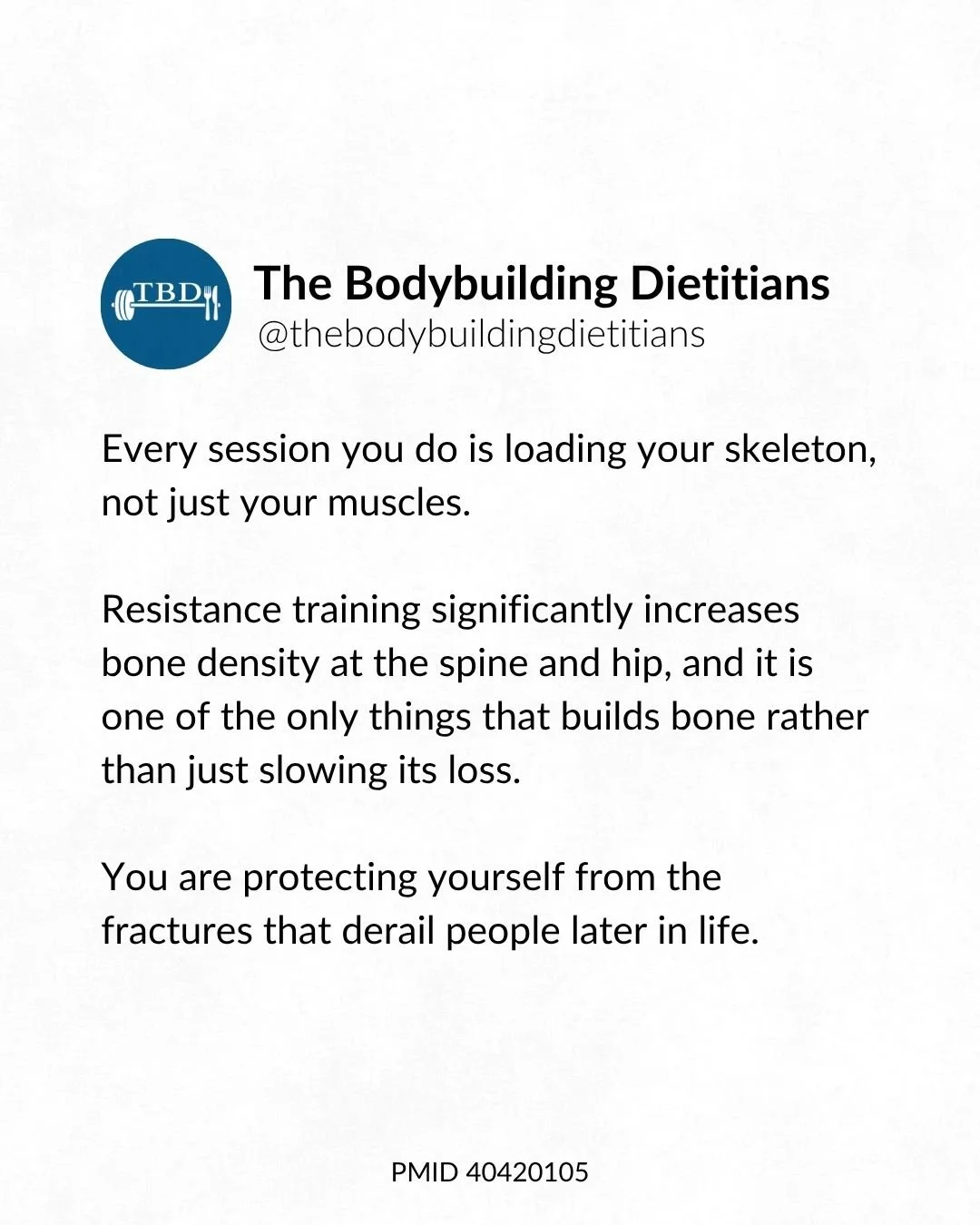
Bone tissue responds to mechanical loading in ways that most other tissues don't. When a muscle contracts against a load and pulls on its attachment points, the mechanical stress transmitted to the underlying bone stimulates bone remodelling and increases bone mineral density over months of consistent loading. This is one of the few known interventions that actually builds bone rather than merely slowing the loss that comes with aging.
Resistance training specifically loads the spine, hip, and other clinically relevant bone sites through the loaded positions and movement patterns that most compound exercises produce. Squats load the spine, hip, and leg bones. Deadlifts load the spine and posterior chain. Overhead pressing loads the spine and shoulder girdle. Rowing loads the spine and upper back. Across a well-structured resistance training program, most of the bone sites that are clinically relevant for fracture risk are loaded regularly.
Systematic reviews of resistance training and bone mineral density have consistently found significant increases in bone density at the lumbar spine and femoral neck (the specific sites most relevant for osteoporotic fracture risk) with 6 to 12 months of consistent progressive resistance training. The effect is most pronounced with higher-intensity loading and is preserved with continued training across years. Source: Kelley et al., 2020, Menopause, 27(9):1035-1042; Watson et al., 2018, Journal of Bone and Mineral Research, 33(2):211-220.
The practical significance of increased bone density is fracture prevention. Osteoporotic fractures (particularly hip and vertebral fractures) are a major source of mortality and morbidity in older adults, and any intervention that meaningfully reduces fracture risk has substantial value at the population level. Strength training is one of the more evidence-supported interventions in this domain, alongside adequate protein intake, vitamin D and calcium status, and general physical activity.
For lifters currently in their thirties, forties, and fifties, the bone density benefit is largely invisible. Bone changes accumulate slowly and don't produce visible feedback in the same way that muscle changes do. What is being protected against is a fracture 20 or 30 years from now that either doesn't happen because the bone had been maintained through decades of loading, or does happen because it wasn't. The invisible protection is genuinely one of the more valuable outcomes the habit produces.
How Does Strength Training Support Balance, Mobility, and Fall Prevention?
Falls are one of the leading causes of injury and mortality in older adults, and the specific consequences of falls (hip fractures, head injuries, hospitalisations that lead to further deconditioning) can meaningfully derail the trajectory of aging well. The physical capabilities that reduce fall risk (balance, walking speed, lower body strength, ability to recover from a stumble) are directly supported by strength training.
Systematic reviews of exercise interventions for fall prevention have consistently identified strength training combined with balance-specific work as the most effective approach for reducing fall risk in older adults. Programs that include resistance training and balance components typically produce 20 to 30 percent reductions in fall rates compared to sedentary control groups. Source: Sherrington et al., 2019, British Journal of Sports Medicine, 53(21):1367-1376.
The specific reason fall prevention matters more than it initially appears is that the mortality and morbidity consequences of falls scale substantially with age. Approximately one in four adults over 65 who fracture a hip die within a year of the fracture, and many of the survivors never regain their previous level of mobility or independence. The specific event of a fall in an older adult can be the pivot point that transitions the person from independent living to assisted care.
Strength training addresses the underlying physical capabilities that reduce fall risk (lower body strength, walking speed, ability to recover balance during a stumble) rather than the acute risk of any single fall. The prevention operates over years of maintained capability rather than as a specific intervention at the moment of the fall. Adults who enter their seventies and eighties with strong legs, good balance, and preserved walking speed are far less likely to fall than adults who don't, and the accumulated prevention across decades of maintained capability produces substantial reductions in the eventual event rate.
For maximum fall prevention specifically, pairing strength training with dedicated balance work (single-leg exercises, tai chi, specific balance training protocols) produces stronger effects than strength training alone. Most lifters don't do dedicated balance work, and adding a small amount of it into the weekly routine is one of the higher-value additions for lifters thinking specifically about aging well.
How Does Strength Training Improve Metabolic Health?
Muscle tissue is the largest site of glucose disposal in the body, accounting for approximately 80 percent of glucose uptake after a meal. Larger muscle mass provides more capacity for glucose disposal, which improves blood sugar control and reduces the metabolic stress placed on the pancreas and cardiovascular system. Strength training therefore improves metabolic health through two related mechanisms: increased muscle mass (more glucose disposal capacity) and increased insulin sensitivity within the muscle tissue itself.
Meta-analyses of resistance training and metabolic health have consistently shown improvements in insulin sensitivity, HbA1c (a marker of longer-term blood glucose control), and fasting insulin levels across resistance-trained populations compared to sedentary controls. The effect is meaningful in both non-diabetic populations (as prevention) and in populations with existing metabolic dysfunction. Source: Ismail et al., 2012, Obesity Reviews, 13(1):68-91; Yang et al., 2019, Sports Medicine, 49(10):1481-1494.
The practical implication is that consistent strength training over years of training substantially reduces the risk of developing type 2 diabetes and related metabolic conditions. Type 2 diabetes remains one of the fastest-growing chronic diseases globally, and its downstream complications (cardiovascular disease, kidney disease, neuropathy, retinopathy) drive substantial morbidity and mortality. Preventing the development of type 2 diabetes through consistent training is one of the more valuable long-term health outcomes strength training produces.
For lifters already carrying meaningful muscle mass from years of training, the metabolic protection is already established. The muscle tissue is doing its glucose disposal work regardless of whether the lifter is specifically training on any given day. Continued training maintains this capacity and prevents the sarcopenia-driven decline that would otherwise compromise it later in life.
For a more detailed look at how nutrition supports the metabolic health outcomes strength training produces, our article on the health case for higher fibre intake covers the dietary side of the same broader health picture.
Ready to Actually Commit to a Structured Approach?
If you have trained on and off over the years and are looking for a more consistent approach, or you are considering investing more time in training for your health and wellbeing, structured guidance can help you build lasting habits. Our team develops training and nutrition programs that fit your lifestyle, support long-term consistency, and align with your individual health and body composition goals.
How Much Strength Training Do You Actually Need to Do?
The dose-response research on strength training and health outcomes suggests that the threshold for capturing meaningful health benefits is much lower than most serious lifters would assume.
A large meta-analysis found that the maximum mortality risk reduction from resistance training was observed at approximately 30 to 60 minutes of resistance training per week, with additional volume above this threshold producing minimal further reductions in mortality risk. The dose-response curve is non-linear, with most of the benefit appearing at low training volumes and plateauing at moderate volumes. Source: Momma et al., 2022, British Journal of Sports Medicine, 56(13):755-763.
The 60 minute per week threshold is well below what most serious lifters are already doing. A lifter training four to five times per week for 60 to 90 minutes per session is accumulating 4 to 7 hours of resistance training per week, which is 4 to 7 times the threshold at which the health benefits are already saturating. This means that from a health outcomes perspective, most serious lifters have already earned the maximum returns available regardless of whether they hit their physique-focused training targets on any given week.
This has two practical implications. First, the health benefits of strength training are genuinely earned by most people who are strength training at all, regardless of whether they consider themselves a serious lifter or just someone who lifts. Two sessions per week for 30 to 40 minutes each is enough to capture most of the mortality and metabolic benefits. Second, the primary determinant of whether the benefits accumulate is consistency across years and decades rather than volume within any single week. Missing a session doesn't reduce the benefits meaningfully. Missing years of training would.
The practical framing for both existing lifters and lifters on the fence is that the health case for strength training is genuinely earned at low training volumes, and the main variable that determines whether the benefits accrue is whether the habit sustains over years. Consistency across time matters more than intensity in any given month.
Practical Takeaways
Strength training is associated with approximately 15 to 20 percent lower all-cause mortality risk in meta-analyses, and the reduction climbs to approximately 40 percent when combined with regular aerobic exercise. This is a large effect by preventive medicine standards.
Adults typically lose 3 to 8 percent of muscle mass per decade from their 30s onward, with the rate accelerating meaningfully after 60. Continued strength training substantially preserves muscle mass and function across the aging curve, which supports independence and physical capability into later life.
Resistance training is one of the few interventions that increases bone mineral density at clinically relevant sites (spine and hip) rather than only slowing its loss. This translates into reduced fracture risk decades later, though the effect is largely invisible during the years the training is happening.
Strength training combined with balance work produces the strongest fall prevention effect in older adults, with typical reductions of 20 to 30 percent in fall rates. Given that approximately one in four adults who fracture a hip die within a year, the fall prevention benefit has substantial mortality implications.
Muscle tissue is the largest site of glucose disposal in the body, and larger muscle mass improves insulin sensitivity and blood sugar control. Strength training reduces the long-term risk of type 2 diabetes and related metabolic conditions.
The dose-response research suggests that as little as 60 minutes of resistance training per week is sufficient to capture most of the mortality and metabolic benefits. Most serious lifters are already exceeding this threshold, meaning the health benefits are already earned regardless of physique-focused training targets. Consistency across years matters more than volume within any single week.
Frequently Asked Questions
Does strength training really lower mortality risk?
Yes. Meta-analyses of the research consistently show that any resistance training is associated with approximately 15 to 20 percent lower all-cause mortality risk compared to no resistance training, and the reduction climbs to approximately 40 percent when combined with regular aerobic exercise. The magnitude of the effect is comparable to other well-established preventive interventions like not smoking and sustained aerobic activity.
How much strength training do I need to do to get the health benefits?
The dose-response research suggests that as little as 60 minutes of resistance training per week is sufficient to capture most of the mortality and metabolic benefits, with maximum benefits typically appearing at 30 to 60 minutes per week. Additional volume above this threshold produces minimal further reduction in mortality risk. This is well below what most serious lifters are already doing, meaning the health benefits are already earned regardless of whether physique-focused training targets are being hit.
Does strength training prevent muscle loss with aging?
Yes. Adults typically lose 3 to 8 percent of muscle mass per decade from their 30s onward, with the rate accelerating after 60. Continued strength training substantially preserves muscle mass across the aging curve, particularly when combined with adequate protein intake. The muscle preserved through consistent training in one's thirties and forties is the physical capability that supports independence in one's seventies and eighties.
How does strength training affect bone density?
Resistance training increases bone mineral density at clinically relevant sites (spine, hip) through mechanical loading of the underlying bone during muscle contraction. This is one of the few interventions that actually builds bone rather than only slowing its loss. Systematic reviews consistently show significant increases in bone density with 6 to 12 months of consistent progressive resistance training, and the effect is preserved with continued training across years.
Can strength training prevent falls in older adults?
Yes. Systematic reviews consistently identify strength training combined with balance-specific work as the most effective approach for reducing fall risk in older adults. Programs including resistance training and balance components typically produce 20 to 30 percent reductions in fall rates compared to sedentary control groups. Given the substantial mortality risk associated with hip fractures in older adults (approximately one in four adults over 65 who fracture a hip die within a year), the fall prevention effect has meaningful mortality implications.
Does strength training reduce diabetes risk?
Yes. Muscle tissue is the largest site of glucose disposal in the body, accounting for approximately 80 percent of glucose uptake after a meal. Larger muscle mass and higher insulin sensitivity (both increased by strength training) improve blood sugar control and reduce the long-term risk of developing type 2 diabetes. Meta-analyses consistently show improvements in insulin sensitivity, HbA1c, and fasting insulin levels across resistance-trained populations compared to sedentary controls.
If you want help structuring a strength training and nutrition approach designed for consistency across years rather than short-term intensity, matched to your health goals as much as your physique goals, our team can build a plan that fits your specific situation. You can enquire about coaching or book a consultation with our team.