A new qualitative study by Buechel et al. (2025) has finally put language and data to an experience physique athletes have known privately for years, recovery after a hard contest prep can feel more overwhelming than the prep itself.
This research explored the lived experiences of 19 natural physique athletes (11 men, 8 women) using in-depth semi-structured interviews. The goal was to understand how athletes navigate the end of prep, the immediate post-show period, and the psychological and physiological realities of weight restoration.
While every athlete’s journey is unique, the study revealed strikingly consistent themes. These insights shed light on why post-show recovery can feel so destabilising, and more importantly, how coaches and athletes can better support the transition.
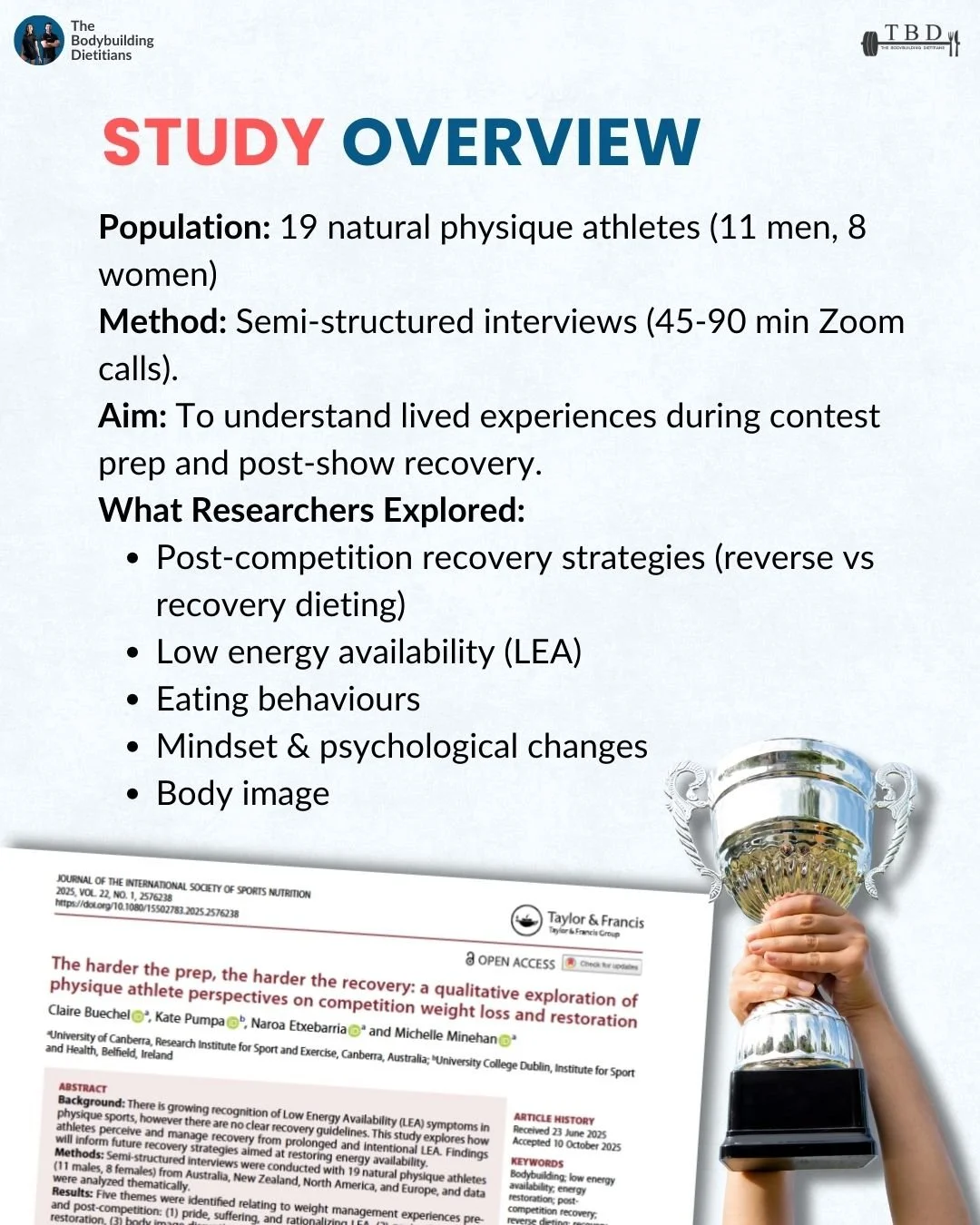
This study wasn’t a surface-level questionnaire. Researchers conducted 45–90 minute Zoom interviews, allowing athletes to describe their lived experiences in detail across both prep and recovery.
They explored:
Post-competition recovery strategies (reverse dieting vs recovery dieting)
Low energy availability (LEA) symptoms
Eating behaviours
Mindset and psychological changes
Body image experiences
Physique sport research often focuses on the metabolic impacts of prep, but this study highlights something just as important, the human experience behind those numbers.
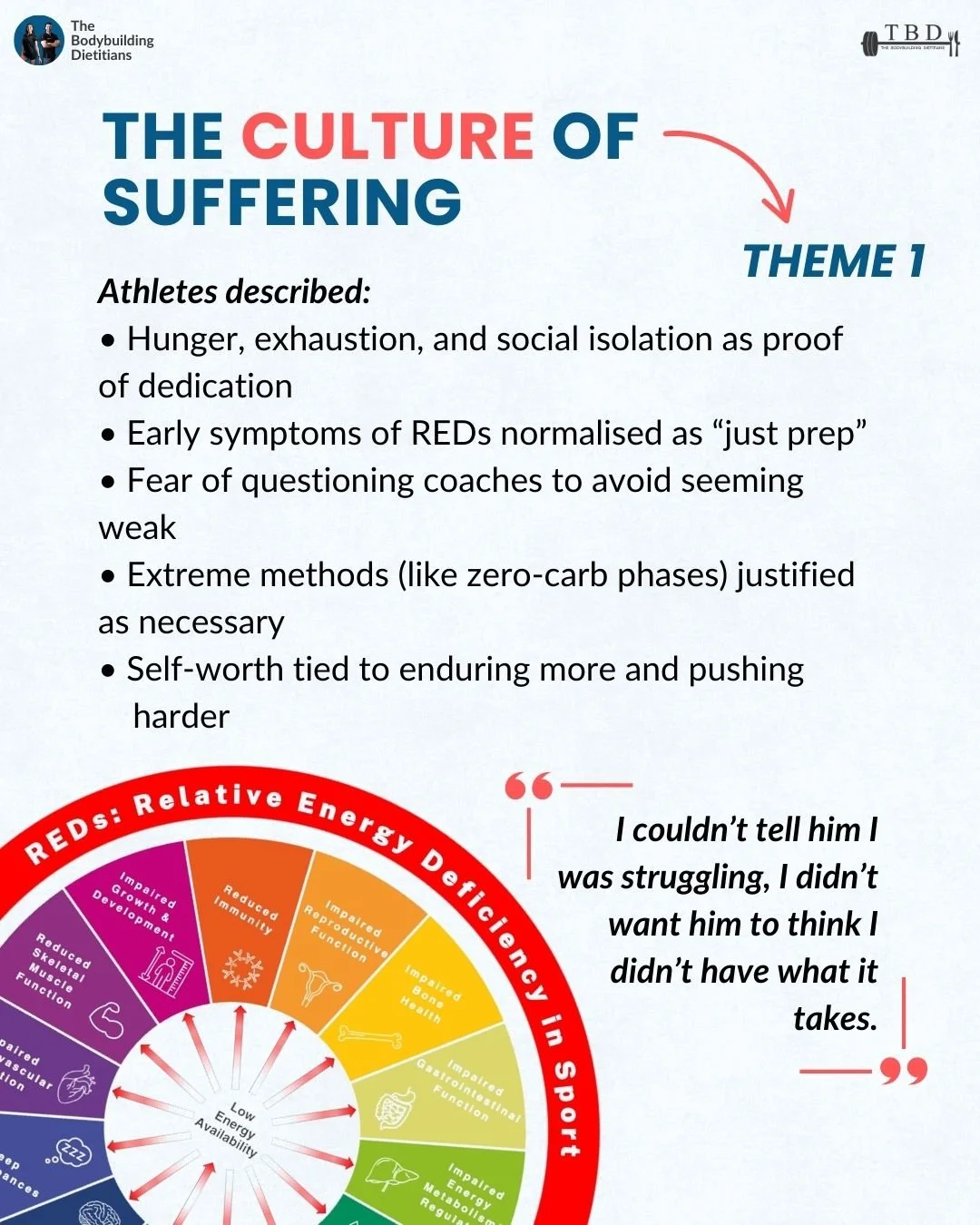
One of the clearest findings was that many athletes internalise a culture of discomfort = dedication.
Athletes described:
Hunger, exhaustion, and social withdrawal as badges of honour
Normalising early symptoms of REDs (sleep disruption, libido changes, irritability) as “just prep”
Feeling unable to question coaches for fear of being seen as weak
Extreme practices (e.g. zero-carb phases) framed as necessary sacrifices
Self-worth tied to suffering, “if it’s not hurting, I’m not doing enough"
This mindset isn’t simply psychological, it’s reinforced by community norms, social media, and sometimes even coaching environments. What should be monitored signals of excessive stress often become glorified.
A striking athlete quote captured the pressure perfectly: “I couldn’t tell him I was struggling. I didn’t want him to think I didn’t have what it takes.”
The result is a fragile environment where athletes endure far beyond what is necessary, setting the stage for a turbulent rebound.
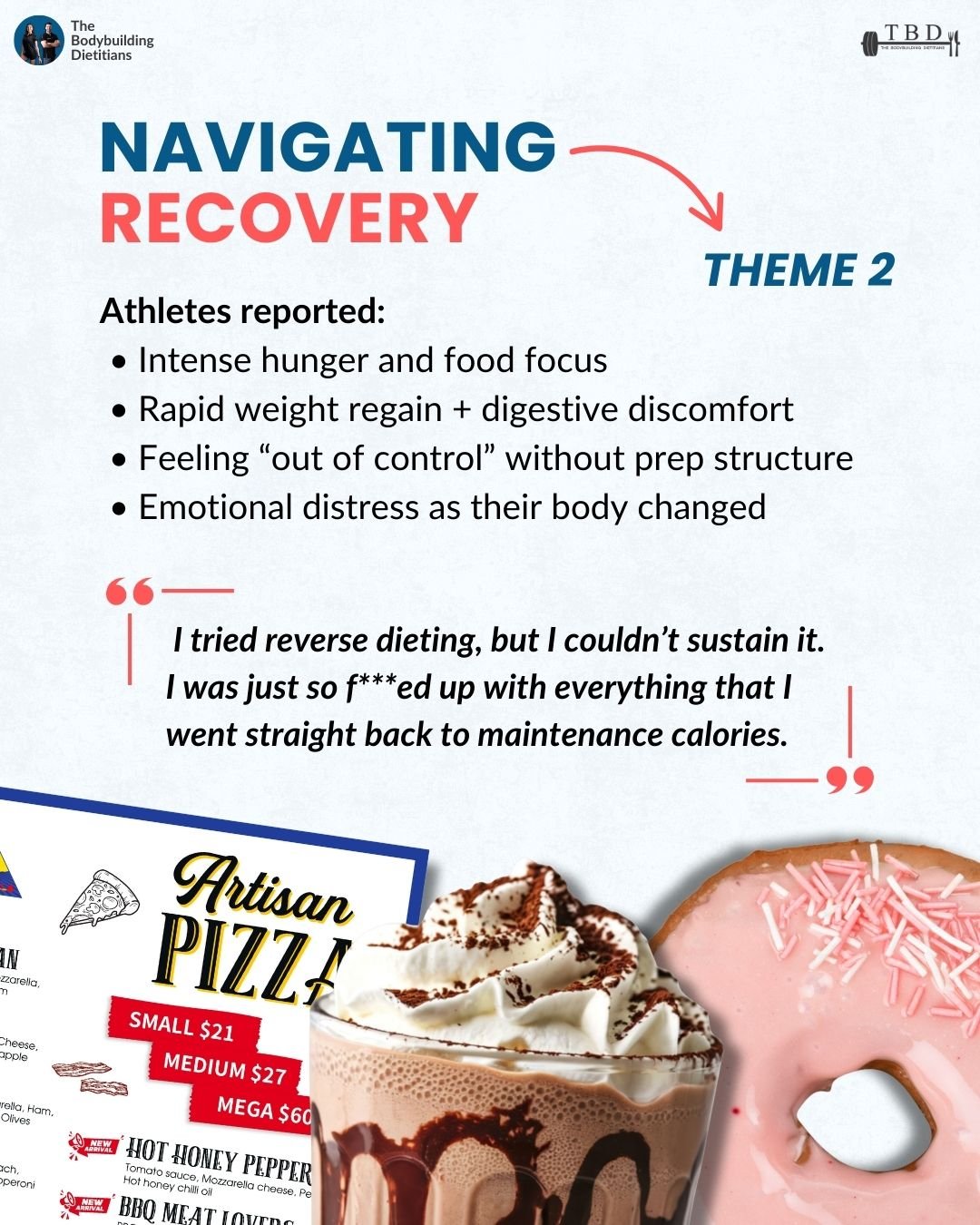
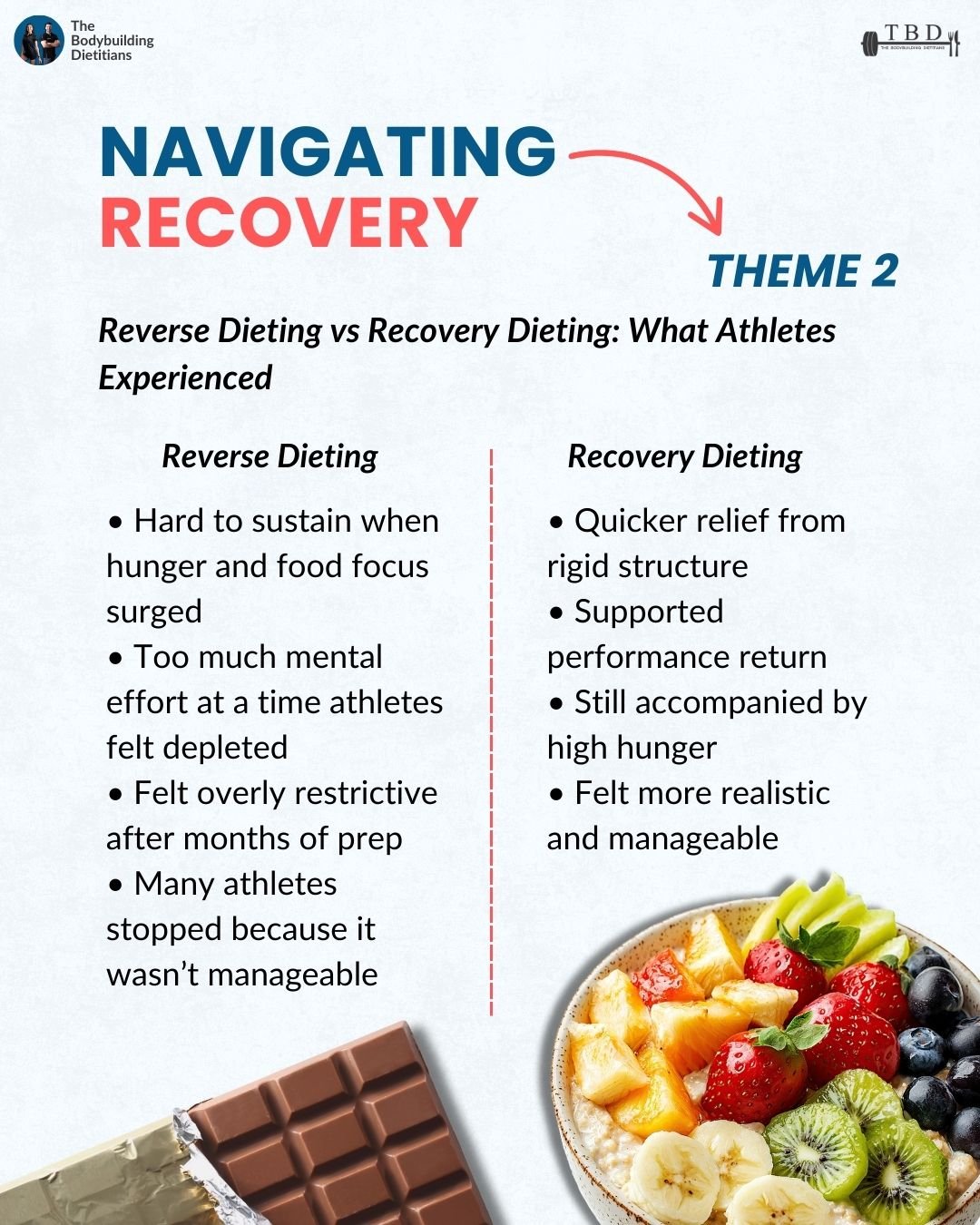
The post-show period was described as emotionally overwhelming and physiologically chaotic, even among experienced competitors.
Athletes reported:
Intense hunger and constant food focus
Rapid weight regain paired with digestive discomfort
Feeling “out of control” without prep structure
Emotional distress as their body changed faster than expected
Those who attempted reverse dieting found it unsustainable:
Reverse dieting challenges:
Extremely difficult with heightened hunger
Too mentally demanding at a time they felt depleted
Felt restrictive after months of dieting
Many abandoned the strategy within weeks
In contrast, recovery dieting, returning closer to maintenance quicker, was described as far more manageable.
Recovery dieting benefits:
Faster relief from rigidity
Supported training performance earlier
Still came with hunger, but felt realistic
Psychological load was significantly lower
This aligns with what many coaches now recognise: when the body is screaming for energy, adding 20–50 calories per week simply doesn’t match biological demand.
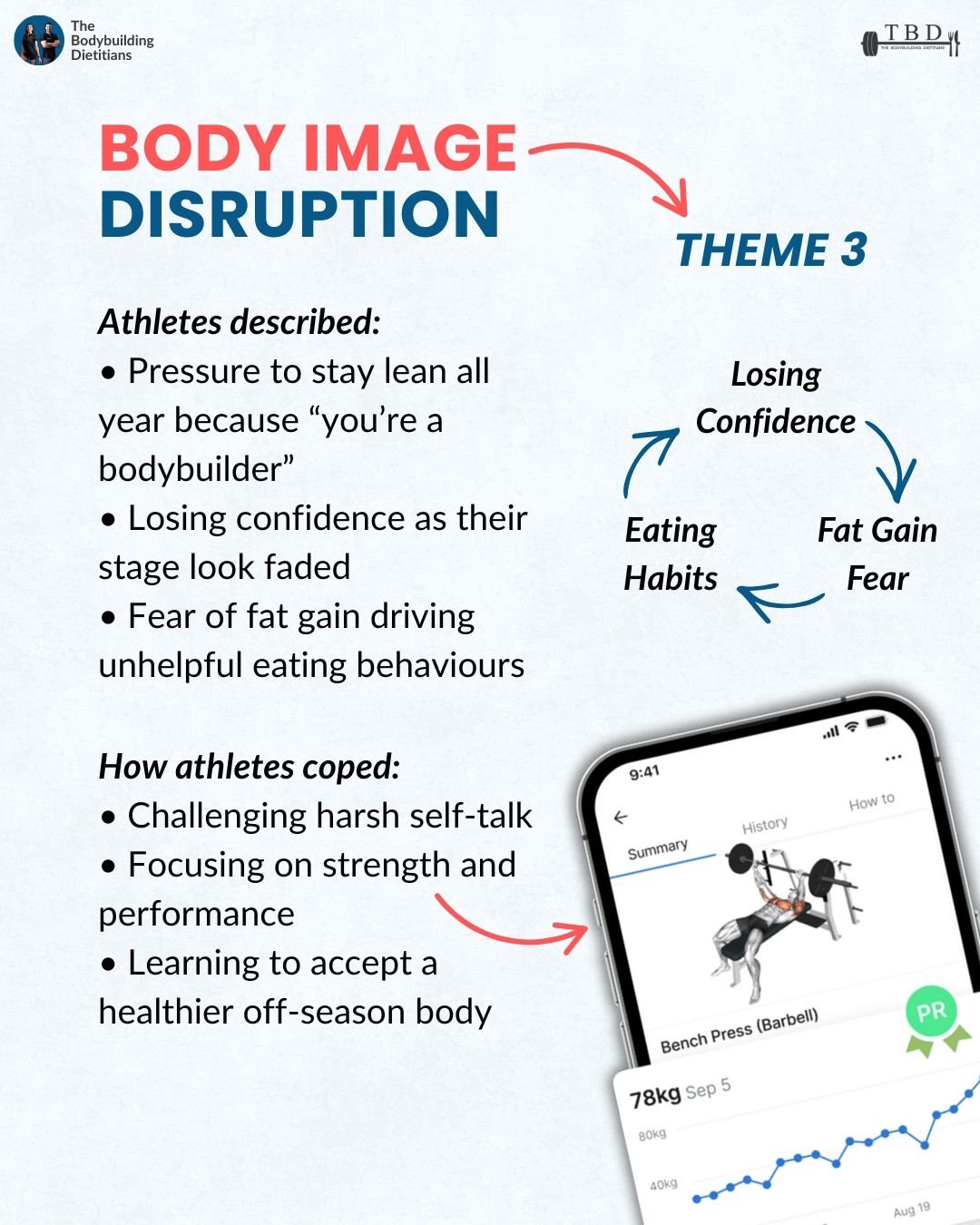
Body image challenges were nearly universal.
Athletes described:
Pressure to “stay lean all year” because of the label “bodybuilder”
Losing confidence as the stage look faded
Fear of fat gain driving unhelpful eating behaviours
The abrupt shift from being celebrated for extreme leanness to looking “normal” triggered significant distress. Many felt emotionally disconnected from their changing physique.
However, those who coped most successfully did so through:
Challenging negative self-talk
Focusing on performance metrics, not aesthetics
Learning to accept a healthier off-season body
This reflects a critical truth: prep changes your body, but it also temporarily changes your identity. Rebuilding both requires intentional support.
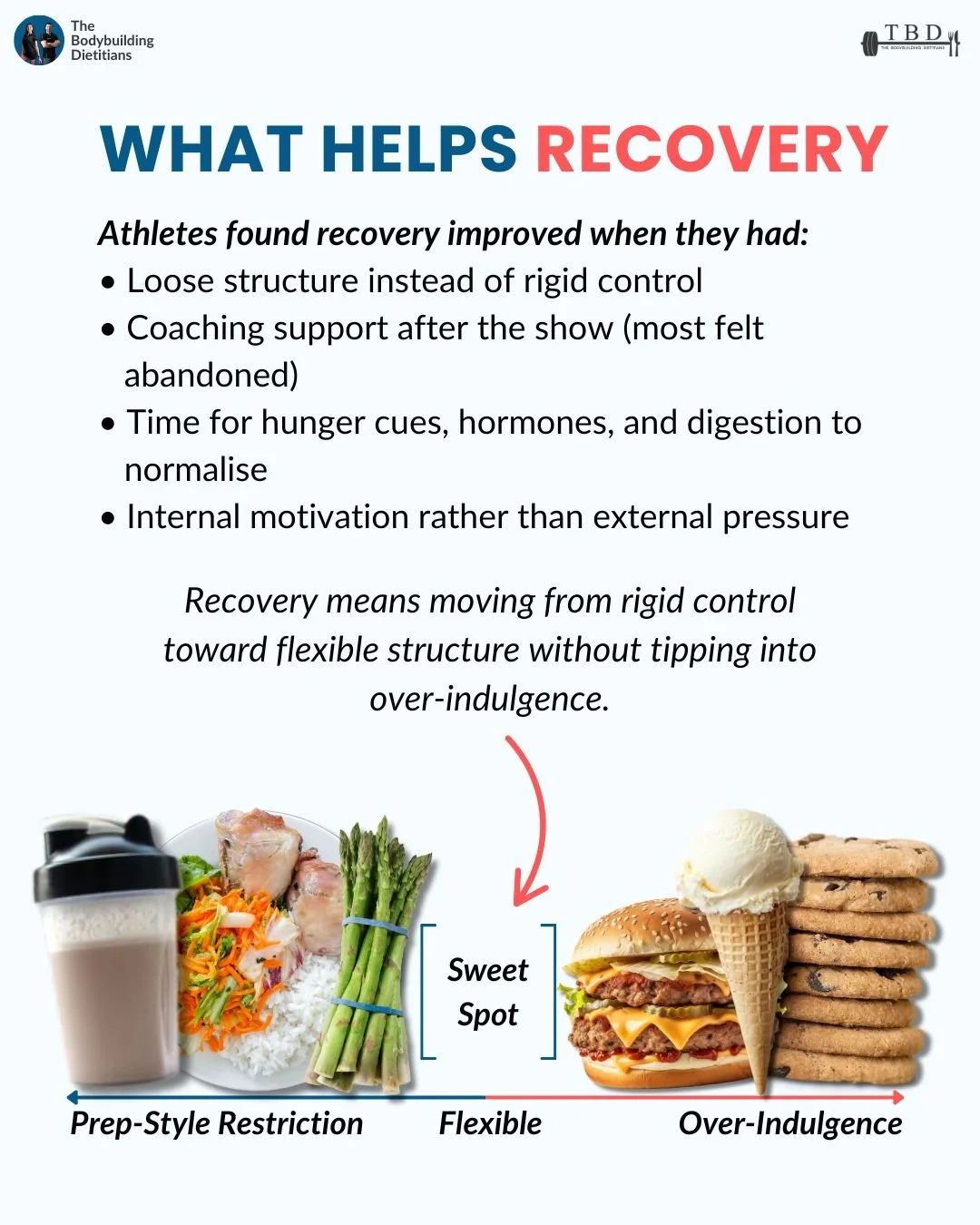
Across the study, athletes consistently found recovery more successful when they had:
Loose structure, not rigid control
Continued coaching support after show day (most said they felt abandoned otherwise)
Time for hunger cues, hormones, and digestion to stabilise
Internal motivation rather than pressure from others
The “sweet spot” lies between prep-style rigidity and free-for-all indulgence. Not tracking at all felt chaotic, but trying to maintain prep-level discipline backfired.
Recovery works best when it mirrors a flexible, supportive improvement-season structure.
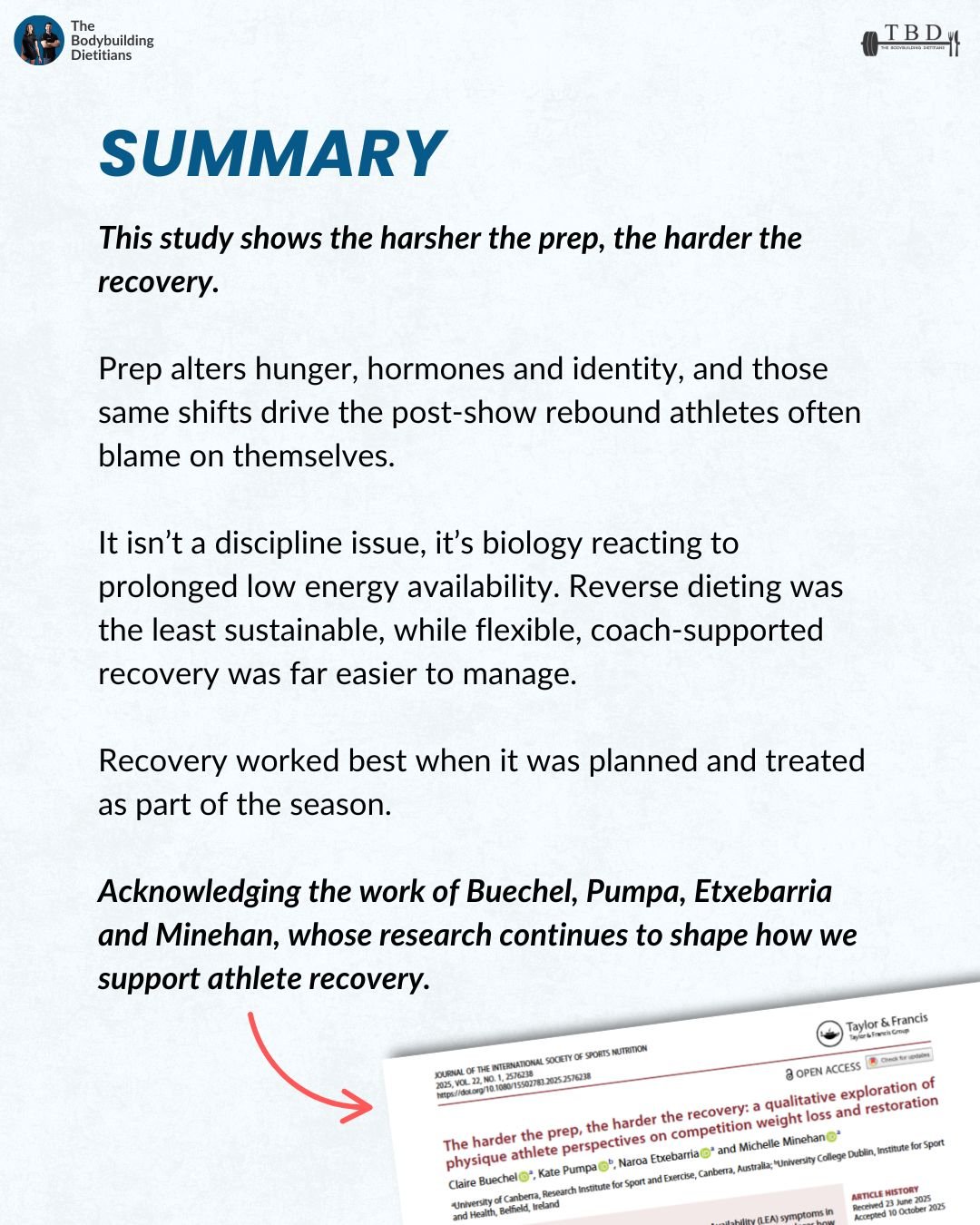
This study reinforces what practitioners and coaches see daily:
The harsher the prep, the harder the recovery.
Prep profoundly impacts hunger, hormones, mood, and identity, and those same shifts drive post-show rebound, regardless of willpower.
It’s not a discipline problem. It’s physiology responding to prolonged low energy availability.
Reverse dieting was generally unsustainable, while flexible, structured recovery dieting was consistently easier to manage.
And most importantly, recovery works best when it’s planned, supported, and treated as part of the competitive season, not an afterthought.
This research highlights the importance of athlete-centred coaching and reinforces the need for psychological, nutritional, and behavioural support beyond show day.
If you want evidence-based support through prep, recovery, or your improvement season, we work with physique athletes worldwide. You don’t need to navigate the hardest parts of the sport alone. Reach out below to build a healthier, more successful competitive journey.