Five real pre-workout meals from our dietitians, with practical guidance on timing, carbohydrates and digestive comfort.
Your pre-workout meal should reflect how much time you have before training, what you've already eaten and the demands of your session. Larger meals containing carbohydrates, protein, fats and fibre generally suit earlier eating windows, while smaller, easier-to-digest options are often preferable closer to training. The best approach also depends on your daily energy requirements and individual digestive tolerance.


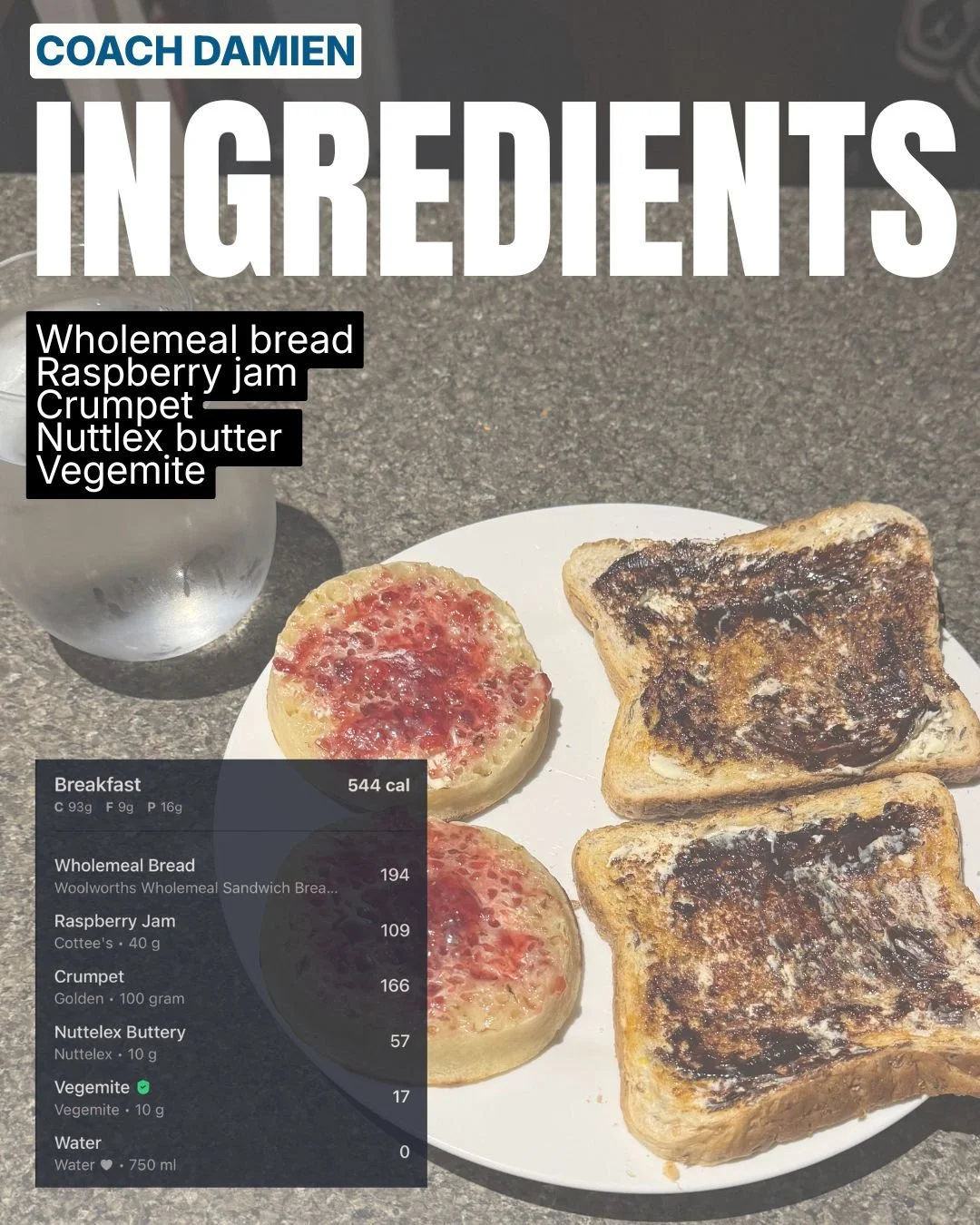
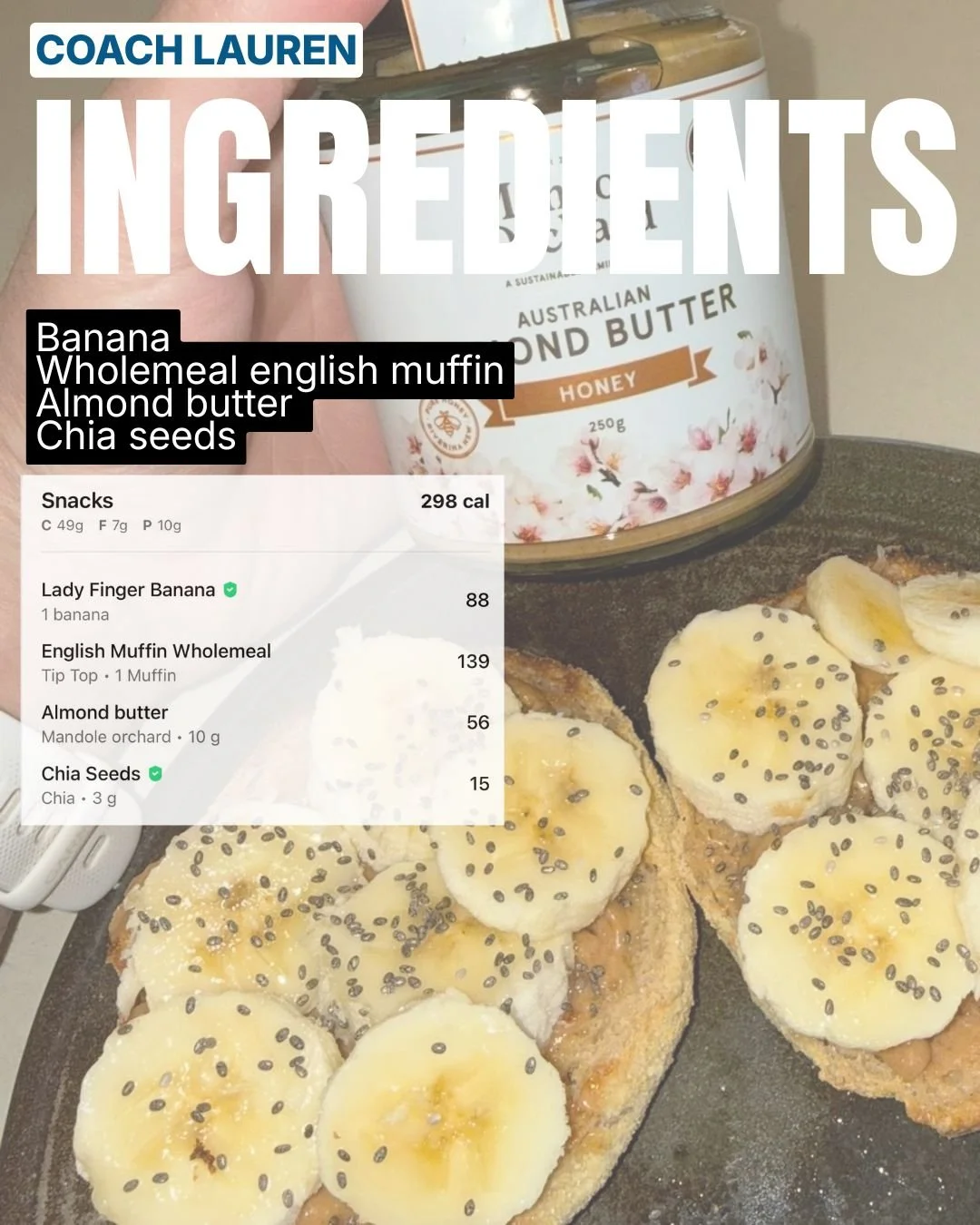


One thing you'll notice from our team's pre-workout meals is how different they look, even though we're all training towards similar physique and performance goals.
Jack's meal contains around 1,450 calories, whereas Lauren's is closer to 300. Damien trains early in the morning and prefers something convenient, while others have more flexibility in how they organise their meals.
All five meals serve different nutritional and practical requirements.
When we're reviewing someone's pre-workout nutrition, we'd be interested in whether their current meal is creating a problem worth addressing. Someone who feels comfortable and performs well during training may have little reason to change anything.
However, if they're regularly experiencing bloating, feeling hungry halfway through their sessions or struggling to meet their daily energy requirements, we'd investigate whether meal size, composition or timing could be contributing.
Here are some examples from our own diets and how we'd approach different pre-workout eating windows.
What Should You Eat 3–4 Hours Before Training?
When you have several hours before training, a larger meal containing carbohydrates, protein, fats and fibre can work well, particularly if your daily energy requirements are high.
Jack's meal is a good example.
It contains oats, rice flour, protein yoghurt, milk, fruit, chia seeds and almond butter, providing approximately 1,450 calories and 196 g of carbohydrates.
Jack generally eats several hours before training, giving him time to digest a meal of this size.
If someone was consuming the same meal 45 minutes before a demanding leg session, we'd be interested in how comfortably they could train with that much food in their stomach.
The fat, fibre and overall volume could cause discomfort, particularly for someone who is sensitive to eating close to exercise.
However, with several hours available, those factors may be much less relevant.
Other options for this window might include a rice-based meal with chicken and vegetables, oats with yoghurt and fruit, or a sandwich with a substantial protein source.
The appropriate size still depends on what you're trying to achieve and how much energy you need across the day.
What Should You Eat 1–2 Hours Before Training?
A moderate-sized meal containing carbohydrates and some protein can work well one to two hours before training, provided you can digest it comfortably.
This is where the examples from Lauren, Talia and Sam become useful.
Lauren's meal contains a wholemeal English muffin, banana, almond butter and chia seeds, providing approximately 300 calories.
Talia's option is a chocolate-chip bagel with strawberries and a little spreadable butter, providing approximately 350 calories.
Sam has a larger yoghurt bowl containing banana, berries, chia seeds, sunflower seeds, cocoa powder and honey, providing approximately 600 calories.
These are all reasonable food combinations, although we'd consider the portion size, fibre, fat and time available before training when deciding which option was most appropriate.
For example, if someone enjoys Sam's yoghurt bowl but experiences bloating during their session, we might reduce the seeds, adjust the portion or move the meal earlier.
If Lauren's smaller meal leaves someone hungry halfway through a long training session, we might increase the carbohydrate portion or review what they'd eaten earlier.
The meal itself gives us a starting point. How someone responds determines whether any changes are worthwhile.
What Should You Eat 30–60 Minutes Before Training?
When you're eating within an hour of training, smaller portions of easily digested carbohydrates are often the most practical choice.
Damien's pre-workout meal illustrates how convenience can influence food selection.
He trains early in the morning and typically chooses foods such as toast, crumpets, Vegemite and jam. The meal shown in our carousel provides approximately 540 calories, including 93 g of carbohydrates.
For someone with limited time before training, this type of familiar, convenient meal may be easier to organise than preparing a substantial breakfast.
However, 540 calories may still be more than some people comfortably tolerate immediately before exercise.
If someone only had 20–30 minutes available, we'd consider reducing the portion or choosing something smaller, such as a banana, toast with jam or a carbohydrate-containing drink.
We'd also look at what they're training.
Someone completing a demanding 90-minute session after an overnight fast may benefit from more deliberate pre-workout fuelling than someone doing a shorter, less demanding workout.
The timing windows are useful guidelines, although there's considerable room for individual variation.
How Much Carbohydrate Do You Need Before Lifting?
Carbohydrate requirements before resistance training depend on the session, your overall dietary intake and how recently you've eaten.
Muscle glycogen contributes to energy production during demanding resistance exercise, particularly when training volume is high.
However, eating more carbohydrate immediately before lifting doesn't always translate into better performance.
King et al. (2025), in Isoenergetic Pre-Exercise Meals Varying in Carbohydrate Similarly Affect Resistance Training Volume Performance Compared to Placebo: A Crossover Trial, compared different pre-exercise carbohydrate intakes in 16 resistance-trained adults.
The researchers found no significant differences in training volume between higher-carbohydrate, lower-carbohydrate and low-calorie placebo conditions during a predominantly upper-body resistance-training session.
These findings don't mean carbohydrate intake is irrelevant. They demonstrate why recommendations need to account for the particular session and someone's existing nutritional intake.
For example, if a client regularly trains after eating several carbohydrate-containing meals, we'd be less concerned about achieving a specific carbohydrate target immediately before lifting.
If they're training early after an overnight fast, eating relatively little throughout the day or completing long, demanding sessions, the situation may warrant more attention.
Kerksick et al. (2017), in International Society of Sports Nutrition Position Stand: Nutrient Timing, similarly emphasised the interaction between training demands, daily nutrition and nutrient timing.
How Do You Know If Your Pre-Workout Meal Needs Adjusting?
We'd look at how you feel during training, whether you're performing consistently and how the meal fits into your broader nutrition.
Someone who regularly experiences nausea or bloating may benefit from reducing their pre-workout meal size, moving it earlier or choosing lower-fat and lower-fibre foods.
If they're consistently hungry or fatigued during sessions, we'd investigate their total energy intake, carbohydrate availability and how long it's been since their previous meal.
For example, someone might assume they need a larger pre-workout snack when they're experiencing low energy during afternoon sessions. However, if they're eating very little throughout the morning and early afternoon, improving their earlier meals may be more useful.
We'd also be cautious about attributing every poor session to nutrition. Sleep, accumulated training fatigue and other recovery factors can contribute.
This is why we'd assess the wider pattern before recommending changes.
Struggling to organise your nutrition around training?
Your training schedule, energy requirements and digestive tolerance can all influence how you structure your meals. If you're regularly experiencing discomfort, hunger or inconsistent performance, it may be worth reviewing how your intake is distributed throughout the day.
Our dietitians can help you identify which adjustments are worthwhile and develop a practical approach around your training and goals.
Should Your Pre-Workout Meal Change During Fat Loss or Muscle Gain?
Your overall energy requirements and available calories will influence how much you eat before training, although the same principles of fuelling and digestive comfort apply.
During fat loss, we often encourage people to preserve enough carbohydrate around demanding training sessions to help maintain performance.
This might involve distributing their daily calories differently, particularly when food intake is becoming more restricted.
During muscle gain, the challenge may be consuming enough energy without feeling excessively full.
Someone with high calorie requirements might benefit from a substantial meal several hours before training, similar to Jack's approach.
Someone dieting on considerably fewer calories may prefer a smaller meal while allocating more of their daily intake to other times.
We'd also consider their protein intake and the broader distribution of meals across the day, which can be reviewed alongside our guide to setting macros for fat loss and muscle gain.
Looking across our team's meals, there's considerable variation in calorie intake, carbohydrate quantity and food selection.
They're useful examples of how different approaches can work, depending on the circumstances.
The main consideration is whether your current meal supports your training, sits comfortably and works within your broader nutrition.
Practical Takeaways
Three to four hours before training, a larger balanced meal containing carbohydrates, protein, fats and fibre may be appropriate, particularly when energy requirements are high.
One to two hours before training, moderate portions of carbohydrate-rich foods such as bagels, English muffins, yoghurt and fruit can work well, depending on digestive tolerance.
Within 30–60 minutes of training, smaller, lower-fat and lower-fibre options are often easier to digest. Bananas, toast with jam, crumpets and carbohydrate-containing drinks are practical examples.
Your pre-workout carbohydrate needs depend on the session and your wider diet. More carbohydrate immediately before lifting doesn't necessarily improve performance if you're already adequately fuelled.
Adjust your meal based on your response. Persistent bloating, hunger or low energy may warrant changes to timing, meal composition or the distribution of food across your day.
Frequently Asked Questions
What is the best meal to eat before lifting weights?
A carbohydrate-containing meal that you digest comfortably is a useful starting point before resistance training. Larger meals containing protein, fat and fibre generally suit earlier eating windows, while smaller and lower-fibre options may be more comfortable closer to training. Your overall nutrition and session demands also influence what you need.
What should you eat 30 minutes before the gym?
If you're eating shortly before training, a small portion of easily digested carbohydrate may be appropriate. Options include a banana, toast with jam, rice cakes or a carbohydrate-containing drink. If you've eaten a substantial meal recently and feel adequately fuelled, you may have little need for another snack.
How long before training should you eat a large meal?
Many people find approximately three to four hours comfortable for digesting a substantial mixed meal. Larger meals containing more fat and fibre may require additional time, particularly for someone prone to gastrointestinal discomfort. The most appropriate timing depends on your meal size and individual tolerance.
Do you need carbohydrates before every workout?
Carbohydrates support high-intensity exercise, although additional intake immediately before training isn't necessary for every session. Someone who has eaten adequately throughout the day may already have sufficient glycogen available. Longer or more demanding sessions, prolonged periods without food and restricted daily carbohydrate intake can make pre-workout fuelling more relevant.
Should you eat differently before training when dieting?
During a calorie deficit, it can be useful to allocate some of your daily carbohydrates around demanding training sessions to support performance. The amount should reflect your overall energy intake, session demands and appetite. We'd also consider whether adjusting earlier meals would be more practical than adding extra calories immediately before training.
Author
The Bodybuilding Dietitians Team
Dietitian-led nutrition, training and physique coaching
Want help structuring your meals around training?
If you're unsure whether your current meal timing, carbohydrate intake or food choices are supporting your training, our coaching can help you review your nutrition and identify appropriate adjustments.