Five principles that shape how our dietitians approach muscle gain, fat loss, recovery and sustainable nutrition.
Effective body composition coaching considers the relationship between training, nutrition, recovery and long-term habits. Building muscle requires an appropriate resistance-training stimulus, while fat loss depends on sustaining an energy deficit. The best approach also accounts for dietary flexibility, health, adequate fuelling and how an individual's needs change over time.

There are a few things we feel particularly strongly about as dietitians and coaches, many of which have developed through our own experiences with training, competing and working with clients.
Some relate to the science behind muscle gain and fat loss. Others involve the expectations people develop around food, what we consider meaningful progress or how we approach the demands of bodybuilding competition preparation.
The recommendations we make can look quite different depending on the person and their goals, although there are some underlying principles that consistently influence our decisions.
Here are five we consider particularly important.
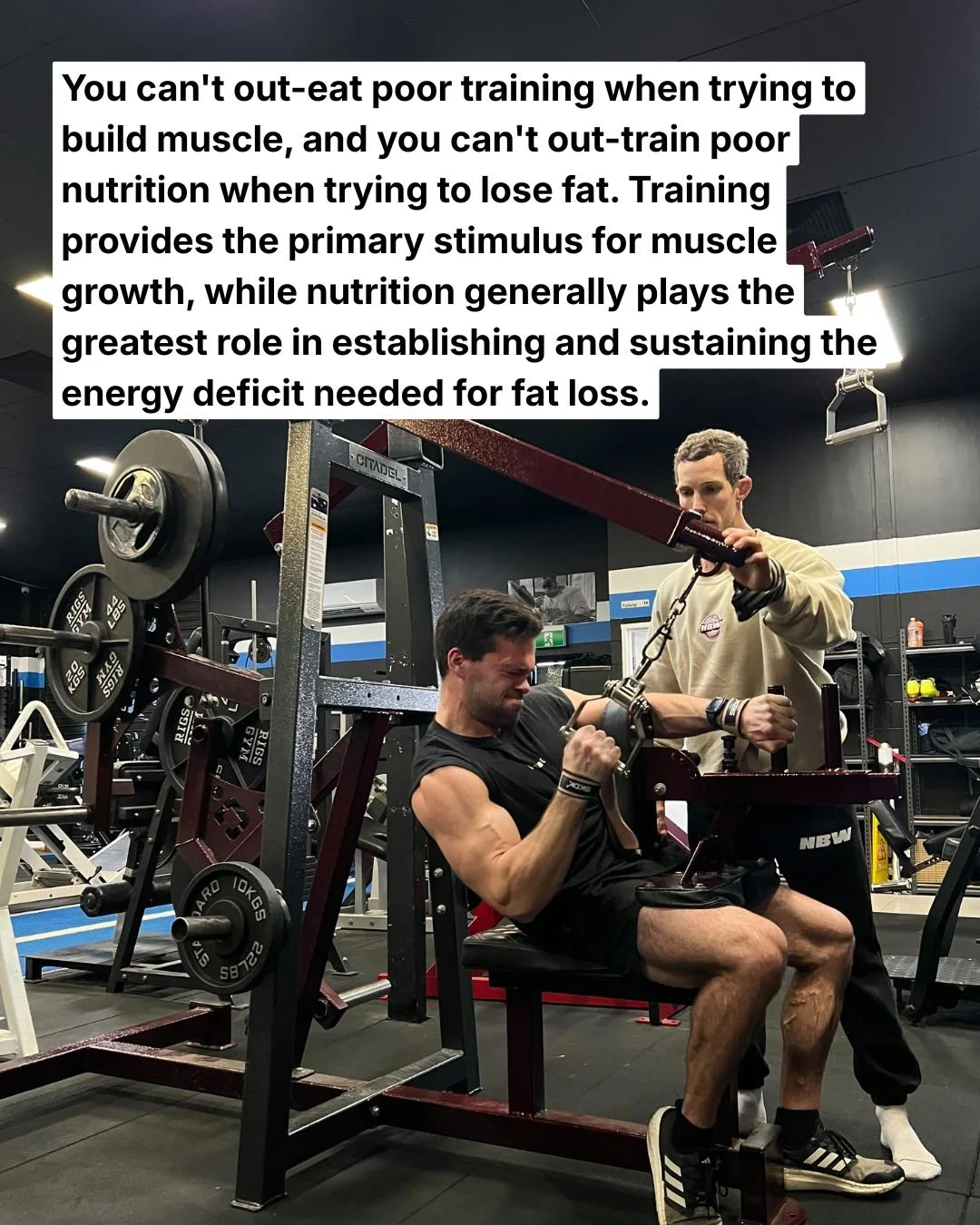
1. What Matters Most for Muscle Gain and Fat Loss?
For building muscle, resistance training provides the primary stimulus for adaptation. For losing body fat, nutrition generally provides the most practical means of establishing and sustaining an energy deficit.
This distinction influences where we'd direct someone's attention when progress isn't matching their effort.
Imagine someone eating sufficient protein, maintaining a calorie surplus and consistently meeting their nutritional targets, yet making very little progress in the gym.
We'd want to examine their training before automatically recommending more food. Their exercise selection, execution, training volume and progression may reveal opportunities that increasing calories alone wouldn't address.
Pelland et al. (2026), in The Resistance Training Dose Response: Meta-Regressions Exploring the Effects of Weekly Volume and Frequency on Muscle Hypertrophy and Strength Gains, reinforced the relationship between resistance-training volume and muscular adaptation, while also identifying diminishing returns as volume increases.
The opposite consideration often applies during fat loss.
Someone might be training regularly and completing considerable amounts of cardio, but if their energy intake consistently matches their expenditure, further fat loss is unlikely.
We'd review their nutrition, activity and bodyweight trends before deciding whether more exercise is warranted.
Training also plays an important role in preserving muscle during fat loss, while nutrition supports training adaptations during muscle gain. Understanding which variable currently deserves the most attention helps us make more productive recommendations.
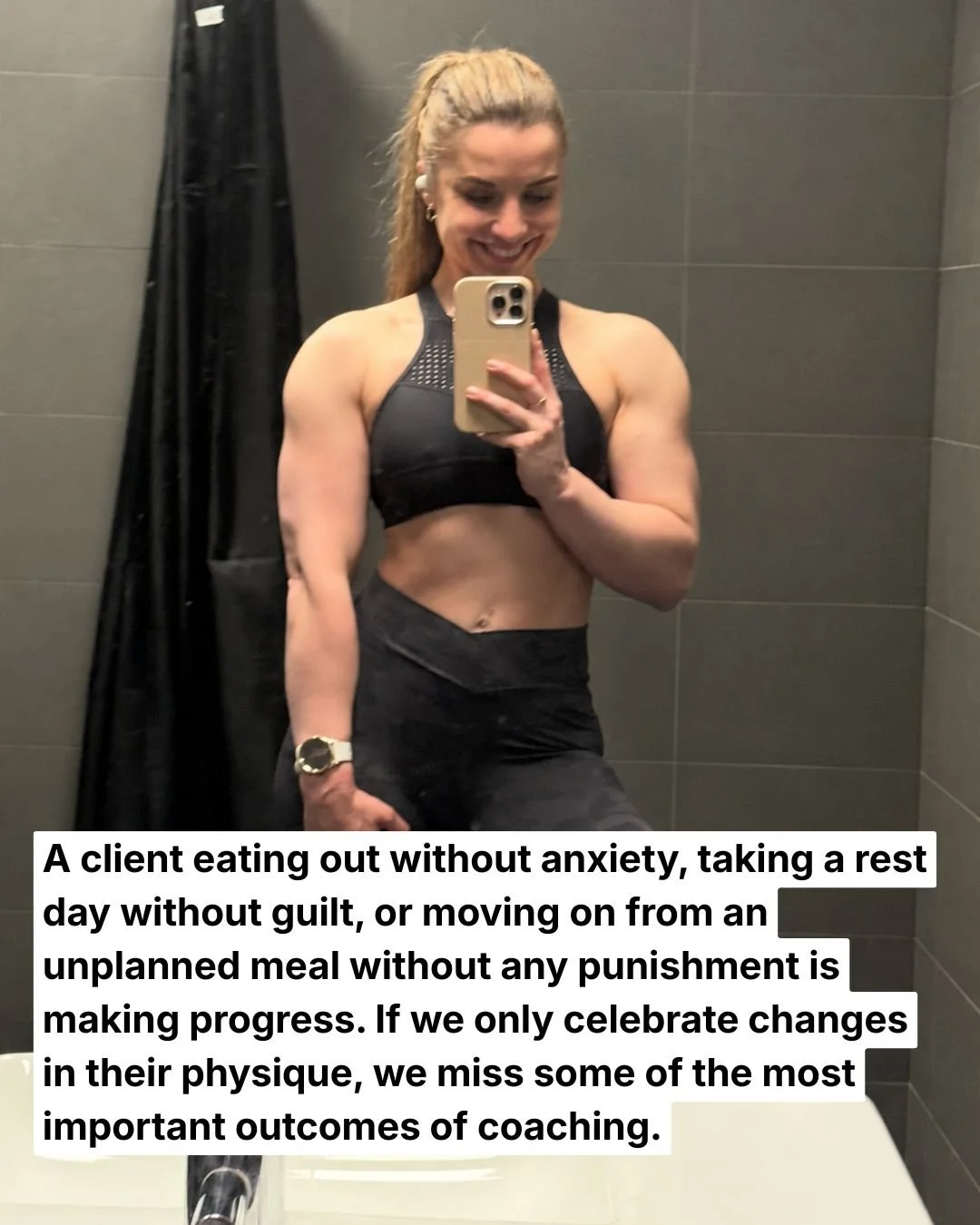
2. What Counts as Progress Beyond Changes in Body Composition?
Improving your relationship with food, developing confidence around eating and becoming more comfortable with rest can represent meaningful progress alongside changes in bodyweight and physique.
We work with people who have spent years pursuing specific body composition goals. Some have developed excellent habits around training and nutrition, although they may also have expectations that make everyday situations unnecessarily difficult.
For example, someone might consistently meet their calorie targets but feel anxious about eating at a restaurant because they can't accurately track the meal.
Another person might struggle to take a rest day, even when they're experiencing considerable fatigue.
If that person gradually becomes more comfortable making those decisions while continuing to progress towards their goals, we'd consider that a meaningful improvement.
Westenhoefer et al. (1999), in Validation of the Flexible and Rigid Control Dimensions of Dietary Restraint, found that rigid dietary control was associated with greater dietary disinhibition and binge-eating behaviours. While the research was observational, it illustrates why the way someone approaches dietary control deserves consideration.
There are certainly situations where considerable dietary precision is appropriate, particularly during bodybuilding competition preparation.
However, for most people, being able to manage meals, training and changes in routine without excessive guilt or anxiety is a valuable part of maintaining their results.
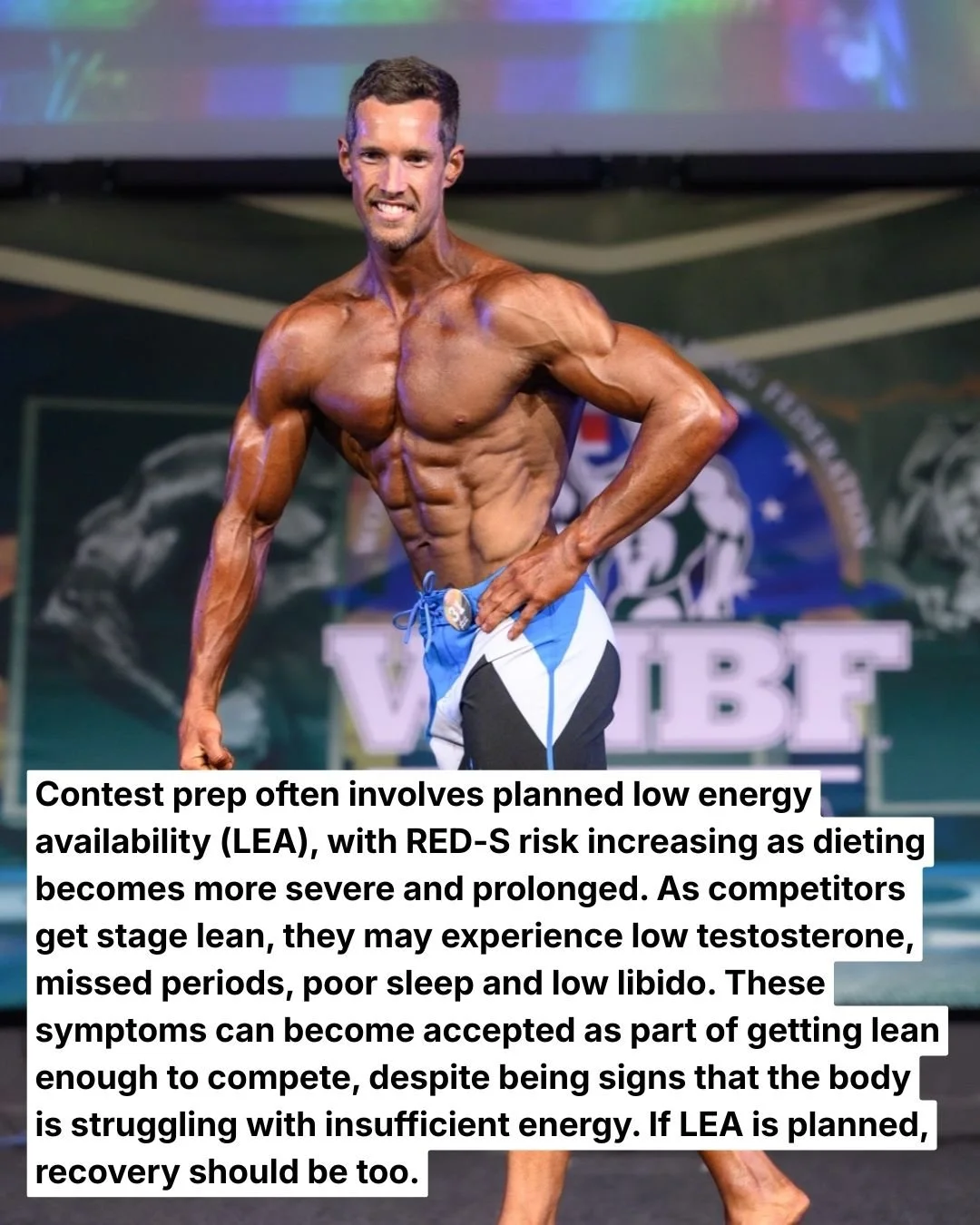
3. Why Should Recovery Be Planned During Bodybuilding Contest Prep?
Bodybuilding competition preparation can involve prolonged energy restriction and increasingly low levels of body fat. Planning for the recovery period is important because the physiological and psychological demands of preparation don't disappear when the competition ends.
As competitors approach stage condition, they may experience increased hunger, poor sleep, fatigue, reduced libido and changes in reproductive hormone function.
These effects can become familiar within competitive bodybuilding, particularly among experienced athletes who understand how demanding preparation can be.
However, we still need to take them seriously.
Mountjoy et al. (2023), in the 2023 International Olympic Committee's (IOC) Consensus Statement on Relative Energy Deficiency in Sport (REDs), outlined how problematic low energy availability can affect reproductive function, bone health, metabolism, immunity and performance.
The severity and duration of energy restriction, alongside individual susceptibility, influence the associated risks.
When coaching someone through competition preparation, we'd want to understand their health and readiness before starting, monitor their response throughout and have a clear plan for recovery afterwards.
That includes restoring sufficient energy intake, adjusting exercise demands, monitoring relevant symptoms and helping the athlete transition towards a more sustainable level of body fat.
Some health concerns may also warrant investigation with an appropriate medical professional.
Preparation for a competition is a temporary phase. The recovery period deserves the same attention as the months spent getting ready for the stage.

4. Can Eating Healthier Foods Make It Harder to Fuel Training?
A nutritious dietary pattern is important for long-term health, although the foods that provide the greatest nutritional value aren't necessarily the most practical choices in every situation.
This becomes particularly relevant when someone has high energy requirements or struggles to consume sufficient food.
Consider an athlete consuming large amounts of vegetables, legumes, whole grains and other high-fibre foods throughout the day.
Their diet may be rich in micronutrients and fibre, but they could also be experiencing considerable fullness, bloating or difficulty eating enough to support their training.
In this situation, we'd consider how their food choices are distributed across the day and whether some lower-fibre, more easily digested options would be useful.
Costa et al. (2025), in the Sports Dietitians Australia and Ultra Sports Science Foundation Joint Position Statement: A Practitioner Guide to the Prevention and Management of Exercise-Associated Gastrointestinal Perturbations and Symptoms, discussed how dietary fibre and other nutritional factors may influence exercise-associated gastrointestinal symptoms.
This is particularly relevant around demanding training sessions, where digestive comfort and carbohydrate availability may take priority.
For example, white bread might be a more practical pre-training carbohydrate source than a large serving of high-fibre whole grains for someone prone to gastrointestinal discomfort.
We'd still want their broader diet to provide adequate fibre, micronutrients and dietary variety.
The point is to select foods according to the nutritional and practical requirements of the situation, rather than applying the same expectations to every meal.
5. Why Does Consistency Matter More Than Perfection?
Long-term body composition progress depends heavily on maintaining useful behaviours across months and years, particularly when motivation, schedules and circumstances change.
It's common for people to approach a new goal with considerable enthusiasm. They begin tracking everything, following their training programme precisely and trying to optimise every aspect of their routine.
That structure can be helpful initially, although it becomes difficult to sustain if every deviation feels like a failure.
When we're reviewing someone's progress, we'd rather understand which habits they're consistently maintaining than focus exclusively on how closely they've followed their targets during a particularly good week.
For example, someone who trains productively four times per week, consistently meets their protein requirements and maintains a manageable calorie intake may make excellent progress.
If they miss a session occasionally or have a higher-calorie meal, their ability to return to their usual routine matters.
We'd also consider whether their targets and expectations are realistic for their current circumstances.
Someone working long hours or managing substantial family commitments may benefit from a different level of meal preparation, training frequency or dietary structure than someone with a highly predictable schedule.
The habits worth prioritising are those that meaningfully contribute to the intended outcome and can be repeated consistently.
Unsure which parts of your approach deserve the most attention?
You might already be training consistently and paying close attention to your nutrition, yet feel uncertain about what's limiting your progress or whether your current approach is appropriate.
Our dietitians review your training, nutrition, recovery and lifestyle together, helping you identify what needs adjusting and understand the reasoning behind those recommendations.
How Do These Principles Influence Our Coaching?
These five principles influence how we assess progress, although the recommendations will depend on the person we're working with.
Someone trying to build muscle may need greater attention to training progression and recovery. Someone dieting may benefit from reviewing their energy intake, hunger and how manageable the approach has become.
For a physique competitor, we'd consider their preparation and recovery alongside their competitive goals and health. For someone with a history of rigid eating habits, developing more flexibility may be an important part of their progress.
We also recognise that priorities change.
An approach that's appropriate during an improvement season may need substantial adjustments during contest preparation, and the structure required during a competition prep may be unnecessarily restrictive once the athlete has recovered.
Part of our role is recognising which considerations matter most at a particular time and helping someone understand how those decisions support their goals.
Practical Takeaways
Prioritise training quality when building muscle. Resistance training provides the stimulus for muscle growth, while sufficient energy, protein and recovery support adaptation. Review training progression before assuming that more calories will improve results.
Use nutrition to establish a manageable fat-loss deficit. Exercise supports health, performance and muscle retention, but dietary intake is usually the most practical variable for managing sustained energy restriction.
Recognise progress beyond body composition. Greater confidence around food, flexibility with routines and a more manageable relationship with training can be valuable outcomes alongside physical changes.
Plan for the demands and recovery of contest preparation. Prolonged energy restriction can affect hormonal function, recovery and wellbeing. Preparation and recovery should both account for the athlete's health.
Choose foods and habits according to your circumstances. High-fibre foods, precise tracking and structured routines can all be useful, although their application should reflect energy requirements, digestive tolerance, goals and long-term practicality.
Frequently Asked Questions
What should a dietitian prioritise for muscle gain?
A dietitian working with someone pursuing muscle gain should assess whether their energy and protein intake support their resistance-training demands. Training progression, recovery, bodyweight trends and current body composition also influence recommendations. The most useful adjustments depend on which factors are limiting progress.
Is training or nutrition more important for fat loss?
Fat loss requires a sustained energy deficit, which is often easier to manage through dietary intake than exercise alone. However, resistance training helps preserve muscle during weight loss, and physical activity contributes to health and energy expenditure. Both are relevant, with their relative importance depending on the intended outcome.
What does progress in nutrition coaching look like besides weight loss?
Progress can include improved training performance, greater dietary consistency, more confidence around food and reduced anxiety when normal routines change. Improvements in energy, recovery and the ability to manage nutrition independently can also be meaningful. The outcomes being monitored should reflect the individual's goals and circumstances.
Why is recovery important after bodybuilding contest prep?
Contest preparation can involve prolonged energy restriction, low energy availability and changes in reproductive hormones, appetite and recovery. After a competition, restoring adequate energy intake and adjusting training demands helps support physiological recovery. Some athletes may also require medical monitoring depending on their symptoms and health history.
Are processed foods useful for athletes?
Some processed foods can be practical sources of energy and nutrients, particularly when convenience, carbohydrate availability or digestive tolerance are important. Foods such as white bread, yoghurt and refined cereals can serve useful roles within an otherwise nutritious diet. Their suitability depends on nutritional composition, overall dietary pattern and the athlete's requirements.
Looking for guidance on your own nutrition and training?
If you'd like help deciding which areas of your current approach deserve attention, our weekly coaching provides an opportunity to review your goals, progress and nutritional requirements with a member of our team.