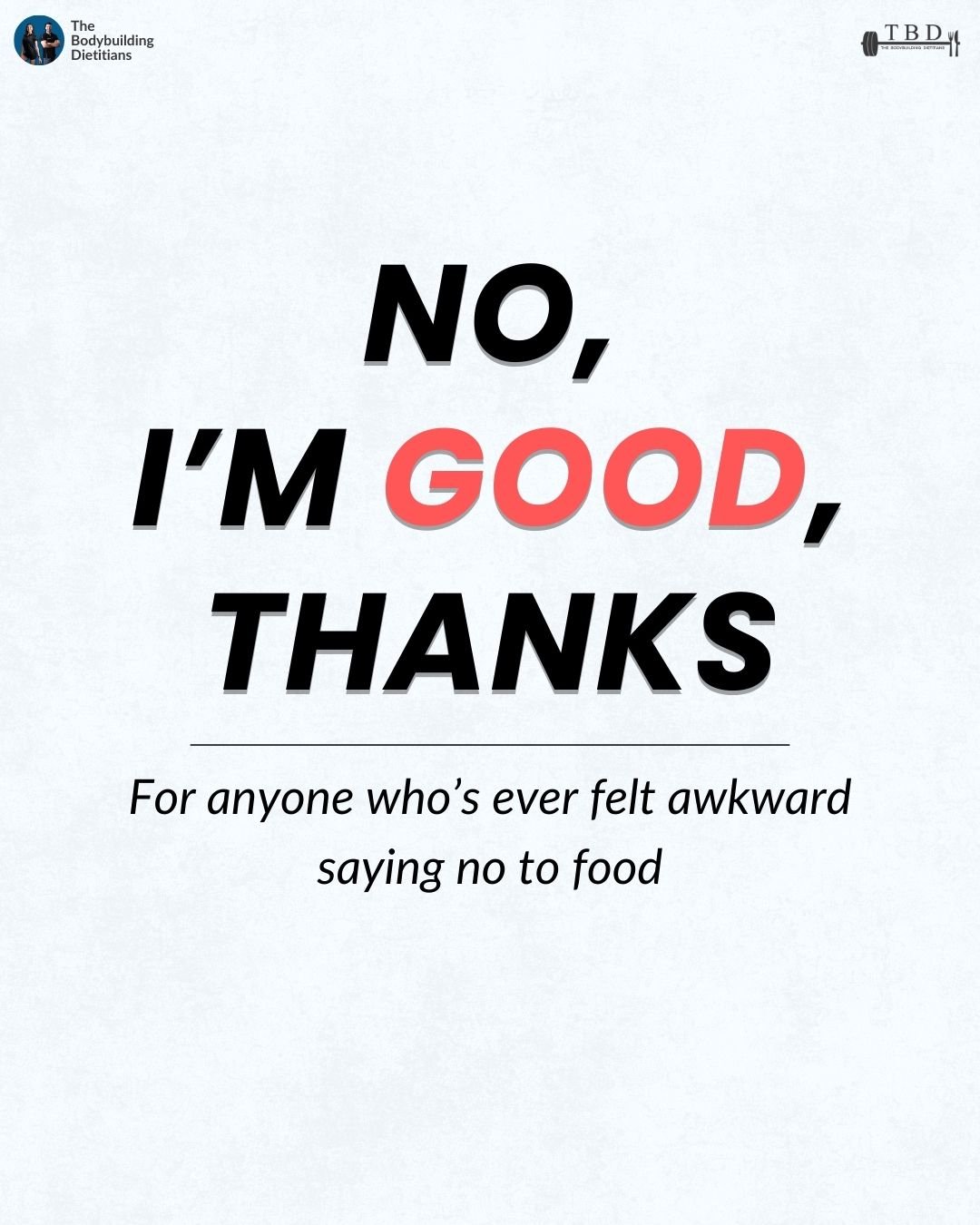
You Don’t Need to Justify Your Food Choices
Most athletes don’t struggle with food because they lack discipline. They struggle because social situations quietly pressure them into decisions they didn’t actually want to make.
In our coaching experience, this shows up most often around family events, holidays, work functions, and shared meals. Not because the food itself is problematic, but because declining food feels loaded, awkward, or open to interpretation.
For athletes who are already invested in their health and physique goals, this tension can be more destabilising than the food itself.
Who this applies to (and who it doesn’t)
This article is for:
Physique athletes and serious lifters
People who already train consistently and diet intentionally
Athletes who feel confident in their nutrition plan, but uneasy navigating social food situations
Anyone who has eaten past comfort to “keep the peace” and regretted it later
This is not written for:
People rigidly avoiding food out of fear
Anyone using food refusal as a form of control or punishment
Athletes early in their journey who are still learning basic structure
The issue here isn’t restriction. It’s boundaries.
Why saying no can feel disproportionately uncomfortable
In practice, declining food rarely feels awkward because of the food itself.
It feels awkward because food often represents:
Care
Tradition
Generosity
Inclusion
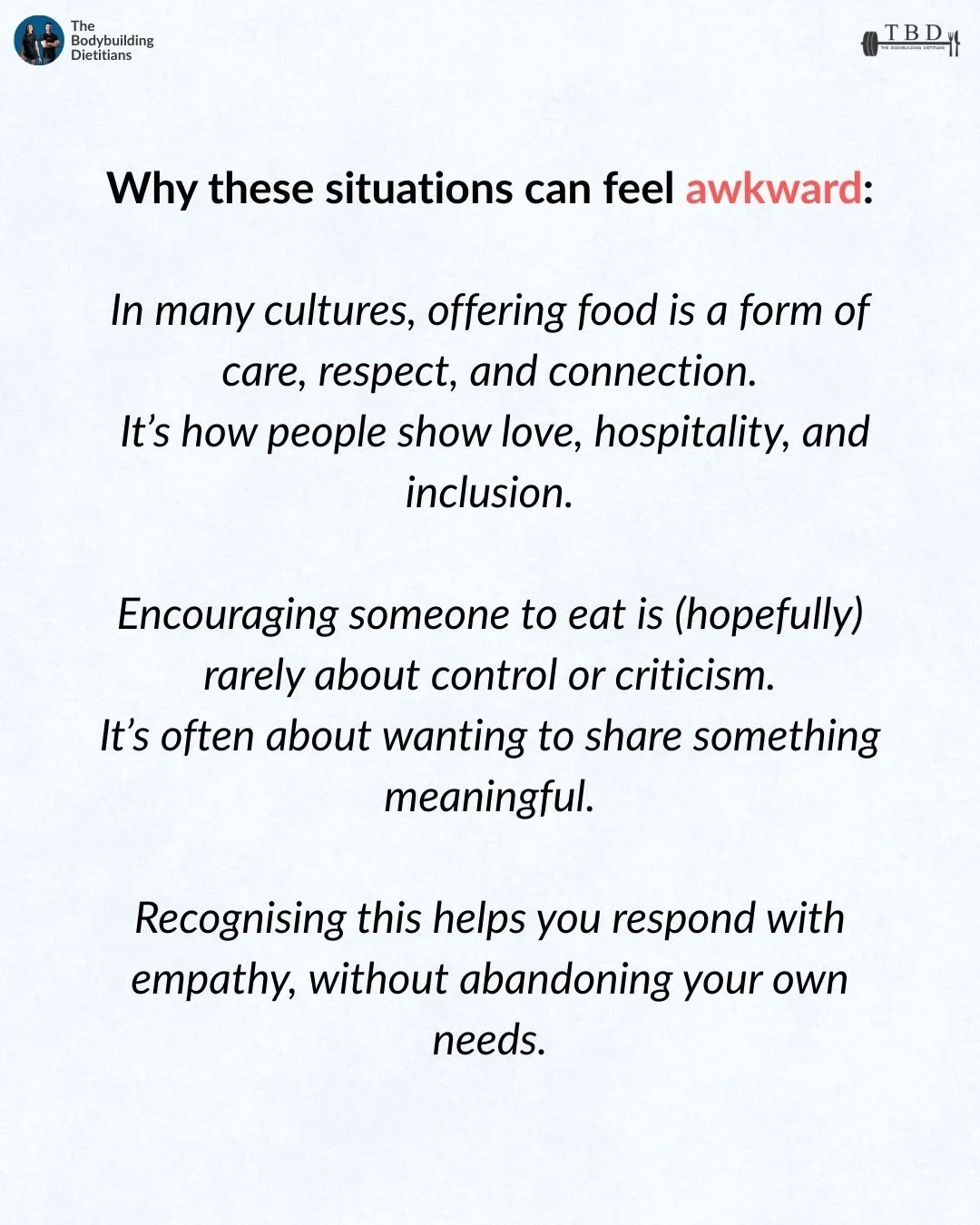
In many cultures, offering food is a relational act. It’s how people show warmth and connection. When you say no, it can feel like you’re rejecting the person, not the plate.
Understanding this matters. Because once you recognise the intent behind the offer, you can respond with empathy without abandoning your own needs.
Where problems actually arise for athletes
What we see repeatedly with athletes isn’t that they “give in” occasionally.
It’s that they override internal cues to avoid discomfort, then compensate later.
Common patterns include:
Eating past fullness to avoid awkwardness
Mentally disengaging from the meal, then grazing later
Framing the situation as a “blowout,” followed by over-correction
Feeling guilty for eating, or resentful for not wanting to
None of this improves consistency. It just shifts the stress downstream.
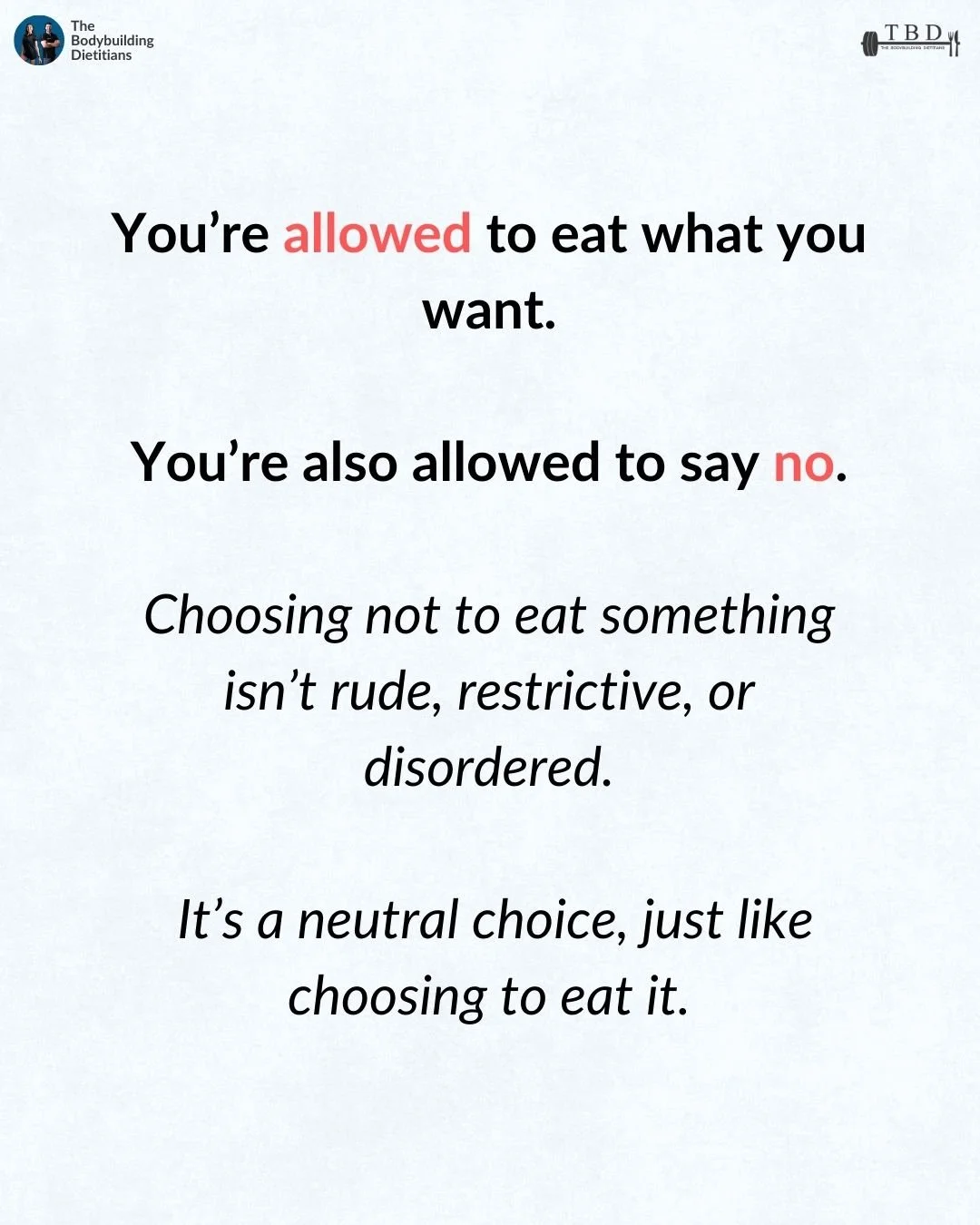
Food choices are neutral, even when they feel social
One of the most useful reframes we use in practice is this:
Choosing to eat is neutral.
Choosing not to eat is neutral.
Choosing to wait is neutral.
None of these require justification.
The moment you feel the need to explain, apologise, or moralise your choice, you unintentionally invite negotiation.
Why simple language works best
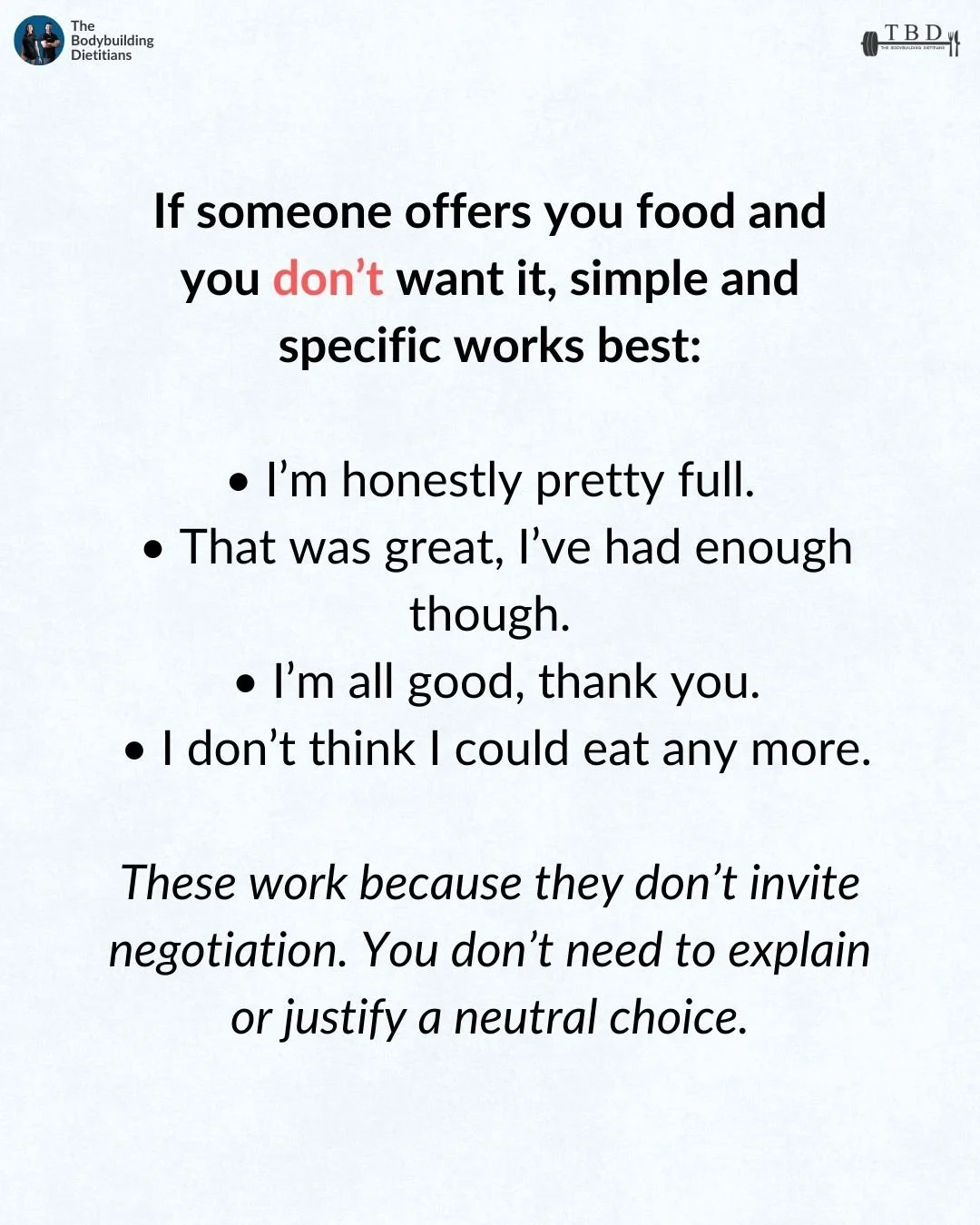
Across multiple prep seasons and off-season phases, we’ve found that simple, specific language closes the loop fastest.
Examples that work well:
“I’m honestly pretty full.”
“That was great, I’ve had enough though.”
“I’m all good, thank you.”
“I don’t think I could eat any more.”
These statements do three things:
They’re factual, not ideological
They don’t label food as good or bad
They don’t invite debate
You’re not refusing the person. You’re responding to your body.
When the offer keeps coming
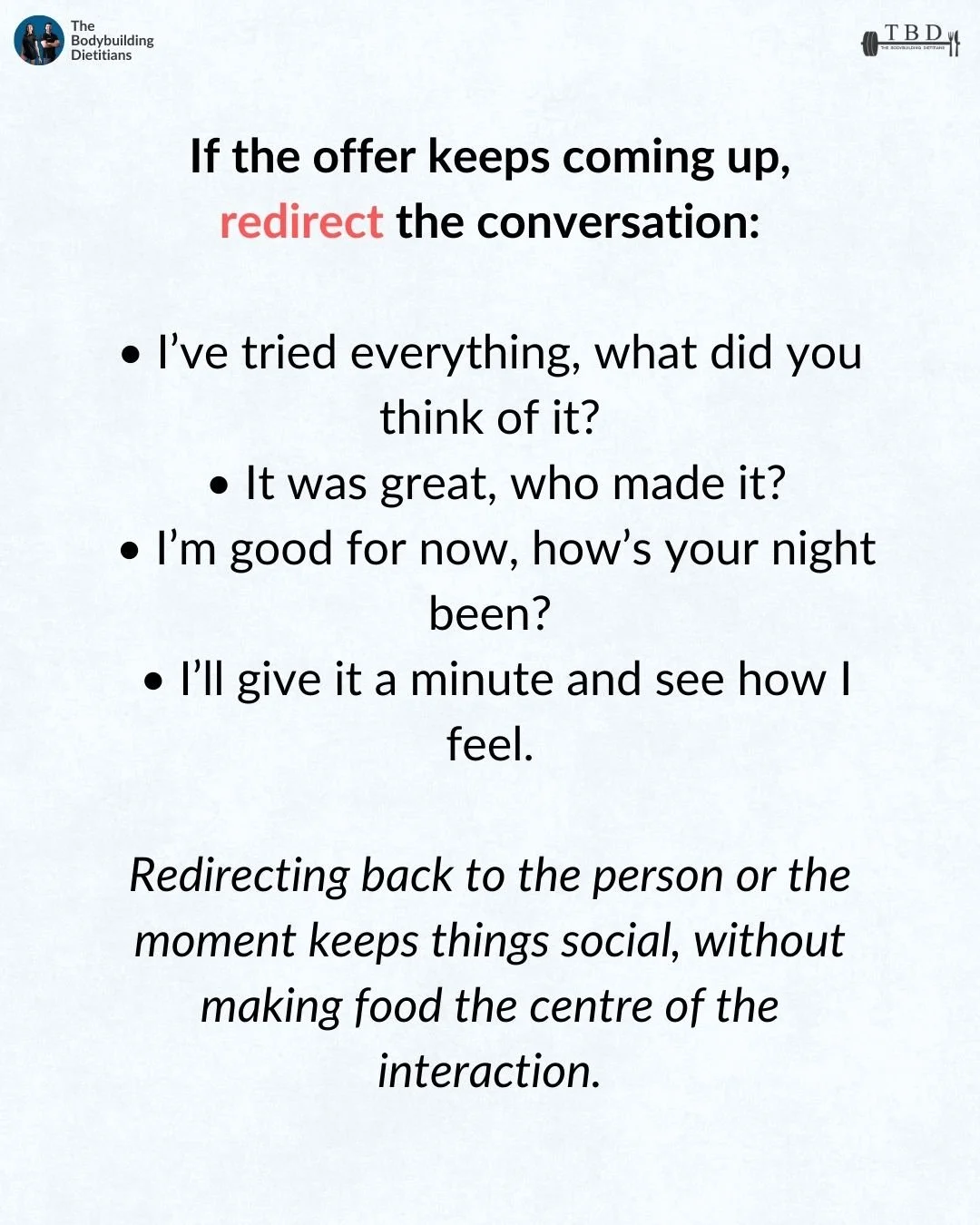
If the interaction persists, redirecting attention away from food often defuses the situation without friction.
In practice, this looks like:
“I’ve tried everything, what did you think of it?”
“It was great, who made it?”
“I’m good for now, how’s your night been?”
“I’ll give it a minute and see how I feel.”
Redirection keeps the interaction social, rather than turning it into a discussion about discipline, willpower, or rules.
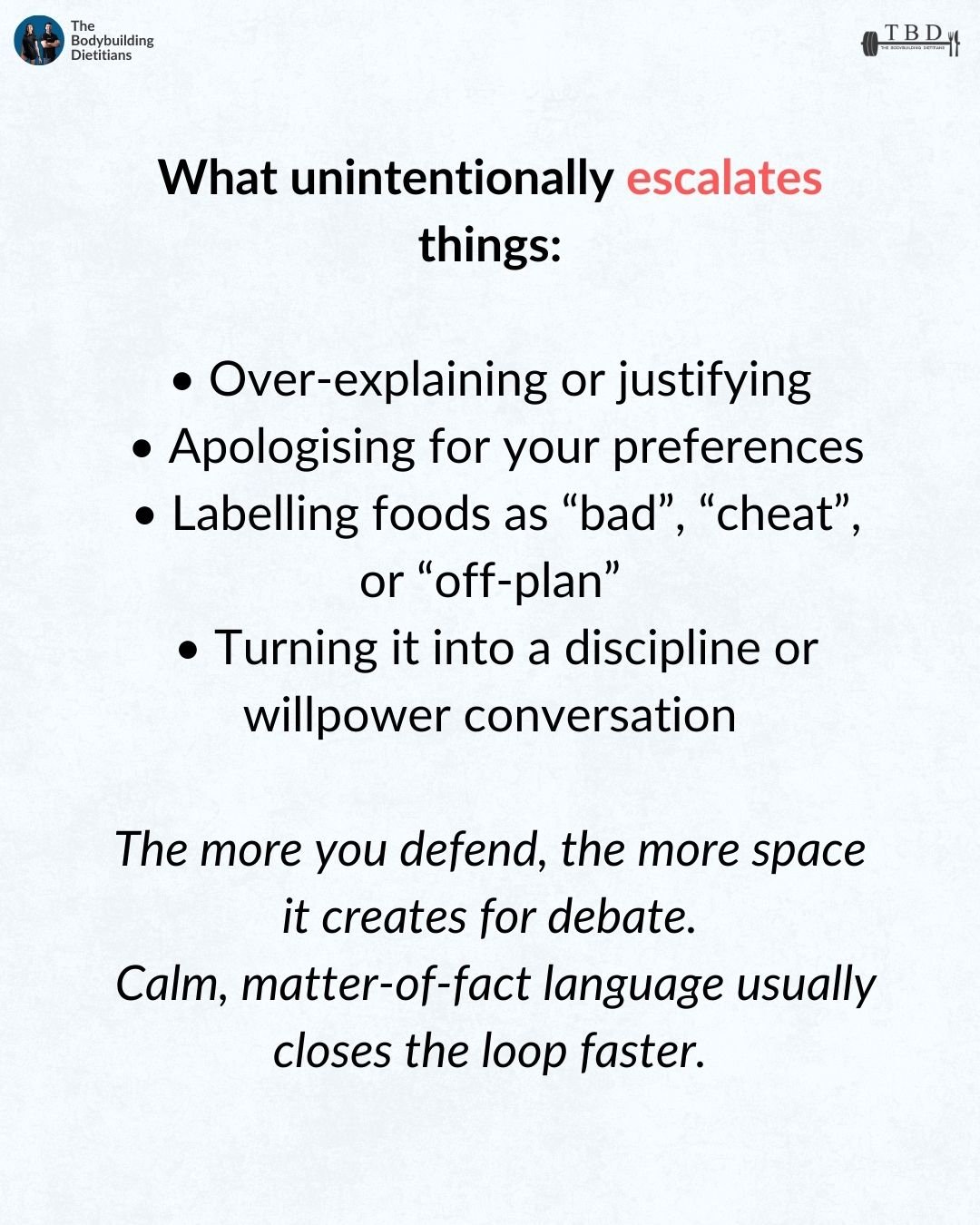
What unintentionally escalates things
We see these responses backfire repeatedly:
Over-explaining or justifying
Apologising for preferences
Labeling foods as “bad,” “cheat,” or “off-plan”
Turning the moment into a discipline conversation
The more you defend, the more space you create for discussion.
Calm, matter-of-fact language usually closes the loop faster.
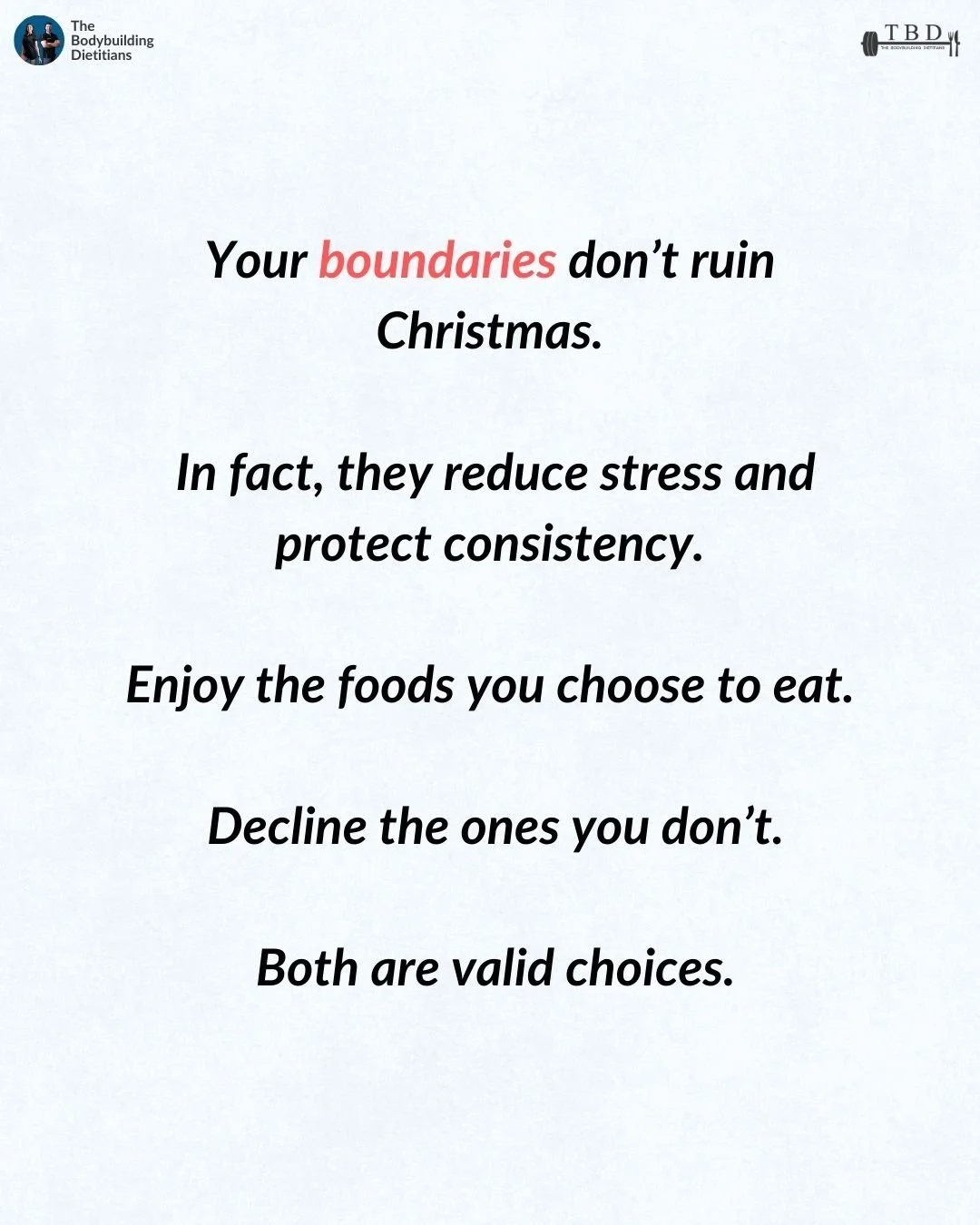
Boundaries don’t ruin occasions, they protect consistency
One of the biggest mindset shifts athletes make over time is realising that boundaries reduce stress, they don’t create it.
In practice, athletes who feel confident declining food:
Eat more intentionally when they do choose to eat
Experience less guilt and rebound behaviour
Maintain consistency across social seasons
Build a healthier long-term relationship with food
Enjoy the foods you choose to eat. Decline the ones you don’t. Both are valid. Both are part of maturity.
Final thought
Developing this level of calm, self-directed decision-making doesn’t happen by accident. It’s a skill built through experience, reflection, and support.
If you want guidance developing a sustainable, confident relationship with food that aligns with your training goals and your life, you can work with our team at The Bodybuilding Dietitians.
Our approach prioritises long-term consistency, context, and athlete maturity, not rigid rules or performative discipline.